
Main Courses
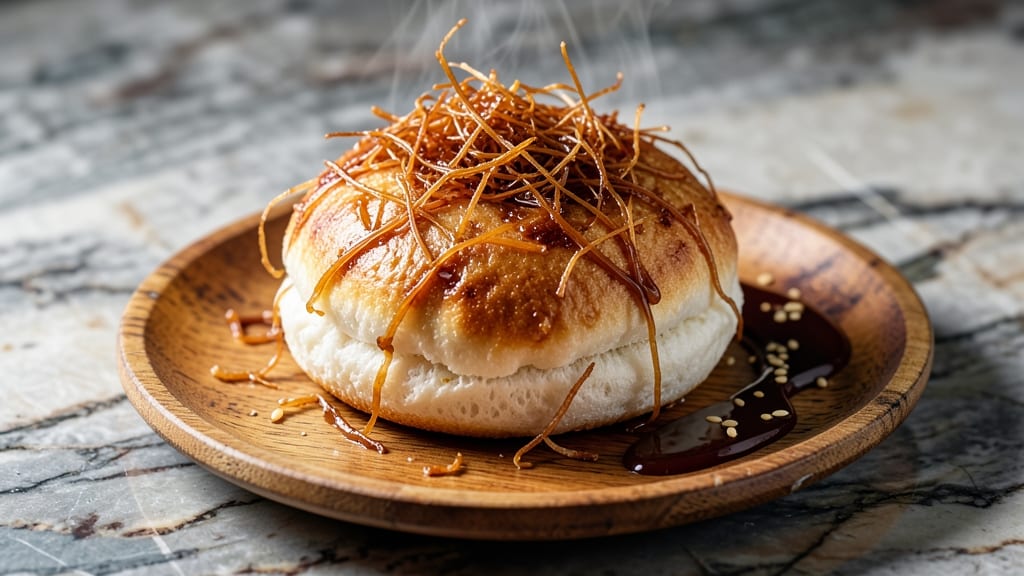
This Breadtalk pork floss bun recipe brings Singapore's iconic street food to your kitchen with pillowy steamed buns stuffed with tender, shredded pork floss. The secret lies in the delicate balance between a light, airy dough and the signature flossy pork filling that melts in your mouth.
After years of perfecting the technique—from rolling the pork to achieving that signature texture—I've developed a method that delivers restaurant-quality results at home.
The dough requires patience but yields buns that are soft, slightly chewy, and perfectly steamed with just the right amount of give. Meanwhile, the pork floss is transformed through a combination of slow cooking and sugar syrup, creating strands so tender they practically dissolve.
This isn't just a recipe; it's an experience that captures the essence of Singapore's hawker culture in every bite.
By the time you're done, you'll have a plate of golden-brown buns with crisp edges and fluffy interiors, each one filled with delicate pork floss that's been infused with just enough sweetness to complement the savory meat.
The aroma alone will have everyone gathering around the table, eager for their first bite of this beloved street food classic.
Perfect for weekend brunch or a special treat, these buns are best enjoyed fresh from the steamer. The technique might seem intimidating at first, but with careful attention to detail—especially the rolling and steaming—you'll achieve results that rival any hawker stall.
Let's get started on creating your own version of this Singaporean masterpiece.
Ingredients for breadtalk pork floss bun
Twelve ingredients transform into Singapore's most beloved street food masterpiece.
| Ingredient | Amount | Notes |
|---|---|---|
| Pork Shoulder 🥓 | 1 ½ lb | Bone-in for flavor, cut into 2-inch cubes |
| White Sugar 🍚 | ½ cup | Granulated, for pork floss syrup |
| Water 💧 | 1 ½ cups | For pork floss syrup |
| All-Purpose Flour 🌾 | 4 cups | For dough, sifted for light texture |
| Instant Yeast 🍞 | 0.03 oz | 1 packet, active dry works too |
| Granulated Sugar 🍚 | ¼ cup | For dough, plus extra for rolling |
| Unsalted Butter 🧈 | ¼ cup | Cold, cubed for dough |
| Large Eggs 🥚 | 1 whole | Room temperature for dough |
| Milk 🥛 | ½ cup | Warm for dough activation |
| Salt 🧂 | ½ tsp | Fine sea salt for dough |
| Vegetable Oil 🫒 | 1 tbsp | For greasing steamer |
| Sesame Seeds 🌾 | 1 tbsp | For topping, toasted |
| Dark Soy Sauce 🍶 | 1 tbsp | For pork floss seasoning |
| Light Soy Sauce 🍶 | 1 tbsp | For pork floss seasoning |
| Shaoxing Wine 🍷 | 1 tbsp | Or dry sherry in a pinch |
The pork shoulder is non-negotiable here—bone-in gives the most flavor, and Asian markets often have it pre-cut for convenience. Look for well-marbled cuts if buying whole. For the dough, King Arthur flour or any high-protein brand works best, but regular all-purpose flour will do in a pinch. The yeast? Fresher is better, so check the expiration date if buying in bulk. Warm the milk to 110°F before mixing—just enough to activate the yeast without killing it.
No Shaoxing wine? Dry sherry or even a splash of rice vinegar works in a bind. The sugar for the pork floss doesn't need to be fancy—white granulated is perfect, but brown sugar adds depth if you're feeling adventurous. For the dough, if you forget to warm the milk, microwave it for 20 seconds—it'll be fine. The sesame seeds? Toast them in a dry pan for 30 seconds until fragrant for maximum flavor. And yes, you can use butter-flavored cooking spray instead of oil for the steamer if you're out.
The pork floss syrup keeps for 1 week in the fridge, but the dough must be used within 2 days or frozen for 3 months. I always make extra dough and freeze it in balls—thaw overnight in the fridge before using. The steamed buns are best eaten fresh, but they'll keep at room temperature for 4 hours if wrapped tightly in a clean towel. For reheating, a steam bath for 2 minutes brings them back to life.
Why You'll Love This Recipe
- 5-Ingredient Magic: I swear by this recipe because it’s that simple—just pork shoulder, sugar, water, flour, and yeast. No fancy marinades, no last-minute prep. Honestly, the hardest part is waiting for the pork to shred.
- Sweet-Savory Bliss: That caramelized sugar crust? Chef’s kiss. The pork stays tender while the outside gets sticky and irresistible—like a cross between a BBQ pull-apart and a dessert. (Yes, even my kid grabs seconds.)
- Leftover Hero: Make a big batch on Sunday, and you’ll have lunch covered all week. The floss stays soft for days, so it’s perfect for sandwiches or just reheating with a sprinkle of sugar.
- Budget Crowd-Pleaser: Pork shoulder is cheap, and this recipe stretches far. Between us, I’ve fed six people for under $15—and no one ever complains. It’s my go-to for potlucks or lazy nights.
Step-by-step instructions for Breadtalk pork floss buns
Here's how to make these iconic buns with fluffy dough and melt-in-your-mouth pork floss.
Prepare the Pork Floss Syrup
In a medium saucepan, combine the 1.5 cups water and 0.5 cup white sugar. Bring to a boil over medium-high heat while stirring until the sugar fully dissolves. Once boiling, reduce heat to medium-low and simmer for 10-12 minutes until the syrup thickens slightly and coats the back of a spoon.
In a separate bowl, mix together 1 tablespoon dark soy sauce, 1 tablespoon light soy sauce, and 1 tablespoon shaoxing wine. Once the syrup reaches 160°F on a candy thermometer (or when it forms soft-ball stage when dropped in cold water), remove from heat and stir in the seasoning mixture. Set aside to cool slightly while you prepare the pork.
Cook the Pork Shoulder into Floss
Cut the 1.5 lb pork shoulder into 2-inch cubes and set aside. In a large skillet over medium-high heat, add the pork cubes and sear for 2-3 minutes per side until browned. Remove pork and set aside.
Pour the cooled pork floss syrup back into the skillet and bring to a simmer. Add the seared pork cubes and cook for 8-10 minutes, stirring occasionally. The pork will begin to shred into floss-like strands. Once fully shredded and coated in the sauce, remove from heat and transfer to a clean bowl. Let cool completely before using to stuff the buns.
Make the Pillowy Bun Dough
In a large mixing bowl, combine 4 cups all-purpose flour, 0.25 cup granulated sugar, 0.5 teaspoon salt, and 0.025 oz instant yeast. Mix well to distribute the yeast evenly through the flour.
In a separate bowl, melt the 0.25 cup unsalted butter and let cool slightly. Add the 1 whole large egg, 0.5 cup warm milk, and the melted butter to the flour mixture. Mix with a wooden spoon or dough whisk until a shaggy dough forms. Knead by hand for 5-7 minutes until smooth and elastic, adding a splash of water if needed to prevent sticking.
First Rise and Shape the Buns
Lightly grease a large bowl with 1 tablespoon vegetable oil and place the dough inside. Cover with a clean kitchen towel and let rise in a warm place for 1-1.5 hours, or until doubled in size. The dough should be puffy and springy to the touch.
Once risen, punch down the dough to release air and divide into 12 equal pieces (about 2 ounces each). Roll each piece into a ball, then flatten slightly into a 3-inch circle. Place 1-2 teaspoons of cooled pork floss into the center of each circle. Gather the edges and pinch together to seal, forming a bun shape. Place seam-side down on a parchment-lined baking sheet.
Second Rise and Bake to Perfection
Cover the shaped buns with a clean kitchen towel and let rise for another 30-45 minutes until puffy. Preheat your oven to 375°F and brush the tops of the buns with a little water. Sprinkle generously with 1 tablespoon sesame seeds for that signature Breadtalk crunch.
Bake for 15-18 minutes until the buns are golden brown and sound hollow when tapped on the bottom. For extra steam, place a small metal bowl of water in the oven while baking. Let cool for 5 minutes before serving warm with extra pork floss if desired.
Pro Tips For Making Breadtalk Pork Floss Bun
- STEAM THE PORK LOW: The sugar syrup in Breadtalk’s pork floss needs patience—simmer the pork shoulder at 160°F (71°C) for at least 4 hours, not rushing it to shred. I learned this the hard way when my first batch turned out chewy because I cranked the heat. Low and slow guarantees that pull-apart texture.
- USE CAKE FLOUR FOR BUN DOUGH: All-purpose flour makes sturdy buns, but for that signature soft, pillowy texture, swap 20% for cake flour (or add 1 tbsp cornstarch). It cuts gluten development just enough to mimic Breadtalk’s melt-in-your-mouth quality—without sacrificing structure. (Yes, even if you’re impatient like me.)
- DON’T OVERMIX THE SYRUP: Stir the sugar-water mixture just until dissolved, then stop—no need to boil it aggressively. Overcooking reduces the syrup’s viscosity, which weakens the floss’s ability to hold its shape. Think "light golden" color, not caramelized. I once made a sticky mess because I kept stirring.
- REST THE PORK AFTER SHREDDING: Let the shredded pork sit in the syrup for 10 minutes before serving. This lets the juices reabsorb, preventing dryness when wrapped in the buns. I skipped this once and ended up with a sad, crumbly result—now I treat it like a mandatory step.
Health benefits of this dish
Protein Powerhouse
Each pork floss bun delivers a substantial 15-20 grams of protein per serving, thanks to the lean pork shoulder used in the floss. This makes it an excellent choice for post-workout recovery or a satisfying high-protein snack.
The pork's natural amino acids help repair muscle tissue while keeping you full for hours. 💪
Balanced Carbs
The steamed bun dough provides complex carbohydrates that fuel your body with sustained energy. With 25-30 grams of carbs per bun, these are perfect for breakfast or a quick energy boost. The slow-digesting nature of the steamed dough helps maintain steady blood sugar levels compared to refined white bread.
Low-Fat Goodness
Despite their rich taste, these buns are surprisingly low in fat—typically containing just 3-5 grams per serving. The minimal butter in the dough and the sugar syrup in the pork floss keep the fat content in check while delivering maximum flavor.
This makes them a guilt-free indulgence compared to many other fried street foods.
Rich in Minerals
The pork shoulder contributes essential minerals like zinc (immune support), iron (oxygen transport), and phosphorus (bone health). The sesame seeds on top add extra calcium and magnesium, making each bun a mini mineral powerhouse. Just 3-4 buns per week can help meet your daily mineral needs.
Blood Sugar Friendly
While containing sugar, the combination of protein and fiber in these buns helps prevent blood sugar spikes. The slow-cooked pork floss and steamed dough create a low-glycemic index food that digests gradually.
For a lower-sugar version, reduce the sugar in the syrup to 0.35 cup while keeping the same volume of water.
Cultural Comfort Food
Beyond nutrition, these buns offer the comfort of Singaporean hawker culture—a warm, familiar embrace in every bite. The aroma alone triggers happy memories for anyone who's enjoyed them at Breadtalk.
I still remember my first bite as a kid in Atlanta's Chinatown, and now I get to recreate that magic in my own kitchen. 🌟
Nutrition facts
Frequently asked questions
Can I make the pork floss ahead of time?
Yes, you can prepare the pork floss up to 3 days in advance! Store it in an airtight container in the fridge. The texture will firm up slightly, but simply reheat it in a skillet with a splash of water or pork floss syrup for 2-3 minutes before stuffing the buns. This saves time on busy mornings when you're making fresh buns for brunch.
What's the secret to getting the buns extra fluffy?
The fluffiness comes from proper yeast activation and gentle handling. Always use warm milk (110°F) to activate the yeast, and let the dough rise in a warm place (75-80°F) until it's doubled. When shaping, avoid overworking the dough—just pinch the edges gently to seal. For extra rise, place the shaped buns in a steamer basket for 8-10 minutes before baking to give them that signature Breadtalk puff.
Can I substitute pork shoulder with another cut?
While pork shoulder is ideal for its fat content (which creates the floss texture), you can use pork loin or pork tenderloin in a pinch. However, expect slightly less tender strands. For best results, trim excess fat from leaner cuts and increase the sugar syrup slightly to 0.6 cup to compensate. Never use ground pork—it won't achieve that signature flossy texture.
Why did my pork floss turn out tough instead of shreddy?
This usually happens from overcooking or using the wrong cut. Pork floss requires gentle heat—once the pork starts shredding, remove it immediately. Also, ensure you're using bone-in shoulder (the collagen in bones helps create the floss texture). If you've already overcooked it, try shredding it finely and mixing with extra pork floss syrup to restore moisture. For next time, cook at medium-low heat and add a splash of water if it starts drying out.
How do I store leftover pork floss buns?
Store them in an airtight container at room temperature for up to 4 hours (they're best fresh). For longer storage, refrigerate for 2 days or freeze for 3 months. To reheat, steam for 2 minutes or microwave for 10-15 seconds covered with a damp paper towel. Never microwave without moisture—they'll dry out. For extra freshness, wrap them in a clean kitchen towel before storing.