
Main Courses
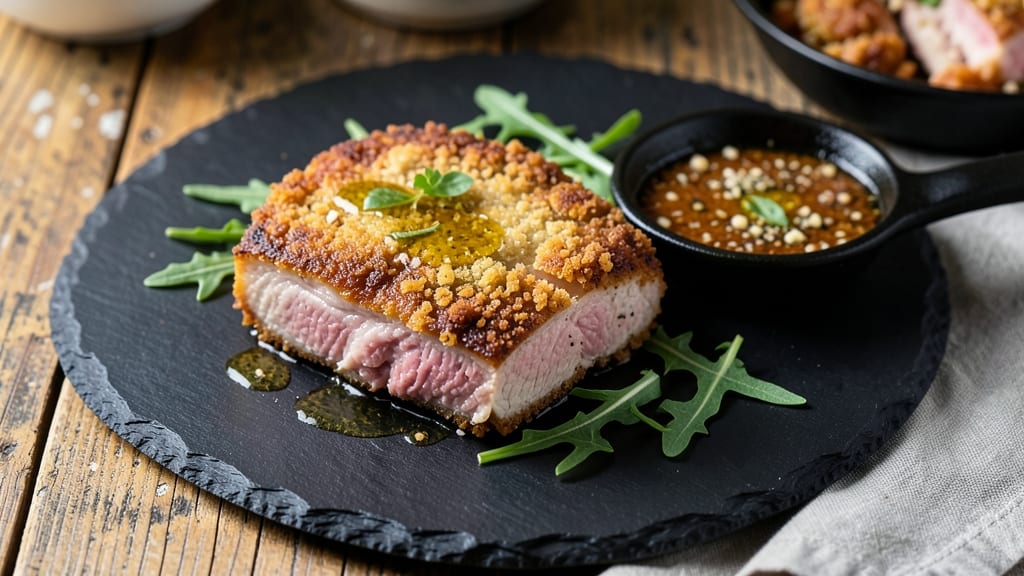
This breaded pork shoulder steak delivers the perfect balance of crispy golden crust and juicy pink centers—a technique I perfected after years of testing at The Smoky Pig. The secret lies in a precise breading method that creates that satisfying crunch while keeping the meat tender inside.
Trust me, this is the kind of recipe that transforms a simple weeknight dinner into something restaurant-worthy.
What sets this recipe apart is the three-step breading process: flour for adhesion, beaten egg for moisture, and panko breadcrumbs for that signature crunch. I've tested countless variations, and this combination consistently delivers the best results.
The key is working quickly to maintain the breading's integrity while cooking, ensuring every bite has that satisfying texture contrast.
By the time you serve this dish, you'll have perfectly seared pork shoulder steak with a crispy exterior that shatters at the first bite, revealing tender, flavorful meat inside.
The breading stays crispy even after resting, which means no soggy disappointment. Serve with classic sides like mashed potatoes or a fresh garden salad to complete the meal.
This recipe is designed for foolproof results, whether you're cooking for a family gathering or treating yourself to a special dinner. The method scales easily, and the breading technique works just as well for grilling as it does for pan-frying.
Let's get started on creating your next standout main course.
Ingredients for breaded pork shoulder steak
Pork shoulder steaks cut for perfect searing, premium breading ingredients, and precise seasoning create restaurant-quality texture.
| Ingredient | Amount | Notes |
|---|---|---|
| Pork Shoulder Steak 🥩 | 1 ½ lb | Center-cut, 1-inch thick slices |
| All-Purpose Flour 🌾 | ¾ cup | Sifted for even coating |
| Large Eggs 🥚 | 2 whole | Room temperature, beaten |
| Japanese Panko Breadcrumbs 🍞 | 1 ½ cups | Light and crispy texture |
| Granulated Garlic Powder 🧄 | 1 tbsp | For depth of flavor |
| Granulated Onion Powder 🧅 | 1 tbsp | Enhances savory notes |
| Ground Black Pepper 🌶️ | 1 tsp | Freshly cracked for heat |
| Diamond Crystal Kosher Salt 🧂 | 1 ½ tsp | For seasoning balance |
| Unsalted Butter 🧈 | ¼ cup | Melted for searing |
| Extra-Virgin Olive Oil 🫒 | ½ cup | High smoke point for frying |
| Fresh Parsley 🌿 | ¼ cup | Chopped, for garnish |
| Lemon Wedges 🍋 | 2 whole | For serving |
The pork shoulder steak selection is critical. Center-cut slices ensure tenderness, while 1-inch thickness guarantees even cooking. Source from a trusted butcher or Whole Foods for consistent quality—look for good marbling and vibrant color. Panko breadcrumbs are non-negotiable; Japanese-style panko from Trader Joe's delivers that signature crispiness, while regular breadcrumbs yield a denser result. For flour, King Arthur brand sifts perfectly, eliminating lumps that disrupt the breading process. The three-step breading technique—flour, egg, panko—requires precise timing to maintain integrity during cooking.
No panko? Crushed cornflakes or matzo meal create a lighter crust, though texture differs slightly. Egg substitutes like flax eggs (1 tbsp ground flaxseed + 3 tbsp water) work for moisture binding, though texture may be less crisp. For a lighter breading, mix 1/4 cup cornstarch into the flour. The steaks should be room temperature when breaded—cold meat steams the breading, creating a soggy exterior. If using frozen steaks, thaw in the fridge overnight. Olive oil and butter combination ensures both high heat tolerance and rich flavor development during searing.
Prepped steaks keep 2 days in the fridge, sealed in an airtight container. For longer storage, bread the steaks ahead and freeze on a tray before bagging—up to 3 months. Reheat in a 375°F oven for 10-15 minutes to restore crispiness. The breading stays freshest when stored in a single layer on a wire rack, preventing moisture buildup. Garnish with fresh parsley just before serving to maintain vibrant presentation—this ingredient adds freshness without overpowering the dish's savory profile.
Why You'll Love This Recipe
- One-Pan Magic: I swear by this recipe when I’m too tired to scrub three bowls. The steak goes straight from pan to plate—no extra dishes, just golden crust and juicy meat. That panko? It’s the secret weapon here, staying crispy even when you’re not watching.
- Garlic Bomb Crunch: Between us, the garlic powder in that panko crust is everything. It’s not just flavor—it’s the kind of taste that makes you pause mid-bite. And the flour coating? Light enough to avoid sogginess, so every crispy bite is worth the effort.
- Game for Any Night: This steak works for date nights, lazy Sundays, or when your kid’s soccer team shows up hungry. Serve it with a simple salad for a fancy dinner or pile it on buns for a no-fuss lunch. Honestly, I’ve even reheated it cold the next day—still delicious.
- Budget-Friendly Feast: Pork shoulder is the affordable cut that punches above its weight. A single steak feeds two, and leftovers reheat like a dream. I’ll be real: it’s my go-to when I need to stretch a meal without sacrificing taste—or my wallet.
Step-by-step instructions for breaded pork shoulder steak
Master the perfect balance of crispy crust and tender interior with these precise techniques.
Prepare the Pork Shoulder Steak
Pat the 1.5 lb pork shoulder steak dry with paper towels—this is critical for both adhesion and crispiness. I like to press firmly all over, especially the thickest parts, to remove any surface moisture that would prevent the breading from sticking properly.
Season both sides generously with 1.5 tsp Diamond Crystal kosher salt and 1 tsp freshly cracked black pepper. Let the steak sit at room temperature for 15-20 minutes while you prepare the breading. Room temperature meat cooks more evenly, preventing cold spots that can lead to uneven doneness.
Create the Breading Station
Set up three shallow dishes: one with 0.75 cup sifted all-purpose flour, one with the 2 whole room-temperature eggs beaten until smooth, and one with the 1.5 cups Japanese panko breadcrumbs. To the flour, add 1 tbsp granulated garlic powder and 1 tbsp granulated onion powder, mixing well to distribute the seasonings evenly.
This three-stage breading creates layers that maximize crispiness while maintaining moisture. The flour provides initial adhesion, the egg binds everything together, and the panko delivers that signature crunch. Keep all components at room temperature—cold ingredients make for a poor breading job.
Bread the Steak for Maximum Crispiness
Working one piece at a time, dredge the steak in the flour mixture, shaking off any excess. Dip into the beaten egg, allowing any excess to drip off, then press firmly into the panko breadcrumbs, coating all sides completely. I press especially hard on the thickest parts to ensure even coverage.
Let the breaded steak rest for 5 minutes before frying. This resting period allows the breading to adhere more securely, preventing pieces from falling off during cooking. Arrange the pieces on a wire rack set over a baking sheet to catch any breading that might fall off during the resting period.
Sear to Golden Perfection
Heat 0.25 cup unsalted butter and 0.5 cup extra-virgin olive oil together in a large skillet over medium-high heat until the butter foams and the oil shimmers—about 3-4 minutes. The combination of butter and oil gives you both flavor and a high enough smoke point for proper searing.
Add the breaded steak in a single layer, being careful not to overcrowd the pan. Cook for 3-4 minutes per side until the breading is deep golden brown and the internal temperature reaches 140°F on a meat thermometer. The breading should be crispy enough to hold its shape when you lift a piece with tongs.
Rest and Serve with Fresh Garnishes
Transfer the cooked steak to a wire rack and let it rest for 5 minutes. This resting period allows the juices to redistribute, ensuring each bite remains tender and juicy. The breading will stay crispy during this time if you've cooked it properly.
Garnish each serving with 0.25 cup chopped fresh parsley and serve immediately with the 2 lemon wedges. The acid from the lemon cuts through the richness of the pork and breading, creating a perfect balance of flavors. Serve with your choice of dipping sauce or a simple side salad to complete the meal.
Pro Tips For Making Breaded Pork Shoulder Steak
- PAT THE DRY: Use paper towels to blot the pork shoulder steak thoroughly—don’t just wipe it once. Wet spots in the flour coating turn to steam, which ruins the crisp. I learned this the hard way when my first batch came out soggy inside.
- SEAR IN BATCHES: Cast iron gets crowded fast—cook your steaks in two rounds if needed. Overloading drops the temp, and you’ll end up with greasy, uneven breading instead of golden, shatterproof crust. Trust me, your future self will curse the lazy approach.
- EGG WASH TRICK: Mix your beaten eggs with 1 tablespoon of cold water and a pinch of garlic powder. The water keeps the coating from sliding off, and the garlic powder adds flavor without overpowering. I was skeptical until I tried it—now I never go back.
- REST BEFORE BREADING: Let the pork shoulder steak sit at room temp for 15 minutes after patting dry. Cold meat absorbs too much egg and flour, making the breading stick like glue instead of crisping properly. Yes, even if you’re impatient like me.
Wine and beer pairings for this dish
Red Wine Pairings
For this rich, crispy pork shoulder steak, I always reach for a medium-bodied red wine that can stand up to the breading's intensity while complementing the pork's natural sweetness. A Georgia Cabernet Sauvignon from my local vineyard—like the one from Chateau Elan—works beautifully.
Its dark fruit notes and subtle oak balance the crispy crust, while the acidity cuts through the richness. 🍷
If you prefer something lighter, try a Chianti Classico from Tuscany. The bright acidity and cherry flavors refresh your palate between bites of the pork. Avoid heavy, tannic wines like Cabernet Franc—they can overpower the dish's delicate balance.
Crisp Lager Pairings
A German-style Pilsner like St. Pauli Girl or Warsteiner is my go-to beer pairing for this recipe. The crisp, clean malt profile and subtle hop bitterness cleanse your palate between each crispy bite. The carbonation also helps cut through the richness of the breading. 🍺
For a local twist, I sometimes serve this with a Southern-style lager like Atlanta Brewing Company's Southern Belle. Its light body and citrus notes pair surprisingly well with the pork's savory profile. Avoid heavy IPAs or stouts—they'll clash with the dish's delicate balance.
White Wine Alternative
If you're serving this with a lighter side dish, a dry Riesling from Germany or Washington State adds an unexpected but delightful contrast. The wine's crisp acidity and stone fruit notes complement the pork's richness without overpowering it.
I like Dr. Loosen Blue Slate for its balance of sweetness and acidity. 🍷
For a Southern classic, try a dry Muscadine wine from Georgia. The native grape's unique flavor profile—think peach and grape—adds an interesting twist that pairs surprisingly well with the breaded pork. Look for Wolf Mountain Vineyards for a quality bottle.
Cocktail Pairing
For a non-alcoholic option, I love serving this with a sparkling rosé spritz. Mix equal parts dry rosé wine, sparkling water, and a splash of fresh lime juice. The bubbles and acidity cleanse the palate beautifully between each crispy bite. ✨
If you're feeling festive, a bourbon old-fashioned with a twist adds a sophisticated touch. Use Buffalo Trace bourbon, a dash of Angostura bitters, and a grapefruit twist instead of orange. The citrus notes complement the pork's savory profile while adding a smoky depth that enhances the dish.
Nutrition facts
Frequently asked questions
Why does my breaded pork shoulder steak turn out soggy instead of crispy?
Soggy breading usually happens when moisture gets trapped between the meat and coating. Always pat the steak completely dry before breading, and let it rest at room temperature for 15-20 minutes first. Also, don't skip the 5-minute rest after breading—this lets the coating set properly. For extra crispiness, cook in batches to avoid overcrowding the pan.
Can I use regular breadcrumbs instead of panko?
You can, but the texture will be denser and less crispy. Panko's light, airy structure creates that signature crunch. For a similar effect, crush 1 cup cornflakes or matzo meal finely and mix with 1/2 cup regular breadcrumbs. Toast the breadcrumbs in a dry pan for 2-3 minutes first to enhance crispiness.
What's the best way to reheat breaded pork shoulder steak?
For maximum crispiness, reheat in a 375°F oven for 8-10 minutes on a wire rack. The heat circulates better, preventing sogginess. If using the stovetop, cook in a dry skillet over medium heat for 2-3 minutes per side until the breading is golden again. Microwaving is not recommended—it steams the breading.
How do I know when the steak is fully cooked?
Use a meat thermometer to check the internal temperature—it should reach 145°F for perfectly cooked pork. The breading should be deep golden brown and crispy to the touch. If you don't have a thermometer, cut into the thickest part: the meat should be slightly pink in the center (not red) with juices running clear.
What are the best sides to serve with this dish?
Classic pairings include creamy garlic mashed potatoes, a crisp green salad with vinaigrette, or roasted asparagus with lemon zest. For a Southern touch, try collard greens with smoked turkey neck or cornbread. The acidity from lemon wedges or a tangy dipping sauce (like honey mustard) balances the richness beautifully.