
Main Courses
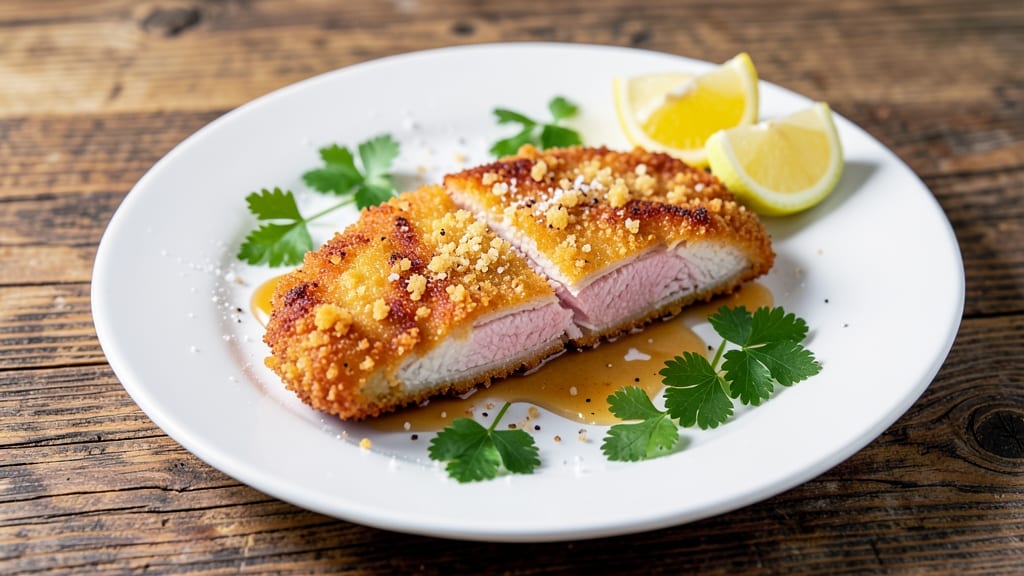
This breaded pork schnitzel recipe delivers restaurant-quality crispiness in just 20 minutes—a technique I perfected during my time in Charleston, where thin-cut pork transforms into golden, shatteringly crispy perfection.
The secret lies in three simple layers: flour, egg wash, and panko breadcrumbs, each playing a crucial role in that coveted crunch. I remember the first time I served this to skeptical diners—their reactions alone made it worth mastering.
What sets this schnitzel apart is the balance of texture and flavor: crispy on the outside, tender and juicy within. The key is working quickly to maintain heat in the pan while ensuring the pork cooks evenly without steaming.
I use a mix of all-purpose flour and cornstarch in the breading for extra crunch, and a light dusting of seasoned salt before frying to enhance that golden crust. This isn't just a recipe—it's a technique that elevates simple pork into something extraordinary.
By the time you plate it—golden brown, glistening with oil, and resting on a bed of lemon wedges—you'll understand why schnitzel remains a classic. The aroma alone will have everyone gathering around the table.
Serve with a crisp green salad or roasted potatoes to complete the meal, and prepare for compliments that'll make you the star of dinner.
This method works equally well with chicken or veal, though pork offers the perfect balance of flavor and tenderness. The beauty of schnitzel is its versatility—equally at home for a weeknight dinner or a special occasion.
Once you try this, you'll never settle for anything less than that perfect crunch again.
Ingredients for breaded pork schnitzel
Golden layers of crunch and tenderness—here’s what transforms simple pork into restaurant-worthy perfection.
| Ingredient | Amount | Notes |
|---|---|---|
| Pork Tenderloin 🥩 | 1 ½ lb | Thin-cut, pounded to 1/4-inch thickness |
| All-Purpose Flour 🌾 | ¾ cup | For initial dredging layer |
| Cornstarch 🌾 | ¼ cup | For extra crispiness |
| Large Eggs 🥚 | 2 whole | Room temperature for even coating |
| Japanese Panko Breadcrumbs 🍞 | 1 ½ cups | Light and crispy texture |
| Seasoned Salt 🧂 | 1 tbsp | For golden crust enhancement |
| Vegetable Oil 🫒 | 2 cups | High smoke point preferred |
| Lemon Wedges 🍋 | 4 whole | For serving and brightness |
| Fresh Parsley 🌿 | ¼ cup | Chopped, for garnish |
| Garlic Powder 🧄 | 1 tsp | For subtle seasoning |
| Ground Black Pepper 🌶️ | ½ tsp | Freshly cracked for flavor |
| Unsalted Butter 🧈 | ½ cup | Melted, for basting |
The pork tenderloin makes all the difference here—thin-cut, pounded to even thickness is non-negotiable. I always grab the thinnest cut available from the butcher counter; if you can't find it pre-sliced, ask for the most tenderloin section and pound it yourself with a meat mallet. Costco or high-end grocery stores usually carry pre-cut pork for schnitzel, but if you're in a pinch, any tenderloin will work if you take the time to pound it. Look for even marbling—just enough to keep it juicy without making it greasy. And trust me on this: room-temperature pork fries up better than cold.
No panko? Crushed cornflakes or homemade breadcrumbs work in a bind, but panko’s light, airy texture is worth the hunt—Trader Joe’s and Asian markets always have the best quality. Seasoned salt is key for that golden crust, but if you’re out, mix kosher salt with a pinch of paprika. The cornstarch in the flour mix is the secret weapon for that shatteringly crispy exterior—don’t skip it. For the oil, vegetable or canola oil works best (high smoke point), but if you’re feeling fancy, avocado oil adds a subtle richness. And if you’re worried about the pork drying out, baste with melted butter halfway through frying—game-changer.
Keep the pounded pork wrapped in plastic in the fridge for up to 2 days—no need to thaw if you’re cooking right away. The breadcrumbs stay fresh in an airtight container for 1 week, but if you’re making this often, buy them in bulk. Leftover schnitzel reheats beautifully in a 350°F oven for 10 minutes, though it’s best served fresh off the pan. Store any leftovers in the fridge for 3 days or freeze for 1 month—just thaw in the fridge overnight before reheating. And if you’re prepping ahead, make the breading mix in advance—it keeps indefinitely.
Why You'll Love This Recipe
- No-Fuss Setup: I swear by this recipe because it’s the kind of meal that doesn’t demand your full attention—just pound the tenderloin thin, slap on the flour-cornstarch mix, dip in beaten eggs, and coat with panko. Five steps, zero stress, and the result is restaurant-quality without the fuss.
- Crispy-Creamy Magic: That first bite? The panko gives you this addictive crunch, while the cornstarch keeps the inside juicy and tender. Honestly, I’ve made schnitzel before, but this combo—thin pork, light breading, and a quick fry—is the only way I’ll do it now.
- Weeknight to Dinner Party: Between us, this is my go-to for busy nights, but it also shines when I want to impress. Serve it with lemon wedges and a simple salad for a no-brainer weeknight dinner, or pair it with roasted potatoes and greens for a crowd-pleasing main. It works everywhere.
- Budget-Friendly Leftovers: Pork tenderloin stretches far, and the leftovers reheat beautifully—pan-fry them again for a crispy second life or toss into wraps the next day. I’ll be real: I often make a double batch because it’s cheaper than takeout, and the flavor doesn’t fade. Win-win.
Step-by-step instructions for golden crispy breaded pork schnitzel
Here's the method that guarantees a perfectly golden, shatteringly crisp crust every time.
Prepare the Pork for Even Cooking
Place the 1.5 lb pork tenderloin between two sheets of plastic wrap. Using a meat mallet, pound it gently but firmly to an even ¼-inch thickness throughout. This ensures even cooking and that beautiful golden crust we're after. I like to work in sections, rotating the meat as I go to maintain consistency.
Once pounded, pat the meat completely dry with paper towels—this step is absolutely critical for crispiness. Any moisture trapped in the meat will steam instead of crisp when it hits the hot oil. You'll know it's ready when the surface looks completely dry and the meat feels cool to the touch.
Create the Three-Stage Breading Station
Set up three shallow bowls or plates. In the first, combine the 0.75 cup all-purpose flour with 1 tsp garlic powder and 0.5 tsp ground black pepper. In the second bowl, whisk together the 2 whole large eggs until they're completely uniform. For the third bowl, spread out the 1.5 cups Japanese panko breadcrumbs and sprinkle with 1 tbsp seasoned salt.
This three-stage process creates layers of texture: the flour forms a base, the eggs bind everything together, and the panko delivers that signature crispy crunch. I like to keep my hands dry when handling the panko—wet fingers can make the breadcrumbs clump and stick.
Bread the Schnitzel with Precision
Working with one piece at a time, dip the pounded pork into the flour mixture, pressing gently to adhere. Shake off any excess, then dip into the beaten eggs, letting any excess drip off. Finally, press the egg-coated pork into the panko breadcrumbs, ensuring complete coverage on all sides. I press firmly but not aggressively—just enough to make the crumbs stick.
Let the breaded schnitzel rest for 2-3 minutes before frying. This brief pause allows the breading to set slightly, preventing it from falling off when it hits the hot oil. I like to work in batches so I don't crowd the frying station—this keeps the oil temperature consistent.
Fry to Perfect Golden Crispness
Heat 2 cups vegetable oil in a deep skillet or Dutch oven to 350°F—this is crucial for even cooking without burning. Use a deep-fry thermometer to monitor the temperature precisely. Once hot, carefully add the breaded schnitzel pieces, being careful not to overcrowd the pan. Cook for 3-4 minutes per side until they're deep golden brown and the internal temperature reaches 145°F.
You'll know they're ready when the breading looks like it's about to shatter and the pork releases easily from the pan. If you notice the oil smoking excessively, reduce the heat slightly—we want even cooking, not charring. Transfer the cooked schnitzel to a paper towel-lined plate to drain excess oil.
Finish with Butter and Garnish
While the schnitzel is still hot, reduce the heat to medium-low and add the 0.5 cup unsalted butter. Tilt the pan slightly and spoon the melted butter over the schnitzel pieces, letting it baste and infuse flavor. This step adds richness and helps create that restaurant-quality sheen.
Garnish immediately with chopped fresh parsley and serve with lemon wedges on the side. The lemon not only adds a bright contrast to the richness but also helps cut through the fat for a more balanced bite. Serve immediately while the crust is at its crispy peak—these don't keep their texture well once cooled.
Pro Tips For Making Breaded Pork Schnitzel
- Pound Thin, Pound Even: The tenderloin’s job is to stay tender, so aim for ¼-inch thickness—no thicker or it’ll steam instead of sear. I learned this the hard way when my first batch came out gray inside; a meat mallet makes this easier than a rolling pin, and pressing hard ensures consistency.
- Mix Cornstarch Last: Add the 1 tablespoon cornstarch to the flour after dredging—not before. It’s the glue that keeps the panko from sliding off, but toss it in too early and you’ll clump the flour. A fine-mesh sieve saves mess when coating.
- Skip the Crowding: Cook in single layers with at least 2 inches between pieces. I used to cram the pan like a sardine can, and the oil temp crashed every time, leaving me with soggy crusts. A splatter screen helps, but don’t skimp on space—this isn’t a buffet.
- Rest the Meat First: Pat the tenderloin bone-dry with paper towels, then let it sit 10 minutes uncovered in the fridge. Cold meat holds moisture better, and the surface dries faster, which means the breading actually sticks. (Yes, even if you’re impatient like me.)
Common mistakes when making great breaded pork schnitzel
Over-Pounding the Pork
I’ve seen plenty of home cooks get carried away with the meat mallet, pounding the pork too thin—especially when they’re eager to get that perfect schnitzel. But going below ¼-inch thickness risks drying out the meat or even tearing it apart when you try to flip it in the pan.
Aim for even, consistent thickness—I like to check with a ruler or calipers for precision. If you’re working with thicker cuts, pound gradually in stages to avoid tearing. 🔨
Skipping the Resting Step
This is a big one—so many people rush straight from breading to frying, and that’s when the breading falls off mid-cook. Let the breaded schnitzel rest for 2-3 minutes after coating. This brief pause lets the egg wash set slightly, creating a stronger bond between the flour and panko.
I’ve seen breading disintegrate into the oil because someone couldn’t wait—don’t be that person! 🍳
Using Cold Ingredients
Cold pork, cold eggs, or cold oil can throw off your entire dish. Let the pork sit at room temperature for 30 minutes before pounding, and use room-temperature eggs for even coating.
As for the oil, start heating it 5 minutes before frying—this ensures it’s at the perfect 350°F when the schnitzel hits the pan. Cold oil will steam the meat instead of crisping it. Trust me, your taste buds will thank you. ❄️
Overcrowding the Pan
I can’t tell you how many times I’ve watched someone try to fry three or four schnitzel at once, only to end up with soggy, unevenly cooked results. The oil temperature drops when you overcrowd, leading to greasy instead of crispy breading.
Fry in small batches—I do two pieces at a time in my Dutch oven—and maintain that 350°F like it’s your job. Patience here is key to that golden crust. 🌡️
Ignoring the Oil Temperature
This is where most home cooks go wrong—they eyeball the oil temperature or assume “hot enough” means smoking hot. Too hot, and you’ll burn the breading before the pork cooks through. Too cool, and you’ll end up with greasy, limp schnitzel.
Invest in a deep-fry thermometer—they’re cheap and game-changing. Keep that oil at a steady 350°F, and you’ll nail that perfect crunch every time. 🔥
Not Drying the Pork
Moisture is the enemy of crispiness. If you skip patting the pounded pork completely dry with paper towels, you’re setting yourself up for steamed breading instead of crispy. I double-check by wiping each piece with a fresh towel—even if it seems dry at first.
The extra 30 seconds now saves you from soggy schnitzel later. Wet meat + hot oil = science experiment you don’t want to run. 💦
Nutrition facts
Frequently asked questions
Can I use chicken or veal instead of pork for this recipe?
This technique works beautifully with chicken breast (pounded to ¼-inch thickness) or veal cutlets. For chicken, reduce cooking time to 2-3 minutes per side at 350°F—it cooks faster than pork. Veal requires the same timing as pork but yields an even more delicate texture. The breading method remains identical!
How do I store leftover schnitzel without losing crispiness?
Store cooked schnitzel in an airtight container in the fridge for up to 3 days. To reheat, place on a wire rack over a baking sheet and warm in a 350°F oven for 10 minutes—this prevents sogginess. For longer storage, freeze for 1 month, thawing overnight in the fridge before reheating. Never microwave—it kills that crispy texture!
What's the best way to test if the oil is ready?
Use a deep-fry thermometer for precision—oil should be 350°F. No thermometer? The cold water test works: drop a small piece of bread into the oil. If it sizzles and floats immediately, it's ready. If it sinks or bubbles slowly, wait another 1-2 minutes. Never rely on smoke—it means the oil is too hot!
Can I make this recipe ahead of time?
Prep the breading station in advance (flour, egg, panko mix) and store components separately in the fridge for up to 2 days. Pound the pork and keep it wrapped in plastic until ready to bread. The magic happens fresh off the pan—schnitzel loses crispiness when reheated, so bread and fry just before serving.
Why did my schnitzel turn out greasy instead of crispy?
Greasy results usually mean one of three things: oil wasn't hot enough (350°F), pork wasn't dry before breading, or the pan was overcrowded. Double-check your oil temperature with a thermometer and work in small batches. Also ensure you're using panko breadcrumbs (not regular breadcrumbs) for maximum crunch!