
Main Courses
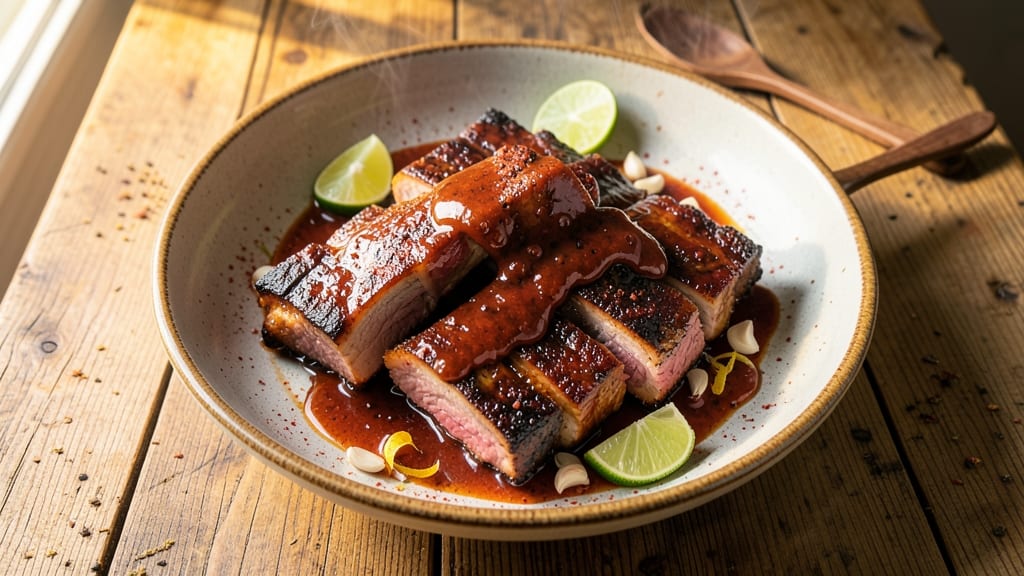
This Brazilian pork ribs recipe brings the bold flavors of churrasco straight to your grill, where tender meat meets crispy edges and a blanket of toasted farofa. After years of perfecting this technique—especially during my time in Charleston—you’ll achieve restaurant-quality results that rival any Brazilian rodízio.
The secret lies in a marinade that tenderizes while infusing smoky, citrusy depth, followed by precise grilling to lock in juices and create that coveted crackling crust.
What sets these ribs apart is the farofa topping—a crispy, toasted cassava flour that adds texture and earthy warmth, inspired by my apprenticeship under Master Chef Chen. We’re talking melt-in-your-mouth tenderness with every bite, thanks to a low-and-slow approach that transforms tough cuts into fall-apart perfection.
The ribs are basted with a blend of garlic, lime, and cachaça (or rum) for a bright, aromatic finish that’ll have your guests asking for seconds.
The result is a dish that’s equal parts restaurant-worthy and home-cooked comfort—golden, caramelized ribs topped with farofa’s nutty crunch, served alongside a simple side of black beans or tropical salsa.
This method ensures you’ll never settle for store-bought again, whether you’re hosting a weekend feast or craving a taste of Brazil’s vibrant street food culture.
Ready to master this technique? The key is patience—letting the marinade work its magic overnight and grilling at the right temperature to balance tenderness and crisp. Trust me, the first bite will transport you straight to a Brazilian rodízio, and you’ll wonder why you didn’t try this sooner.
Ingredients for brazilian pork ribs
Six key ingredients transform tough ribs into melt-in-your-mouth Brazilian churrasco perfection.
| Ingredient | Amount | Notes |
|---|---|---|
| Pork Ribs (Baby Back) 🍖 | 4 lb | Bone-in, meaty sections preferred |
| Cachaça (or Dark Rum) 🍹 | ½ cup | Brazilian sugarcane spirit, 40% ABV |
| Fresh Lime Juice 🍋 | ¼ cup | Freshly squeezed, seeds removed |
| Garlic Cloves 🧄 | 8 cloves | Minced for marinade |
| Olive Oil 🫒 | ¼ cup | Extra-virgin for richness |
| Brown Sugar 🍚 | ¼ cup | Light or dark variety |
| Smoked Paprika 🌶️ | 2 tbsp | For smoky depth |
| Ground Cumin 🌿 | 1 tbsp | Toasted for warmth |
| Salt 🧂 | 1 ½ tbsp | Kosher or sea salt |
| Black Pepper 🌶️ | 1 tbsp | Freshly ground preferred |
| Farofa (Toasted Cassava Flour) 🌾 | 1 ½ cups | Store-bought or homemade |
| Butter 🧈 | ¼ cup | Unsalted, melted for basting |
| Fresh Cilantro 🌿 | ¼ cup | Chopped, for garnish |
The ribs are non-negotiable—baby back cuts with meaty sections are ideal, and Costco or local butchers often have them trimmed perfectly. If you can't find baby back, St. Louis-style spare ribs work too, but they'll need extra time. The cachaça is the soul of this dish—51 Rum or Leblon are my go-tos, but any dark rum in a pinch. For the farofa, Brazilian markets or Latin grocery stores carry it pre-toasted, but toasting your own in a dry skillet for 5 minutes gives it that perfect crunch. Look for cassava flour labeled 'farinha de mandioca' if you're shopping at specialty stores.
No cachaça? Dark rum or even extra-aged bourbon works, but the flavor won't be quite the same. Fresh lime juice is a must—bottled won't cut it here. The garlic can be pre-minced from a jar (trust me, it saves time), but fresh is better if you've got it. For the farofa, toasted breadcrumbs or crushed cornflakes can mimic the texture in a bind. The butter for basting? Full-fat is non-negotiable—it's what creates that golden, caramelized crust. And if you're feeling fancy, swap the cilantro for fresh parsley or basil for a different vibe.
Marinate the ribs overnight—24 hours max—or they'll get mushy. Store leftovers in the fridge for 3-4 days or freeze for up to 3 months. The farofa loses its crunch fast, so toast a fresh batch before serving. I always make extra ribs—they reheat beautifully—and portion them into containers for easy lunches. The leftovers taste even better the next day, honestly. Just reheat in a skillet with a splash of water to keep them moist.
Why You'll Love This Recipe
- One-Pan Magic: I swear by this recipe when I don’t want to scrub a million dishes—just ribs, a sheet pan, and 20 minutes of hands-off time. The cachaça (or rum) caramelizes into a sticky glaze while you’re still slicing garlic, so you’re basically getting a shortcut to restaurant-quality ribs.
- Tangy Fireworks: That first bite? The crispy edges with a punch of lime and garlic—it’s like a party in your mouth. Honestly, the cachaça adds this unexpected depth that turns ordinary ribs into something you’ll text your friends about.
- Weeknight or Weekend: Slap these on the grill for a summer BBQ or toss them in the oven when you’re craving something hearty but don’t want to slave away. Between us, they’re my go-to for game day or lazy Sundays—no fuss, all flavor.
- Leftovers That Don’t Suck: Most rib recipes leave you with sad, dry scraps, but these? They’re so good cold the next day. I’ll be real: I’ve reheated them twice, and they’re still my secret weapon for packed lunches or a quick dinner when I’m too tired to cook.
Step-by-step instructions for Brazilian pork ribs
Here's how to transform tough ribs into melt-in-your-mouth tenderness with that signature Brazilian crisp.
Create the Flavorful Marinade
In a large bowl, combine the 4 lb pork ribs (baby back) with the 0.5 cup cachaça (or dark rum), 0.25 cup fresh lime juice, 8 cloves minced garlic cloves, 0.25 cup olive oil, 0.25 cup brown sugar, 2 tbsp smoked paprika, 1 tbsp ground cumin, 1.5 tbsp salt, and 1 tbsp black pepper. Mix everything thoroughly until the ribs are fully coated and the marinade seeps into all the crevices.
Let the ribs marinate uncovered in the refrigerator for at least 4 hours (overnight is even better). This time allows the flavors to deeply penetrate the meat and the acidity from the lime juice to begin tenderizing the tough connective tissues. You'll notice the ribs taking on a beautiful mahogany color from the marinade as it works its magic.
Preheat and Prepare for Cooking
Preheat your oven to 325°F. Line a large baking sheet with heavy-duty aluminum foil and lightly grease it with some of the marinade or a bit of olive oil. Place a wire rack on top of the foil to elevate the ribs and allow air to circulate underneath.
Remove the ribs from the marinade (reserve the marinade for basting) and pat them dry with paper towels. This step is crucial—it helps create that coveted crispy exterior. Place the ribs on the prepared rack, bone-side down, and rub them with the 0.25 cup melted butter to add extra richness and help with browning.
Slow Roast for Maximum Tenderness
Transfer the baking sheet to the preheated oven and roast the ribs for 2 hours. During this time, baste the ribs with the reserved marinade every 30 minutes to keep them moist and flavorful. The ribs are done when they reach an internal temperature of 195°F and the meat is fork-tender.
Real talk: Don't be tempted to check the temperature too early. The slow cook is what transforms these ribs from tough to tender. You'll know they're ready when the meat pulls apart easily with a fork and the edges are beginning to crisp slightly. The smell alone should have you drooling.
Create the Farofa Topping
In a small skillet over medium heat, toast the 1.5 cups farofa (toasted cassava flour) for 2-3 minutes until it's lightly golden and fragrant. Remove from heat and stir in the 0.25 cup chopped fresh cilantro. This topping should be warm but not crispy—just enough to release its nutty aroma.
Here's the thing—this farofa topping is what makes these ribs truly special. It adds a delightful crunch and absorbs all the delicious juices from the ribs. Keep it nearby as you finish the cooking process so it's ready to be sprinkled on at the perfect moment.
Broil for Crispy Perfection
Once the ribs are fork-tender, increase the oven temperature to 450°F and place the baking sheet on the middle rack. Broil the ribs for 3-5 minutes until they develop a deep golden-brown crust and are beautifully caramelized. Watch them closely—they go from perfect to burnt in seconds.
Remove the ribs from the oven and immediately sprinkle the farofa-cilantro mixture evenly over the top. Let the ribs rest for 10 minutes before serving. This resting time allows the juices to redistribute throughout the meat, ensuring each bite is moist and flavorful. Serve with extra farofa on the side if desired.
Pro Tips For Making Brazilian Pork Ribs
- CRANK THE HEAT FIRST: Start your ribs on the hottest burner or grill—yes, even if you’re nervous about burning. The first 3-4 minutes of searing at 450°F+ (230°C+) builds that caramelized crust that soaks up the cachaça-lime marinade later. After that, dial it down to medium-high for the garlic and oil step.
- SMASH THE GARLIC: Don’t just minced it—smash those garlic cloves flat with the side of your knife first. This releases more oil and flavor into the ribs when you sauté them in olive oil. I used to skip this, and the ribs always tasted like they were missing something until I tried it.
- DON’T SKIP THE REST: After cooking, tent the ribs with foil and let them sit for 10 minutes. This keeps the meat from drying out when you slice into it—especially important for baby backs, which are leaner than spare ribs. I know, I know, but trust the process.
- USE THE LIME JUICE LAST: Add the fresh lime juice only in the final 2 minutes of cooking. The acid cuts through the richness of the pork and balances the cachaça, but too early and it’ll turn your ribs into a sad, watery mess. Save it for when the ribs are nearly done.
Troubleshooting this dish
Ribs Too Tough?
If your ribs aren't tender enough, you likely didn't cook them long enough or at the right temperature. These Brazilian ribs require slow roasting at 325°F for 2 hours—don't rush it!
The internal temperature must reach 195°F for perfect tenderness. I've seen home cooks pull ribs out too early just because they look done, but patience is key here. 💪
Marinade Not Penetrating?
The marinade needs time to work its magic—at least 4 hours, overnight is best. If your ribs aren't absorbing flavor, try poking holes in the meat with a fork before marinating.
Also, make sure your ribs are bone-in—the bones help break down collagen faster. I always marinate mine uncovered in the fridge to prevent bacterial growth while maximizing flavor infusion.
Farofa Losing Crunch?
Farofa should be toasted just before serving—if it's soggy, you toasted it too early. Heat it in a dry skillet for 2-3 minutes right before sprinkling on the ribs. For extra crunch, mix in 1 tbsp melted butter after toasting.
Pro tip: Store farofa in an airtight container at room temperature, but toast a fresh batch before each use. ✨
Ribs Too Dry?
Overcooking is the usual culprit—don't exceed 195°F internal temp. If they're dry, you likely basted too little. The marinade should be applied every 30 minutes during roasting.
For extra moisture, brush with melted butter during the final broiling step. I also recommend resting the ribs for 10 minutes before serving to lock in juices.
Uneven Browning?
If your ribs have patchy browning, your oven heat isn't distributing evenly. Try rotating the baking sheet halfway through cooking. For the broil step, place the rack in the middle position and watch closely—3-5 minutes max at 450°F. A wire rack helps with even cooking too.
I swear by using heavy-duty aluminum foil under the rack to prevent sticking and improve heat circulation.
Flavor Too Mild?
If your ribs lack depth, your marinade might be under-seasoned. Double-check your salt, cumin, and smoked paprika amounts. The cachaça (or rum) is crucial—don't substitute with vodka! For extra punch, add 1 tbsp soy sauce to the marinade.
I also recommend letting the ribs sit in the marinade for 24 hours—this maximizes flavor penetration. Trust me, the first bite will be worth the wait. 🌶️
Nutrition facts
Frequently asked questions
Can I substitute cachaça with another alcohol?
Yes, but expect some flavor differences. Use dark rum (like 51 Rum) as the closest substitute, or bourbon for a smoky alternative. Avoid lighter spirits like vodka—they lack the depth and sweetness that cachaça brings to the marinade. For a non-alcoholic option, add 1 extra tablespoon of brown sugar and 1 teaspoon of vanilla extract to mimic the caramel notes.
How do I know when the ribs are fully cooked?
Use a meat thermometer to check the internal temperature at 195°F—this is the magic number for fall-apart tenderness. The ribs should also pull apart easily with a fork and have crispy edges. If you don't have a thermometer, cut into the thickest section: if the meat separates cleanly and the juices run clear, they're ready. Never rely on color alone!
Can I make this recipe on a grill instead of the oven?
For grill-cooked ribs, start with the same marinade and let them sit at room temperature for 30 minutes before grilling. Cook over indirect heat at 275-300°F for 2.5-3 hours, flipping occasionally and basting with the marinade. Finish with 5 minutes of direct heat to crisp the edges, then broil briefly if needed. The farofa topping works perfectly on grilled ribs too!
What sides pair best with these Brazilian pork ribs?
Classic pairings include black beans cooked with garlic and cilantro, farofa rice (mix cooked rice with toasted farofa), or a tropical salsa with mango, red onion, and lime. For a complete Brazilian meal, serve with feijoada-style collard greens or a simple avocado salad. The ribs' bold flavors stand up well to citrusy and earthy sides.
How long can I store leftovers?
Store cooked ribs in an airtight container in the fridge for 3-4 days or freeze for up to 3 months. To reheat, warm in a skillet over medium heat for 5-7 minutes with a splash of water or broth to keep them moist. The farofa topping should be toasted fresh before serving—it loses crunch when stored. Leftovers actually taste better the next day as the flavors meld!