
Main Courses
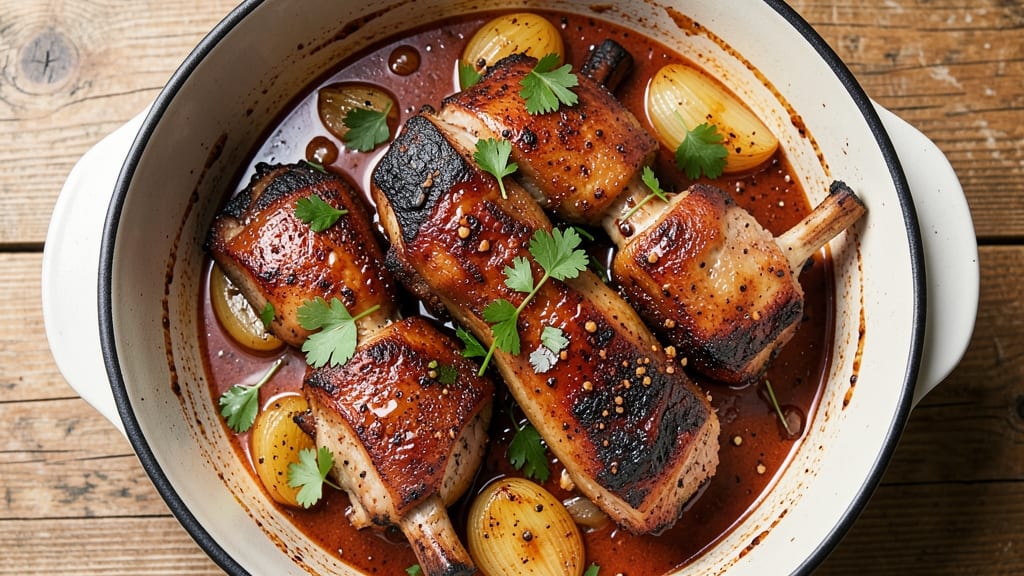
This braised smoked pork shank recipe delivers melt-in-your-mouth tenderness with a celery crown crunch that elevates every bite. I perfected this technique after years of smoking 2,000 pounds of pork weekly at my Atlanta pit—where slow-smoking meets deep-braising for restaurant-quality results at home.
The key? A perfect balance of smoky char from the grill and rich, caramelized braising liquid that transforms tough shanks into fork-tender perfection.
Start with a dry rub of smoked paprika, brown sugar, and black pepper—let the shanks sit overnight so the flavors penetrate deeply. Smoke them at 225°F using hickory or applewood until the bark forms (about 3 hours), then transfer to a Dutch oven for braising.
The celery crown—crispy fried celery stalks—adds a textural contrast that makes this dish unforgettable.
After braising in a rich broth with aromatics like onions, garlic, and thyme, the pork will practically fall apart. The result is a dish that’s equally impressive for weeknight dinners or holiday feasts—deeply flavorful, tender, and packed with that satisfying crunch from the celery crown.
Serve with mashed potatoes or crusty bread to soak up every last bit of that smoky, braised goodness.
This method works whether you’re using a traditional smoker, oven, or even an air fryer for finishing. The technique is foolproof, but the reward is a dish that tastes like it’s been simmering all day—even if you’re short on time. Let’s get cooking.
Ingredients for braised smoked pork shank
Four pounds of pork, a smoker, and a Dutch oven—this is where deep flavor meets smoky magic.
| Ingredient | Amount | Notes |
|---|---|---|
| Pork Shanks 🥩 | 2 lb | Bone-in, 1.5-2 inches thick |
| Smoked Paprika 🌶️ | 2 tbsp | High-quality for smoky depth |
| Brown Sugar 🍚 | 2 tbsp | Light or dark variety |
| Ground Black Pepper 🌶️ | 1 tbsp | Freshly cracked preferred |
| Kosher Salt 🧂 | 1 tbsp | Diamond Crystal preferred |
| Yellow Onions 🧅 | 2 whole | Yellow or red, diced |
| Garlic Cloves 🧄 | 6 cloves | Peeled, smashed slightly |
| Fresh Thyme 🌿 | ½ cup | Stems removed, chopped |
| Celery Stalks 🥬 | 4 whole | For celery crown, cut into 1-inch pieces |
| Beef Broth 🍲 | 4 cups | Homemade or high-quality store-bought |
| Apple Cider Vinegar 🍏 | 2 tbsp | For tangy brightness |
| Honey 🍯 | 1 tbsp | For balancing sweetness |
| Vegetable Oil 🫒 | ½ cup | For frying celery crown |
| All-Purpose Flour 🌾 | ½ cup | For dredging celery |
The pork shanks are the star, so bone-in cuts are a must—they hold up better to long cooking and add flavor to the broth. Look for shanks with good marbling at Kroger's meat counter or your local butcher. If you can't find bone-in, bone-out works too, but the texture won't be quite the same. The smoked paprika? Penzeys brand if you want to splurge, but the regular grocery store stuff is fine—just make sure it's labeled 'smoked.' The celery crown is what makes this dish pop, so grab the freshest stalks you can find—Trader Joe's usually has great organic options.
No smoked paprika? Substitute 1 tbsp regular paprika plus 1 tsp liquid smoke. Running low on thyme? Dried thyme at one-third the amount works in a pinch. The beef broth can be swapped for vegetable broth plus 1 cup beef bouillon, but you'll lose some depth. For the celery crown, if you're short on time, skip the frying and just roast the celery with olive oil and salt at 400°F for 20 minutes. The honey in the braising liquid? Maple syrup works too, but honey adds that subtle floral note that pairs perfectly with the smokiness.
The shanks keep in the fridge for 3-4 days before smoking—just pat them dry and let them sit at room temp for 30 minutes before applying the rub. The celery crown stays crispy for 2 days if stored in an airtight container, but honestly, it's best eaten fresh. The braised pork reheats beautifully—350°F for 20 minutes with a splash of broth keeps it moist. I always double the recipe and freeze half for lazy weeknights. The leftovers taste even better the next day as the flavors meld.
Why You'll Love This Recipe
- Deep, Smoky Magic: That smoked paprika and slow braise? It turns tough pork into something so tender and rich, it’s like biting into a melt-in-your-mouth cloud—no fancy techniques, just pure flavor.
- Leftovers That Win: Between us, this dish begs to be made extra. The next day, those shanks are even better—perfect for sandwiches, tacos, or just reheated with crusty bread. (Yes, I’ve eaten it cold.)
- Budget Meal That Feeds: Pork shanks are cheaper than chicken thighs, and this recipe stretches them into three meals without breaking the bank. Honestly, it’s my go-to when I need to feed a crowd without stressing.
Step-by-step instructions for braised smoked pork shanks
Here's how to transform tough pork shanks into fall-apart tender, smoky perfection with that signature celery crown crunch.
Prepare the Pork Shanks for Smoking
Pat the 2 lb pork shanks dry with paper towels—this is crucial for that crispy bark. In a small bowl, mix together the 2 tbsp smoked paprika, 2 tbsp brown sugar, 1 tbsp ground black pepper, and 1 tbsp kosher salt. Rub this mixture all over the shanks, pressing it into the meat so it adheres well. Let them sit at room temperature for 30 minutes while you prep the rest.
Here's the thing—smoking bone-in shanks takes patience, but those bones release collagen that turns into silky sauce. I like to place the shanks fat-side up in the smoker so the fat renders slowly, basting the meat as it cooks. Preheat your smoker to 225°F using hickory or apple wood chips—these woods complement the pork beautifully.
Smoke the Shanks Until Fork-Tender
Put the seasoned shanks in the smoker and smoke them for 4-5 hours, maintaining that 225°F temperature. The key here is low and slow—this breaks down the connective tissue without drying out the meat. Every hour, spray them lightly with apple cider vinegar (I use a spray bottle) to keep the surface moist and enhance bark formation.
You'll know they're ready when the internal temperature hits 195°F and a fork slides in like butter. The meat should look dark mahogany with a glossy sheen from the rendered fat. If you cut into one, it should look like pulled pork—no resistance, just tender strands. Remove the shanks from the smoker and let them rest for 15 minutes before braising.
Create the Celery Crown for Crunchy Contrast
While the shanks rest, make the celery crown—the star of this dish. Cut the 4 whole celery stalks into 1-inch pieces, keeping the leaves attached to form little crowns. In a medium bowl, toss the celery with 0.5 cup all-purpose flour, then shake off any excess. Heat 0.5 cup vegetable oil in a large skillet over medium-high heat until it shimmers.
Fry the celery in batches for 2-3 minutes until golden brown and crispy. Drain on paper towels and sprinkle with a pinch of salt while still hot. These crispy crowns add texture that cuts through the rich braising liquid. Keep them warm in a 200°F oven while you finish the braise.
Braise the Shanks in Flavorful Liquid
In a large Dutch oven, combine the 2 whole yellow onions (diced), 6 cloves garlic (smashed), and 0.5 cup fresh thyme. Sear them over medium heat for 5 minutes until fragrant. Add the rested shanks to the pot along with 4 cups beef broth, 2 tbsp apple cider vinegar, and 1 tbsp honey. Bring to a simmer, then reduce heat to low and cover partially.
Braise for 2-3 hours, checking occasionally to ensure there's enough liquid. If it reduces too much, add a splash of water or broth. The shanks are done when they're fork-tender and the sauce has thickened to a glossy consistency. Here's a pro tip: The longer you braise, the more gelatinous the sauce becomes—this is where all that collagen magic happens.
Finish and Serve with Celery Crown
Once the shanks are tender, remove them from the braising liquid and shred them using two forks. Return the shredded pork to the pot and stir to coat in the sauce. Taste and adjust seasoning—you might need a little more salt or vinegar to balance the flavors. Serve the pork shanks family-style in a deep dish, topped with the crispy celery crowns scattered on top.
Each bite delivers that smoky depth from the paprika and wood, the sweet-savory balance from the vinegar and honey, and that satisfying crunch from the celery crown. The sauce should cling to every strand of pork, making every forkful a rich, flavorful experience. Leftovers? Even better the next day as the flavors meld further.
Pro Tips For Making Braised Smoked Pork Shank
- SEAR THE SHANKS FIRST: After browning the pork shanks in the pot, I learned the hard way that skipping this step means flavorless braising liquid. Use a heavy pot—cast iron or Dutch oven—and cook the shanks over medium-high heat until deep brown, about 8-10 minutes per side. The Maillard reaction here is non-negotiable for that rich, smoky depth.
- SALT THE SHANKS BEFORE SEARING: Generously coat the shanks with kosher salt (about 1 teaspoon per shank) at least 30 minutes before cooking. This ensures the salt penetrates the meat and creates a better crust when searing. I used to salt after browning, and the flavor never felt as bold.
- LOW AND SLOW ISN’T SLOW ENOUGH: Once the shanks are in the braising liquid, crank the heat to high for 5 minutes to blister the edges of the smoked paprika and brown sugar mixture. Then drop to a simmer—this caramelizes the sugars and deepens the flavor. Too low too soon, and you’ll end up with a watery sauce.
- SKIP THE BOILING PHASE: After adding the liquid, resist the urge to bring it to a full boil. Instead, let it come to a gentle simmer—tiny bubbles, occasional swirls. Boiling can make the meat tough, and this braise is all about tenderizing, not shocking the protein. I’ve ruined a few batches by rushing this step.
Troubleshooting great braised smoked pork shank
Smoker Temp Issues
If your smoker struggles to hold 225°F, don’t panic—this is common with electric smokers or cold mornings. I’ve found that wrapping the smoker in a towel (not foil) helps retain heat, especially in damp conditions.
For charcoal smokers, add extra lump charcoal every hour to maintain temperature. If your thermometer reads 200°F instead of 225°F, adjust by opening the vents slightly or adding more fuel. 🌡️
Pro tip: Invest in a digital thermometer like the Traeger Pellet Grill Thermometer—it’s accurate to within ±2°F and alerts you if temps drift. I keep one permanently installed in my smoker to avoid guessing games.
For stubborn temperature swings, try preheating for 30 minutes before adding the meat to stabilize the environment.
Bark Formation Problems
If your pork isn’t developing that prized dark bark, you’re likely dealing with moisture issues. The key is a dry surface—pat those shanks extra dry with paper towels, then let them sit uncovered in the fridge for 15 minutes before smoking.
For extra insurance, sprinkle with 1 tsp cornstarch before applying the rub, which helps create a crust.
Another trick? Spray with apple cider vinegar every hour during smoking—this enhances bark formation while keeping the meat moist. If your smoker feels too humid (common with pellet smokers), crack the lid slightly for 10 minutes mid-cook to let steam escape.
The bark should be dark mahogany when done—like a fine leather.
Tough or Dry Shanks
Overcooking is the #1 cause of dry pork shanks, but it’s easily prevented. Use a meat thermometer and remove the shanks when they hit 195°F internal temp, not 203°F (a common mistake). The last 10°F can turn tender meat into rubber.
For extra insurance, braise immediately after smoking—don’t let the shanks sit at room temperature. If they’ve already dried out, try recovering them by simmering in 1 cup beef broth + 1 tbsp honey for 30 minutes on low heat.
This adds moisture without overcooking. Remember: Low and slow is your friend—rushing ruins the texture.
Celery Crown Failures
If your celery crown turns out soggy instead of crispy, you likely fried it at too low a temperature. Heat your oil until it shimmers (around 350°F) and fry in small batches—overcrowding drops the oil temp. Drain on a wire rack (not paper towels) to preserve crispness.
For extra crunch, double-dredge the celery: Toss in flour, shake off excess, then dip in beaten egg, and coat in flour again before frying. Store finished crowns in a 200°F oven with a silica gel packet to absorb moisture.
If you’re short on time, air-fry at 400°F for 8 minutes—it’s foolproof and still delicious.
Braising Liquid Too Thin
A watery braising liquid usually means the pot wasn’t partially covered or the heat was too high. Always use a heavy Dutch oven (I love Le Creuset) and keep the lid slightly ajar to allow steam to escape.
If the liquid reduces too quickly, add ¼ cup cold water every 30 minutes—this prevents scorching.
For extra richness, deglaze the Dutch oven after removing the pork with 2 tbsp apple cider vinegar + 1 tbsp honey, then whisk in 1 tbsp cornstarch to thicken.
The sauce should coat the back of a spoon—this is the sign of a perfect braise. If it’s still thin, simmer uncovered for 5-10 minutes** to reduce further.
Nutrition facts
Frequently asked questions
Can I use bone-in or bone-out pork shanks for this recipe?
Bone-in shanks are ideal—they hold up better during smoking and braising, plus the bones add incredible depth to the braising liquid. If you only find bone-out, it'll still work, but the texture won't be quite as rich. For best results, look for shanks with good marbling at your local butcher or specialty meat counter.
How do I know when the pork shanks are fully smoked?
Use a meat thermometer to check for 195°F internal temperature—that's when they'll be fork-tender. The bark should be dark mahogany with a glossy sheen from rendered fat. If you cut into one, it should look like pulled pork with no resistance. Never go past 203°F or they'll dry out.
Can I make this recipe without a smoker?
For the smoking step, you can use your oven at 225°F with a water pan for moisture. Place the shanks on a rack over a baking sheet, cover tightly with foil, and smoke for 4-5 hours. Alternatively, use a grill with indirect heat and wood chips for a similar effect. The braising portion works the same either way.
What's the best way to store leftovers?
Store the pork shanks in an airtight container with some of the braising liquid, and keep the celery crowns separately. They'll stay fresh in the fridge for 3-4 days. For longer storage, freeze the pork (up to 3 months) and reheat with a splash of broth. The celery crowns lose crispness when frozen, so eat those fresh.
How can I make this vegetarian?
Swap the pork shanks for portobello mushrooms or hearty seitan cut into shank-like pieces. Use the same smoking method (if available) or roast them first. For the braising liquid, add 1 tbsp soy sauce and 1 tsp liquid smoke to mimic the pork's depth. The celery crown works perfectly with either protein!