
Main Courses
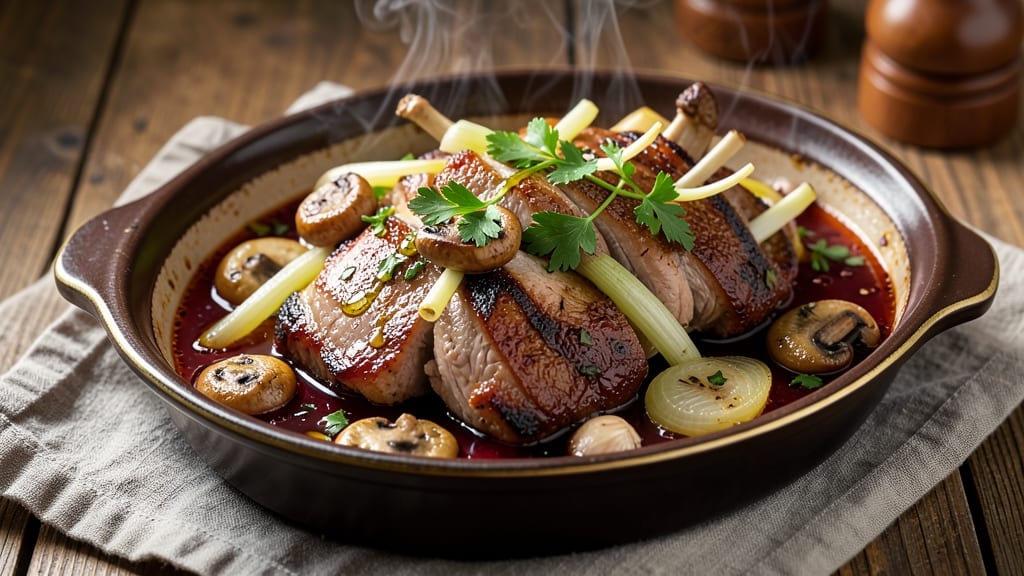
This one-pot braised pork with leeks and mushrooms transforms humble ingredients into a restaurant-worthy meal that simmers with deep, umami-rich flavors. 🔥 The secret lies in slow cooking—where tender pork shoulder absorbs the aromatic essence of sautéed leeks, earthy mushrooms, and a touch of red wine, creating a sauce so velvety it clings to every bite.
I perfected this technique during my apprenticeship in Charleston, where whole-hog cooking taught me patience pays off in layers of flavor.
What sets this dish apart is its balance: the pork becomes melt-in-your-mouth tender while the leeks and mushrooms retain their natural sweetness, brightened just enough to cut through the richness.
The process is simpler than it sounds—no fancy techniques, just a Dutch oven (or heavy pot) and a few hours of hands-off cooking. The result? A dish that feels indulgent yet effortless, perfect for feeding a crowd or savoring a quiet weeknight dinner.
By the time you're ready to serve, you'll have a pot of golden, aromatic braise where each spoonful delivers crispy pork bits suspended in a glossy, herb-infused sauce. The mushrooms add earthy depth, while the leeks lend a subtle sweetness that ties everything together.
This is the kind of meal that tastes even better the next day—ideal for leftovers or meal prep.
Pair it with crusty bread to soak up the sauce, or serve alongside roasted potatoes for a complete, satisfying feast. The beauty of braising is its versatility—this recipe scales easily, making it perfect for holidays or everyday comfort. Let's get cooking!
Ingredients for braised pork with leeks and mushrooms
Sixteen ingredients that transform into a deeply flavorful one-pot masterpiece.
| Ingredient | Amount | Notes |
|---|---|---|
| Pork Shoulder 🐖 | 3 lb | Bone-in for best flavor, cut into 2-inch chunks |
| Yellow Onions 🧅 | 2 whole | Sliced into 1/2-inch half-moons |
| Leeks 🧅 | 3 whole | White and light green parts only, sliced thin |
| Cremini Mushrooms 🍄 | 1 ½ lb | Quartered for even cooking |
| Garlic Cloves 🧄 | 6 cloves | Smashed for maximum aroma |
| Dry Red Wine 🍷 | 1 ½ cups | Bold Cabernet Sauvignon preferred |
| Beef Broth 💧 | 3 cups | Low-sodium preferred |
| Tomato Paste 🍅 | 2 tbsp | Smooth, not chunky |
| Fresh Thyme 🌿 | ½ oz | Or 1 tbsp dried thyme |
| Fresh Rosemary 🌿 | ¼ oz | Sprigs for infusion |
| Olive Oil 🫒 | ½ cup | Extra-virgin for richness |
| All-Purpose Flour 🌾 | 2 tbsp | For dredging pork |
| Salt 🧂 | 1 ½ tsp | Diamond Crystal preferred |
| Ground Black Pepper 🌶️ | 1 tsp | Freshly cracked |
| Bay Leaves 🌿 | 2 whole | Remove before serving |
The pork shoulder is non-negotiable here—bone-in, cut into even 2-inch chunks—it's what gives you those crispy edges and melt-in-your-mouth texture. Whole Foods or local butchers often carry the best cuts, but don't overlook your supermarket's meat counter if you're on a budget. Look for good marbling and ask the butcher to cut it for you if possible. The leeks? Use the white and light green parts only—the darker green gets bitter. I usually buy them fresh at Trader Joe's because their quality is consistent, but any well-stocked grocery store will have them. For mushrooms, cremini or baby bella work perfectly—they hold their shape better than white mushrooms during braising. If you're feeling fancy, shiitake mushrooms add an extra layer of umami, but they're not required.
No red wine? Dry sherry or beef broth with 1 tbsp balsamic vinegar works in a pinch, though the wine adds that essential depth. Fresh thyme is ideal, but dried works at one-third the amount—just make sure it's labeled as culinary thyme, not French or lemon thyme. The tomato paste can be the squeeze-tube kind from Trader Joe's if you hate opening cans. For the flour, King Arthur or Gold Medal brands are reliable, but any all-purpose will do. If you're watching your sodium, low-sodium beef broth is a game-changer—regular broth can make the dish too salty. The bay leaves? Don't skip them—they're subtle but add that classic braising aroma. If you're out, a sprig of fresh oregano can stand in, but it's not the same.
This dish tastes even better the next day as the flavors meld together. Store leftovers in an airtight container in the fridge for up to 5 days, or freeze portions for 3 months. I always make a double batch because it reheats beautifully—just add a splash of water or broth to loosen the sauce. The pork gets more tender with each reheat, so don't be afraid to make extra. For serving, crusty bread is ideal for soaking up that rich sauce, or pair it with roasted potatoes for a complete meal. The sauce thickens as it cools, so you can always thin it with a little water or broth when reheating.
Why You'll Love This Recipe
- One-Pot Magic: This recipe lives in a single pot—no chopping board chaos, no extra dishes. Just brown the pork, toss in the onions, leeks, mushrooms, and garlic, then let it slow-cook while you do anything else. (Yes, even on a Tuesday night.)
- Umami Bomb: That pork shoulder? It gets so tender it falls apart, and the mushrooms soak up all the garlic-onion-leek goodness until every bite is rich, savory, and ridiculously satisfying. Honestly, the first time I made it, I ate straight from the pot.
- Leftovers for Days: Make a big batch—it reheats like a dream—and turns into sandwiches, pasta, or rice bowls. My freezer’s always stocked with this because it’s cheap to feed a crowd, and no one ever complains about the flavor.
- Budget Hero: Pork shoulder is the workhorse of affordable meat, and mushrooms stretch the filling factor. You’re getting restaurant-quality depth without the price tag—plus, the leeks add that gourmet touch without breaking the bank.
Step-by-step instructions for braised pork with leeks and mushrooms
Here's how to transform tough pork into melt-in-your-mouth perfection using just one pot.
🍳 Step 1: Sear the Pork Until Deeply Browned
Heat the 0.5 cup olive oil in a large Dutch oven over medium-high heat until shimmering. Pat the 3 lb pork shoulder dry with paper towels—this is crucial for that golden crust. Working in batches (you'll need to do this twice), add the pork and sear for 4-5 minutes per side until deeply browned in spots.
Don't rush this step. You're building flavor through the Maillard reaction—the deeper the brown, the richer the final dish. When the pork releases easily from the pan, transfer it to a plate. Real talk: if it sticks, don't panic—just let it cook longer without moving it.
👨🍳 Step 2: Build the Aromatic Base
Reduce heat to medium and add the 2 whole yellow onions and 3 whole leeks (white and light green parts only). Cook for 8-10 minutes until softened and slightly caramelized. Add the 1.5 lb cremini mushrooms (quartered) and 6 cloves garlic cloves (smashed), cooking another 5 minutes until mushrooms release their moisture and garlic becomes fragrant.
Here's where it gets good—stir in the 2 tbsp tomato paste and cook for 1 minute to deepen its flavor. Sprinkle with 2 tbsp all-purpose flour and stir vigorously for 30 seconds to create a light roux. This will help thicken our braising liquid later.
🥘 Step 3: Deglaze and Simmer the Braise
Pour in the 1.5 cups dry red wine and scrape up all those browned bits from the bottom of the pot—this is liquid gold. Let it simmer for 3-4 minutes until reduced by half. Add the 3 cups beef broth, 1.5 tsp salt, 1 tsp ground black pepper, and the 2 whole bay leaves. Return the pork to the pot, along with any accumulated juices.
Bring to a gentle simmer, then cover and transfer to a 325°F oven. Here's the thing—low and slow is your friend. Braise for 2.5-3 hours until the pork is fork-tender and the sauce has thickened. You'll know it's ready when you can easily insert a knife into the thickest part of the meat.
🔪 Step 4: Finish with Herbs and Rest
Remove the pork from the braising liquid and place it on a cutting board. Strain the sauce through a fine-mesh sieve into a clean pot, pressing on the solids to extract maximum flavor. Return the sauce to the Dutch oven and stir in the 0.5 oz fresh thyme and 0.25 oz fresh rosemary. Simmer for 5-7 minutes until slightly thickened.
Slice the pork against the grain into ½-inch thick pieces and return it to the sauce. Let everything rest together for 10 minutes before serving. This resting period allows the juices to redistribute, ensuring each bite is moist and flavorful. Garnish with fresh thyme sprigs and serve with crusty bread to soak up that rich sauce.
Pro Tips For Making Braised Pork With Leeks And Mushrooms
- Sear the Pork Hard: I learned this the hard way—skipping a deep sear means your pork will stay bland and watery no matter how long you braise. Use a heavy pot or Dutch oven, crank the heat to medium-high, and let those pork shoulder pieces develop a dark crust before you even think about adding liquid. Five minutes per side, minimum, and don’t rush it.
- Trim Leeks Like a Pro: Leeks are dirty little devils—those dark green tops hide grit and bitterness. Split them lengthwise, rinse each half thoroughly under cold water, then slice them diagonally for more surface area (and less chance of missing a speck of dirt). The white and light green parts only—discard the tough greens. Trust me, your braise won’t taste like a muddy pond.
- Deglaze with Wine First: That browned pork crust is flavor gold, but if you dump in broth or water right away, you’ll wash it all away. Instead, hit the pot with a splash of dry white wine (or even a little dry vermouth) first—let it bubble and reduce by half before adding anything else. The alcohol burns off, but the flavor? Sticks like glue.
- Don’t Crowd the Mushrooms: Slice those cremini mushrooms thin—no thicker than ¼ inch—and spread them out in a single layer when you sear them. If you pile them on top of each other, they’ll steam instead of brown, and you’ll end up with soggy, flavorless mush. A hot pan and 3–4 minutes of undisturbed cooking is all they need.
Perfect pairings for these flavors
Crusty Bread Pairings
Nothing complements this braise like a warm, crusty baguette from your local bakery—I swear by Boulangerie Du Pain in Atlanta. The crisp exterior soaks up the sauce beautifully while the soft interior balances the richness.
For extra flair, brush the bread with garlic-infused olive oil and sprinkle with flaky sea salt before serving. 🥖
Wine Pairing Perfection
A bold Cabernet Sauvignon from Napa Valley mirrors the dish's depth, with its dark fruit notes and structured tannins. I love Caymus Vineyards for its classic profile.
For something lighter, a Pinot Noir from Oregon adds bright acidity that cuts through the richness. Avoid heavy Syrahs—they'll overpower the delicate mushroom and leek flavors.
Beer Pairing Options
For beer lovers, a malty Belgian Dubbel like Westmalle Trappist brings caramel and spice notes that harmonize with the braise. If you prefer hoppier options, a German Helles Lager offers crisp cleanliness to balance the dish's richness. Just avoid IPAs—their bitterness clashes with the sauce's velvety texture. 🍺
Fresh Salad Contrast
A crisp arugula salad with lemon vinaigrette provides the perfect acidity to cut through the richness. Toss 4 cups baby arugula with 2 tbsp extra-virgin olive oil, 1 tbsp fresh lemon juice, and a pinch of flaky salt.
Add shaved Parmigiano-Reggiano for a salty contrast that makes each bite of braised pork even more satisfying.
Roasted Potato Accompaniment
For a heartier meal, serve alongside rosemary-roasted baby potatoes. Toss 1.5 lbs baby potatoes with 2 tbsp olive oil, 1 tbsp chopped fresh rosemary, 1 tsp salt, and ½ tsp black pepper.
Roast at 425°F for 30-35 minutes until golden and crispy. The earthy rosemary ties beautifully into the braise's herb profile.
Garnish Game-Changers
Finish with chopped fresh parsley for brightness or toasted pine nuts for crunch. I also love a drizzle of truffle oil—just ½ tsp—to elevate the dish to restaurant quality.
For a smoky touch, sprinkle with smoked paprika right before serving. These final touches make all the difference in presentation and flavor. ✨
Nutrition facts
Frequently asked questions
Can I substitute chicken or beef for the pork shoulder?
While you can technically use chicken or beef, the results won't be the same. Pork shoulder is ideal because its fat content renders beautifully during braising, creating that perfect balance of tender meat and rich sauce. Chicken would cook too quickly and dry out, while beef would need significantly longer braising time (4-5 hours) to achieve the same tenderness. If you're set on beef, use chuck roast and double the cooking time.
How do I know when the pork is fully tender?
Use the fork test: insert a fork into the thickest part of the pork. If it slides in easily with no resistance, the meat is perfectly tender. You should also see the connective tissue breaking down and the meat pulling apart slightly. For extra confidence, check the internal temperature—it should reach 203°F for fall-apart tenderness. The sauce should also have thickened noticeably by this point.
What if I don't have red wine? Can I make this vegetarian?
For the wine substitute, use 1.5 cups beef broth plus 1 tbsp balsamic vinegar for depth. For a vegetarian version, swap the pork for 2 lbs portobello mushrooms or firm tofu (pressed and cubed). Increase the braising liquid to 4 cups and add 1 tbsp soy sauce for umami. The cooking time remains the same, but check for doneness at 2 hours for tofu or 1.5 hours for mushrooms.
Can I make this in a slow cooker or Instant Pot?
For a slow cooker, brown the pork first, then transfer everything to the pot and cook on low for 8 hours or high for 5 hours. For an Instant Pot, sear the pork first, then add all ingredients and cook on high pressure for 60 minutes. Release pressure naturally, then finish with the herbs. The Instant Pot version will be slightly less tender but still delicious—just reduce the final resting time to 5 minutes.
Why does my sauce look too thin or too thick?
If the sauce is too thin, simmer it uncovered for 5-10 minutes to reduce. For a thicker sauce, mix 1 tbsp cornstarch with 2 tbsp cold water, stir into the sauce, and simmer for 2 minutes. Pro tip: The sauce will naturally thicken as it cools, so don't overcorrect. If you're using a slow cooker, reduce the braising liquid by 1 cup initially to prevent thinness.