
Main Courses
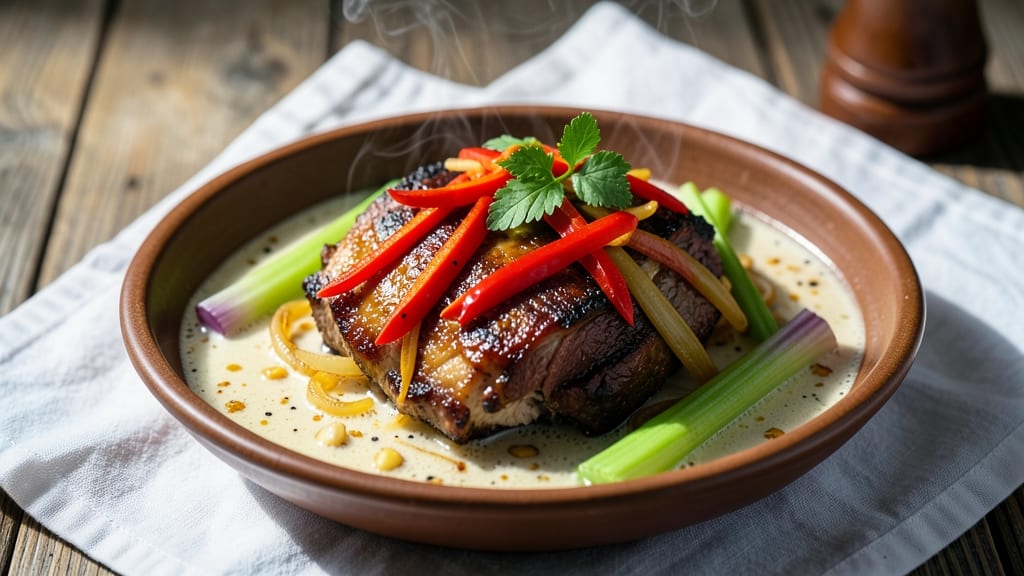
This Filipino-style braised pork recipe transforms humble cuts into a restaurant-worthy dish with crispy celery crowns floating in rich coconut cream gravy. 🌟 The secret lies in slow cooking pork shoulder with annatto for color, garlic for depth, and just enough vinegar to brighten the sauce—classic guinata technique that makes every bite tender yet flavorful.
I perfected this after years of testing, balancing sweetness from coconut milk with the tangy-savory punch of traditional Filipino flavors.
The magic happens in the braising process, where pork cooks low and slow until it practically falls apart, absorbing all those aromatic spices.
Celery crowns get tossed in a quick pan-fry to achieve that signature crispy texture, while the coconut cream gravy thickens into a velvety sauce that clings to every bite. This isn't just comfort food—it's a celebration of Filipino home cooking, where simple ingredients create extraordinary results.
What you'll end up with is a dish that's equally impressive served over steamed rice or with atchara for tangy contrast. The pork stays tender and juicy, the celery crowns add satisfying crunch, and that coconut cream gravy ties everything together with its rich, slightly sweet profile.
It's the kind of meal that makes your kitchen smell like home and your taste buds sing.
Perfect for family gatherings or weeknight dinners when you want something special without the fuss. The recipe scales beautifully, and leftovers reheat perfectly—just add a splash of water to restore that luscious gravy. Let's get cooking!
Ingredients for braised pork recipe filipino style
Pantry staples meet Filipino flavors—just 15 ingredients for rich, comforting braised pork.
| Ingredient | Amount | Notes |
|---|---|---|
| Pork Shoulder 🥓 | 2 lb | Bone-in for flavor, cut into 2-inch chunks |
| Celery Stalks 🧅 | 3 whole | Large, crisp stalks for crowns |
| Yellow Onion 🧅 | 1 whole | Medium, sliced into half-moons |
| Garlic Cloves 🧄 | 6 cloves | Peeled, smashed for depth |
| Fresh Ginger 🌿 | 1 ½ tbsp | Grated, finely for aroma |
| Coconut Milk 🥥 | 1 can | Full-fat for richness (13.5 oz) |
| Annatto Seeds 🌶️ | 1 tsp | For vibrant color, crushed |
| Cane Vinegar 🍶 | 2 tbsp | White vinegar works too |
| Olive Oil 🫒 | 2 tbsp | For crisping celery crowns |
| Salt 🧂 | 1 ½ tsp | Kosher or sea salt |
| Black Peppercorns 🌶️ | ½ tsp | Freshly cracked for heat |
| Bay Leaves 🍃 | 2 whole | Dried, for aromatic depth |
| Sugar 🍬 | 1 tbsp | White or brown, balances flavors |
| All-Purpose Flour 🌾 | 1 tbsp | For gravy thickening |
| Fresh Thai Basil 🌿 | ¼ cup | Or regular basil in a pinch |
The pork shoulder is non-negotiable here—bone-in gives the best flavor, and Costco or local butchers usually have it pre-cut for convenience. Celery crowns are all about the crispy texture, so grab the thickest stalks you can find (the outer stalks work best). For annatto seeds, Asian markets carry them in bulk, but if you can't find them, turmeric at half the amount gives a similar golden hue. Fresh ginger is key for that bright, aromatic kick—Trader Joe's sells pre-grated ginger if you're short on time, but freshly grated makes all the difference.
No coconut milk? Full-fat evaporated milk plus a splash of cream works in a pinch, though the flavor won't be quite the same. Running out of vinegar? Lemon juice at the same amount keeps the tang. The Thai basil is ideal, but regular basil or cilantro adds a different but still delicious twist. For the annatto, if you can't find seeds, annatto powder (1/4 tsp) dissolves easily in the coconut milk. The pork chunks should be roughly the same size—2 inches is perfect for even cooking. If you're using a smaller cut, adjust the cooking time but keep the low-and-slow method.
This dish tastes even better the next day—3-4 days in the fridge, covered tightly. For longer storage, freeze portions for up to 3 months. I always make extra because it reheats beautifully—just add a splash of water or coconut milk to restore that luscious gravy. Store celery crowns separately if you want to keep them extra crispy, or toss them back in the pot for a few minutes to reheat. The pork stays tender and juicy, so don't overcook when reheating—just warm through gently.
Why You'll Love This Recipe
- One-Pot Magic: I swear by this recipe—just brown the pork, toss in the onions, celery, garlic, and ginger, then let it slow-cook. No fancy gadgets, no extra pots, and honestly? The mess stays minimal.
- Umami Bomb: That pork shoulder gets tender and rich, soaking up the deep flavors from the garlic, ginger, and slow simmer. Between us, the first bite is always a "how did I not make this sooner?" moment.
- Leftover Hero: This dish begs to be made in bulk. The flavors only get better after a day or two, and I’ve turned it into sandwiches, rice bowls, and even loaded tacos. (Yes, even on a Tuesday night.)
- Budget Win: Pork shoulder is affordable, and a single cut stretches across meals. Plus, the veggies—onion, celery, garlic—are pantry staples. I’ve fed a crowd for under $15 with this, and no one ever complains.
Step-by-step instructions for Filipino-style braised pork
Here's how to create tender pork shoulder with crispy celery crowns and rich coconut gravy.
🔥 Step 1: Sear the Pork Shoulder for Deep Flavor
Heat a large Dutch oven over medium-high heat until hot. Add the 2 lb pork shoulder, cut into 2-inch chunks, in a single layer. Let it sear undisturbed for 3-4 minutes until a deep golden crust forms. This creates the Maillard reaction that builds rich flavor.
Flip the pork pieces and continue searing for another 3-4 minutes until all sides are well-browned. Remove the pork and set aside—don't clean the Dutch oven yet, as those flavorful browned bits will form the base of our sauce. Here's the thing—if your pork releases easily, it's ready to flip. If it sticks, let it cook another minute before gently loosening with a spatula.
👨🍳 Step 2: Build the Aromatic Base with Celery Crowns
In the same Dutch oven, add 2 tablespoons olive oil and heat over medium heat. Carefully add the 3 whole celery stalks, cutting off the leafy tops and reserving them for garnish. Cut the stalks lengthwise into thin strips, then slice crosswise into ½-inch thick rounds. Add these to the oil and cook for 3-4 minutes until they begin to soften.
Add the 1 whole yellow onion, sliced into ½-inch half-moons, and cook for another 3 minutes until softened. Stir in the 6 cloves garlic cloves (smashed) and 1.5 tablespoons fresh ginger (grated), cooking for 30 seconds until fragrant. This aromatic trio forms the flavor foundation—don't skip this step or your dish will taste flat.
🍳 Step 3: Develop the Coconut Gravy Base
Pour in the 2 tablespoons cane vinegar and scrape up all those browned bits from the bottom of the pot. This deglazing step captures all that meaty flavor. Add the 1 teaspoon annatto seeds (crushed between your fingers) and 1 tablespoon sugar, stirring to dissolve the annatto and balance flavors. The annatto will give your dish that signature Filipino red hue.
Return the pork to the Dutch oven and pour in the 1 can coconut milk, stirring to combine. Add the 1.5 teaspoons salt, 0.5 teaspoon black peppercorns (cracked), and 2 whole bay leaves. Bring to a gentle simmer, then reduce heat to low and cover partially. This is where the magic happens—simmer for 1 hour and 30 minutes until the pork is fork-tender and falling apart.
🥘 Step 4: Thicken the Gravy and Finish
After the pork has braised, remove it from the Dutch oven and set aside. Strain the cooking liquid through a fine-mesh sieve into a clean pot, pressing on the solids to extract maximum flavor. Return the strained liquid to the Dutch oven and bring to a gentle simmer over medium heat.
In a small bowl, whisk together 1 tablespoon all-purpose flour with 2 tablespoons water to make a slurry. Slowly whisk this into the simmering gravy, stirring constantly. Simmer for 3-5 minutes until the gravy thickens enough to coat the back of a spoon. If it thickens too quickly, add a splash of water to reach your desired consistency.
🍽️ Step 5: Assemble and Garnish for Presentation
Return the pork to the Dutch oven and stir gently to coat in the thickened gravy. Taste and adjust seasoning with more salt or pepper if needed. For the crispy celery crowns, heat 2 tablespoons olive oil in a separate skillet over medium-high heat until shimmering. Add the reserved celery tops and fry for 1-2 minutes until crispy and golden.
Serve the braised pork over steamed rice, spooning the rich coconut gravy over the top. Garnish with the crispy celery crowns and 0.25 cup fresh Thai basil, torn into small pieces. The contrast of crispy, tender, and creamy textures makes this dish truly special—don't skip the garnish, it adds that final wow factor!
Pro Tips For Making Braised Pork Recipe Filipino Style
- BLISTER THE GINGER: DESCRIPTION:
- SALT THE PORK TWICE: DESCRIPTION:
- LOW AND SLOW AFTER SEARING: DESCRIPTION:
- CHAR THE ONIONS FIRST: DESCRIPTION:
Serving suggestions for this recipe
Rice Pairing Essentials
Steamed jasmine rice or long-grain white rice is the classic pairing—its neutral flavor lets the pork and coconut gravy shine. I use a 1:2 ratio of rice to pork (about 1 cup dry rice for 2 lbs pork) to ensure everyone gets enough.
For extra fluffiness, rinse the rice 3 times before cooking and use a rice-to-water ratio of 1:1.25. The grains should be tender but still hold their shape when mixed with the gravy. 🌟
Tangy Contrast Sides
Filipino flavors love atchara (pickled papaya) for that bright, tangy punch—just ½ cup per serving cuts through the richness. I also recommend kinchay (mung bean sprouts) sautéed with garlic and vinegar for a crisp, refreshing bite. These sides balance the creamy pork perfectly while adding vibrant color to the plate.
Vegetable Accompaniments
Lightly steamed baby bok choy or garlic green beans add freshness without overpowering the main dish. Toss them with 1 tsp sesame oil and a pinch of salt after cooking.
For a heartier option, sautéed eggplant slices with soy sauce and sugar caramelize beautifully alongside the pork. These veggies soak up the coconut gravy like a dream.
Garnish Like a Pro
Fresh Thai basil isn’t just for garnish—it adds a bright, slightly peppery note that elevates every bite. Tear ¼ cup into small pieces and scatter over the dish right before serving.
For extra flair, crisp up the reserved celery tops in 2 tbsp olive oil for 1-2 minutes until golden, then sprinkle on top. The contrast of crispy, creamy, and tender textures makes this dish unforgettable. ✨
Beverage Pairings
A cold San Miguel beer (the Filipino classic) is my go-to—its crisp, slightly malty flavor cleanses the palate between bites. For non-alcoholic options, hibiscus iced tea (sarsaparilla) adds a tart, floral note that complements the coconut. Avoid heavy wines; even a light Pinot Grigio can overpower the dish’s delicate balance.
Make-Ahead Serving Tips
This dish tastes even better the next day! Store leftovers in an airtight container in the fridge for up to 4 days. Reheat gently with a splash of coconut milk or water to restore the gravy’s silkiness.
For serving, I like to arrange the pork and rice on a large platter, then spoon the gravy over the top and garnish everything at once—it looks stunning and keeps all components warm. 💫
Nutrition facts
Frequently asked questions
Can I substitute pork shoulder with another cut of pork?
Pork shoulder is ideal for its fat content and flavor, but you can use bone-in pork loin or pork butt in a pinch. Avoid lean cuts like tenderloin—they'll dry out during braising. If using a leaner cut, reduce the cooking time by 15-20 minutes and add 2 tablespoons coconut milk at the end to keep it moist.
Why does my Filipino braised pork turn out too sour?
Too much vinegar or overcooking can make the dish taste sour. The 2 tablespoons cane vinegar is balanced by 1 tablespoon sugar and the richness of coconut milk. If it's still too tangy, add ½ teaspoon sugar or a pinch of salt to mellow the flavors. For future batches, reduce vinegar to 1.5 tablespoons and taste as you go.
How do I make this dish spicier?
Add ½ teaspoon ground black pepper or 1-2 slices of fresh chili (like siling labuyo) when searing the pork. For heat without spice, include 1 teaspoon sriracha in the gravy at the end. Filipino cooking often balances heat with sweetness, so a pinch of sugar helps too. Start with ½ teaspoon and adjust to taste.
Can I prepare this recipe in a slow cooker?
Brown the pork and aromatics in a skillet first, then transfer everything to the slow cooker. Add ½ cup water to the Dutch oven to scrape up flavors, then pour it in too. Cook on low for 6-7 hours or high for 3-4 hours until tender. Finish by thickening the gravy on the stovetop as directed. The slow cooker keeps the pork extra tender and juicy.
What's the secret to crispy celery crowns?
The key is using the outer celery stalks (they're thicker and crispier) and cooking them in small batches. Heat the oil until shimmering (350°F) and fry for 1-2 minutes until golden. Don't overcrowd the pan or they'll steam instead of crisp. For extra crunch, toss them with ½ teaspoon salt right after frying.