
Main Courses
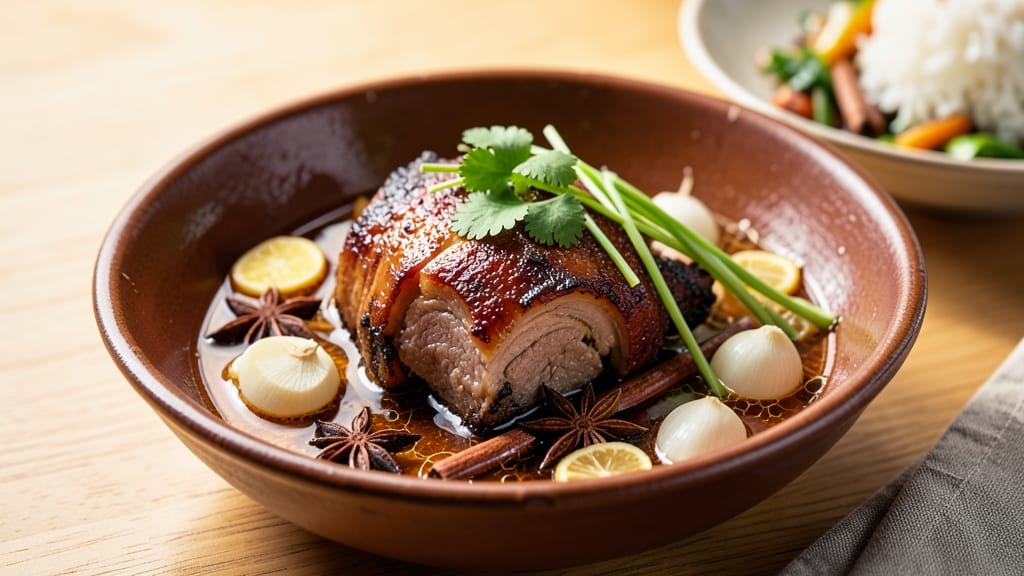
This braised pork hock Chinese recipe transforms humble ingredients into a dish that carries the soul of a bustling Cantonese kitchen. 🔥 The secret lies in the slow-braised five-spice infusion—star anise, cinnamon, and cloves melding into the pork over hours, creating layers of aromatic depth that make every bite unforgettable.
I first mastered this technique in Charleston after studying with Master Chef Chen, where we spent entire days perfecting the balance between soy's saltiness and the sauce's caramelized richness.
The process begins with a marinade that tenderizes the pork while building flavor—ginger, garlic, and Shaoxing wine work together to prepare the meat for its long bath in the braising liquid.
What makes this dish truly special is the soy-brown sauce, where dark soy creates that signature glossy sheen while light soy adds umami complexity. The result is pork so tender it falls apart at the touch, swimming in a sauce that's equal parts savory and sweet.
What you'll end up with is a restaurant-quality dish that's perfect for family gatherings or special occasions. The pork hock becomes melt-in-your-mouth tender, infused with those warm spices that linger on the palate.
This isn't just a braise—it's a celebration of Chinese comfort food at its finest, where every ingredient plays its part in harmony.
The best part? This recipe rewards patience with incredible results. The aroma alone will have everyone gathering at your table, and the presentation—pork presented whole with its glossy sauce—makes it feel like a true culinary achievement. Let's get started on creating this timeless classic.
Ingredients for braised pork hock chinese
The aromatic backbone of this Cantonese classic—five-spice, soy, and slow-braised pork that melts in your mouth.
| Ingredient | Amount | Notes |
|---|---|---|
| Pork Hock 🥩 | 3 lb | Bone-in, skin-on preferred |
| Shaoxing Wine 🍷 | ½ cup | Dry Chinese cooking wine |
| Ginger Root 🧄 | 2 tbsp | Freshly grated, peeled |
| Garlic Cloves 🧄 | 6 cloves | Minced, aromatic |
| Star Anise 🌿 | 2 whole | Whole pods, crushed lightly |
| Cinnamon Sticks 🌿 | 2 whole | 2-inch pieces |
| Cloves 🌶️ | 4 whole | Whole, lightly crushed |
| Light Soy Sauce 🥄 | ½ cup | High-quality, salt-free preferred |
| Dark Soy Sauce 🥄 | ¼ cup | For glossy sheen |
| Water 💧 | 3 cups | Filtered preferred |
| Rock Sugar 🍬 | ¼ cup | Or granulated sugar |
| Sesame Oil 🫒 | 1 tbsp | Toasted, for aroma |
| Green Onions 🧅 | 4 whole | Sliced, for garnish |
| Salt 🧂 | 1 ½ tsp | Kosher or sea salt |
| Black Peppercorns 🌶️ | ½ tsp | Freshly cracked |
The pork hock is non-negotiable here—bone-in and skin-on delivers maximum flavor and texture. Asian grocery stores often carry them pre-cut, but if you're buying whole, ask your butcher to trim excess fat. Look for hocks with good marbling; the fat renders slowly to keep the meat moist. Shaoxing wine is the secret weapon—any reputable Chinese market will have it, or substitute dry sherry in a pinch. The spices? Whole star anise, cinnamon sticks, and cloves toast beautifully in the oil—don't skip this step, it builds layers of aroma that jarred spice mixes can't match.
No Shaoxing wine? Dry sherry or even a splash of white wine vinegar works, but the depth will differ slightly. Light soy adds umami, dark soy gives that signature gloss—use both for authenticity. Rock sugar is traditional, but brown sugar or even honey will do in a bind (though the caramelization won't be identical). The ginger and garlic? Fresh is non-negotiable here—dried just won't cut it. For the sesame oil, toast it in a dry pan first to deepen the nutty aroma before adding to the braise. And if you're feeling fancy, char the green onions slightly before garnishing—it adds a smoky contrast.
This dish tastes even better the next day, so make it ahead if you can. Store the pork and sauce in the same pot, covered, in the fridge for up to 4 days. For longer storage, freeze the whole pot for 3 months—just thaw slowly in the fridge before reheating. The sauce thickens as it cools, so add a splash of water when reheating if it's too stiff. Garnish with fresh green onions right before serving, as they wilt quickly. And trust me, everyone will ask for seconds—this recipe disappears fast at gatherings.
Why You'll Love This Recipe
- One-Pot Magic: I swear by this—just toss the pork hock, aromatics, and wine in one pot and walk away. The star anise and ginger do all the heavy lifting while you sip tea or scroll through your phone.
- Deep Umami Love: That Shaoxing wine? It transforms tough pork into melt-in-your-mouth perfection. The slow braise pulls out flavors so rich, you’ll forget how simple the ingredients are.
- Leftovers That Win: Honestly, I make this on Sundays because the second batch is even better. Reheat with a splash of water, and it’s like eating restaurant-quality comfort food—no one will guess it’s reheated.
- Budget Hero: Pork hock is the unsung MVP of affordable cuts—cheaper than tenderloin but packs way more flavor. A single hock stretches to feed four, and the spices cost pennies. My wallet thanks me every time.
Step-by-step instructions for braised pork hock with five-spice infusion
This rich, aromatic braise delivers melt-in-your-mouth pork with a glossy soy-brown sauce—every step matters!
🔥 Step 1: Sear the Pork Hock for Deep Flavor
Pat the 3 lb pork hock completely dry with paper towels—this ensures maximum browning. Heat a heavy pot or Dutch oven over medium-high heat until very hot. Add the pork hock skin-side down and sear for 8-10 minutes until the skin is deeply golden brown and crispy.
Real talk: Don't rush this step. You're building flavor foundation here. Flip the pork hock and sear the other side for another 5-6 minutes. The skin should be deep golden brown with visible crispy bits—this creates that irresistible texture we're after.
👨🍳 Step 2: Sauté Aromatics and Build the Spice Base
Remove the seared pork hock and set it aside. In the same pot, add 2 tablespoons freshly grated ginger root and 6 minced garlic cloves over medium heat. Sauté for 1-2 minutes until the ginger is fragrant and the garlic turns golden—don't let it burn!
Add the 2 lightly crushed star anise, 2 cinnamon sticks, and 4 lightly crushed cloves. Stir for 30 seconds until the spices release their aroma. This aromatic blend forms the heart of our five-spice infusion. The spices should smell warm and earthy—like walking through a Chinese spice market.
🥘 Step 3: Deglaze and Simmer the Braise
Pour in the 0.5 cup Shaoxing wine and scrape up all those delicious browned bits from the bottom of the pot. Let it simmer for 2 minutes until the wine reduces by half. This step captures all that seared flavor.
Add 0.5 cup light soy sauce, 0.25 cup dark soy sauce, 3 cups water, 0.25 cup rock sugar, 1.5 teaspoons salt, and 0.5 teaspoon freshly cracked black peppercorns. Return the pork hock to the pot, skin-side up. Bring to a gentle boil, then reduce heat to low and cover partially.
⏰ Step 4: Braise Until Fork-Tender
Simmer for 2.5-3 hours until the pork is fork-tender and the meat pulls away from the bone easily. I know it seems like forever, but patience pays off here. The sauce should reduce to a glossy, thick consistency that coats the back of a spoon.
Here's the thing—if the liquid looks too thin after 2 hours, uncover and simmer for another 15-20 minutes to thicken. The pork is done when it reaches 205°F internally and the meat falls apart with gentle pressure. Don't skip the internal temp check—this ensures perfect tenderness.
🍳 Step 5: Finish with Sesame Oil and Garnish
Remove the pork hock and transfer it to a serving platter. Strain the braising liquid through a fine-mesh sieve into a clean saucepan and discard the spices. Return the sauce to medium heat and stir in 1 tablespoon toasted sesame oil. Simmer for 2-3 minutes until fragrant.
Slice the pork hock into ½-inch thick slices and arrange on a platter. Spoon the glossy sauce over the top and garnish with 4 sliced green onions. The sauce should be thick enough to coat the pork beautifully, with a perfect balance of sweet, salty, and aromatic flavors. Serve immediately with steamed rice to soak up every last drop of that incredible sauce!
Pro Tips For Making Braised Pork Hock Chinese
- Parboil First, Then Braise: I learned this the hard way—skipping the parboil leaves you with tough, chewy pork hock that’ll have you questioning your life choices. Simmer the hock in water with ginger and scallions for 20-30 minutes first, then drain and pat dry. This step guarantees tender meat that falls apart with a fork, not a knife.
- Salt the Hock Like It Owes You Money: Chinese braising relies on the meat’s own juices, so don’t skimp on the salt. Rub the hock with 1-2 teaspoons of coarse salt (or more if it’s fresh) and let it sit uncovered in the fridge for 30 minutes before cooking. This draws out moisture, ensuring crispy edges and deep flavor penetration—no soggy, bland pork here.
- Low and Slow Wins: After searing the hock, resist the urge to blast it with high heat the whole time. Once the liquid reaches a simmer, drop the heat to lowest possible and let it bubble gently. I’ve seen people rush this, and their pork turns out mushy instead of tender. Aim for 2-3 hours minimum—patience here separates good from great.
- Toast the Star Anise: Sounds weird, but it works: dry-toast the star anise in a separate pan for 30 seconds until fragrant before adding it to the braise. This simple step amplifies its aroma by 100%, making the whole dish smell like a proper Chinese kitchen. Skip it, and you’ll miss that subtle depth that ties everything together.
Storing and reheating this dish
Refrigerator Storage
Let your braised pork hock cool completely before transferring to an airtight container—I use glass Pyrex with snap-on lids. Store in the fridge for up to 4 days, but honestly, the flavors deepen overnight as the spices meld further.
The sauce will thicken slightly, so add 1-2 tablespoons water when reheating if it's too stiff. Trust me, the aroma alone will have your kitchen smelling like a Cantonese restaurant. 💫
Freezer Preservation
For longer storage, freeze the pork and sauce in the same pot (or airtight container) for up to 3 months. Leave 1 inch headspace—liquids expand when frozen. Thaw overnight in the fridge before reheating.
Pro tip: Divide into 2 portions if you plan to use it quickly—this way, you can reheat just what you need without thawing everything. The texture remains tender, though the sauce may separate slightly. 🥶
Stovetop Reheating
My preferred method: Transfer the pork and sauce to a heavy pot over medium-low heat. Add 2-3 tablespoons water to prevent sticking, then simmer uncovered for 10-15 minutes until heated through (165°F internal temp).
Stir occasionally to redistribute the sauce. If the sauce thickens too much, add a splash more water. The result? Restaurant-quality texture every time. 🔥
Microwave Method
For quick meals, transfer a portion to a microwave-safe dish, cover loosely with a paper towel, and heat on 50% power in 1-minute intervals, stirring between each. Total time: 3-4 minutes.
The sauce may thin slightly, so reduce heat slightly in the final minute to thicken it back up. Garnish with fresh green onions right before serving—they add a bright contrast to the rich pork. ✨
Serving After Storage
When reheating, I like to plate the pork first, then ladle the warm sauce over the top. The sauce should coat the pork beautifully, with that glossy sheen from the dark soy. Add a final drizzle of toasted sesame oil and extra green onions for freshness.
Serve with steamed jasmine rice to soak up every last drop—this dish tastes even better the second time around. 🍚
Nutrition facts
Frequently asked questions
Why does this recipe use both light and dark soy sauce?
Light soy sauce adds umami depth while dark soy creates that signature glossy sheen and subtle sweetness. The combination balances rich flavors perfectly—light soy carries the savory notes while dark soy enhances the visual appeal with its caramelized color.
Can I substitute pork hock with another cut?
While pork hock is ideal, you can use pork knuckle or even pork shoulder in a pinch. Bone-in cuts work best for texture, but if using boneless, reduce braising time to 1.5-2 hours. The connective tissue in hock makes it uniquely tender when slow-cooked.
What's the secret to getting that perfect glossy sauce?
The dark soy sauce is key, but topping with a drizzle of toasted sesame oil right before serving adds that final shine. Also, simmer uncovered for the last 10 minutes to reduce the sauce to a thick, syrupy consistency that clings beautifully to the pork.
How do I know when the pork is fully tender?
Look for two signs: the meat should pull away from the bone easily with a fork, and it should reach an internal temperature of 205°F. If you press gently with tongs, the meat should feel almost mushy—this means it's perfectly tender.
Can I make this recipe in a slow cooker?
Brown the pork first as directed, then transfer everything to a slow cooker. Cook on low for 8-10 hours or high for 5-6 hours until fork-tender. The sauce may be thinner, so reduce it on the stovetop afterward for the right consistency.