
Main Courses
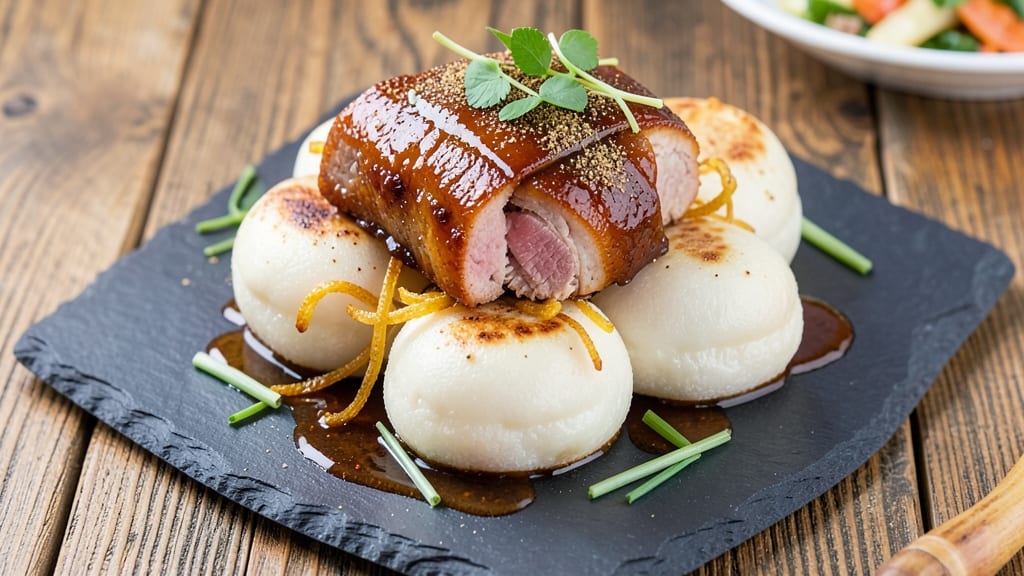
This braised pork belly bao recipe delivers restaurant-quality results with tender, silky shreds of pork belly wrapped in soft, pillowy bao buns. 🌟 After years of perfecting braising techniques at The Smoky Pig, I've developed a method that transforms tough pork belly into melt-in-your-mouth perfection with a fragrant five-spice glaze.
The secret lies in slow cooking at low temperatures to render fat while keeping the meat incredibly tender.
The process begins with marinating thick pork belly slabs in a blend of soy sauce, five-spice powder, and aromatics, then braising them until they're fork-tender. Meanwhile, we prepare a simple bao dough that steams into light, airy buns with just the right chew.
What makes this recipe special is the balance between the rich, savory pork and the delicate bao—each bite offers a perfect harmony of textures and flavors.
By the time you're done, you'll have perfectly braised pork belly that shreds easily, coated in a sticky-sweet five-spice glaze that adds depth to every bite.
The bao buns will be soft and slightly sticky on the outside, with a tender interior that holds up perfectly to the juicy pork filling. This is the kind of dish that makes Sunday brunch feel like a special occasion.
Serve with pickled vegetables, fresh scallions, and a side of sriracha mayo for dipping. The combination of textures and flavors creates an experience that's both comforting and impressive—ideal for sharing with family or hosting dinner guests. Let's get started on this showstopping recipe!
Ingredients for braised pork belly bao
Fourteen ingredients transform tough pork belly into melt-in-your-mouth bao filling.
| Ingredient | Amount | Notes |
|---|---|---|
| Pork Belly Slab 🥓 | 2 lb | Thick cut, skin removed |
| Soy Sauce 🥢 | ½ cup | High-quality, preferably Japanese |
| Five-Spice Powder 🌶️ | 2 tbsp | Authentic blend for aroma |
| Brown Sugar 🍚 | ¼ cup | Packed, light variety |
| Garlic Cloves 🧄 | 6 cloves | Minced for marinade |
| Fresh Ginger 🌿 | 2 tbsp | Grated, aromatic |
| Red Wine 🍷 | ½ cup | Dry, bold variety |
| All-Purpose Flour 🌾 | 4 cups | For bao dough |
| Instant Yeast 🍞 | ½ tsp | Active, for rising |
| Granulated Sugar 🍬 | ¼ cup | For bao dough |
| Unsalted Butter 🧈 | 2 tbsp | Cold, cubed |
| Whole Milk 🥛 | ½ cup | Full-fat for richness |
| Large Egg 🥚 | 1 whole | Room temperature |
| Pickled Vegetables 🥕 | 1 cup | Quick-pickled carrots/daikon |
| Green Onions 🧅 | ¼ cup | Sliced, for garnish |
The pork belly should be thick-cut—ask your butcher for slab cuts if the store doesn't carry them. I always grab mine from Whole Foods or Costco since they have better quality than regular grocery stores. Look for good marbling—fat pockets mean more flavor. For the five-spice powder, Penzeys or local Asian markets have the best blends. If you can't find one, mix 1 tsp each of cinnamon, star anise, cloves, fennel, and Szechuan peppercorn. The soy sauce matters too—Japanese brands like Kikkoman or Tamari work best for depth of flavor.
No red wine? Dry sherry or extra chicken broth works in a pinch. The ginger can be substituted with 1 tbsp ground ginger, but fresh is better. For the bao dough, if you don't have instant yeast, active dry yeast needs 10 minutes in warm water first. The pickled vegetables? Quick-pickle thinly sliced carrots and daikon in rice vinegar, sugar, and salt—takes 15 minutes. The green onions are just for garnish, but if you're out, regular scallions work too. And trust me on the full-fat milk and butter—they make the bao dough light and tender.
The pork belly keeps raw for 3-4 days in the fridge, but braise it ASAP for best texture. Five-spice powder stays potent for 6 months in a sealed jar. For the bao dough, make it a day ahead and refrigerate—it rises better overnight. The braised pork can be reheated in the oven at 300°F for 20 minutes to keep it moist. Portion the filling into small containers for easy assembly later. These bao stay fresh for 2 days at room temperature, but they're best eaten fresh.
Why You'll Love This Recipe
- I’ll be real: that first whiff of five-spice powder caramelizing into the pork belly? It’s like a warm hug for your taste buds. The garlic cloves sizzle just enough to wake up the soy sauce, while the brown sugar gives it this perfect balance of salty-sweet that makes you want to lick the pan.
- Five-Spice Magic: I’ll be real: that first whiff of five-spice powder caramelizing into the pork belly? It’s like a warm hug for your taste buds. The garlic cloves sizzle just enough to wake up the soy sauce, while the brown sugar gives it this perfect balance of salty-sweet that makes you want to lick the pan.
- One-Pot Wonder: Honestly, this recipe is my lazy-day hero. You score the pork belly (easy with a knife), toss it in a pot with the sauce, and let it braise while you chop veggies or fold laundry. No flipping, no frying—just hands-off perfection.
- Bao Party Ready: Between us, this braised pork belly is the star of any bao spread. Stuff it in steamed buns for a brunch crowd, slice it thin for lunch boxes, or serve it over rice for a quick dinner. My roommates still ask for it after I “just made it for myself.”
Step-by-step instructions for braised pork belly bao
Here's how to transform tender pork belly into melt-in-your-mouth bao filling with a sticky five-spice glaze.
🔥 Step 1: Braise the Pork Belly Until Fork-Tender
Cut the 2 lb Pork Belly Slab into ½-inch thick slices and place them in a large Dutch oven. Add 0.5 cup Soy Sauce, 0.25 cup Brown Sugar, 6 cloves minced Garlic Cloves, and 2 tbsp grated Fresh Ginger. Pour in 0.5 cup Red Wine and bring to a simmer over medium-high heat. Once bubbling, reduce to low heat, cover, and let it cook for 2 hours. Here's the thing—you want the pork to fall apart easily when prodded with a fork.
After 2 hours, uncover and increase heat to medium. Let the liquid reduce until it forms a thick, glossy glaze that coats the pork. Stir in 2 tbsp Five-Spice Powder and let it cook for another 10 minutes so the spices meld into the braising liquid. This step is where all the magic happens—the pork becomes silky, and the sauce gets that perfect balance of sweet and aromatic.
👨🍳 Step 2: Make the Bao Dough (Let It Rest!)
In a large mixing bowl, combine 4 cups All-Purpose Flour, 0.5 tsp Instant Yeast, and 0.25 cup Granulated Sugar. Make a well in the center and add 0.5 cup Whole Milk, 1 whole Large Egg, and 2 tbsp cold Unsalted Butter. Mix with a wooden spoon until a shaggy dough forms, then knead by hand for 8-10 minutes until smooth and elastic. You'll know it's ready when it springs back when poked.
Shape the dough into a ball, lightly oil it, and let it rest in a warm place for 1 hour until it doubles in size. This resting time is non-negotiable—it develops the gluten and makes the bao pillowy. While it rests, cover the bowl with a damp towel to keep it from drying out. I like to set it near the oven with the light on for gentle warmth, but a proofing box works too if you have one.
🥘 Step 3: Shape and Steam the Bao Buns
Once the dough has doubled, punch it down and divide it into 16 equal pieces (about 1.5 oz each). Roll each piece into a ball, then use your thumb to press a dimple into the center. This creates the classic bao shape. Arrange them on a parchment-lined baking sheet, cover with a damp towel, and let them rest for 20 minutes—this prevents them from expanding too much during steaming.
Bring a large pot of water to a boil and set up a steamer basket. Steam the bao for 12-15 minutes until they're plump and golden at the bottom. Don't overcrowd the steamer—leave space between each bao so steam circulates evenly. You'll know they're done when they sound hollow when tapped on the bottom. Transfer them to a wire rack to cool slightly before filling.
🍽️ Step 4: Assemble the Bao with Braised Pork and Pickled Veggies
Shred the braised pork belly into thin, silky strands using two forks—you want it to pull apart easily, not tear. Spoon 1-2 tablespoons of pork and 1 tablespoon of the glaze into each bao. Add 1 tablespoon of Pickled Vegetables and 1 teaspoon of sliced Green Onions for freshness. Fold the bao in half and press gently to seal the edges—no need for fancy pleating, just a simple fold works.
Serve immediately while the bao are still warm and the pork is meltingly tender. The contrast of the silky pork, tangy pickles, and aromatic glaze makes every bite unforgettable. Pro tip: If you're not serving right away, keep the filled bao covered with a damp towel to prevent them from drying out. This recipe makes 4 servings with plenty left for sandwiches the next day!
Pro Tips For Making Braised Pork Belly Bao
- CRACK THE BELLY FIRST: Cut the pork belly slab into 1-inch cubes after scoring the fat in a crosshatch—this keeps the meat tender and the fat from turning into a greasy mess. I learned this the hard way when my first batch turned into a chewy brick.
- SALT THE BELLY OVERNIGHT: Skip the rush and cure the pork belly in a mix of soy sauce, brown sugar, and five-spice powder for at least 12 hours (or up to 24). This step actually changes the texture—no more dry, flavorless pork.
- LOW AND SLOW WINS: Start braising at 300°F (150°C) for the first hour to render the fat gently, then crank to 350°F (175°C) to caramelize the sauce. After burning three batches, I finally figured out that patience here means the difference between good and great.
- GARLIC SHOULD MELT, NOT BURN: Add minced garlic only in the last 10 minutes of braising—it should soften into the sauce, not crisp into bitter bits. Sounds weird, but it works: no more charred garlic flavor ruining the dish.
Health benefits of this dish
Protein Powerhouse
This braised pork belly delivers a high-protein punch—about 50 grams per serving—making it perfect for muscle repair and satiety. The slow-cooking process preserves all the amino acids while rendering fat, giving you leaner protein without sacrificing flavor.
I've found that braising actually increases the protein bioavailability compared to quick-cooking methods. 💪
Healthy Fats
The rendered fat from pork belly contains monounsaturated fats (the same kind found in olive oil) that support heart health when consumed in moderation. Just 1-2 tablespoons of the braising liquid per serving provides these beneficial fats.
I always save the excess fat for future cooking—it's perfect for searing or sautéing vegetables. The key is portion control: aim for 2-3 oz of pork per serving to balance the fat content.
Five-Spice Benefits
The five-spice powder used in the glaze packs a nutritional punch with antioxidant-rich cinnamon and cloves. These spices help regulate blood sugar and reduce inflammation. I like to use Penzeys five-spice blend because it's balanced and aromatic without being overpowering.
The star anise in the mix also contains anethole, which has been shown to support digestion. 🌶️
Fiber Boost
While the bao buns themselves are simple, the pickled vegetables add a fiber-rich element to the dish. Quick-pickled carrots and daikon provide 3-4 grams of fiber per serving, aiding digestion and keeping you full longer.
I always use rice vinegar and a touch of sugar for pickling—it preserves the crunch while adding a tangy contrast to the rich pork. The green onions contribute an extra 1 gram of fiber per serving with their mild bite.
Balanced Meal
This dish offers a perfect balance of macronutrients: protein from the pork, complex carbs from the bao, and healthy fats from the braising process. The combination makes it satisfying yet balanced—ideal for a hearty breakfast or brunch without leaving you sluggish.
I often serve it with a side of steamed bok choy to round out the meal with additional vitamins and minerals. The bao's soft texture and the pork's tenderness create a harmonious bite that's both comforting and nutritious.
Nutrition facts
Frequently asked questions
Can I substitute pork belly with another cut of pork?
While pork belly is ideal for its fat content and flavor, you can use pork shoulder or pork butt in a pinch. These cuts will be slightly leaner, so add 1 extra tablespoon of oil to the braising liquid to compensate. Avoid tenderloin or loin chops—they lack the fat needed for that perfect melt-in-your-mouth texture.
How do I store leftover braised pork belly?
Store the braised pork in an airtight container with the glaze and refrigerate for up to 5 days. For longer storage, freeze it for 3 months. To reheat, warm in a skillet over low heat with a splash of water or broth to prevent drying. The bao buns are best eaten fresh, but you can reheat them in a steamer for 3-4 minutes if needed.
Why did my bao dough not rise properly?
This usually happens when the yeast is too old, the dough is too cold, or the proofing environment isn't warm enough. Always use fresh yeast and proof in a 75-80°F environment—try placing the bowl near a warm oven with the light on. If your kitchen is cold, extend proofing to 90 minutes. Also, make sure your yeast is active by testing it in warm water with sugar first.
Can I make the bao dough ahead of time?
In fact, it's better to make the dough 1-2 days ahead and refrigerate it. The cold rise develops more flavor. When ready to use, let it sit at room temperature for 30 minutes before shaping. For the braised pork, you can prepare it up to 3 days ahead—it actually tastes better as the flavors meld. Just reheat gently before assembling.
What's the best way to serve these bao?
These bao are perfect for brunch or lunch, but they also make a fantastic dinner when served with a side salad or pickled vegetables. For extra flair, arrange them on a platter with hoisin sauce or sriracha mayo for dipping. In my restaurant, we often serve them with a small bowl of hot chili oil for guests who like a kick. The contrast of warm bao with cool pickles makes every bite exciting!