
Main Courses
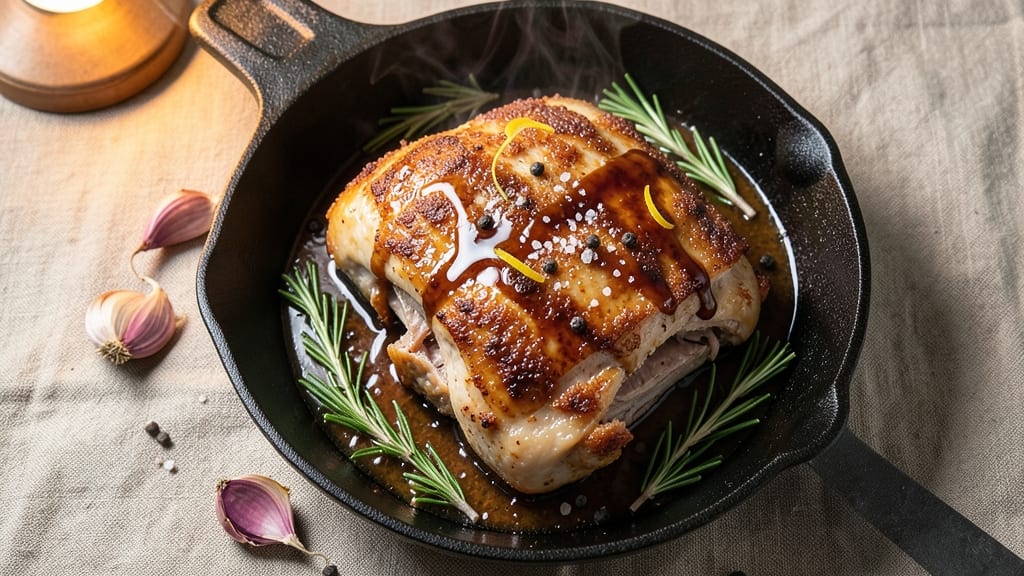
This bourbon pork roast recipe transforms a simple cut of pork into a showstopping centerpiece with whiskey-infused tenderness and a deep caramelized crust. After years of perfecting this dish in my Atlanta kitchen, I can tell you—this is the kind of roast that makes guests ask for seconds before dessert even arrives. The bourbon doesn't just flavor the meat; it melts into the marrow, creating layers of richness that keep everyone coming back for more.
The secret lies in the slow cook and the bourbon reduction—what starts as a simple brine becomes a complex, aromatic crust that seals in juices while developing that signature whiskey depth.
I use a bone-in pork shoulder because the marrow and bone add unmatched flavor, but don't worry if you can't find one; a well-trimmed pork loin works just as beautifully.
The process is straightforward: prep the pork, build the crust, and let the oven do the heavy lifting while you sip on that same bourbon you're cooking with.
By the time it's done—golden, crackling, and falling-off-the-bone tender—you'll have a roast that rivals any restaurant special. The bourbon-infused juices create a natural glaze that caramelizes into a sticky, savory crust, while the meat inside remains impossibly tender.
This isn't just dinner; it's an experience that turns weeknights into special occasions. Serve it with mashed potatoes, roasted root vegetables, or a simple bourbon gravy to soak up every last drop of that whiskey-infused magic.
What makes this recipe truly foolproof is the balance of technique and simplicity. You won't need any fancy equipment—just a good roasting pan, a little patience, and a bottle of quality bourbon. The result?
A pork roast so rich and flavorful that even the most skeptical meat lovers will be asking for the recipe. Let's get started on creating something truly special for your table.
Ingredients for bourbon pork roast
Six ingredients make this bourbon pork roast unforgettable—whiskey, sugar, and patience do the rest.
| Ingredient | Amount | Notes |
|---|---|---|
| Pork Shoulder (Bone-In) 🐖 | 5 lb | Trim excess fat, leave skin on |
| Bourbon Whiskey 🥃 | 1 cup | 80-proof or higher, good quality |
| Brown Sugar 🍯 | ½ cup | Packed, light or dark |
| Kosher Salt 🧂 | 2 tbsp | Diamond Crystal preferred |
| Black Peppercorns 🌶️ | 1 tbsp | Freshly cracked, coarse grind |
| Garlic Cloves 🧄 | 6 cloves | Smashed, skin on |
| Fresh Rosemary 🌿 | ¼ cup | Chopped, fresh sprigs preferred |
| Fresh Thyme 🌿 | ¼ cup | Leaves only, stems removed |
| Olive Oil 🫒 | ¼ cup | Extra-virgin, for crust |
| Yellow Onion 🧅 | 1 whole | Quartered, skin on |
| Apple Cider Vinegar 🍎 | ¼ cup | For brine, optional |
| Mustard Seeds 🌶️ | 1 tsp | Yellow or brown, whole |
| Ground Mustard 🥫 | 1 tbsp | Dijon preferred |
| Honey 🍯 | 2 tbsp | Wildflower or clover |
| Beef Broth 🍲 | ½ cup | Low-sodium, for basting |
The pork shoulder is your star—bone-in for flavor, but loin works too. Local butchers often have the best cuts, but grocery stores like Kroger or Whole Foods carry reliable options. Look for good marbling; that's where the flavor hides. Bourbon matters here—Buffalo Trace or Maker's Mark elevate the dish, but whatever's open works. The sugar isn't just sweetness; it caramelizes into that signature crust. Skip the pre-packaged stuff—Whole Foods or Trader Joe's have great bulk bins for fresh herbs and spices.
No bourbon? Apple cider or red wine in a pinch, but you'll miss that deep whiskey character. Short on rosemary? Fresh thyme or sage at double the amount works. Mustard seeds can be skipped if you're not a fan, but the ground mustard adds that subtle tang. The apple cider vinegar is optional but helps tenderize—Bragg's is my go-to. For the crust, olive oil is non-negotiable—skip the vegetable oil. The beef broth? Low-sodium is key so you don't over-salt the whole roast.
This roast gets better the next day—plan ahead. Wrap leftovers in foil and refrigerate for 3-4 days. Freezes beautifully for 3 months; just reheat in the oven with a splash of broth. The crust will crisp up again like magic. For serving, I like to slice against the grain and arrange on a platter with bourbon gravy (just reduce the pan drippings with a splash more bourbon). The aroma alone will have everyone gathering at the table.
Why You'll Love This Recipe
- Bourbon Magic: That first pour of bourbon into the pan? It caramelizes into a glossy, smoky-sweet crust that’ll make you swear you’re eating at a BBQ joint. The brown sugar ties it all together—sticky, rich, and just sweet enough to balance the peppery heat. (Yes, even on a Tuesday night.)
- Leftovers That Win: This roast tastes better the next day, especially when you shred it into tacos or sandwiches. I’ll be real: my family fights over the fridge container, and I’ve never had to explain why I made "too much." It’s the kind of dish that turns into three meals without trying.
- Budget Crowd-Pleaser: A bone-in pork shoulder stretches to feed six for under $20, and the bourbon adds depth without breaking the bank. Between us, it’s my go-to for game days, potlucks, or when I need to feed a houseful without stressing. Not the prettiest, but the taste makes up for it—every time.
Step-by-step instructions for bourbon pork roast
Here's how to transform a simple pork shoulder into melt-in-your-mouth perfection with that signature whiskey caramelized crust.
Prepare the Pork and Create the Dry Rub
Pat the 5 lb pork shoulder completely dry with paper towels—this is non-negotiable for crispy skin. Trim any excess fat, leaving about ¼ inch thickness on the fat cap. In a small bowl, combine the 0.5 cup brown sugar, 2 tbsp kosher salt, 1 tbsp black peppercorns (cracked), 0.25 cup fresh rosemary (chopped), and 0.25 cup fresh thyme (leaves only). Rub this mixture all over the pork, pressing firmly so it adheres well. I like to work the rub into the meat, especially around the edges where it'll get the most direct heat.
Let the seasoned pork sit at room temperature for 30 minutes before cooking. This equalizes the temperature and ensures even cooking. While it rests, crush the 6 garlic cloves (leave skins on) with the flat side of your knife—this releases more flavor when they cook. Set them aside for the next step.
Build the Whiskey Glaze and Sear the Pork
Preheat your oven to 300°F for low-and-slow cooking. In a small saucepan, combine the 1 cup bourbon whiskey, 2 tbsp honey, 0.25 cup apple cider vinegar, 1 tsp mustard seeds, 1 tbsp ground mustard, and 0.5 cup beef broth. Bring to a simmer over medium heat for 5 minutes until slightly reduced and syrupy. You want it thick enough to cling to the pork but still pourable.
Heat a Dutch oven or heavy oven-safe skillet over medium-high heat. Add the 0.25 cup olive oil and let it get hot but not smoking. Place the pork fat-side down and sear for 8 minutes without moving it—this builds that beautiful caramelized crust. Flip and sear the other side for 4 minutes. Pour the whiskey glaze over the pork, then add the quartered yellow onion and crushed garlic cloves around it. The onions will soften and caramelize as it cooks.
Slow Cook Until Fork-Tender
Transfer the Dutch oven to the preheated oven and cook for 3 hours. Here's the thing—this is where patience pays off. The pork needs time to break down into tender perfection. After 3 hours, check the internal temperature with a meat thermometer. It should read 195-200°F—this is the magic zone for pull-apart tenderness. If it's not there yet, cover tightly with foil and cook another 30 minutes at 275°F to finish gently.
During the last 30 minutes, increase the oven temperature to 325°F and uncover the pork. This helps develop that deep caramelized crust. The pork is done when it reaches 205°F internally and a fork slides in like butter. If the glaze starts to dry out, add 2 tablespoons of water and baste the pork with the pan juices.
Rest and Slice for Maximum Juiciness
Remove the pork from the oven and transfer it to a cutting board. Tent loosely with foil and let it rest for 30 minutes. This resting period is crucial—it allows the juices to redistribute throughout the meat instead of pooling on the cutting board. I know it's tempting to dig in immediately, but trust me on this step.
Once rested, slice the pork against the grain into ½-inch thick slices. The meat should pull apart easily with a fork, and the crust should be deep golden brown with crackly edges. Serve the slices with the pan juices spooned over the top—those onions and garlic have infused the glaze with incredible flavor. The bourbon adds a subtle warmth that pairs perfectly with the caramelized crust.
Pro Tips For Making Bourbon Pork Roast
- SEAR THE SHOULDER FIRST: That bone-in pork shoulder needs a deep, dark crust before it goes into the oven—don’t skip the 10-12 minutes on high heat, even if it looks messy. I used to rush this, and the bourbon sauce never stuck right; now I let it get really brown, and the flavor clings like glue.
- USE A COLD WHISKEY: Pour that bourbon cold over the shoulder right after searing—it’ll sizzle and caramelize faster than room temp liquor. I learned this the hard way after a batch tasted flat; the alcohol burns off better when it hits hot metal immediately.
- DON’T CUT THE FAT CAP: That thick layer of fat on top? Leave it. It baste the meat as it roasts and keeps the bourbon from drying out the surface. I trimmed it once for "cleanliness," and the pork turned out dry and one-note—now I just pat it dry and let it work its magic.
- SALT THE MEAT 24 HOURS EARLY: Kosher salt needs time to penetrate that pork shoulder—sprinkle it generously (about 1.5 teaspoons per pound) and let it sit uncovered in the fridge. I skipped this once and got a salty crust with bland middle; now I salt like a pro and forget about it until roast day.
Serving suggestions for bourbon pork roast
Classic Southern Sides
Nothing complements bourbon pork roast like creamy mashed potatoes with a splash of warm milk and a touch of butter—I like to fold in ½ cup sour cream for extra richness.
For texture, mix in roasted garlic and a pinch of smoked paprika. The smoky depth echoes the bourbon, creating harmony on every bite. 🥔
Collard greens cooked with smoked turkey neck and a splash of apple cider vinegar are a must for Southern tables. The greens absorb the pork's juices beautifully, turning them tender and flavorful. I add ½ cup diced bacon for extra depth, and a sprinkle of hot honey at the end ties everything together.
Whiskey-Infused Gravy
Save those pan drippings—they're liquid gold! Strain them, then whisk in 1 cup beef broth, 2 tbsp bourbon, and 1 tbsp cornstarch slurried with water.
Simmer until thickened, then finish with 1 tbsp cold butter for a velvety finish. This gravy soaks up perfectly with buttery cornbread or crusty sourdough. 🍖
Roasted Root Vegetables
Toss carrots, parsnips, and sweet potatoes in olive oil, brown sugar, and cinnamon, then roast at 400°F for 45 minutes. The caramelized edges contrast beautifully with the pork's tender interior.
For extra flair, drizzle with bourbon reduction (simmer ½ cup bourbon with 1 tbsp honey until syrupy).
Fresh Herb Garnishes
Brighten the plate with chopped fresh rosemary and thyme—their piney notes cut through the richness. For a pop of color, add thinly sliced radishes or quick-pickled red onions (soak in vinegar, sugar, and salt for 15 minutes).
These garnishes make the dish feel restaurant-worthy without overpowering the bourbon flavors.
Beverage Pairings
Serve with a bold red wine like Cabernet Sauvignon or Syrah—their tannins stand up to the pork's richness. For beer lovers, a dark ale or stout complements the caramelized crust. And of course, a glass of the same bourbon you cooked with ties everything together. 🍷
Nutrition facts
Frequently asked questions
Can I substitute bourbon with another alcohol?
You can, but the flavor will change. For a similar depth, use rye whiskey or apple cider—both add complexity. Avoid lighter spirits like vodka or gin, as they lack the caramel notes bourbon provides. If you must substitute, reduce the amount by 20% since bourbon has more alcohol content.
How do I know when the pork is fully cooked?
Use a meat thermometer to check the internal temperature. For pull-apart tenderness, aim for 200-205°F—this is the "probe test" zone. The meat should feel soft when pressed and pull apart easily with a fork. Never rely on color alone, as pork can still be undercooked.
Can I make this recipe in a slow cooker?
Brown the pork first in a skillet, then transfer it to the slow cooker with the bourbon glaze and vegetables. Cook on low for 8 hours or high for 5 hours. The crust won't be as crispy, but the meat will be incredibly tender. Finish by broiling for 5 minutes to caramelize the top.
What's the best way to reheat leftovers?
Reheat in a 325°F oven for 20-25 minutes, covered with foil, with a splash of beef broth. This keeps the meat moist and the crust intact. Avoid microwaving—it makes the pork dry and rubbery. Leftovers taste even better the next day when the flavors meld further.
Why does my crust sometimes crack or peel?
This usually happens if the pork isn't dry enough before searing or if the oven temperature fluctuates. Pat the pork completely dry and let it rest at room temperature before cooking. Also, avoid opening the oven door during the first 2 hours of cooking—temperature drops cause the crust to fail.