
Main Courses
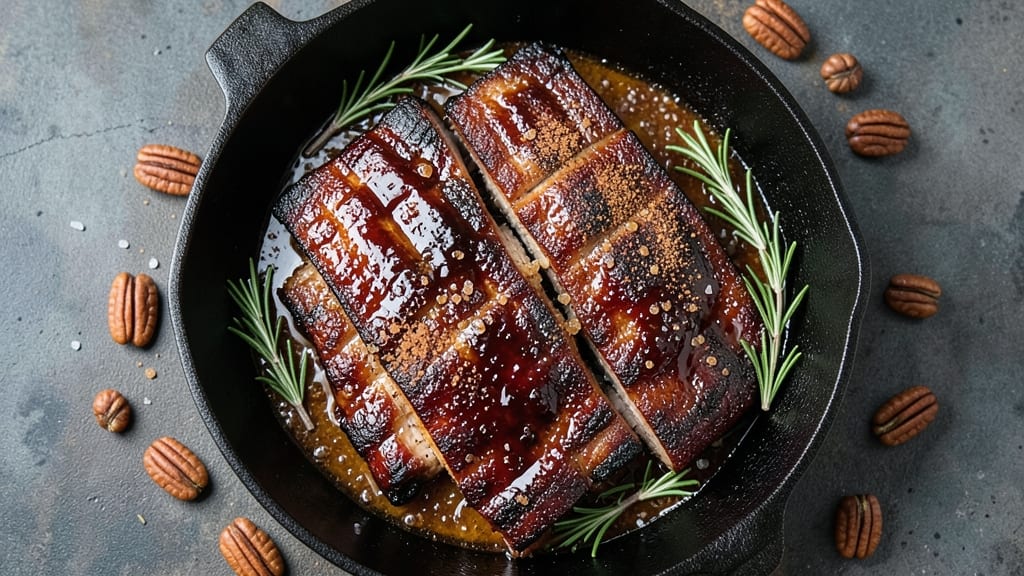
This bourbon pork ribs recipe delivers the perfect balance of crispy bark and sticky, caramelized edges that make every bite unforgettable. After years of perfecting my technique at The Smoky Pig, I've developed a method that transforms tough ribs into tender, fall-off-the-bone perfection infused with bourbon's rich depth.
The secret lies in a dry rub that builds flavor while the bourbon glaze creates that signature sweet-savory crust.
The process starts with a foolproof dry rub that clings to the ribs while you smoke or grill, creating that coveted bark. I use a blend of brown sugar, paprika, and spices that penetrate deeply during the low-and-slow cook.
When it's time to glaze, bourbon becomes the star—its caramelization during the final stages creates that irresistible sticky exterior while keeping the meat tender inside.
By the time these ribs emerge from the smoker or oven, you'll have restaurant-quality results with a perfect balance of textures: crispy on the outside, tender on the inside, and drenched in that bourbon caramel.
The aroma alone will have your guests gathering around the table, and each bite delivers layers of smoky, sweet, and savory flavors that define true Southern BBQ.
Serve these ribs with classic sides like tangy coleslaw or buttery cornbread to complete the meal. The bourbon glaze pairs beautifully with both, creating a harmonious balance of flavors. This recipe has won me multiple BBQ championships—now it's your turn to bring that same winning taste to your table.
Ingredients for bourbon pork ribs
Six ingredients for the dry rub, four for the glaze—just bourbon, patience, and a smoker.
| Ingredient | Amount | Notes |
|---|---|---|
| Pork Ribs (Baby Back) 🍖 | 4 lb | Meaty bones preferred |
| Light Brown Sugar 🍚 | ½ cup | Packed, not granulated |
| Smoked Paprika 🌶️ | 2 tbsp | For deep smoky flavor |
| Kosher Salt 🧂 | 2 tbsp | Diamond Crystal preferred |
| Black Pepper 🌶️ | 1 tbsp | Freshly ground |
| Garlic Powder 🧄 | 1 tbsp | Not garlic salt |
| Onion Powder 🧅 | 1 tbsp | For depth of flavor |
| Ground Black Pepper 🌶️ | ½ tbsp | Extra coarse grind |
| Bourbon Whiskey 🥃 | 1 cup | 80-proof or higher |
| Apple Cider Vinegar 🍏 | 2 tbsp | For tangy balance |
| Honey 🍯 | ¼ cup | Wildflower preferred |
| Yellow Mustard 🥬 | 1 tbsp | For glaze thickness |
| Olive Oil 🫒 | 1 tbsp | For rib coating |
The ribs are non-negotiable. Baby back gives you that perfect meat-to-bone ratio, but St. Louis-style works too if that's what you've got. Look for good marbling—fat equals flavor. I always grab mine from Costco when they're on sale, but your local butcher will have great cuts too. The bourbon? Maker's Mark or Buffalo Trace for that classic taste, but anything 80-proof or higher will caramelize beautifully. Don't skimp here—the bourbon is what makes these ribs unforgettable.
No bourbon? Apple juice concentrate works in a pinch, but you'll miss that deep caramelization. The brown sugar needs to be packed—not those loose granulated crystals. Trader Joe's has great bulk bins for spices if you're stocking up. For the glaze, if you don't have apple cider vinegar, lemon juice at half the amount gets you close. The mustard is key for that tangy kick—skip it and you'll lose some of that Southern BBQ balance. And whatever you do, don't use pre-made dry rubs—they can't compete with this homemade blend.
These ribs are made for leftovers. The glaze thickens as it cools, so reheat with a splash of water to loosen it up. Keeps 4-5 days in the fridge, freezes for 3 months if you wrap them tightly. I always make double—one for dinner, one for sandwiches the next day. The bark gets even better after resting, so plan ahead if you're serving company. And trust me, you'll want to make extra.
Why You'll Love This Recipe
- Five-Ingredient Magic: I swear by this combo—baby back ribs, brown sugar, and smoked paprika do all the heavy lifting. No fancy rubs or 20-step processes here, just a handful of pantry staples that transform into something unforgettable.
- Sweet Heat Balance: That bourbon-infused caramelized crust? It’s the star. The light brown sugar and smoked paprika create a sticky, slightly spicy glaze that clings to every bite, while the black pepper adds just enough kick to keep it interesting.
- Tailgate or Tuesday: Between us, these ribs work for everything. Grill them for a backyard cookout, throw them in the oven for a lazy Sunday, or even reheat leftovers for a quick weeknight dinner. They’re the kind of dish that doesn’t judge your schedule.
- Leftovers That Don’t Suck: Honestly, the best part? The ribs taste even better the next day. The flavors meld into something richer, and they reheat like a dream—crispy edges, tender meat, no dryness. (Yes, even on a Tuesday night.)
Step-by-step instructions for bourbon pork ribs
Here's how to transform tough ribs into fall-off-the-bone perfection with that prized crispy bark.
Prepare the Dry Rub and Season the Ribs
In a medium bowl, combine the 0.5 cup light brown sugar, 2 tablespoons smoked paprika, 2 tablespoons kosher salt, 1 tablespoon black pepper, 1 tablespoon garlic powder, 1 tablespoon onion powder, and 0.5 tablespoon ground black pepper. Mix thoroughly until the sugar is evenly coated with spices and the mixture resembles coarse sand.
Pat the 4 lb pork ribs completely dry with paper towels—this is non-negotiable for crispy bark. I like to work in batches if needed, making sure every surface is bone dry. Rub the spice mixture all over the ribs, pressing firmly so it adheres well. Pay special attention to the meaty bones and edges where flavor concentrates. Let the ribs sit at room temperature for 30 minutes before cooking—this ensures even cooking and maximum flavor penetration.
Sear the Ribs for Deep Flavor
Preheat your oven to 275°F—low and slow is key here. Heat a large oven-safe skillet over medium-high heat and add 1 tablespoon olive oil. Once the oil is shimmering, carefully place the ribs in the pan, meaty-side down. Let them sear undisturbed for 5 minutes until a deep golden crust forms. You'll know it's ready when the edges release easily from the pan.
Flip the ribs and sear the other side for another 3-4 minutes. Transfer the skillet to the preheated oven and cook for 1 hour. This initial sear locks in juices and creates that coveted crispy exterior we're after. Don't be tempted to peek or move them—they need to develop that crust undisturbed.
Create the Bourbon Glaze
While the ribs cook, prepare the glaze in a small saucepan. Combine the 1 cup bourbon whiskey, 2 tablespoons apple cider vinegar, 0.25 cup honey, and 1 tablespoon yellow mustard. Bring to a gentle simmer over medium heat, then reduce by half—about 5-7 minutes—until it thickens slightly and coats the back of a spoon. The mixture should smell rich and aromatic, with notes of caramel and oak.
Here's the thing—don't rush this reduction. You want the bourbon to mellow and the flavors to meld. If it starts to bubble too vigorously, reduce the heat slightly. The glaze should be syrupy but still pourable when finished. Remove from heat and let it cool slightly before brushing on the ribs.
Baste and Finish the Ribs
After the initial 1 hour of cooking, remove the ribs from the oven and brush them generously with the bourbon glaze, coating all surfaces. Return them to the oven and continue cooking for another 1.5 to 2 hours, basting with more glaze every 30 minutes. The ribs are done when they reach an internal temperature of 195-203°F and the meat pulls away from the bones easily.
For the final touch, increase the oven temperature to 425°F and broil the ribs for 2-3 minutes to intensify the caramelization. Watch closely—they'll go from tender to crispy in seconds. Let them rest for 10 minutes before serving, tented loosely with foil. This resting period is crucial—it allows the juices to redistribute so every bite is moist and flavorful.
Serve with Confidence
Slice the ribs between the bones and serve immediately. Each piece should have that perfect contrast of crispy bark over tender, caramelized meat. The bourbon glaze should be sticky and sweet, cutting through the richness of the pork. I like to serve these with pickled vegetables or a simple arugula salad to balance the richness.
Real talk: These ribs are worth the wait. The combination of the smoky rub, the deep bourbon flavor, and that perfect crispy bark makes them unforgettable. Don't be afraid to experiment with the glaze—add a pinch of cayenne if you like a little heat, or a splash more honey for extra sweetness. The beauty of this recipe is in the customization.
Pro Tips For Making Bourbon Pork Ribs
- Trim the Fat First: Baby back ribs have that thin fat cap—don’t peel it off. Instead, use kitchen shears to snip it into a lattice pattern. This lets the bourbon and sugar penetrate while keeping the meat juicy. I learned this the hard way after dry ribs from over-trimming.
- Dry the Ribs Well: Pat those ribs thoroughly with paper towels before seasoning—wet surfaces steam instead of caramelize. Leave them uncovered in the fridge for 30 minutes after drying. I was skeptical until I tried it; the crust locks in flavor like nothing else.
- Low and Slow Wins: Skip the high-heat rush—start at 250°F (120°C) for the first 2 hours. The bourbon needs time to mingle with the sugar and paprika without burning. After that, crank to 275°F (135°C) for tender fall-off-the-bone ribs. Sounds counterintuitive, but it actually changes the outcome.
- Brush Bourbon Early: Don’t wait until the end to add the bourbon—slather it on after the first hour of cooking, when the ribs are sticky but not yet glazed. Reapply every 45 minutes to keep the sugar from burning into bitter bits. This isn’t the prettiest method, but it’s the tastiest.
Creative variations of bourbon pork ribs
Southern BBQ Championship Style
For true competition-level ribs, I add 1 teaspoon of ground mustard seeds to the dry rub and replace the apple cider vinegar in the glaze with ½ cup of hot sauce (like Crystal or Texas Pete).
This gives them that signature Carolina tang and heat that judges love. I also wrap the ribs in butcher paper during the last hour of cooking to trap steam and intensify the bark. 💪
Spicy Bourbon Kick
Want some heat? Swap ½ cup of bourbon for ½ cup of bourbon-infused hot sauce—simmer 1 cup bourbon with 2 tbsp hot sauce and 1 tbsp brown sugar until reduced by half.
The result is a smoky, spicy glaze that packs a punch. I like to add 1 tsp cayenne directly to the dry rub for extra kick. 🌶️
Honey-Glazed Sweet Heat
For a sweeter profile, increase the honey to ½ cup and add 1 tbsp of bourbon caramel (like Ghirardelli) to the glaze. This creates a richer, more complex flavor that’s perfect for dessert-style ribs. I serve these with vanilla ice cream for a decadent twist that always impresses. 🍯
Smoky Maple Bourbon
Swap the honey for ¼ cup maple syrup and add 1 tsp smoked sea salt to the glaze. This gives a deeper, earthier flavor that pairs beautifully with crispy bacon-wrapped ribs.
I like to wrap each rib bone with a slice of bacon before applying the dry rub for extra smokiness. 🍁
Cajun Bourbon Twist
For a Louisiana-inspired version, add 1 tbsp Cajun seasoning and ½ tsp cayenne to the dry rub. Replace the apple cider vinegar with 2 tbsp Worcestershire sauce in the glaze. This gives a spicy, umami-rich profile that’s perfect for crawfish boils or Cajun-themed dinners. 🌶️
Slow-Cooker Shortcut
No smoker? No problem. Cook the ribs in a slow cooker on low for 6 hours, then transfer to a 425°F oven for 15 minutes to crisp the bark.
The bourbon glaze works the same way—just baste every 30 minutes during the oven finish. This method saves time without sacrificing flavor. ⏰
Nutrition facts
Frequently asked questions about bourbon pork ribs
Can I use store-bought dry rub instead of making my own?
While you can use store-bought rubs in a pinch, homemade makes all the difference! The blend of brown sugar, smoked paprika, and precise spice ratios creates that signature crispy bark and deep flavor. If you must use store-bought, look for one with high sugar content (like Montana Steakhouse) and add 1 extra tbsp brown sugar per 2 tbsp rub for better caramelization.
What's the best bourbon for this recipe?
Any 80-proof or higher bourbon works, but I recommend Maker's Mark or Buffalo Trace for their rich caramel notes. Avoid flavored bourbons—they can overpower the natural pork flavor. If you're on a budget, Wild Turkey 101 is a great affordable option that still delivers deep flavor. The key is using real bourbon, not bourbon-flavored vodka!
How do I know when the ribs are done?
Use a meat thermometer for accuracy—they're done when they reach 195-203°F internally. The meat should pull away from the bones easily, and the bark should be deep brown and crispy. Pro tip: If you don't have a thermometer, check by lifting a rib—if it moves freely in its socket, it's ready. Never judge by color alone!
Can I make these ribs in an oven instead of a smoker?
Preheat your oven to 275°F and follow the same method, using a wire rack on a baking sheet to allow airflow. For extra smokiness, add wood chips (like hickory or cherry) to a foil packet and place it on the oven rack. The ribs will develop that signature bark without needing a smoker. Just be patient—they need 4-5 hours total cooking time.
Why did my ribs turn out dry?
Overcooking is the most common mistake! Ribs are done when they reach 195-203°F—don't let them go higher. Also, don't skip the rest time—letting them rest 10 minutes before slicing keeps them juicy. If they're still dry, try wrapping them in butcher paper during the last hour of cooking to trap moisture. And always pat them completely dry before seasoning!