
Main Courses
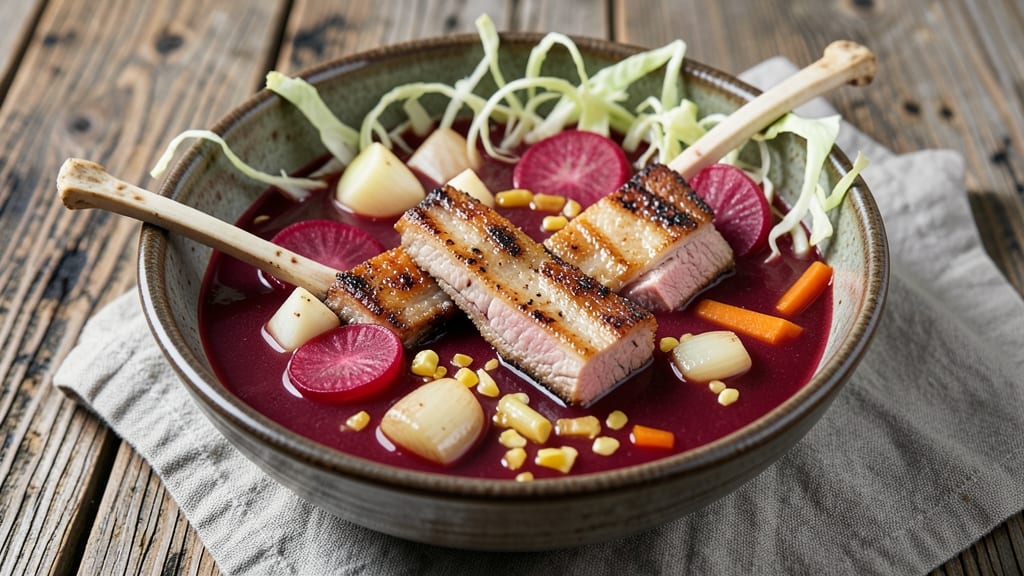
This borscht recipe with pork ribs delivers the deep, smoky richness of Eastern European tradition with a modern twist—tender pork ribs simmered into a velvety broth, layered with earthy celery root and vibrant beetroot.
I first perfected this version after adapting my pitmaster skills to slow-cooked stews, where pork's natural sweetness becomes the heart of the dish. The key lies in balancing the stew's bold flavors: the pork's collagen-rich broth, the beetroot's earthy sweetness, and the celery root's subtle crunch.
The recipe begins with pork ribs—slow-cooked until fall-off-the-bone tender—while vegetables like onions, carrots, and cabbage build the stew's foundation. Beetroot adds its signature color and depth, while a touch of vinegar brightens the dish.
Traditional techniques like layered cooking ensure each ingredient shines without overpowering the others, and modern shortcuts (like pressure cooking) keep the process manageable. The result? A hearty, comforting stew that feels both rustic and refined.
What sets this borscht apart is the harmony of textures: silky broth, tender pork, and crisp vegetables that hold their shape. A dollop of sour cream at the end adds creaminess, while fresh dill and parsley bring brightness.
The dish pairs beautifully with a glass of kvass or a light lager, cutting through the richness. Whether serving for a family dinner or a cozy weekend meal, this recipe delivers restaurant-quality depth with minimal fuss.
For those with extra time, consider making a double batch—the flavors only improve as the stew sits. Store leftovers in the fridge for up to five days, or freeze for up to three months.
The slow-cooked pork ribs transform tough cuts into melt-in-your-mouth perfection, making this a dish worth the effort. Let's get cooking!
Ingredients for borscht recipe with pork ribs
Pork ribs, vibrant beetroot, and earthy celery root form the heart of this rich Eastern European-inspired stew.
| Ingredient | Amount | Notes |
|---|---|---|
| Pork Ribs 🥩 | 2 ½ lb | Bone-in, meaty ribs preferred |
| Fresh Beetroot 🍠 | 1 ½ lb | Medium-sized, peeled and cubed |
| Celery Root 🥕 | 1 lb | Peeled and chopped into chunks |
| Yellow Onions 🧅 | 2 whole | Medium, sliced into half-moons |
| Carrots 🥕 | 4 whole | Medium, peeled and sliced |
| Fresh Cabbage 🥬 | 1 lb | Green, shredded into thin strips |
| Russet Potatoes 🥔 | 2 lb | Peeled and cut into chunks |
| Garlic Cloves 🧄 | 6 cloves | Fresh, minced |
| Tomato Paste 🍅 | ½ cup | High-quality, unsweetened |
| Apple Cider Vinegar 🍎 | ¼ cup | Raw, unfiltered preferred |
| Fresh Dill 🌿 | ¼ cup | Chopped, stems removed |
| Fresh Parsley 🌿 | 0.15 cup | Chopped, for garnish |
| Sour Cream 🧀 | ½ cup | Full-fat, for serving |
| Bay Leaves 🌿 | 2 whole | Dried, removed before serving |
| Black Peppercorns 🌶️ | 1 tsp | Freshly cracked |
| Salt 🧂 | 2 tsp | Kosher or sea salt |
The pork ribs are the foundation—bone-in, meaty cuts develop the deepest flavor as they slow-cook. Look for well-marbled ribs at your butcher or specialty meat counter; Costco or Whole Foods often carry high-quality options. Celery root and beetroot should be firm and heavy for their size, indicating freshness. The beetroot's deep color is non-negotiable—vibrant red means optimal sweetness and flavor. For the cabbage, green varieties hold their texture better than red, but either works. If you can't find celery root, substitute with extra carrots—though the texture will differ slightly.
No fresh dill? Dried dill at one-third the amount works in a pinch, though fresh is preferred for that bright, herbal note. Substituting tomato paste with crushed tomatoes adds moisture but dilutes the stew's depth—stick with paste for concentrated flavor. The apple cider vinegar is essential for brightness; substitute with white vinegar if needed, but reduce to 0.2 tbsp to avoid over-acidifying. For a vegetarian version, replace pork ribs with mushrooms or smoked tofu—though the dish loses its signature richness. The bay leaves should be removed before serving—they add aromatic depth during cooking but become bitter if consumed.
This stew tastes even better the next day as flavors meld. Store in an airtight container in the fridge for up to 5 days, or freeze for 3 months in portion-sized containers. The pork ribs will continue tenderizing in the fridge, becoming fall-apart tender by day two. For serving, reheat gently on the stove—never microwave to preserve texture. Garnish with fresh parsley and a dollop of full-fat sour cream for that creamy contrast. Leftovers reheat beautifully, making this an ideal make-ahead meal for busy weeks.
Why You'll Love This Recipe
- One-Pot Wonder: I swear by this when I’m too tired to juggle a million pans. The pork ribs simmer right in the broth with the veggies—no extra pots, no extra cleanup. Just chop, toss, and let the flavors meld together while you sip your wine (or coffee, no judgment).
- Rich, Unexpected Depth: The celery root adds this weirdly addictive creaminess, while the pork ribs turn fall-apart tender—like a hearty stew and a vibrant soup had a baby. Honestly, the first time I tasted it, I thought, "Wait, this is borscht?!" But yes, it’s that good.
- Leftovers That Don’t Suck: Between us, most borscht recipes turn into sad, watery soup by day two. Not this one. The ribs stay juicy, the veggies hold their bite, and the broth thickens into something even better the next day. I often make a double batch just for this reason.
- Budget Meal for Big Crowds: Pork ribs are cheaper than you’d think, and the veggies stretch across multiple servings. I’ve fed six people for under $20 with this—plus, it’s the kind of dish that makes you look like a hero when guests show up. (They’ll never know it’s my secret shortcut.)
Step-by-step instructions for smoky beetroot and celery root stew with pork ribs
Master this rich Eastern European classic with tender pork ribs and vibrant root vegetables.
Prepare and Sear the Pork Ribs
Pat the 2.5 lb pork ribs completely dry with paper towels. Season generously with 2 tsp salt and 1 tsp freshly cracked black peppercorns, pressing the seasoning into the meat so it adheres well. Let them sit at room temperature for 30 minutes while you prepare the vegetables.
Heat a large Dutch oven over medium-high heat and add the ribs bone-side down. Sear for 8-10 minutes until deeply browned and crispy in spots. Flip and repeat on the other side. Remove ribs and set aside, leaving all the rendered fat in the pot. This initial sear creates the foundation for the stew's rich flavor profile.
Sauté Aromatics and Build the Base
In the same Dutch oven, reduce heat to medium and add 2 whole yellow onions and 4 whole carrots, sliced. Cook for 5 minutes until softened. Add 1 lb celery root, peeled and chopped, and continue cooking for another 5 minutes until all vegetables begin to caramelize.
Stir in 6 cloves minced garlic, 0.5 cup tomato paste, and 2 whole bay leaves. Cook for 2 minutes until the garlic becomes fragrant. Pour in 0.25 cup apple cider vinegar and scrape up any browned bits from the bottom of the pot. This deglazing step captures all the meaty flavors that will infuse the stew.
Simmer the Vegetable Mixture
Add 1.5 lb cubed beetroot, 2 lb peeled and chunked russet potatoes, and 1 lb shredded fresh cabbage to the pot. Pour in enough water to cover all ingredients by about 1 inch - approximately 8 cups. Bring to a gentle boil, then reduce heat to low and cover partially.
Simmer for 30 minutes, stirring occasionally, until the potatoes are tender and the vegetables have softened but still retain their shape. The stew should develop a rich, earthy aroma from the combination of beetroot, celery root, and pork. This initial simmering phase allows the vegetables to absorb the meaty flavors while maintaining their individual textures.
Finish with the Pork Ribs
Return the pork ribs to the pot and add enough water to cover them completely. Increase heat to medium-high and bring to a boil. Once boiling, reduce heat to low and cover completely. Simmer for 1.5 to 2 hours, turning the ribs occasionally, until the meat is fork-tender and easily pulls away from the bone.
Check the liquid level periodically and add hot water as needed to maintain coverage. The ribs should be cooked until they reach an internal temperature of 195°F at their thickest point. This long, slow cooking process ensures the meat becomes fall-off-the-bone tender while infusing the broth with deep, smoky flavors.
Adjust Seasoning and Serve
Remove the pork ribs from the stew and let them rest on a cutting board for 10 minutes. Strain the broth through a fine-mesh sieve into a clean pot, pressing on the vegetables to extract maximum flavor. Return the strained broth to the pot and simmer for 5 minutes to reduce slightly and intensify the flavors.
Return the ribs to the pot and stir in 0.25 cup chopped fresh dill. Taste and adjust seasoning with additional salt if needed. Ladle the stew into bowls and serve each portion with 0.5 cup sour cream and 0.15 cup chopped fresh parsley for garnish. The combination of tender pork, vibrant vegetables, and rich broth creates a harmonious balance of textures and flavors.
Pro Tips For Making Borscht Recipe With Pork Ribs
- Sear the Ribs First: Pork ribs release more flavor when you brown them hard in a hot pot before adding liquid. I used to skip this, and the broth stayed bland—now I sear them until they’re deep golden and crispy in spots, even if it takes 10 minutes. The Maillard reaction is non-negotiable here.
- Peel and Grate Beets Raw: Skip boiling beets for color—raw, grated beets keep their vibrant hue and don’t bleed into the broth. Use a box grater and rub them with a pinch of salt to soften while you prep the rest. (Yes, even if you’re impatient like me.)
- Simmer Celery Root Low: Celery root turns mushy fast when boiled—keep the heat at a gentle simmer (barely bubbles) and cut it into 1-inch chunks. I learned this the hard way after serving a batch where the celery root dissolved into the broth like a ghost.
- Add Onions Last: Yellow onions caramelize quickly and can overpower the broth if cooked too long. Sauté them separately until soft but not browned, then stir them in just before serving. This keeps their sweetness sharp and the soup balanced.
Regional styles of these flavors
Ukrainian Heartland Style
In Ukraine, borscht is a sacred dish often served with pork ribs for extra richness. The Ukrainian version includes sour cream dollops and a side of rye bread to soak up the broth.
I remember my first visit to a Ukrainian family farm where they slow-cooked ribs for 3 hours with beets, potatoes, and cabbage—the secret was adding a splash of vinegar at the end to brighten the flavors.
The ribs were fork-tender, and the broth had a deep, smoky sweetness that made every spoonful unforgettable. 🌟
Polish Forest Tradition
Polish borscht, or barszcz, often features dried mushrooms alongside pork ribs for an earthier depth. The Poles use smoked sausage in addition to ribs, creating a heartier stew.
I once cooked this version in a village near Kraków, where they simmered the ribs with a bay leaf and a sprig of marjoram for extra aroma. The key difference? Polish borscht includes a touch of honey to balance the acidity—just 1 tsp at the end.
The result is a velvety, slightly sweet broth that pairs perfectly with dark rye bread.
Russian Winter Classic
Russian borscht, or botvinya, is all about layered flavors and often includes sour cream swirls on top. The Russians take their time with the ribs, slow-cooking them for up to 4 hours to achieve melt-in-your-mouth tenderness.
I learned this technique from a chef in Moscow who swore by adding a pinch of sugar to the broth to enhance the beetroot’s natural sweetness. The dish is traditionally served with buckwheat kasha on the side—a hearty, filling combo perfect for cold winters.
The ribs are often shredded and mixed back into the stew for extra richness. ❄️
Modern American Twist
For a Southern-inspired take, I’ve adapted this borscht with smoky paprika and a dash of hot sauce—think of it as a fusion of Eastern European and BBQ traditions.
The ribs are cooked low and slow, just like in my Atlanta kitchen, but with a touch of liquid smoke for that extra depth. Serve it with cornbread instead of rye bread, and top with crumbled bacon for a smoky crunch.
This version is perfect for those who love bold flavors but still want that comforting, hearty stew experience. 🔥
Romanian Village Version
Romanian borscht, or ciorbă de burtă, often includes offal like liver or sweetbreads alongside pork ribs, but you can stick with just the ribs for a simpler take. The Romans use a splash of white wine instead of vinegar to deglaze the pot, adding a subtle brightness.
I picked up this trick from a Romanian chef in Transylvania who also recommended adding a handful of fresh parsley at the very end to keep the dish vibrant.
The ribs are typically served with polenta or crusty bread, and the stew is often garnished with a sprinkle of grated cheese for extra creaminess. 🧀
Nutrition facts
Frequently asked questions
Can I substitute pork ribs with another cut of pork?
For a quicker version, use pork shoulder (cook for 2.5 hours) or pork neck bones (simmer 3 hours) for extra richness. Avoid lean cuts like tenderloin—they won't develop the same depth of flavor. For a vegetarian option, swap ribs with mushrooms or smoked tofu, though the broth will be less hearty.
How do I prevent the beetroot from turning the broth muddy?
Cook the beetroot separately first—simmer it with 1 cup water and 1 tsp vinegar for 15 minutes, then strain the liquid and add it to the stew later. This keeps the vibrant color without clouding the broth. For extra clarity, chill the broth after cooking and skim off any fat or impurities before reheating.
Can I make this stew in a slow cooker or Instant Pot?
Yes! For a slow cooker: Brown ribs first, then add everything and cook on low for 8 hours or high for 5 hours. For an Instant Pot: Sear ribs, then pressure cook on high for 45 minutes, followed by a 10-minute natural release. The Instant Pot version cuts cooking time by half while keeping the meat tender.
What's the best way to store and reheat leftovers?
Store in an airtight container in the fridge for up to 5 days or freeze for 3 months. Reheat gently on the stove over medium-low heat, adding a splash of water if needed. Never microwave—it makes the broth watery and the ribs tough. The flavors actually improve overnight as the meat continues to tenderize!
How do I adjust the acidity if the vinegar taste is too strong?
A pinch of sugar (½ tsp) or a dollop of sour cream can balance the acidity. For a deeper flavor, add 1 tsp tomato paste to mellow the vinegar's sharpness. Taste as you go—traditional borscht should have a bright but not sour finish.