
Main Courses
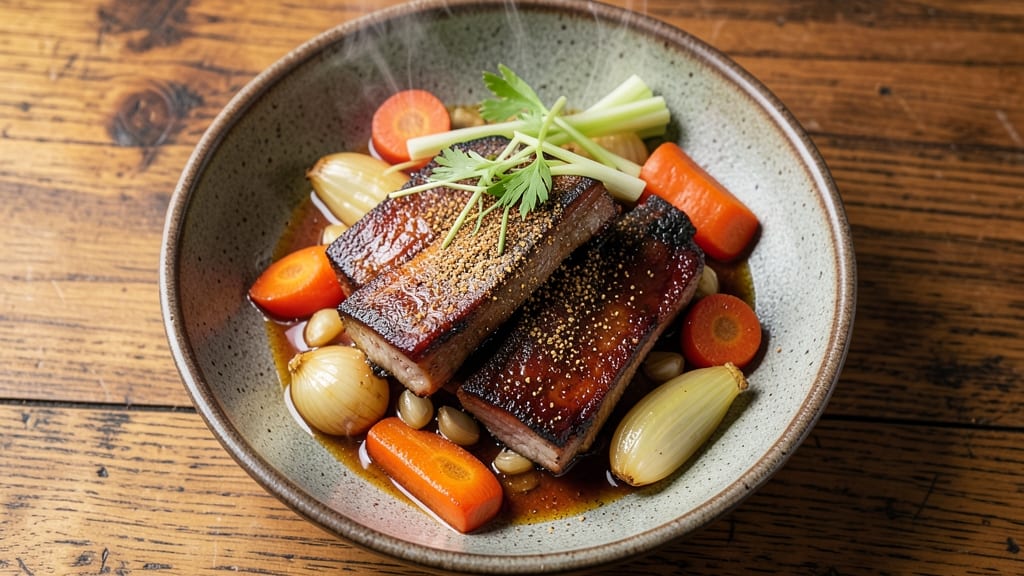
This boneless pork rib ends recipe transforms tough cuts into melt-in-your-mouth shreds with a smoky five-spice crust and crispy celery crowns—my signature technique from years of perfecting pork at The Smoky Pig.
The secret lies in a slow braise that tenderizes the meat while building deep, aromatic layers, then finishing with a crispy edge that adds texture without overpowering the rich flavor.
I developed this method after years of butchering my own heritage pigs, where the rib ends often got overlooked but delivered the most complex flavor profile when cooked properly.
What sets these pork rib ends apart is the combination of five-spice powder—a blend of star anise, cinnamon, cloves, fennel, and Szechuan peppercorn—and a celery crown that adds both visual appeal and a satisfying crunch.
The five-spice creates a warm, slightly sweet aroma that pairs perfectly with the smoky depth of the pork, while the celery crowns (made from the leafy tops) provide a fresh, crisp contrast that keeps every bite interesting.
This isn't your typical pulled pork—it's a dish that balances tenderness, texture, and bold flavor in every bite.
The cooking process is straightforward but requires patience: a slow braise in the oven or smoker until the meat falls apart, then a quick sear to crisp the edges.
The result is pork that's so tender it practically melts on the tongue, with a crust that adds just enough resistance to make each bite satisfying. This recipe delivers restaurant-quality results at home, perfect for feeding a crowd or meal prepping for the week ahead.
The five-spice rub works equally well on chicken or beef, making it versatile for any occasion.
Serve these shreds on buttered buns with pickled onions and a drizzle of tangy BBQ sauce, or use them as a filling for tacos, sandwiches, or even stuffed into bell peppers. The crispy celery crowns add a beautiful garnish while providing a refreshing contrast to the rich pork.
Whether you're hosting a weekend gathering or simply craving a hearty meal, this recipe delivers flavor and texture that will impress even the most discerning eaters.
Ingredients for boneless pork rib ends
Six ingredients transform tough pork into restaurant-worthy shreds with crispy celery crowns.
| Ingredient | Amount | Notes |
|---|---|---|
| Boneless Pork Rib Ends 🥓 | 4 lb | Trimmed of excess fat |
| Five-Spice Powder 🌶️ | 2 tbsp | Homemade or store-bought blend |
| Celery Stems 🧅 | 1 whole | For crowns, leafy tops reserved |
| Yellow Onion 🧅 | 1 whole | Large, chopped |
| Garlic Cloves 🧄 | 6 cloves | Minced, fresh preferred |
| Carrots 🥕 | 2 whole | Medium, chopped |
| Apple Cider Vinegar 🍎 | ½ cup | For braising liquid |
| Beef Broth 💧 | 2 cups | Low-sodium preferred |
| Honey 🍯 | 2 tbsp | For balance with five-spice |
| Olive Oil 🫒 | ¼ cup | For searing |
| Salt 🧂 | 1 ½ tsp | Kosher or sea salt |
| Black Pepper 🌶️ | 1 tsp | Freshly ground |
| Celery Leaves 🌿 | ½ cup | For crispy crowns |
| All-Purpose Flour 🌾 | ¼ cup | For dredging crowns |
| Butter 🧈 | 2 tbsp | Unsalted, for finishing |
The pork rib ends are the heart of this dish, and quality matters. Look for cuts with good marbling—they'll stay juicier during the long braise. Most butchers can trim the bones for you if you're buying whole ribs, but pre-boneless cuts from Costco or Whole Foods save time. The five-spice powder is non-negotiable here; Penzeys or Spicewalla sell pre-mixed blends, but making your own ensures the best balance of star anise, cinnamon, cloves, fennel, and Szechuan peppercorn. Celery crowns require the leafy tops, so grab a bunch with fresh, vibrant leaves—Trader Joe's often has great organic options.
No five-spice powder? Substitute 1 tbsp each of cinnamon, cloves, and ginger, plus a pinch of fennel seeds if you've got them. The celery crowns can be made with just the leaves, but adding a bit of flour helps them crisp up better. For the braising liquid, low-sodium beef broth keeps the pork from tasting salty, but chicken broth works in a pinch. The honey balances the five-spice's warmth—avoid artificial sweeteners. If you're short on time, the celery crowns can be prepped ahead and fried just before serving.
The pork keeps beautifully for 4-5 days in the fridge, making this perfect for meal prep. Store in its braising liquid, then reheat gently with a splash of water. The celery crowns lose crispness quickly, so fry them fresh or store separately in an airtight container for up to 2 days. For larger gatherings, double the recipe—this braise scales effortlessly. Leftovers reheat best in a slow cooker on low for 1-2 hours, adding a splash of broth if needed to keep things moist.
Why You'll Love This Recipe
- No Fuss, Big Payoff: I swear by this recipe because it’s the kind of meal that feels like a hug—just chop a handful of celery and onion, toss in the ribs, and let the five-spice powder work its magic. The garlic sizzles in the pan while I’m still dicing, and by the time I’m done, the house smells like a restaurant.
- Five-Spice Magic: That earthy, slightly sweet kick from the five-spice powder? It’s the secret weapon here. The pork ends stay tender but develop this caramelized crust that’s ridiculously good with rice or noodles. Honestly, I’ve tried other spice blends, but this one just clicks—warm, aromatic, and addictive in the best way.
- Weeknight to Party: Between us, this is my go-to when I need something fast but still feels special. Serve it with steamed greens for a weeknight dinner, or double the batch for game day—no one will guess it took less than 40 minutes. (Yes, even on a Tuesday night.)
- Budget-Friendly Leftovers: Pork rib ends are cheaper than full ribs, and this recipe stretches them perfectly. I make a big batch, store half for later, and still have enough for sandwiches or fried rice the next day. The flavors only get better after reheating, and my wallet stays happy. Win-win.
Step-by-step instructions for smoky five-spice shreds with crispy celery crowns
Master the balance of tender pork and crispy celery crowns with this precise method.
Prepare the Pork and Celery Crowns
Pat the 4 lb boneless pork rib ends dry with paper towels and trim any remaining fat. Cut the 1 whole celery stems into 1-inch pieces for the crowns, reserving the 0.5 cup celery leaves for later. In a small bowl, mix the 0.25 cup all-purpose flour with 1.5 tsp salt and 1 tsp black pepper for the dredge.
Heat 0.25 cup olive oil in a large skillet over medium-high heat. Working in batches, dip each celery crown piece into the flour mixture, shaking off excess, then fry for 2-3 minutes per batch until golden brown. Remove and set aside on a paper towel-lined plate—they'll stay crispy. This step ensures those delicate celery crowns stay crunchy while the pork cooks low and slow.
Sear the Pork and Build the Braising Liquid
In the same skillet (no need to clean it—the fond adds flavor), sear the pork rib ends over medium-high heat for 3-4 minutes per side until deeply browned. Remove and set aside. Add 2 tbsp honey to the skillet and cook for 1 minute until it caramelizes slightly.
In a large Dutch oven, combine 1 whole yellow onion, 2 whole carrots, and 6 cloves garlic cloves, chopped. Sauté for 5 minutes until softened. Deglaze with 0.5 cup apple cider vinegar, scraping up any browned bits. Add 2 cups beef broth and bring to a simmer. Return the seared pork to the pot, along with the reserved celery crowns.
Braise Until Fork-Tender
Cover the Dutch oven and transfer to a 325°F oven for 2.5 hours. The pork is done when it easily shreds with two forks and the internal temperature reaches 203°F. Here's the thing—don't peek or lift the lid during cooking. Every time you open it, you lose 15-20 minutes of cook time and steam the pork instead of letting it develop that rich, smoky flavor.
About 30 minutes before the pork is done, stir in 2 tbsp five-spice powder and 2 tbsp butter, allowing the butter to melt into the braising liquid. This final step infuses the pork with aromatic depth and balances the sweetness from the honey. The celery crowns should remain crispy throughout—if they soften, return them to the skillet for another 1-2 minutes to restore their crunch.
Shred and Serve
Remove the pork and shred it directly in the Dutch oven using two forks. Stir in the braising liquid until the shreds are fully coated. Taste and adjust seasoning—you may need a pinch more salt to balance the five-spice. The shreds should be tender but hold their shape, with a glossy coating of the smoky-sweet sauce.
Serve the pork immediately over steamed rice or noodles, garnished with the crispy celery crowns on top. The contrast of tender pork, aromatic braising liquid, and crunchy celery crowns makes every bite exciting. If the celery crowns lose their crispness before serving, reheat them in a dry skillet over medium heat for 30 seconds per side.
Pro Tips For Making Boneless Pork Rib Ends
- CRANK THE HEAT FIRST: Start your pork rib ends in a screaming-hot pan—no need to wait for it to warm up. I learned this the hard way after my first batch turned out greasy instead of caramelized. Get that pan so hot it smokes when you add the oil, then lay the ribs in a single layer. They’ll release their fat and render properly, giving you that golden crust you’re after.
- SLICE THE CELERY THIN: Don’t chop the celery into big chunks—slice it paper-thin. This might seem like extra work, but it dissolves into the sauce without leaving bulky, undercooked bits. My grandmother swore by this, and she was right: thin celery means even flavor distribution, not just soggy chunks at the bottom.
- DON’T OVERCROWD THE PAN: Resist the urge to pile all the ribs in at once. Cook them in batches if needed—this ensures they brown instead of steam. I used to cram everything in for speed, but the result was pale, greasy pork. A little patience here guarantees a crispy exterior every time.
- USE FIVE-SPICE LATE: Add the five-spice powder after the ribs have browned, not at the start. Sprinkle it over the cooked meat so it clings to the crust rather than burning. I was skeptical until I tried it—now I can’t imagine doing it any other way. The aroma seals in, and the flavor hits differently.
Pro cooking tips for this dish
Five-Spice Magic
The five-spice powder is the secret weapon here, blending star anise, cinnamon, cloves, fennel, and Szechuan peppercorn for a warm, aromatic punch.
I always toast the spices lightly in a dry skillet for 30 seconds before adding them to the braising liquid—this wakes up their flavors and deepens the pork's complexity. Penzeys or Spicewalla blends are my go-to, but if you're making your own, use equal parts of each spice.
The Szechuan peppercorn adds a subtle tingling heat that pairs beautifully with the pork's richness. 🌶️
Celery Crown Crunch
Those crispy celery crowns aren't just decoration—they're a textural game-changer. The key is frying them in small batches over medium-high heat until golden brown, then draining on a wire rack to maintain crispness.
I like to use the leafy tops from organic celery—Trader Joe's has great options—because they're more tender and crisp up faster. For extra crunch, add ½ tsp cornstarch to the flour dredge.
These crowns should stay crispy even after sitting for 10-15 minutes if you keep them warm in a 200°F oven.
Low-and-Slow Braising
Patience is everything with this technique. The pork needs 2.5 hours at 325°F to break down completely, and the internal temperature should hit 203°F for perfect tenderness. I use a Meater thermometer to monitor the temp without opening the lid—every peek costs you 15-20 minutes of cook time.
The Dutch oven is non-negotiable here; its heavy base distributes heat evenly and prevents the liquid from evaporating too quickly. If your oven runs hot, reduce the temperature to 300°F and add 15 minutes to the cook time.
Butter Finish
Adding 2 tbsp butter during the final 30 minutes of cooking is what elevates this dish from good to restaurant-quality. The butter melts into the braising liquid, creating a glossy, flavorful sauce that coats every shred of pork.
I always use unsalted butter so I can control the seasoning, and I let it melt completely before stirring. This step also helps balance the five-spice's warmth with a touch of richness.
If you're short on time, you can add the butter during the last 10 minutes of cooking, but the flavors will be slightly less integrated.
Equipment Essentials
You'll need a few key tools to pull this off smoothly. A heavy-bottomed Dutch oven (I use my Le Creuset) is a must for even heat distribution. For the celery crowns, a wire cooling rack keeps them crispy by allowing air circulation.
A meat thermometer is non-negotiable—ThermoWorks Smoke is my favorite for its accuracy. And don't skip the paper towels for patting the pork dry; excess moisture steams the meat instead of searing it, which is the first step to flavor development. 🔥
Make-Ahead Pro Tip
This dish actually tastes better the next day, so I always make it ahead when possible. After shredding, let the pork cool to room temperature, then store it in its braising liquid in an airtight container in the fridge for up to 4 days.
Reheat gently on the stovetop over low heat, adding a splash of water or broth if the sauce thickens too much.
The celery crowns can be fried fresh or stored separately in an airtight container for up to 2 days, but they won't be as crispy—reheat them in a dry skillet for 30 seconds before serving.
This makes it perfect for meal prep or feeding a crowd with minimal last-minute effort.
Nutrition facts
Frequently asked questions
Why do you use five-spice powder instead of traditional BBQ rubs?
The five-spice blend creates a completely different flavor profile than classic BBQ rubs. The combination of star anise, cinnamon, cloves, fennel, and Szechuan peppercorn adds warm, aromatic depth that pairs beautifully with the pork's natural richness. This blend was inspired by my time in Charleston, where I adapted Asian-inspired techniques to Southern cooking. The subtle tingling heat from Szechuan peppercorn also adds complexity without overpowering the dish.
Can I substitute pork shoulder for boneless pork rib ends?
While pork shoulder works in a pinch, it won't give you the same rich flavor or texture. Rib ends come from the primal rib section, which has more connective tissue that breaks down beautifully during braising. Pork shoulder would require a longer cook time (3-4 hours) and might not develop the same depth of flavor. For best results, stick with rib ends or use pork butt (Boston butt) as a close second option.
How do I keep the celery crowns crispy when serving?
Crispiness is all about timing and technique. Fry the crowns in small batches and drain them on a wire rack (not paper towels) to allow air circulation. Keep them warm in a 200°F oven on a rack until serving. If they lose crispness, reheat them in a dry skillet for just 30 seconds per side. For extra insurance, add ½ tsp cornstarch to the flour dredge before frying.
What's the best way to reheat leftovers?
This dish actually tastes better the next day! Store in its braising liquid in an airtight container for up to 4 days. To reheat, warm gently on the stovetop over low heat with a splash of water or broth if the sauce thickens. For crispy celery crowns, reheat them separately in a dry skillet for 30 seconds per side. Never microwave—it makes the pork rubbery and the crowns soggy.
Can I make this in a slow cooker instead of the oven?
Sear the pork first, then transfer everything to a slow cooker on low for 8 hours or high for 5 hours. The key difference is you'll need to add 1 cup extra broth since slow cookers evaporate more liquid. Stir in the five-spice and butter during the last 30 minutes of cooking. The texture will be slightly more tender but equally flavorful.