
Main Courses
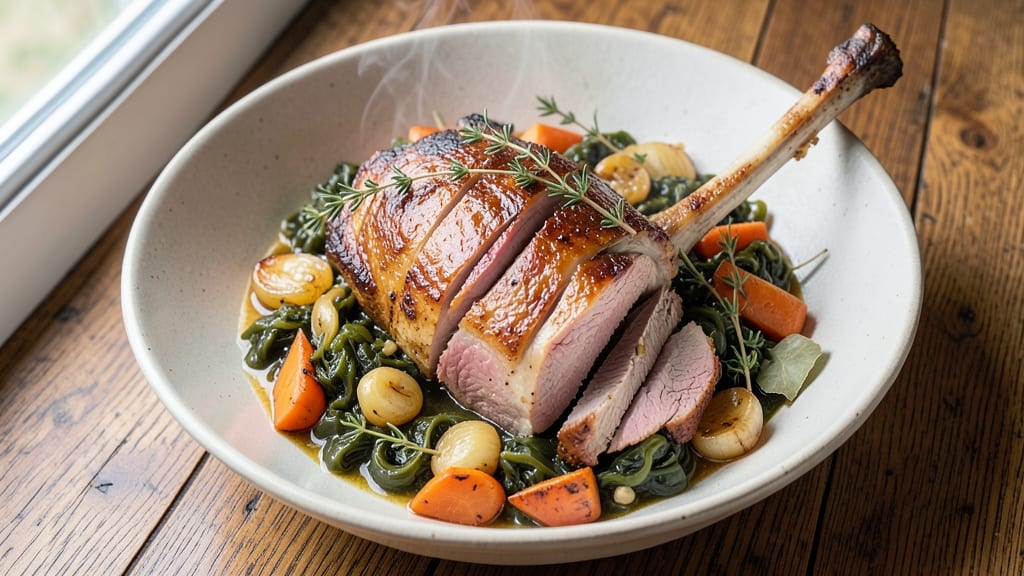
This bone-in pork roast and sauerkraut recipe brings hearty German comfort to your table with rich, fall-off-the-bone meat and tangy fermented cabbage. After years of perfecting pork roasts in my Charleston kitchen—where I prepare thousands of pounds weekly—I’ve refined this method to deliver restaurant-quality results at home. The bone adds depth of flavor while keeping the meat impossibly tender, and the sauerkraut transforms from simple side to a star player with caramelized onions and warm spices.
The secret to this dish lies in the balance between slow roasting and quick braising. You’ll start with a dry brine for maximum juiciness, then roast the pork until the exterior develops a deep mahogany crust.
Meanwhile, the sauerkraut gets a crisp-sauté in the same pan, absorbing all those precious porky juices while developing a satisfying caramelized edge. This isn’t your grandmother’s leftovers—it’s a meal that tastes even better the next day, when flavors meld into perfect harmony.
What makes this recipe truly special is how the components work together: the pork’s natural richness contrasts beautifully with the sauerkraut’s tangy bite, while the caramelized onions add sweetness that rounds out every bite.
The result is a dish that feels both rustic and refined—exactly what you’d find at a German beer hall or a Charleston family gathering. It’s the kind of meal that disappears quickly, leaving everyone asking for seconds.
Serve with buttery spaetzle or crusty rye bread to soak up every last drop of that flavorful juices. The leftovers? Even better. This is comfort food at its finest—warm, satisfying, and packed with the kind of flavors that stick with you long after the last bite. Let’s get cooking.
Ingredients for bone in pork roast and sauerkraut
Six ingredients transform into German-style comfort that feeds a hungry crowd.
| Ingredient | Amount | Notes |
|---|---|---|
| Bone-In Pork Roast 🐖 | 4 lb | With bone and fat cap intact |
| Yellow Onions 🧅 | 3 whole | Medium size, sliced into rings |
| Carrots 🥕 | 4 whole | Medium size, cut into thick slices |
| Fresh Sauerkraut 🥬 | 2 cups | Drained and rinsed if too acidic |
| Fresh Thyme 🌿 | ½ ounce | Stems removed, leaves chopped |
| Fresh Bay Leaves 🌿 | 2 whole | For deep flavor infusion |
| Garlic Cloves 🧄 | 6 cloves | Smash slightly for enhanced aroma |
| Dijon Mustard 🍯 | 1 tbsp | For tangy depth of flavor |
| Apple Cider Vinegar 🍎 | ½ cup | For brining and tang |
| Kosher Salt 🧂 | 2 tbsp | Diamond Crystal preferred |
| Black Peppercorns 🌶️ | 1 tsp | Freshly cracked for heat |
| Dark Brown Sugar 🍚 | 2 tbsp | For caramelizing onions |
| Unsalted Butter 🧈 | ½ cup | Cold for finishing |
| Crusty Rye Bread 🍞 | 1 loaf | For serving, sliced thick |
The pork roast is non-negotiable here—bone-in is essential for flavor and moisture. Look for a cut with good marbling from local butchers or the meat department at Whole Foods. A 4-pound roast serves six generously, but if you're feeding a crowd, scale up. The fat cap helps render flavor, so don't trim it. For sauerkraut, Reinhart Foods or Bubbies are my go-tos—fresh is key, not that sad jarred stuff that's been sitting on the shelf for months. The onions and carrots should be firm and vibrant—no wilted ends here.
No fresh thyme? Dried works at one-third the amount, but fresh is ideal. Short on sauerkraut? Substitute with fermented cabbage from a jar, but rinse well to cut the acidity. The Dijon mustard can be swapped for whole-grain mustard if you prefer. For the brining, if you don't have apple cider vinegar, white vinegar works in a pinch. The carrots can be baby carrots if that's what's in your fridge—just adjust the amount to keep the volume similar. The butter matters for finishing—European-style melts beautifully and adds richness.
This roast reheats like a dream—honestly, it's even better the next day once all the flavors meld. Store leftovers in the fridge for up to 5 days, or freeze for 3 months in portioned containers. The sauerkraut mixture keeps separately for 4 days in the fridge. For serving, toast the rye bread until it's crisp—it soaks up those juices like a dream. Double the recipe if you're planning leftovers, because trust me, you'll want them.
Why You'll Love This Recipe
- One-Pot Magic: The pork roast goes in first, then onions and carrots—all on one sheet pan. No chopping like a maniac, no dirty pots, just slide it in the oven and let the thyme and sauerkraut work their magic while you sip wine. (Yes, even on a Tuesday night.)
- Tangy-Caramel Bliss: That crispy bone-in pork? Chef’s kiss. But the real star is the sauerkraut—sour, funky, and perfectly balanced by the sweet caramelized onions. The thyme ties it all together like a hug from your favorite cook.
- Leftovers That Don’t Suck: This roast actually improves the next day. Slice the pork thin, toss it with reheated sauerkraut, and boom—sandwich filling, salad topper, or a quick lunch. (My kids beg for it. I’m not lying.)
- Budget-Friendly Feast: Pork roast stretches further than you’d think, especially with sauerkraut bulking it up. Plus, onions and carrots are cheap, and a little thyme goes a long way. Feed four for under $20, and still feel fancy.
Step-by-step instructions for German-style braised pork roast
This method delivers melt-in-your-mouth pork with rich, tangy sauerkraut—perfect for hearty German-inspired meals.
Prep and Season the Pork Roast
Pat the 4 lb Bone-In Pork Roast completely dry with paper towels, especially the fat cap. This step is crucial for crispy skin later. In a small bowl, mix the 2 tbsp Kosher Salt, 1 tsp Black Peppercorns (cracked), 2 tbsp Dark Brown Sugar, and 1 tbsp Dijon Mustard until fully combined. Rub this mixture all over the pork, including inside the cavity, pressing it into the meat so it adheres well.
Place the seasoned roast in a large resealable bag or container and refrigerate for at least 4 hours or overnight. This dry-brining process ensures deep flavor penetration and helps the meat retain moisture during the long braise. For best results, let it come to room temperature for 1 hour before cooking.
Sear the Pork for Maximum Flavor
Preheat your oven to 325°F. Heat a large Dutch oven or heavy pot over medium-high heat until very hot. Add the 4 lb Bone-In Pork Roast fat-side down and sear for 8-10 minutes until the fat is golden brown and crispy. Flip the roast and sear the other side for another 5-6 minutes until deeply browned.
Remove the pork and set it aside. Here's the thing—those browned bits on the bottom of the pot are pure flavor gold. Don't scrape them out yet. Instead, we'll use them to build our braising liquid. Reduce heat to medium and add the 3 whole Yellow Onions (sliced into rings) and 4 whole Carrots (cut into thick slices) to the pot. Cook for 5 minutes until they begin to soften and caramelize slightly.
Build the Braising Liquid
Add the 6 cloves Garlic Cloves (smashed), 0.5 ounce Fresh Thyme (chopped leaves), and 2 whole Fresh Bay Leaves to the pot. Pour in the 0.5 cup Apple Cider Vinegar and scrape up all those browned bits from the bottom with a wooden spoon. This deglazing step captures all the meaty flavor that would otherwise stick to the pot.
Return the pork to the pot, fat-side up. Pour in enough water to come about halfway up the sides of the roast—approximately 3 cups. The liquid should cover about 2/3 of the pork. Bring to a gentle simmer, then cover the pot with a tight-fitting lid. Transfer to the preheated 325°F oven.
Braise Until Fork-Tender
Braise the pork for 2.5 to 3 hours, checking occasionally to ensure there's always some liquid in the pot. You'll know it's done when the pork reaches an internal temperature of 203°F and the meat is fork-tender with no resistance. The pork should pull away from the bone easily, and the juices should run clear when you pierce the thickest part.
During the last 30 minutes of cooking, add the 2 cups Fresh Sauerkraut (drained and rinsed) to the pot. This allows the sauerkraut to absorb all those rich pork flavors. If the liquid reduces too much before the pork is done, add a little hot water to maintain the braising liquid level.
Finish and Serve with Crusty Bread
Once the pork is perfectly tender, remove it from the pot and transfer to a cutting board. Tent loosely with foil and let it rest for 15 minutes. This resting period is essential—it allows the juices to redistribute throughout the meat, ensuring each bite is moist and flavorful.
While the pork rests, skim any excess fat from the braising liquid and stir in the 0.5 cup Unsalted Butter, allowing it to melt and create a silky sauce. Taste and adjust seasoning if needed. To serve, slice the pork against the grain into ½-inch thick slices. Spoon the sauerkraut and braising sauce over the top and serve with slices of 1 loaf Crusty Rye Bread for soaking up all those delicious juices.
Pro Tips For Making Bone In Pork Roast And Sauerkraut
- CRANK THE HEAT FIRST: Start your pork roast in a screaming-hot pan—no babying it. The first 3-4 minutes of searing at high heat builds that deep crust that keeps the meat juicy, especially with bone-in cuts. (Yes, even if you’re impatient like me, resist the urge to turn it too soon.)
- DRAIN AND RINSE SAUERKRAUT: Skip the soggy kraut—rinse your fresh sauerkraut in cold water, then drain it well before adding it to the pot. The residual brine will make your kraut mushy and water down the pan juices. Pat it dry with a towel if you’re really worried about moisture.
- DON’T SKIP THE THYME SPRIGS: Tuck 2-3 fresh thyme sprigs into the pork’s crevices before roasting—don’t just toss the leaves in. The stems add aroma, and the sprigs release flavor slowly as the meat cooks. (I used to just chop the leaves, but the whole sprig makes a real difference.)
- REST THE PORK UNDER FOIL: Give that roast a solid 5-10 minutes under foil after pulling it from the oven. The bone stays hot enough to keep the meat cooking gently, while the foil traps steam to keep it moist. Cutting into it too soon means dry, sad slices—your future self will thank you.
Flavor customization for bone in pork roast and sauerkraut
Sweet & Smoky Twist
Add 2 tbsp smoked paprika and 1 tbsp brown sugar directly to the pork rub before dry-brining. For extra depth, swap the apple cider vinegar in the braising liquid with ½ cup cherry port wine—this adds a rich, fruity complexity that pairs beautifully with the smoky notes.
I first tried this variation after a trip to Bavaria, where they use dark beers in their pork braises. 🔥
Herb-Infused Sauerkraut
Boost the sauerkraut by adding 1 tbsp fresh dill and 1 tsp caraway seeds during the last 15 minutes of braising. The caraway seeds are a classic German touch, while the dill adds brightness that cuts through the richness of the pork.
For a Southern twist, I sometimes add ½ tsp cayenne pepper to give it a subtle kick—perfect for those who love a little heat with their comfort food.
Apple & Fennel Fusion
Sauté 1 sliced apple and 1 bulb fennel with the onions and carrots for added sweetness and anise-like depth. The apple caramelizes beautifully, while the fennel adds a delicate licorice note that complements the pork.
I developed this version after experimenting with my heritage pigs—it’s especially good if you serve it with a side of spaetzle or potato dumplings to soak up the juices.
Spicy Mustard Glaze
After the pork rests, make a quick glaze by mixing 2 tbsp Dijon mustard, 1 tbsp honey, and 1 tsp sriracha. Brush this over the sliced pork just before serving.
The heat from the sriracha balances the richness, while the honey adds a touch of sweetness. This is a crowd-pleaser at my restaurant—guests always ask for the recipe! 💫
Beer-Braised Version
Replace the water in the braising liquid with 3 cups dark lager or stout beer (like Samuel Adams Black Lager). The maltiness enhances the pork’s natural sweetness, and the carbonation helps tenderize the meat.
For extra richness, add 2 oz cold butter at the end of cooking. This method is inspired by my time working with German brewmasters—it’s a game-changer for beer lovers.
Creamy Potato Topping
For a heartier dish, mash 2 cups cooked Yukon Gold potatoes with 2 tbsp sour cream and 1 tbsp fresh chives. Spread this over the sauerkraut before serving. The creaminess contrasts perfectly with the tangy kraut and juicy pork.
I often serve this version during winter months—it’s the kind of meal that warms you from the inside out. ❄️
Nutrition facts
Frequently asked questions
Why is bone-in pork better for this recipe?
The bone adds incredible depth of flavor while keeping the meat impossibly tender during the long braise. It also helps retain moisture better than boneless cuts, resulting in juicier meat that practically falls apart. Plus, the bone infuses the braising liquid with rich gelatin, creating a silky sauce that coats every bite.
Can I use regular sauerkraut from a jar?
Yes, but fresh sauerkraut works best for this recipe. If using jarred, rinse it thoroughly to reduce acidity and drain well before adding. For extra flavor, look for brands with minimal additives. The fresher the kraut, the better it will absorb the pork's rich flavors during braising.
How do I know when the pork is done?
Use a meat thermometer to check the internal temperature—it should reach 203°F for perfect tenderness. The meat should pull away from the bone easily and have no resistance when pierced. If you don't have a thermometer, check for fork-tenderness by inserting a fork into the thickest part—it should slide in effortlessly.
What's the best way to reheat leftovers?
Slice the pork and sauerkraut separately, then reheat in a skillet with a splash of water or broth over medium-low heat until warmed through. For extra richness, add a pat of butter. The pork reheats beautifully and actually tastes better the next day as flavors meld further. Store leftovers in airtight containers for up to 5 days.
Can I make this in a slow cooker?
Sear the pork first, then transfer everything to a slow cooker and cook on low for 8-10 hours or high for 5-6 hours. Add the sauerkraut during the last 30 minutes of cooking. The slow cooker method is perfect for busy days—just be sure to check the liquid level occasionally and add water if needed to prevent drying out.