
Main Courses
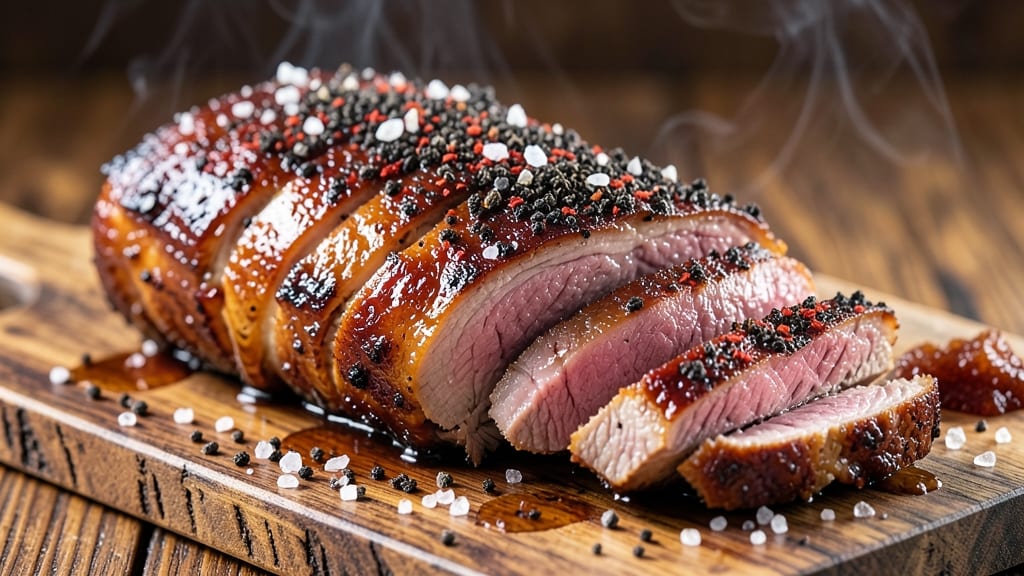
This bone-in pork loin smoker recipe delivers restaurant-quality results with a crispy bark and juicy pink center—the kind of magic that transforms backyard cookouts into showstopping meals. ✨ I've been perfecting this technique for years, especially during the Southeast BBQ circuit where judges demand that perfect balance between smoky flavor and tender texture.
The bone-in cut adds extra richness and keeps the meat moist during the long smoke, while the right wood choice creates that unmistakable bark that makes everyone ask for seconds.
The secret lies in low-and-slow smoking at 225°F with a mix of hickory and applewood—hickory for that classic smoky depth, applewood for subtle sweetness that complements the pork beautifully.
I've found that a dry rub with brown sugar, smoked paprika, and black pepper creates the perfect foundation for that coveted bark while keeping the interior tender.
This isn't just about throwing meat on the smoker and hoping for the best; it's about precision in temperature control, smoke exposure, and knowing exactly when to wrap for that juicy core.
What you'll end up with is a bone-in pork loin that's shatteringly crispy on the outside with a tender, juicy interior that practically melts in your mouth. The bone stays perfectly pink, adding to the visual appeal while keeping the meat moist.
This is the kind of dish that makes your smoker worth every inch of space in your backyard—smoky, flavorful, and impressive enough for company but simple enough for weeknight dinners.
Serve it sliced thick against a bed of creamy mac and cheese or with grilled corn and collard greens for a full Southern spread. The leftovers reheat beautifully too, making this the ultimate make-ahead centerpiece for any gathering. Let's get smoking!
Ingredients for bone in pork loin smoker
These premium ingredients transform your smoker into a showstopping Southern masterpiece.
| Ingredient | Amount | Notes |
|---|---|---|
| Bone-In Pork Loin 🥓 | 3 lb | Center-cut, 1.5-inch thick |
| Brown Sugar 🍚 | ¼ cup | Light or dark variety |
| Smoked Paprika 🌶️ | 2 tbsp | High-quality for authentic flavor |
| Coarse Black Pepper 🌶️ | 1 tbsp | Freshly cracked for texture |
| Coarse Sea Salt 🧂 | 1 tbsp | Diamond Crystal preferred |
| Hickory Wood Chips 🌳 | 1 package | Soaked for 30 minutes |
| Apple Wood Chips 🍎 | 1 package | Soaked for 30 minutes |
| Yellow Onion 🧅 | 1 whole | Quartered, for serving |
| Fresh Rosemary 🌿 | ¼ cup | Chopped, for serving |
| Aluminum Foil 📄 | 1 sheet | Heavy-duty for wrapping |
| Butter 🧈 | ½ cup | Unsalted, softened for basting |
| Apple Cider Vinegar 🍎 | 1 tbsp | For spritzing during smoke |
The bone-in pork loin is non-negotiable—center-cut with that 1.5-inch thickness ensures perfect bark without drying out the interior. Costco or your local butcher will have the best cuts, and I always ask for the bone-in version since it adds richness. For the wood chips, Traeger or Cookshack brands are my go-to—they hold up perfectly during soaking. The smoked paprika? Penzeys or McCormick smoked varieties make all the difference in that authentic bark flavor. Don't skip the soaking step—hydrated wood chips produce cleaner, more consistent smoke for hours.
No hickory chips? Mesquite works in a pinch, though it's stronger—use half the amount. Running low on brown sugar? Turbinado sugar at 1:1 ratio gives a similar caramelized bark. The applewood chips can be swapped for cherry wood if that's what you've got, but stick with fruitwoods for that subtle sweetness. For the vinegar spritz, white vinegar works too—just dilute it with water first. And if you're short on foil? Butcher paper lets the bark stay crispier during the wrap, though foil is more foolproof for beginners.
This pork keeps beautifully—3-4 days in the fridge if wrapped tightly, or up to 3 months frozen. I always slice it thick against the grain and store portions in airtight containers. The leftovers reheat perfectly in a 350°F oven for 15 minutes with a splash of water to keep them moist. Pro tip: save the bones for pork broth—they yield rich, flavorful stock that's perfect for mac and cheese or collard greens.
Why You'll Love This Recipe
- Smokehouse Simplicity: I swear by this recipe because it’s that easy—just rub, smoke, and let it do the work. No fancy prep, no stressing over timing. The bone-in cut stays juicy while the crust gets that perfect smoky crackle from the paprika and salt.
- Sweet-Smoky Magic: That caramelized brown sugar crust? Chef’s kiss. It balances the smoky heat with just enough sweetness, while the coarse pepper adds a little bite. Honestly, the first time I sliced into it, my whole kitchen smelled like a BBQ dream.
- Weeknight Workhorse: Between us, this is my go-to for dinner parties and lazy Sundays. Slice it thin for tacos, serve it whole for a centerpiece cut, or even shred it for sandwiches. (Yes, even on a Tuesday night.)
- Budget-Friendly Luxury: Bone-in pork loin is cheaper than you’d think, and a single roast stretches across three meals—sandwiches, hash, or even fried rice. I’ll be real: it’s the kind of leftovers I actually look forward to.
Step-by-step instructions for smoked bone-in pork loin
Here's the foolproof method for achieving that perfect smoky bark and juicy pink center every time.
🔥 Step 1: Prepare and Season the Pork Loin
Start by removing the pork loin from the refrigerator and letting it sit at room temperature for 30 minutes. This ensures even cooking throughout. Meanwhile, preheat your smoker to 225°F using the soaked hickory wood chips and apple wood chips—the combination gives you that perfect balance of smoky depth and subtle sweetness.
In a small bowl, mix together the 0.25 cup brown sugar, 2 tbsp smoked paprika, 1 tbsp coarse black pepper, and 1 tbsp coarse sea salt. Rub this mixture all over the pork loin, pressing it into the meat so it adheres well. I like to focus extra attention on the fat cap and edges—this is where that beautiful bark will form. Let the seasoned pork loin rest for another 15 minutes before smoking.
🔥 Step 2: Smoke the Pork Loin Low and Slow
Place the seasoned pork loin directly on the smoker grates, fat side up. This positioning allows the rendered fat to baste the meat as it cooks. Close the lid and let it smoke undisturbed for 4-5 hours. Here's the thing—resist the urge to open the smoker during this time. Every time you peek, you lose heat and moisture, which can set back your cook time by 30-45 minutes.
After 4 hours, spritz the pork loin with 1 tbsp apple cider vinegar using a spray bottle. This helps break up the surface sugars and creates steam, which keeps the meat moist during the final stages. The internal temperature should be around 160°F at this point, but don't worry if it hasn't quite reached that yet—we're going for that perfect pink center.
🥘 Step 3: Wrap and Finish the Cook
Once the internal temperature hits 160°F, it's time to wrap the pork loin in the aluminum foil. I like to double-wrap it to ensure maximum moisture retention. This technique, known as the "Texas crutch," helps power through the stall and ensures a juicy result. Return the wrapped pork loin to the smoker and continue cooking until the internal temperature reaches 203°F—this is when the collagen breaks down and the meat becomes fork-tender.
This final stage usually takes another 1.5-2 hours. You'll know it's done when the internal temperature holds steady at 203°F and the meat is fork-tender with a slight resistance. The bark should be dark and crispy, while the inside remains beautifully pink and juicy.
⏰ Step 4: Rest and Prepare for Serving
Remove the pork loin from the smoker and let it rest on a cutting board for at least 30 minutes. This resting period allows the juices to redistribute throughout the meat, ensuring every slice is moist and flavorful. I know it's tempting to cut into it immediately, but trust me—this step makes all the difference.
While the pork loin rests, prepare your serving platter. Slice the whole yellow onion into wedges and arrange them on the platter. Chop the 0.25 cup fresh rosemary and scatter it around the pork loin. Once the pork loin has rested, slice it against the grain into ½-inch thick slices. Serve immediately with the softened 0.5 cup butter for basting if desired.
Pro Tips For Making Bone In Pork Loin Smoker
- Trim That Fat Cap: The layer of fat on the bone side? Don’t carve it off—score it lightly with a knife in a crosshatch pattern. This lets the smoke penetrate deeper and keeps the meat from curling up like a burrito on the smoker. (Yes, even if it looks messy—it’s not just for show.)
- Start with a Hot Smoker: Fire up your smoker to 275°F (135°C) for the first 30 minutes, then drop to 225°F (107°C). That initial burst of heat helps render fat and kickstart the crust faster than creeping along at a steady low temp. I learned this the hard way—my first attempt took hours to get any color.
- Don’t Drown the Sugar: Brown sugar burns faster than you’d think, especially on a smoker. Mix it with a teaspoon of water or apple cider vinegar before applying—it’ll stick better and caramelize without turning into a blackened glaze. (Trust me, you don’t want to scrape char off your pork.)
- Probe Like a Pro: Use a meat thermometer to check the thickest part of the loin away from the bone—it’ll run 5–10°F hotter there. Pull it at 140°F (60°C) internal temp, then let it rest 10 minutes under foil. Cutting into it early? You’ll end up with a sad, dry slice. (Your guests won’t notice the rest time—your taste buds will.)
Pro cooking tips for great bone in pork loin smoker
Smoke Temperature Mastery
Nailing the 225°F temperature is non-negotiable for that perfect balance of bark and tenderness. I use a Traeger Pellet Grill with a built-in thermometer, but if you're using a charcoal smoker, invest in a quality probe like the Meater.
The key is maintaining that steady temp—fluctuations above 230°F will dry out your pork, while dipping below 220°F risks uneven cooking. I've learned the hard way that even a 10°F swing can throw off your entire cook time by 1-2 hours. 🌡️
Wood Chip Strategy
That hickory-applewood combo is my secret weapon: hickory for that bold smoky punch and apple for sweetness that caramelizes beautifully with the brown sugar. Soak your chips for 30 minutes before using—I've tried the dry method, and it's a disaster.
For extra flavor, I add 1/4 cup applewood chips during the last 30 minutes of cooking to intensify that sweet aroma. Pro tip: If your smoker gets too hot, reduce airflow by closing the dampers slightly rather than adding more wood.
Spritzing for Moisture
That vinegar spritz at the 4-hour mark isn't just for moisture—it's a game-changer for bark development. I use a 1:1 vinegar-to-water ratio in a spray bottle, applying it in quick bursts. The acid helps break down sugars on the surface, creating that perfect crust while keeping the interior juicy.
For extra flavor, I sometimes add 1 tsp Worcestershire sauce to the mix. Timing is everything: spritz too early, and you'll dilute your rub; too late, and you risk steaming instead of bark formation.
The Wrap Technique
When you hit 160°F internal temp, that's your cue to wrap. I double-wrap in heavy-duty foil with a 1/2 cup apple cider vinegar and 2 tbsp butter inside—this creates a steam bath that keeps the meat moist while allowing the bark to stay crisp.
Some pitmasters swear by butcher paper, but I've found foil gives me more consistent results, especially in humid conditions. The wrap should be snug but not airtight—leave a 1-inch opening to allow some steam to escape.
Resting Like a Pro
This is where most home cooks mess up. That 30-minute rest isn't optional—it's when the juices redistribute and the meat becomes fork-tender. I like to tent the pork with foil and let it rest on a wire rack over a baking sheet to catch any drippings.
For extra flavor, I brush the slices with melted butter mixed with 1 tsp fresh rosemary right before serving. The first time I skipped this step, I ended up with dry slices that fell apart—never again! 💪
Internal Temp Secrets
Your meat thermometer should be inserted into the thickest part of the loin, avoiding the bone. I aim for 203°F for that perfect pull-apart tenderness, but don't be afraid to go slightly lower (195°F) if you prefer a more medium-rare center.
The bone stays pink at this temp, which is actually ideal—it's a sign of proper doneness. For extra accuracy, I use a Thermoworks Smoke dual-probe thermometer that tracks both internal temp and smoke levels simultaneously. Trust the probe, not the guesswork!
Nutrition facts
Frequently asked questions
Why does the recipe call for bone-in pork loin instead of boneless?
The bone-in cut stays juicier during long smoking because the bone acts as a natural insulator. It also adds rich, gelatinous flavor as it renders, creating a more complex taste profile. Plus, the bone helps maintain shape during cooking, preventing the meat from shrinking too much. For a 3 lb bone-in loin, expect about 2.5 lbs of usable meat after cooking.
Can I use this recipe with a charcoal smoker instead of pellets?
The technique works perfectly with charcoal smokers. Just maintain that 225°F temperature by adjusting airflow through the dampers. Use a Meater or Thermoworks probe for accuracy—charcoal temps fluctuate more than pellet grills. For extra flavor, add 1/4 cup applewood chips during the last 30 minutes of cooking to intensify the smoke aroma.
What if my smoker can't maintain 225°F consistently?
If your smoker runs too hot, reduce airflow by closing dampers slightly. For temperatures below 220°F, add more wood chips gradually. I've found that 10°F swings can add 1-2 hours to cook time. For stubborn smokers, try preheating with a 250°F start and then adjusting down to 225°F once the wood is burning steadily.
How do I know when the pork is done without overcooking?
Use a meat thermometer inserted into the thickest part (avoiding bone) to check for 203°F internal temperature. The bone stays pink at this temp, which is actually ideal. For medium-rare, aim for 195°F. Pro tip: The bark should be dark and crispy while the interior remains tender—it should pull apart easily with two forks but still have slight resistance.
What are the best sides to serve with smoked pork loin?
Classic Southern pairings include creamy mac and cheese, grilled corn on the cob, and smothered collard greens. For a lighter option, try apple slaw with a tangy vinaigrette or roasted sweet potatoes. The juices from the pork work beautifully with buttery mashed potatoes or crusty bread** for soaking up those delicious drippings.