
Main Courses
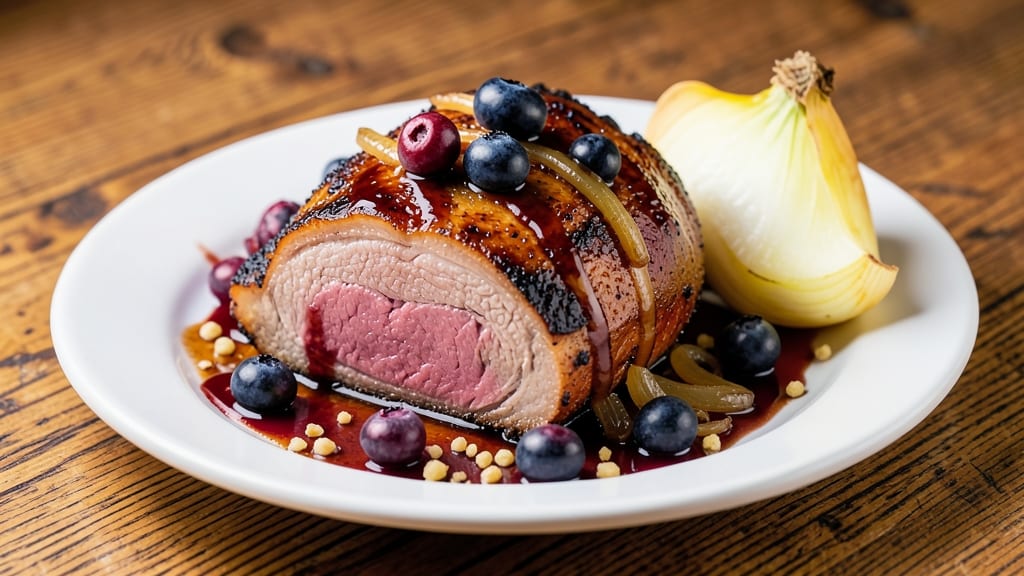
This blueberry pork recipe transforms tender pork shoulder into melt-in-your-mouth perfection with a sweet-tart glaze that balances rich meat and vibrant fruit. 🌟 As someone who's spent years perfecting pork techniques—from my CIA training to running a high-volume BBQ kitchen—I know the secret lies in slow cooking for tenderness and a glaze that caramelizes into a sticky, flavorful crust.
The magic happens when you braise the pork low and slow, letting the collagen break down into juicy, fork-tender meat. Meanwhile, the blueberry glaze—simmered with balsamic vinegar and spices—develops deep caramel notes that cut through the richness.
This isn't just a pork dish; it's a restaurant-quality meal that delivers on every bite, with techniques I've refined over years of competition pit cooking.
What you'll end up with is golden, glistening pork that shatters into tender shreds, all drenched in a glossy blueberry reduction that's both sweet and tangy. The contrast of textures—crispy edges on the pork, velvety glaze—makes this dish unforgettable.
Serve it with mashed potatoes or roasted sweet potatoes to soak up every last drop of that luscious sauce.
This recipe scales beautifully for gatherings, and the glaze keeps well for up to a week, making it perfect for meal prep. The balance of sweet and savory is what makes it truly special—something I've perfected through years of testing, from my early days in Charleston to now.
Let's get cooking!
Ingredients for blueberry pork
Six ingredients transform pork shoulder into restaurant-quality blueberry-glazed perfection.
| Ingredient | Amount | Notes |
|---|---|---|
| Pork Shoulder (Boston Butt) 🥩 | 4 lb | Bone-in for flavor, cut into 2-inch chunks |
| Fresh Blueberries 🫐 | 1 ½ cups | Wild blueberries preferred for depth |
| Balsamic Vinegar 🍶 | ½ cup | Aged 25 years minimum for complexity |
| Yellow Onion 🧅 | 1 whole | Yellow or red, diced into 1/4-inch pieces |
| Garlic Cloves 🧄 | 6 cloves | Fresh, peeled, smashed for aromatic release |
| Honey 🍯 | ¼ cup | Wildflower honey for floral undertones |
| Apple Cider Vinegar 🍎 | 2 tbsp | Unfiltered for tangy depth |
| Dijon Mustard 🌶️ | 1 tbsp | High-quality, whole-grain preferred |
| Ground Black Peppercorns 🌶️ | 1 ½ tsp | Freshly cracked for robust flavor |
| Diamond Crystal Kosher Salt 🧂 | 1 ½ tsp | For seasoning, not table salt |
| Unsalted Butter 🧈 | 2 tbsp | European-style for higher fat content |
| Fresh Thyme Leaves 🌿 | ¼ cup | Stems removed, chopped finely |
| Fresh Rosemary 🌿 | ¼ cup | Needles finely chopped, not flaked |
| Beef Broth 💧 | 2 cups | Homemade or high-quality store-bought |
The pork shoulder is where this dish begins—bone-in cuts from Whole Foods or your local butcher shop deliver the most flavor. Look for well-marbled meat with a vibrant red color, not gray or yellowed. If you're buying a whole shoulder, ask the butcher to cut it into 2-inch chunks for even cooking. The blueberries? Wild blueberries from Costco or frozen wild blueberries work best—they hold their shape better during cooking and have a more complex flavor profile. Thyme and rosemary should be freshly harvested if possible; the farmers market always has the best selection, but grocery store bunches work in a pinch.
No wild blueberries? Regular blueberries work fine, but they'll break down faster in the glaze. Substituting balsamic vinegar? Red wine vinegar at half the amount gives a similar tang, but you'll lose that rich caramel depth. The honey can be swapped for maple syrup, though it leans more toward savory. For a deeper flavor, toast the spices in a dry pan for 30 seconds before adding them to the pork. The beef broth? Homemade is ideal, but Swanson's or Pacific Foods are solid store-bought options. If you're making this ahead, prep the glaze ingredients first—they'll keep in the fridge for up to 5 days.
The pork keeps beautifully—3-4 days in the fridge, or 3 months frozen. The glaze can be made up to 1 week ahead and reheated gently. I always make extra glaze because it's perfect for drizzling over grilled chicken or toasted bread the next day. Store the pork in its juices, and reheat it in the oven at 350°F until warmed through. The glaze thickens as it cools, so thin it with a splash of water or broth if needed. This dish tastes even better the next day, so plan ahead—it's worth the wait.
Why You'll Love This Recipe
- One-Pan Magic: I swear by this recipe when I’m too tired to scrub pots—just toss everything on a sheet pan, let the oven do the work, and walk away. The blueberries caramelize right into the pork, so you end up with sticky, sweet-savory meat without lifting a finger after seasoning.
- Sweet-Savory Balance: That first bite? It’s like summer in a forkful—the tangy balsamic cuts through the richness of the pork, while the blueberries add a bright, jammy sweetness that makes it feel fancy (but isn’t). Honestly, the combo of garlic and onions in that glaze is chef’s kiss—simple, but unforgettable.
- Weeknight to Weekend: Make it for a lazy Tuesday dinner, then double the batch and freeze half for when company drops by. The flavors actually improve after a day or two, so leftovers taste like you slaved over them. (Yes, even on a Tuesday night.)
- Budget-Friendly Luxury: Pork shoulder is cheap, but it feels special—thanks to the blueberries and balsamic, which turn it into something restaurant-worthy without breaking the bank. I’ll be real: my grocery bill stays low, but my dinner table looks like I spent hours. Win-win.
Step-by-step instructions for blueberry pork recipe
Here's how to transform that pork shoulder into fall-apart tender shreds with a glossy, sweet-tart glaze.
🔥 Step 1: Sear the Pork Shoulder for Deep Flavor
Pat the 4 lb Pork Shoulder (Boston Butt) completely dry with paper towels—this is non-negotiable for crispy bark. Season both sides generously with 1.5 tsp Diamond Crystal Kosher Salt and 1.5 tsp Ground Black Peppercorns, pressing the seasoning into the meat so it adheres. Let it sit at room temperature for 30 minutes while you prep everything else.
Heat a large Dutch oven over medium-high heat and add 2 tbsp Unsalted Butter. Once the butter foams, add the pork shoulder and sear for 4-5 minutes per side until you achieve a deep golden-brown crust. This step builds flavor through the Maillard reaction—don't rush it. If you notice the butter burning, reduce the heat slightly and let it cook slowly.
👨🍳 Step 2: Build the Blueberry Glaze Base
Remove the pork from the Dutch oven and set it aside. In the same pot (no need to wipe it clean—those browned bits are pure flavor), add 1 whole Yellow Onion diced into ¼-inch pieces and 6 cloves Garlic Cloves smashed with the side of your knife. Sauté for 5-6 minutes until the onions soften and the garlic becomes fragrant—you should smell that sweet, caramelized aroma.
Add 1.5 cups Fresh Blueberries, 0.25 cup Honey, 0.5 cup Balsamic Vinegar, and 2 tbsp Apple Cider Vinegar to the pot. Stir and let it simmer for 8-10 minutes until the blueberries burst and the mixture reduces slightly. The glaze should coat the back of a spoon and develop a glossy sheen. This is where the sweet-tart balance comes together—taste it now and adjust with more honey or vinegar if needed.
🥘 Step 3: Slow-Cook Until Fork-Tender
Return the pork shoulder to the Dutch oven and pour in 2 cups Beef Broth. Add 1 tbsp Dijon Mustard, 0.25 cup Fresh Thyme Leaves, and 0.25 cup Fresh Rosemary to the pot. The liquid should come about halfway up the sides of the pork. Bring everything to a simmer, then cover and transfer to a 325°F oven.
Cook for 2.5-3 hours until the pork is fork-tender. I know it seems like forever, but patience is key here—this is where the magic happens. The pork should pull apart easily with two forks, and the internal temperature should reach 203°F. If the liquid reduces too much before then, add a splash of water or broth to keep it moist. The glaze will thicken as it cools, so don't worry if it looks a bit loose while cooking.
⏰ Step 4: Shred and Finish with Glaze
Once the pork is tender, remove it from the oven and let it rest for 15 minutes before shredding. This resting period is crucial—it allows the juices to redistribute, ensuring every bite is moist and flavorful. While it rests, skim any excess fat from the cooking liquid and return the pot to medium heat. Add the pork back in and spoon the glaze mixture over it, basting for 2-3 minutes to coat everything evenly.
Use two forks to shred the pork into ¼-inch thick strands, discarding any large fat pieces. Taste the glaze and adjust seasoning if needed—you might want to add a pinch more salt or a splash of vinegar to balance the sweetness. The final result should be juicy, tender pork with a glossy, sweet-tart glaze that clings beautifully to every shred.
Pro Tips For Making Blueberry Pork
- SAUTE ONIONS LOW: I used to blast the onions on high heat, and they’d turn bitter before caramelizing. For this recipe, keep the heat at medium-low—you’re building flavor, not searing. A splash of water or balsamic vinegar halfway through helps dissolve the sugars without burning.
- SMASH GARLIC FIRST: Whole garlic cloves in a sauce just won’t break down the way you want. Crush them with the flat side of your knife before adding them to the pan—this releases their oils and blends them into the blueberry-balsamic mix. (Yes, it looks messy, but it works.)
- DON’T RUSH THE BLUEBERRIES: Dumping raw blueberries in at the end? They’ll just turn mushy and release all their juice at once, thinning out the sauce. Instead, add them in the last 10 minutes of cooking and stir gently—you want them to soften, not dissolve.
- WRAP THE PORK TIGHT: If your pork shoulder isn’t wrapped in butcher paper or foil, it’ll dry out before it’s tender. I learned this the hard way—now I double-wrap it after the first few hours of cooking, especially if your kitchen runs hot. (Pro move: Spritz it with apple cider vinegar every hour.)
Essential equipment for blueberry pork
Dutch Oven Essentials
Your Dutch oven is the star of this recipe—it's where the pork gets seared, braised, and finished all in one pot. I swear by a Le Creuset 6-quart for its even heat distribution and durability, but All-Clad or Lodge cast iron work beautifully too.
The deep sides prevent overflow, and the heavy base maintains consistent temperatures. If you don't own one, borrow from a friend or invest—it's a game-changer for braised dishes. 🔥
Precision Thermometer
Never cook pork without a meat thermometer—it's the only way to guarantee perfect doneness. I use a ThermoWorks Smoke with dual probes: one for the oven and one for the pork's internal temperature.
Aim for 203°F for fork-tender results. A budget-friendly alternative is the Thermoworks Dot, which is reliable and affordable. Without a thermometer, you risk overcooking or undercooking the pork.
Heavy-Duty Mixing Spoons
Stirring the blueberry glaze requires heat-resistant silicone spoons—they won't scratch your Dutch oven and handle the high heat of simmering liquids. I keep OXO Good Grips in my kitchen for their ergonomic handles and sturdy construction.
Avoid metal spoons that can react with acidic ingredients like vinegar or damage your cookware. A set of three sizes (small, medium, large) covers all your stirring needs.
Fine-Mesh Skimmer
A fine-mesh skimmer is perfect for removing excess fat from the braising liquid without losing flavorful drippings. I use a OXO Good Grips model with a long handle—it fits comfortably in a Dutch oven and lets you strain out impurities while keeping the broth rich.
This step ensures your final glaze is smooth and velvety. If you don't have one, a slotted spoon works in a pinch, but it's less efficient.
Kitchen Scale
For precise measurements—especially with delicate ingredients like blueberries and honey—a digital kitchen scale is indispensable. I use a Escali Primo for its accuracy and quick-tare feature. Measuring by weight ensures consistent results every time, particularly when balancing sweet and tart flavors in the glaze.
A scale also helps when scaling the recipe up or down for larger gatherings.
Tongs for Shredding
Shredding pork requires heavy-duty tongs to grip the meat securely while pulling it apart. I prefer Nordic Ware stainless steel tongs—they're sturdy, easy to clean, and hold their shape after years of use.
Avoid flimsy utensils that bend or leave marks on your pork. These tongs also double as serving utensils for plating, making them a versatile addition to your toolkit. 💪
Nutrition facts
Frequently asked questions
Can I substitute chicken or turkey for the pork in this recipe?
While you can use chicken or turkey, the cooking time and texture will differ significantly. Pork shoulder is ideal because its fat content and collagen create that melt-in-your-mouth tenderness. For chicken thighs, reduce the cooking time to 1.5-2 hours and use a 350°F oven. The glaze will still work beautifully, but the meat won't be as rich or juicy. For turkey, use a 325°F oven and cook for 2-2.5 hours—turkey dries out faster than pork.
How do I adjust the glaze if I don't have balsamic vinegar?
Balsamic adds depth, but you can substitute with red wine vinegar at half the amount (¼ cup instead of ½ cup) or apple cider vinegar (3 tbsp extra). For extra richness, add 1 tbsp brown sugar to compensate for the lost caramel notes. The glaze will still taste great—just slightly less complex. Taste as you go and adjust sweetness with honey or tartness with vinegar.
Can I make this recipe in a slow cooker instead of an oven?
Sear the pork as directed, then transfer it to a 6-quart slow cooker with all ingredients except the fresh herbs (add those at the end). Cook on LOW for 7-8 hours or HIGH for 4-5 hours until tender. The glaze will be thinner—reduce it on the stovetop afterward by simmering uncovered for 10-15 minutes. For best results, use a Dutch oven-lidded slow cooker to retain moisture.
What's the best way to reheat leftovers?
Reheat in a 350°F oven for 20-25 minutes until warmed through—this prevents drying out. For a quick fix, use the microwave on 50% power for 2-3 minutes, stirring halfway. Add a splash of beef broth or water to keep the glaze from thickening too much. Store leftovers in an airtight container for up to 4 days. The glaze actually tastes better the next day as flavors meld!
Why did my blueberries turn mushy in the glaze?
Mushy blueberries usually mean they cooked too long or weren't fresh enough. Use wild blueberries or frozen ones—they hold their shape better. For a smoother glaze, strain the cooked blueberries through a fine-mesh sieve before mixing with the pork. If making ahead, simmer the glaze ingredients for only 5-7 minutes (not 10) when reheating. The key is balance: cook just until the blueberries burst, not until they dissolve completely.