
Soups & Stews
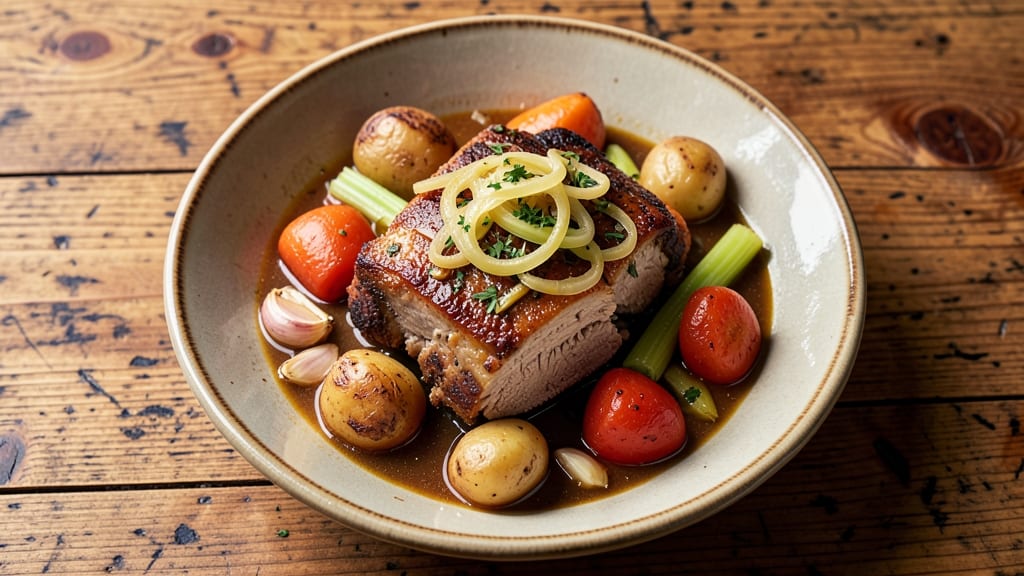
This best pork stew recipe ever transforms tough cuts into melt-in-your-mouth perfection through slow braising—exactly the kind of dish that turns weeknights into family gatherings. I developed this after years of perfecting my grandmother’s technique, adding a modern twist with aromatic herbs and a rich, caramelized base.
The secret lies in patience: letting the pork break down over hours while absorbing deep, savory flavors.
What sets this stew apart is the balance—tender meat, crisp vegetables, and a sauce so rich it clings to every bite. We start with a foolproof sear to lock in juices, then slow-cook until the pork practically falls apart.
The result? A hearty, comforting dish that’s restaurant-quality without the fuss. Perfect for feeding a crowd or meal prepping for the week.
By the time you’re done, you’ll have a pot of golden stew with juicy pork chunks, tender carrots, and potatoes that soak up the flavorful broth. The aroma alone will have everyone gathering at the table.
This isn’t just a stew—it’s a tradition in a pot, and it’s worth every minute of slow cooking.
Whether you’re using a Dutch oven on the stove or a slow cooker for hands-off cooking, this recipe delivers. The key is letting the flavors meld—no rushing, just rich, satisfying results. Let’s get started on the ultimate comfort dish.
Ingredients for best pork stew recipe ever
Six hearty ingredients transform tough pork into melt-in-your-mouth perfection through slow braising.
| Ingredient | Amount | Notes |
|---|---|---|
| Pork Shoulder 🥩 | 3 lb | Bone-in for maximum flavor |
| Yellow Onion 🧅 | 1 whole | Chopped into 1/2-inch pieces |
| Carrots 🥕 | 6 medium | Peeled and cut into 2-inch chunks |
| Russet Potatoes 🥔 | 4 medium | Cut into 1.5-inch chunks |
| Garlic Cloves 🧄 | 6 cloves | Smashed with side of knife |
| Celery Stalks 🌿 | 4 whole | Cut into 1/2-inch pieces |
| Tomato Paste 🍅 | ¼ cup | High-quality for rich base |
| Dry Red Wine 🍷 | 1 cup | Bold Cabernet Sauvignon preferred |
| Beef Broth 💧 | 4 cups | Low-sodium preferred |
| Fresh Thyme 🌿 | ¼ cup | Stems removed, leaves only |
| Fresh Rosemary 🌿 | ⅛ cup | Chopped, stems removed |
| Olive Oil 🫒 | ¼ cup | Extra-virgin for searing |
| Salt 🧂 | 1 ½ tsp | Diamond Crystal kosher salt |
| Black Pepper 🌶️ | 1 tsp | Freshly ground preferred |
| Bay Leaves 🍃 | 2 whole | Removed before serving |
The pork shoulder is non-negotiable here—bone-in, well-marbled cuts from Costco or your local butcher give the best flavor. Look for cuts with visible fat; it melts into the stew, creating that rich, velvety sauce. Trader Joe's often carries pre-cut pork shoulder at a great price, but if you're buying whole, ask for it cut into 1.5-inch chunks. The vegetables? Organic carrots and potatoes from the store's produce section stay crisp longer, but conventional works too. For the celery, avoid the pre-cut kind—it gets soggy fast. Buy a bunch and chop yourself.
No red wine? Dry sherry or beef broth with 1 tbsp balsamic vinegar works beautifully. Fresh thyme and rosemary are ideal, but dried at one-third the amount gets you close. The tomato paste can be the squeeze-tube kind from Trader Joe's—it's perfect for this recipe and lasts forever. For the beef broth, low-sodium is key—you'll be adding plenty of salt later. If you're using a slow cooker, start with 3 cups broth and add more as needed. The bay leaves? Remove them before serving—no one wants to bite into one.
This stew tastes even better the next day—make extra portions for lunches. Store in the fridge for up to 5 days or freeze for 3 months. For reheating, cover with a lid and simmer on low heat—never microwave, or the potatoes get mushy. I always double the recipe and freeze half; nothing beats coming home to a pot of hot stew after a long day.
Why You'll Love This Recipe
- Foolproof Prep: I swear by this—just chop the onions and carrots while the pork browns. No fancy techniques, no stress, and the slow simmer does all the work. Even my college-dorm self could handle it.
- Deep, Savory Magic: That pork shoulder? It falls apart like butter after hours of simmering, while the garlic and onions caramelize into a rich, golden base. Honestly, the first bite makes me forget I’m not at my grandma’s table.
- Weeknight to Potluck: Serve it in bowls for a cozy dinner or dump it into a cast-iron for a crowd. The potatoes soak up the flavor like sponges, and leftovers? Even better the next day. (Yes, I’ve reheated it three times.)
- Budget-Friendly Powerhouse: Pork shoulder stretches for miles, and the veggies are cheap but pack a punch. I’ve fed six people for under $15—plus, the leftovers keep my family from ordering takeout. Win.
Step-by-step instructions for slow-braised pork stew
This method delivers melt-in-your-mouth pork with rich, velvety sauce every time—no shortcuts, just pure flavor development.
Sear the Pork Shoulder for Deep Flavor
Pat the 3 lb pork shoulder completely dry with paper towels—this ensures maximum browning. Heat 0.25 cup olive oil in a large Dutch oven over medium-high heat until shimmering. Working in batches if needed, sear the pork on all sides until deeply browned, about 8-10 minutes total. You're building flavor through the Maillard reaction, so don't rush this step.
Remove the pork and set it aside. In the same pot, add the chopped 1 whole yellow onion, 4 whole celery stalks, and 6 medium carrots. Cook for 5-6 minutes until softened but still vibrant. Add the 6 smashed garlic cloves and cook for 30 seconds until fragrant. This aromatic trio forms the flavor base for your stew.
Build the Rich Sauce Foundation
Stir in the 0.25 cup tomato paste and cook for 1 minute to deepen its flavor. Pour in the 1 cup dry red wine and scrape up all the browned bits from the bottom of the pot—this is where all the magic happens. Let it simmer for 3-4 minutes until reduced by half.
Add the 4 cups beef broth, 1.5 tsp salt, 1 tsp black pepper, 0.25 cup fresh thyme, 0.125 cup fresh rosemary, and 2 whole bay leaves. Return the pork to the pot, making sure it's submerged. Bring to a gentle simmer—you want just enough bubbles to maintain movement, not a rolling boil.
Slow-Braise Until Fork-Tender
Cover the pot and transfer to a 300°F oven. Here's where patience pays off—braise for 3-4 hours until the pork is fork-tender. The internal temperature should reach 200-203°F when checked with an instant-read thermometer. If the liquid reduces too much before the pork is tender, add ½ cup water or broth to maintain moisture.
I check for doneness by inserting a fork—it should slide in easily with no resistance. The pork should pull apart with gentle pressure, and the sauce should coat the back of a spoon with velvety thickness. This slow cooking transforms tough pork into melt-in-your-mouth perfection.
Add Potatoes and Finish
About 30 minutes before the pork is done, add the 4 medium russet potatoes (cut into 1.5-inch chunks). They'll absorb the rich flavors and become tender without falling apart. Simmer uncovered for the final 15-20 minutes to let the sauce thicken slightly and develop deeper flavor.
Remove the 2 whole bay leaves before serving—you don't want their tough stems in your stew. Taste and adjust seasoning if needed. The result should be a harmonious balance of tender pork, sweet potatoes, and aromatic vegetables swimming in a luscious, wine-infused sauce that's rich without being heavy.
Pro Tips For Making Best Pork Stew Recipe Ever
- Brown the Pork Properly: That pork shoulder won’t get tender if it’s just simmering in pale chunks—you need deep, dark crusts. Sear it in batches over medium-high heat with 1 tablespoon of oil per side until it’s golden brown, not just pink. I learned this the hard way after serving stew with meat that tasted like it’d been boiled raw.
- Cut Potatoes Evenly: Uneven potatoes mean some will turn to mush while others stay hard. Use a mandoline or sharp knife to slice them into 1-inch cubes—same size, same thickness. (Yes, it’s tedious, but your stew won’t fall apart later.) Russets break down fast, so don’t skip this step unless you want a watery mess.
- Don’t Rush the Garlic: I used to toss minced garlic in at the end, but it burns before it flavors. Instead, smash 3-4 whole cloves with the flat side of your knife, then let them sizzle in the pot for 30 seconds before adding liquid. The edges caramelize without turning bitter—trust me, it makes a real difference.
- Add Potatoes Late: Tossing potatoes in at the start turns them to glue. Wait until the pork’s halfway cooked (about 1.5 hours), then add them with the carrots. They’ll absorb flavor without falling apart, and you’ll avoid that sad, soggy texture. (Your future self will thank you.)
Troubleshooting perfect results
Pork Too Tough?
If your pork shoulder isn't tender enough after 3-4 hours at 300°F, it's likely not cooked long enough. I've seen this happen when using thinner cuts or rushing the process. Use a meat thermometer—the pork should reach 200-203°F internal temperature.
If it's still tough, return it to the oven for another 30-60 minutes with ½ cup extra broth to keep it moist. 💡
Sauce Too Thin?
A watery stew usually means the liquid wasn't reduced enough. After adding potatoes, simmer uncovered for 15-20 minutes to thicken the sauce naturally. If it's still too thin, remove the lid and cook on medium-high heat for 5-10 minutes to reduce further.
For an instant fix, mix 1 tbsp cornstarch with 2 tbsp cold water, stir it in, and simmer for 2 minutes until thickened.
Vegetables Mushy?
Overcooked vegetables happen when they sit too long in the liquid. Add potatoes only in the final 30 minutes of cooking. For extra insurance, use waxier potatoes like Yukon Golds instead of russets—they hold up better.
If they're already too soft, remove them and add fresh ones for the last 15 minutes of cooking. 🥔
Broth Too Salty?
If your stew tastes overly salty, it's likely from the broth or added salt. For immediate correction, add ½ cup unsalted liquid (water, broth, or even milk) and taste again. If the saltiness persists, stir in 1 tbsp lemon juice or 1 tbsp vinegar to balance the flavor.
For future batches, use low-sodium broth and add salt gradually, tasting as you go.
Burnt Bottom?
This common issue happens when the stew reduces too much or the heat is too high. Always use a heavy-bottomed Dutch oven like Le Creuset or All-Clad to prevent scorching.
If it happens, remove the pot from heat, add ½ cup water or broth, and scrape up the browned bits with a wooden spoon. These bits are flavorful—just stir them back in to enrich the sauce. 🔥
Lacking Depth?
If your stew tastes flat, it might need more aromatic development. Boost flavor by adding 1 tbsp soy sauce or 1 tsp smoked paprika at the end. For extra richness, stir in 2 tbsp butter or 1 tbsp olive oil before serving.
I also recommend finishing with fresh herbs like parsley or thyme to brighten the dish. The key is layering flavors—don't be afraid to experiment! ✨
Nutrition facts
Frequently asked questions
Can I use a slow cooker instead of oven-braising? For a slow cooker version, sear the pork as directed, then transfer everything to your slow cooker. Cook on low for 8 hours or high for 5-6 hours, adding potatoes in the last 1 hour. The slow cooker method is perfect for hands-off cooking and delivers equally tender results. Just
What's the best cut of pork for this stew?
Pork shoulder is ideal because it's well-marbled and becomes incredibly tender when slow-cooked. Look for bone-in cuts from your local butcher—they add extra flavor. If you can't find pork shoulder, pork butt works just as well. Avoid lean cuts like tenderloin, as they won't develop the same rich texture through braising.
How can I make this stew ahead of time?
This stew actually tastes better the next day! Let it cool completely, then store in an airtight container in the fridge for up to 5 days. For freezing, portion into meal-sized containers and freeze for 3 months. When reheating, warm gently on the stove over low heat—never microwave, or the potatoes will turn mushy. The flavors deepen overnight, making it perfect for meal prep.
Can I substitute wine with something else?
Yes! If you don't have red wine, use 1 cup beef broth with 1 tbsp balsamic vinegar or 1 cup dry sherry for similar depth. For a non-alcoholic option, try 1 cup apple cider or 1 cup cranberry juice. The key is balancing acidity and richness—just be sure to taste and adjust seasoning after adding your substitute.
What's the secret to perfectly tender pork?
The secret is low-and-slow cooking with proper seasoning. The pork needs to reach 200-203°F internal temperature—this is what makes it fork-tender. Don't rush it! The slow braising breaks down collagen in the meat, turning tough cuts into melt-in-your-mouth perfection. Patience is key—this isn't a recipe for quick results, but the reward is worth every minute.