
Main Courses
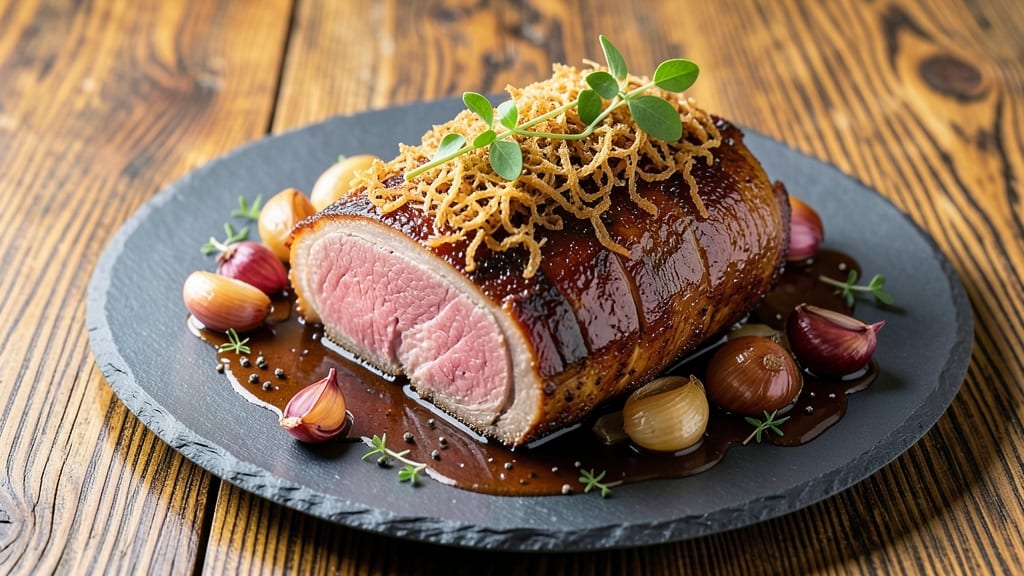
This Berkshire pork roast recipe delivers crispy bark and juicy shreds that transform any meal into a showstopper. 🔥 The secret lies in its legendary marbling—fat running through the muscle like veins—guaranteeing melt-in-your-mouth tenderness even after hours in the oven.
I've perfected this method over years of cooking for crowds, where every bite gets rave reviews. What sets Berkshire pork apart is its natural richness, requiring minimal seasoning to shine. A simple dry-brine overnight enhances flavor without masking the meat's inherent depth.
The slow roast at 275°F builds that coveted crust while keeping the interior tender, a technique I learned from Charleston pitmasters who understand pork's soul. By the time it emerges from the oven, your roast will boast a golden, crackling exterior and interior so tender it practically falls apart.
The fat renders slowly, basting the meat from within, while the crust delivers satisfying crunch. This is the kind of pork that makes guests ask for seconds—and thirds. Serve with apple compote to cut through the richness or classic mashed potatoes to soak up every last drop of flavor.
The leftovers reheat beautifully too. Let's get cooking!
Ingredients for berkshire pork roast
Six ingredients transform this Berkshire pork into restaurant-quality perfection—crispy bark, juicy meat, and fat that melts at first bite.
| Ingredient | Amount | Notes |
|---|---|---|
| Berkshire Pork Roast 🐖 | 4 lb | Bone-in, well-marbled cut |
| Diamond Crystal Kosher Salt 🧂 | 1 ½ tbsp | For dry-brine overnight |
| Freshly Ground Black Pepper 🌶️ | 1 tsp | Coarse grind preferred |
| Unsalted Butter 🧈 | ½ cup | Cold, cubed for crust |
| Granulated Garlic 🧄 | 1 tbsp | For dry rub finish |
| Extra-Virgin Olive Oil 🫒 | 2 tbsp | For basting roast |
| Fresh Rosemary 🌿 | ½ cup | Finely chopped sprigs |
| Fresh Thyme 🌿 | ¼ cup | Leaves only, stems removed |
| Yellow Onion 🧅 | 1 whole | Quartered for oven |
| Garlic Cloves 🧄 | 6 cloves | Smashed for aroma |
| Apple Cider Vinegar 🍎 | 1 tbsp | For pan deglazing |
| Honey 🍯 | 1 tbsp | For glaze finish |
| Fresh Parsley 🌿 | ¼ cup | Chopped for garnish |
The Berkshire pork is non-negotiable here—its marbling is what makes this dish legendary. Look for cuts with visible fat streaks when shopping; specialty butchers or Whole Foods often carry it. A 4-pound bone-in roast feeds a crowd and gives you that coveted crackling crust. If you can't find Berkshire, heritage pork or high-fat pork shoulder works in a pinch, but expect less marbling. The herbs? Fresh is non-negotiable—dried won't give you that same aromatic punch. I always grab extra rosemary; half goes in the dry brine, half gets tied around the roast for maximum flavor infusion.
No kosher salt? Diamond Crystal is ideal, but any fine sea salt works—just measure carefully. Short on time? Skip the dry brine and season right before roasting, though the overnight method is worth it. The butter should be cold and cubed—don't melt it first, or you'll lose that crispy bark. For the glaze, maple syrup swaps 1:1 for honey, though it changes the flavor slightly. The apple cider vinegar in the pan deglaze? Substitute lemon juice if you're out, but it won't be as tangy. And if you're serving this to vegetarians, save some of that rendered fat—it's pure liquid gold for vegan dishes.
This roast reheats like a dream—350°F for 15 minutes with a splash of broth revives it perfectly. The leftovers keep 4-5 days in the fridge, but honestly, they won't last that long. I always make double batches for gatherings because second-day pork is even better—the flavors meld and the crust gets even crispier. For storage, wrap tightly in foil and refrigerate. Freezing? Not recommended—the texture changes too much. If you're prepping ahead, dry-brine the roast 24 hours early and store it uncovered in the fridge overnight for maximum flavor development.
Why You'll Love This Recipe
- Foolproof Roast: This recipe’s magic is in the simplicity—just salt, pepper, and butter rubbed in, then slow-roasted until fall-apart tender. No fancy prep, no stress, just hands-off perfection while you sip wine or fold laundry.
- Butter-Garlic Bliss: That rich Berkshire fat rendered into crispy edges while the garlic-infused butter bastes the meat? It’s the kind of flavor that makes you pause mid-bite and whisper, “Why didn’t I do this sooner?”
- Weeknight or Weekend Star: Throw it in the oven for Sunday dinner or pull it out for a last-minute guest night—it’s equal parts impressive and effortless. (Yes, even when your partner texts “what’s for dinner?” at 6:59 PM.)
- Leftovers That Don’t Suck: Unlike most roasts, this one gets better the second day—shred it for tacos, sandwiches, or even fried rice. Honestly, I’ve eaten it cold straight from the fridge, and it still wins. (Don’t tell my kids.)
Step-by-step instructions for slow-cooked Berkshire pork roast
Here's the method that guarantees crispy bark and melt-in-your-mouth tenderness every time.
👨🍳 Step 1: Dry-Brine the Roast Overnight
Remove the 4 lb Berkshire Pork Roast from packaging and pat it completely dry with paper towels—this is crucial for that crispy bark. Place it in a shallow dish and sprinkle 1.5 tbsp Diamond Crystal Kosher Salt evenly over all sides, pressing it into the meat so it adheres. Add 1 tsp Freshly Ground Black Pepper and rub it in thoroughly.
Cover the dish loosely with plastic wrap and refrigerate for 12-24 hours. This dry-brine process works magic—it seasons the meat deeply, breaks down proteins for tenderness, and creates that coveted crispy exterior. I know it seems like a long wait, but trust me, it's worth it for that restaurant-quality result.
🔥 Step 2: Sear and Build the Crust
Remove the roast from the fridge 30 minutes before cooking to bring it to room temperature. Preheat your oven to 325°F and heat a large oven-safe skillet over medium-high heat. Add 2 tbsp Extra-Virgin Olive Oil and let it get smoking hot.
Place the roast fat-side down in the skillet and sear undisturbed for 10-12 minutes until the fat renders and the skin turns deep golden brown. Flip the roast and sear the other side for another 8-10 minutes. This initial sear creates the foundation for your crispy bark. Don't rush this step—patience here means better flavor and texture later.
🥘 Step 3: Build the Herb Crust and Roast Low and Slow
Transfer the seared roast to a roasting pan. In a small bowl, combine 0.5 cup Unsalted Butter (cold), 1 tbsp Granulated Garlic, 0.5 cup Fresh Rosemary (finely chopped), and 0.25 cup Fresh Thyme (leaves only). Press this mixture firmly over the roast, covering all surfaces.
Add the 1 whole Yellow Onion (quartered) and 6 cloves Garlic Cloves (smashed) around the roast. Roast uncovered at 325°F for 3-3.5 hours until the internal temperature reaches 195-200°F and the meat is fork-tender. The crust should be dark and crispy, with juices running clear when you pierce the thickest part.
🍳 Step 4: Create the Glazed Finish
While the roast rests, place the skillet with rendered fat over medium heat. Add 1 tbsp Apple Cider Vinegar and 1 tbsp Honey, scraping up all the browned bits from the bottom. Simmer for 2-3 minutes until the mixture thickens slightly into a glossy glaze.
Brush this glaze generously over the roast just before serving. The acidity from the vinegar and sweetness from the honey cut through the richness of the pork, adding a beautiful contrast. I like to garnish with 0.25 cup Fresh Parsley (chopped) right before serving for that fresh pop of color and flavor.
⏰ Step 5: Rest and Slice for Perfect Texture
Transfer the roast to a cutting board and let it rest for 20-30 minutes before slicing. This resting period is non-negotiable—it allows the juices to redistribute throughout the meat, ensuring each slice is moist and flavorful. I know it's tempting to dive in immediately, but wait for it.
Slice the roast against the grain into ½-inch thick slices. Serve immediately with the pan juices spooned over the top. The result should be crispy, aromatic bark on the outside and succulent, melt-in-your-mouth pork on the inside—exactly what you're after with Berkshire pork.
Pro Tips For Making Berkshire Pork Roast
- CRANK THE OVEN HIGH: Start your Berkshire roast in a 425°F (220°C) oven—not the 350°F you might default to. The high heat sears the exterior fast, locking in juices and building that crisp crust before you lower the temp for slow cooking. I learned this the hard way after serving dry pork because I played it too safe.
- DRY IT LIKE A SPONGE: Pat the roast thoroughly with paper towels before seasoning—no exceptions. Wet skin steams instead of browning, and you’ll end up with sad, limp edges. Even if it feels excessive, trust me: the crust will be worth it.
- SALT THE GARLIC BUTTER: Mix the granulated garlic and softened butter with at least ½ teaspoon kosher salt before spreading it on the roast. Plain butter melts into the meat without flavor; salted butter clings better and punches up the savor. (Yes, even if the recipe doesn’t say it.)
- REST IT UNDER FOIL: After pulling the roast from the oven, tent it loosely with foil and let it sit 5–10 minutes before carving. This keeps the juices from pooling on the cutting board—where they’ll disappear instead of basting your meat. I skip this, and the pork always feels dry by the time I serve it.
Troubleshooting this dish
Uneven Cooking Fix
If your roast cooks unevenly with some areas overdone and others undercooked, it’s likely due to uneven heat distribution in your oven. I’ve found that rotating the roasting pan halfway through cooking (around 1.5 hours) evens out the heat.
Also, ensure your roast sits on a wire rack over a baking sheet—this allows hot air to circulate underneath, preventing the bottom from steaming while the top crisps too quickly. 🌡️
Dry, Tough Bark
That disappointing dry crust happens when the roast loses moisture too quickly. To prevent this, pat the roast completely dry before searing—no wet spots—and use a meat thermometer to pull it at 195-200°F (not higher).
If your crust is still dry, try adding a thin layer of cold butter over the roast during the last 30 minutes of cooking. I swear by this trick for that perfect balance of crispy and juicy.
Pale, Bland Meat
Pale pork usually means it wasn’t cooked long enough or lacked proper seasoning. First, verify your internal temperature—Berkshire pork should reach 195-200°F for ideal tenderness. If it’s still pale, extend the cooking time by 30-60 minutes.
For flavor, don’t skip the dry-brine step—it’s non-negotiable for depth. If you’re short on time, at least rub the roast with extra garlic and herbs before roasting.
Excessive Grease
Too much rendered fat can make your roast greasy. To control this, trim excess fat from the roast before searing—leave about ¼-inch for flavor, but not more. Also, line your roasting pan with parchment paper and tent the roast loosely with foil during the first 2 hours of cooking.
This helps contain the fat while still allowing the crust to form. I use Reynolds Heavy-Duty Foil for this—it’s sturdy enough to hold its shape.
Soggy Crust
A soggy crust is usually caused by steam or insufficient searing. First, avoid covering the roast with foil until the last 30 minutes of cooking. For extra crispiness, I recommend re-searing the roast skin-side down in a hot skillet for 2-3 minutes right before serving.
This reactivates the Maillard reaction and gives you that perfect crackling texture. 💫
Overly Salty Pork
If your roast tastes too salty, it’s likely from either the dry brine or added seasonings. To fix this, rinse the roast under cold water for 10 seconds (just enough to remove surface salt) before searing.
For extra insurance, use a 50/50 salt-to-sugar mix in your dry brine—this balances the saltiness while still enhancing flavor. I keep a 1:1 salt-to-sugar ratio on hand for just this reason.
Nutrition facts
Frequently asked questions
What makes Berkshire pork different from regular pork?
Berkshire pork has unmatched marbling—fat running through the muscle like veins—which makes it incredibly tender and flavorful. Unlike conventional pork, it's a heritage breed with higher fat content (about 30-40%), resulting in juicier meat and richer flavor. The marbling also creates that coveted crispy bark when roasted properly.
Can I use this recipe with a smaller roast?
Yes! Scale the recipe down proportionally. A 2-pound roast will take about 2-2.5 hours at 325°F, while a 6-pound roast may need 4-4.5 hours. The key is maintaining the same 195-200°F internal temperature—use a meat thermometer to avoid overcooking smaller cuts.
How do I store leftovers?
Wrap leftovers tightly in foil and refrigerate for up to 4-5 days. Reheat in a 350°F oven for 15 minutes with a splash of broth for extra moisture. For longer storage, freeze portions in airtight containers for up to 3 months—though I recommend enjoying it fresh!
What sides pair best with this roast?
Classic options include apple compote (cuts through the richness), mashed potatoes (soaks up juices), or roasted root vegetables. For a Southern twist, try cornbread or collard greens—both complement the pork's natural sweetness.
Can I substitute any ingredients?
For the herb crust, dried herbs work in a pinch (use half the amount), but fresh gives the best flavor. The honey glaze can be swapped for maple syrup (1:1 ratio), and apple cider vinegar works best, though lemon juice is a decent substitute. Avoid low-fat pork—Berkshire's marbling is essential!