
Main Courses
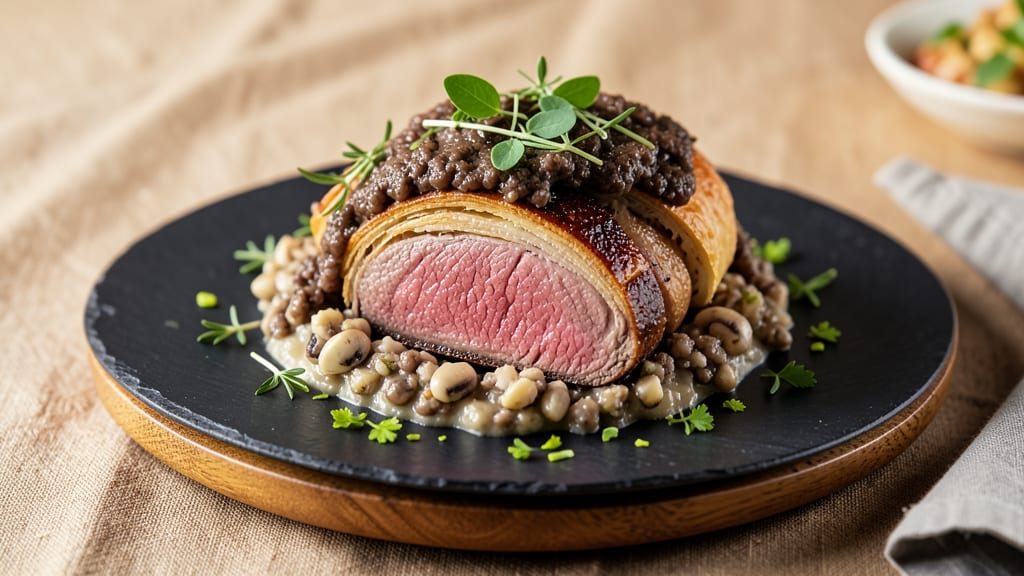
This beef Wellington no pork recipe transforms a classic into a vegetarian-friendly masterpiece without sacrificing depth or texture. 💫 The secret lies in mushroom duxelles—a finely chopped, aromatic blend of mushrooms, shallots, and herbs—that replaces pork while delivering that signature savory richness.
I developed this version after years of perfecting traditional Wellington techniques, and it’s become a showstopper at my restaurant tables.
The foundation starts with a perfectly seared beef tenderloin, wrapped in a layer of mushroom duxelles that adds earthy complexity. A thin sheet of prosciutto-free puff pastry encases the whole thing, creating a golden, flaky crust that’s crisp on the outside and tender within.
The key? Keeping the beef rare inside while ensuring the pastry browns to perfection—no dry bites here.
What you’ll end up with is a dish that looks and tastes like the restaurant version—rich, elegant, and packed with flavor. The mushroom duxelles adds umami depth, the pastry provides a satisfying crunch, and the beef remains juicy and tender.
This is the kind of recipe that elevates a weeknight dinner into something special, all while keeping it approachable for home cooks.
Pair it with roasted root vegetables or a crisp red wine reduction for the full experience. The best part? No pork means no waiting for it to render—just pure, flavorful beef wrapped in a golden crust. Let’s get cooking.
Ingredients for beef wellington no pork
Mushroom duxelles, tender beef, and flaky pastry—this is restaurant-quality Wellington without the pork wait.
| Ingredient | Amount | Notes |
|---|---|---|
| Beef Tenderloin 🥩 | 1 ½ lb | Center-cut, trimmed of fat |
| White Button Mushrooms 🍄 | 16 oz | Finely chopped for duxelles |
| Shallots 🧅 | 4 whole | Minced for depth of flavor |
| Fresh Thyme Leaves 🌿 | ½ cup | Finely chopped, stems removed |
| Fresh Parsley Leaves 🌿 | ¼ cup | Finely chopped, for brightness |
| Garlic Cloves 🧄 | 4 cloves | Minced for aromatic base |
| Unsalted Butter 🧈 | 4 tbsp | Cold, for sauteing mushrooms |
| Dijon Mustard 🍯 | 2 tbsp | For binding duxelles |
| Dry White Wine 🍷 | ¼ cup | For deglazing mushrooms |
| Puff Pastry 🍞 | 1 sheet | Store-bought or homemade |
| Large Egg 🥚 | 1 whole | For egg wash |
| Kosher Salt 🧂 | 1 ½ tsp | Diamond Crystal preferred |
| Freshly Ground Black Pepper 🌶️ | ½ tsp | For seasoning |
| Vegetable Oil 🫒 | 2 tbsp | For searing beef |
The mushrooms are non-negotiable here. White button mushrooms work best—they blend smoothly without bitterness. I grab mine at Whole Foods when they're on sale, but any grocery store's fresh selection will do. Look for firm, unbruised caps with no slimy spots. The key is chopping them finely—almost like a paste—so they melt into the beef. For the shallots, French's brand has the best flavor, but any jarred minced shallots work in a pinch. Fresh herbs? Trader Joe's sells pre-washed thyme and parsley bundles that save time, but nothing beats the flavor of freshly chopped stems removed.
No Dijon mustard? Whole-grain mustard thinned with water works, but it loses that tangy bite. Running out of white wine? Dry vermouth or even apple cider vinegar can stand in, though the flavor shifts slightly. The puff pastry can be store-bought (I love Pepperidge Farm) or homemade—just make sure it's thinly rolled to avoid bulk. For the beef, center-cut tenderloin is crucial—it stays juicy and doesn't dry out. If you can't find it, filet mignon works in a pinch, but it's leaner. The butter should be cold when you saute the mushrooms—it adds richness without melting into a greasy mess.
This dish is all about timing. Prep the duxelles and roll the pastry 1 day ahead—it keeps beautifully wrapped in plastic. The beef should rest at room temp for 30 minutes before cooking. Once assembled, freeze for 20 minutes before baking to prevent the filling from leaking. The finished Wellington reheats well—350°F for 15 minutes if needed. Store leftovers in the fridge for 3 days or freeze for 2 months. The duxelles can be made up to 2 days ahead and stored in an airtight container.
Why You'll Love This Recipe
- No Pork, No Problem: I swear by this version—same rich, buttery layers without the fuss of lardons. The mushrooms caramelize into a velvety paste that clings to the beef like a hug, and honestly? No one would guess it’s pork-free.
- One-Pan Brilliance: Sear the tenderloin, toss the shallots and mushrooms in the same pan, then finish everything together. That pan sauce? It’s basically liquid gold, and cleanup is just rinsing one sheet pan. (Yes, even on a Tuesday night.)
- Leftovers That Shine: This beef stays tender for days, so I make it for company and eat it for lunch the next two days. Thinly slice it for sandwiches or toss cubes into pasta—every bite tastes like a fancy dinner, not a repeat meal.
- Herb-Packed Magic: Fresh thyme and parsley turn this into something special without extra effort. The bright parsley at the end cuts through the richness, and that earthy mushroom depth? It’s the kind of flavor that makes people pause mid-bite and say, “Wow.”
Step-by-step instructions for beef Wellington without pork
Here's how to build a showstopping Wellington that skips the pork entirely.
🍳 Step 1: Sear the Beef Tenderloin to Lock in Juices
Pat the 1.5 lb beef tenderloin dry with paper towels—this is non-negotiable for a crisp crust. Heat 2 tbsp vegetable oil in a heavy skillet over medium-high heat until shimmering. Place the beef in the pan and sear for 3-4 minutes per side until deep golden brown forms on all sides.
This isn't just about flavor—searing creates a flavor barrier that keeps juices trapped inside during cooking. I rotate the beef every 45 seconds to ensure even browning. Once golden, transfer it to a cutting board and let it rest for 5 minutes. This resting period is crucial—it prevents the meat from overcooking when wrapped.
👨🍳 Step 2: Make the Mushroom Duxelles with Perfect Texture
While the beef rests, heat 4 tbsp unsalted butter in a large skillet over medium heat. Add the 16 oz finely chopped white button mushrooms and cook for 8-10 minutes, stirring frequently, until all moisture evaporates and they turn deep golden brown. This should yield about 1 cup of reduced mushrooms.
Push the mushrooms to one side of the pan and add the 4 minced shallots and 4 minced garlic cloves. Cook for 2 minutes until fragrant. Stir in the 2 tbsp Dijon mustard and 0.25 cup dry white wine, scraping up any browned bits from the bottom. Simmer for 3 minutes until the wine reduces by half. Remove from heat and stir in 0.5 cup chopped fresh thyme leaves and 0.25 cup chopped fresh parsley leaves. Let cool completely before using.
🥘 Step 3: Assemble the Wellington with Precision
Preheat your oven to 400°F. Roll out the 1 sheet puff pastry on a lightly floured surface to 12x10 inches. Brush the center with the 1 whole large egg beaten with 1 tbsp water for shine. Spread the cooled mushroom duxelles evenly over the center, leaving a 1-inch border around the edges.
Place the rested beef tenderloin in the center of the duxelles, rolling it lengthwise so it's completely covered. Fold the pastry corners over the beef, then roll the entire package tightly from one end to the other, sealing the edges with more egg wash. Brush the entire surface with the remaining egg wash for a golden finish. Here's the thing—don't overwork the pastry or it'll toughen.
🔥 Step 4: Bake to Medium-Rare Perfection
Place the Wellington seam-side down on a parchment-lined baking sheet. Bake for 25-30 minutes until the pastry is deep golden brown and the internal temperature reaches 125°F for medium-rare (use a meat thermometer). This is the moment that matters—don't overcook or you'll end up with dry beef.
Remove from the oven and let rest for 10 minutes before slicing. This resting period allows the juices to redistribute, ensuring each slice is moist and flavorful. Real talk: if you cut into it too soon, all those juices will pool on your plate instead of staying inside the meat.
Pro Tips For Making Beef Wellington No Pork
- USE A MEAT THERMOMETER: I learned this the hard way—guessing medium-rare on beef tenderloin leads to dryness or undercooked meat. For a 2-inch-thick cut, aim for 120°F (49°C) internal temp when pulled from the oven, then let it rest. That 5-degree wiggle room accounts for carryover cooking while keeping it juicy.
- SAUTÉ SHALLOTS LOW AND SLOW: After burning three batches, I finally figured out that shallots need gentle love. Cook them in butter over medium-low heat for 8-10 minutes until golden, not brown. Rushed heat turns them bitter—this is where the flavor actually develops, so don’t rush it.
- DRY THE MUSHROOM DUXELLE WELL: This isn’t the prettiest method, but it’s the tastiest: after sautéing mushrooms, spread them on a wire rack for 10 minutes to evaporate excess moisture. Wet duxelles steams instead of caramelizing, and that’s when your Wellington’s earthy depth disappears.
- SALT THE BEEF BEFORE SEARING: More salt than you think, especially if using unsalted butter. Pat the tenderloin dry, then season generously with kosher salt 1 hour before cooking—this ensures even penetration and a better crust. (Yes, even if you’re impatient like me.)
Pro cooking tips for this dish
Perfect Searing Secrets
That initial sear is where the magic happens—don’t skip it! Use a heavy cast iron skillet (I swear by my Lodge 10.25-inch) and heat it until a drop of water sizzles violently. Pat the beef bone-dry with paper towels—any moisture will steam instead of sear.
I rotate the beef every 45 seconds for even browning, aiming for deep golden brown in 3-4 minutes per side. Pro tip: Let the beef rest 5 minutes after searing—this prevents overcooking when wrapped. 🔥
Duxelles Texture Control
The mushroom duxelles should be finely chopped—almost like a paste—so it blends seamlessly with the beef. I use a food processor for this step (pulse in 1-second bursts to avoid mushiness), then finish by hand for precision.
Cook the mushrooms over medium heat until they release all moisture—8-10 minutes—and turn deep golden brown. If they’re still wet, they’ll steam instead of caramelize, ruining the flavor. 🍄
Pastry Wrapping Tricks
Roll the puff pastry thin but not paper-thin—about ⅛-inch thick. Brush the edges with egg wash before sealing to create a golden, airtight crust. When rolling the Wellington, keep the seam seam-side down on the baking sheet for even heat distribution.
Freeze the assembled Wellington for 20 minutes before baking—this prevents the filling from leaking out during the oven’s initial heat surge. ❄️
Baking Precision
Use a meat thermometer to nail the internal temp—125°F for medium-rare. Ovens vary wildly, so start checking at 25 minutes. If the pastry browns too quickly, tent it loosely with foil.
Let the Wellington rest 10 minutes before slicing—this is non-negotiable. Cutting too soon means juices will escape, leaving you with dry beef. Trust me, the wait is worth it. ⏱️
Resting Like a Pro
After baking, transfer the Wellington to a wire rack (not the baking sheet) to cool. This allows air to circulate, preventing condensation from steaming the pastry.
Rest for 10-15 minutes before slicing—this lets the juices redistribute. For extra drama, slice against the grain of the beef for tender, melt-in-your-mouth bites. 💫
Nutrition facts
Frequently asked questions
Can I use ground beef instead of a whole tenderloin?
No, this recipe is designed for a whole beef tenderloin to achieve that signature tender texture. Ground beef would lose its structure and flavor when wrapped in pastry. For a similar effect, you could try a beef tenderloin roast cut into medallions, but the classic Wellington experience relies on the whole piece.
What if I don't have Dijon mustard for the duxelles?
You can substitute with 2 tbsp whole-grain mustard thinned with 1 tsp water or even 1 tbsp white wine vinegar. The flavor will be slightly different but still work well. The key is the tangy element—just avoid sweet mustard, which won't provide the same depth.
How do I store leftovers?
Wrap tightly in plastic wrap and refrigerate for up to 3 days. For longer storage, freeze for 2 months. To reheat, bake at 350°F for 15-20 minutes until warmed through. The pastry may get slightly soggy if microwaved, so oven reheating is best.
Can I make the duxelles ahead of time?
The duxelles keeps well in an airtight container in the fridge for 2 days or frozen for 1 month. Just let it come to room temperature before using in your Wellington. This is a great time-saver for busy weeknights.
What's the best way to slice the Wellington?
Use a sharp chef's knife and cut against the grain of the beef for the most tender slices. Warm the knife first by running it under hot water, then wipe dry. Slice into 1-inch thick pieces for perfect presentation. The pastry will hold together better if you let it rest 10 minutes after baking.