
Soups & Stews
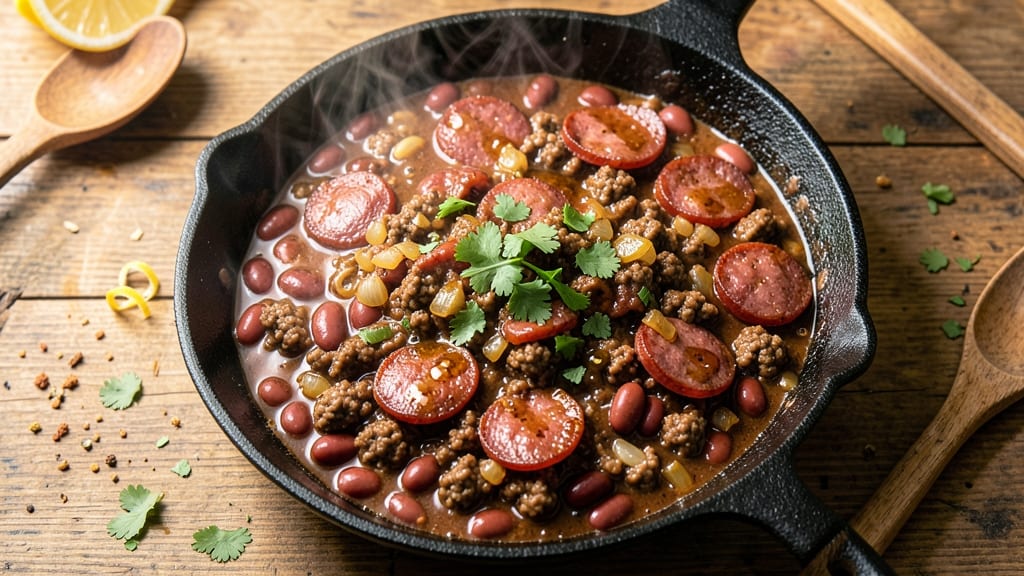
This beef and pork sausage chili recipe delivers the kind of deep, smoky flavor that transforms a simple weeknight dinner into a restaurant-worthy meal. 🔥 I developed it after years of perfecting chili at my pit, where the secret lies in slow-cooked sausage and beans that meld into a rich, hearty stew.
The combination of beef and pork sausage creates layers of texture and taste that stand up to bold spices without overpowering them.
The foundation of this chili is properly browning the sausage first—this step builds flavor that can't be replicated by simply dumping raw meat into the pot.
I use a blend of ground beef and pork sausage for that perfect balance of richness and depth, while kidney beans add heartiness that keeps everyone satisfied. The slow simmer lets all the flavors develop and come together into a cohesive, comforting dish.
By the time it's done, you'll have a pot of chili that's rich with smoky, savory notes and perfectly tender sausage and beans. The aroma alone will have everyone gathering around the table, and each bite delivers that perfect combination of hearty meat, flavorful beans, and warming spices.
This is the kind of chili that tastes even better the next day, making it ideal for meal prep or feeding a crowd.
Serve it with cornbread or crusty bread to soak up every last bit of that flavorful broth, and top with your favorite toppings—cheddar cheese, sour cream, or fresh jalapeños all work beautifully. The possibilities for customization are endless, but the base recipe delivers consistently delicious results every time.
Ingredients for beef and pork sausage chili
Six servings of smoky, hearty chili—just the right mix of meat, beans, and bold spices.
| Ingredient | Amount | Notes |
|---|---|---|
| Ground Beef (80% lean) 🥩 | 1 ½ lb | Browned and drained |
| Pork Sausage (Kielbasa or Mild Italian) 🌭 | 1 lb | Sliced into half-moons |
| Kidney Beans (Canned) 🌱 | 2 cups | Drained and rinsed |
| Onion (Yellow or Red) 🧅 | 1 whole | Diced into small pieces |
| Garlic Cloves 🧄 | 4 cloves | Minced finely |
| Tomato Paste 🍅 | ¼ cup | Smooth, not chunky |
| Chili Powder 🌶️ | 2 tbsp | Smoked variety preferred |
| Ground Cumin 🌿 | 1 tbsp | Toasted for depth |
| Paprika (Smoked) 🌶️ | 1 tbsp | Adds rich color |
| Dried Oregano 🍃 | 1 tsp | Mexican oregano best |
| Cayenne Pepper 🔥 | ½ tsp | Adjust for heat |
| Beef Broth (Low-Sodium) 💧 | 3 cups | Homemade or quality brand |
| Black Coffee ☕ | ½ cup | Cold, for depth |
| Dark Brown Sugar 🍚 | 1 tbsp | Balances heat |
| Salt 🧂 | 1 ½ tsp | Kosher or sea salt |
| Black Pepper 🌶️ | ½ tsp | Freshly cracked |
The sausage is non-negotiable here. Kielbasa or mild Italian gives that perfect balance of richness without overpowering the beef. I grab mine from Costco or the butcher section at Walmart—anything pre-sliced saves time. The beef? 80% lean browns better and keeps the chili tender. Pro tip: slice the sausage into half-moons so it cooks faster and stays intact. For the beans, canned kidney beans are a must—they hold their shape and soak up flavor like sponges. Just make sure to rinse them well to cut down on sodium.
No chili powder? Substitute smoked paprika plus a pinch of cayenne—it’s not the same, but it’ll get you close. Running low on cumin? Ground coriander at half the amount works in a pinch, though it’s not identical. The coffee is key—cold brew or even instant works, but skip this if you’re sensitive to caffeine. For the onion, yellow or red both work, but red adds a touch of sweetness. And if you’re worried about the tomato paste being too thick, Trader Joe’s squeeze tubes are perfect—they’re convenient and don’t waste space in your pantry.
This chili tastes even better the next day—honestly, that’s when all the flavors really meld. Keeps for 4-5 days in the fridge, and freezes beautifully for up to 3 months. I like to portion it into containers with a little extra broth on top so it reheats smoothly. If you’re prepping for a crowd, double the batch—it’s worth it. And if you’ve got leftovers, freeze in single servings for quick lunches later.
Why You'll Love This Recipe
- One-Pan Magic: I swear by this—just brown the beef and sausage in the same pot, dump in the rest, and let it simmer. No chopping boards, no extra dishes, and the garlic cloves? They soften right into the meat, so no extra prep.
- Double-Meat Depth: That 80% lean beef gives it hearty texture, while the kielbasa or Italian sausage adds smoky richness. Honestly, the first bite is always the best—like a hug in a bowl, but with more protein.
- Game-Day Crowdpleaser: Tailgate parties? Game nights? It’s my go-to because it feeds 6+ without fuss. The beans hold up, the meat stays tender, and everyone—even the picky eaters—asks for seconds. (Yes, even on a Tuesday night.)
- Budget-Friendly Powerhouse: Ground beef and canned beans stretch this far beyond a single meal. I make 8 servings for $12, and it tastes better reheated than most takeout. My wallet and my freezer thank me.
Step-by-step instructions for beef and pork sausage chili
Here's how to build a rich, smoky chili with deep flavors and hearty texture—no shortcuts, just great taste.
🔥 Step 1: Brown the Meats for Maximum Flavor
Heat a large Dutch oven over medium-high heat. Add the 1.5 lb ground beef (80% lean) and cook, breaking it apart with a wooden spoon, until it loses its raw color and becomes deep brown—about 5-6 minutes. This browning creates the Maillard reaction, which builds that fundamental meaty depth.
Push the beef to one side and add the 1 lb pork sausage (kielbasa or mild Italian), sliced into half-moons. Cook until the sausage is golden brown all over and the fat starts to render out—another 4-5 minutes. Here's the thing—don't drain the rendered fat. That golden goodness is flavor gold. Once both meats are cooked, drain any excess liquid but leave the browned bits in the pot.
👨🍳 Step 2: Sauté Aromatics Until Fragrant
Add the diced onion (1 whole) and minced garlic (4 cloves) to the pot with the cooked meats. Stir everything together and cook for 3-4 minutes until the onions soften and become translucent, and the garlic releases its aromatic punch. You should smell that sweet, caramelized onion scent—this is where the chili's soul begins to develop.
Now add the 2 tbsp chili powder, 1 tbsp ground cumin, 1 tbsp smoked paprika, 1 tsp dried oregano, and 0.5 tsp cayenne pepper. Stir vigorously to coat the meats and aromatics completely. Let the spices toast in the pan for 30 seconds—this blooms their flavors and makes them more potent in the final dish.
🥘 Step 3: Build the Chili Base
Pour in the 0.25 cup tomato paste and stir until it's fully incorporated and the spices are evenly distributed. Add the 2 cups drained kidney beans and 3 cups low-sodium beef broth. Stir everything together, scraping up any browned bits from the bottom of the pot—those bits are packed with flavor.
Bring the mixture to a gentle boil, then reduce heat to medium-low and let it simmer uncovered for 15 minutes. This initial simmer helps meld the flavors and thicken the base. While it cooks, you'll notice the chili darkening slightly—that's perfect. It's developing that rich, complex color that signals deep flavor development.
🍳 Step 4: Add Coffee and Sweetener for Depth
After the initial simmer, stir in the 0.5 cup cold black coffee and 1 tbsp dark brown sugar. The coffee adds a subtle bitterness that cuts through the richness of the meat, while the sugar balances the heat and adds a touch of caramelization. Stir well to combine, then add the 1.5 tsp salt and 0.5 tsp black pepper. Taste the mixture—you should have a good balance of smoky, spicy, and slightly sweet flavors.
Return the chili to a gentle simmer and cook uncovered for another 20-25 minutes, stirring occasionally. The chili should thicken slightly as it reduces, and the flavors should meld beautifully. Here's where it gets fun—the longer it simmers, the more complex the flavors become. Don't be tempted to rush this step.
⏰ Step 5: Rest and Adjust Before Serving
Once the chili reaches your desired consistency—it should coat the back of a spoon but still be spoonable—remove it from heat. Let it rest for 10 minutes before serving. This resting period allows the flavors to fully develop and the textures to settle. During this time, taste the chili again and adjust seasoning if needed—add more salt if it's bland, or a pinch more cayenne if you want more heat.
Serve the chili hot with your favorite toppings—sour cream, shredded cheese, chopped green onions, or a dollop of avocado. Each bowl should be hearty, flavorful, and packed with that perfect balance of smoky, spicy, and savory notes that make chili so satisfying. Enjoy it with crusty bread or over rice for a complete meal.
Pro Tips For Making Beef And Pork Sausage Chili
- Brown the Sausage First: Kielbasa or Italian sausage releases fat and flavor faster than ground beef—start with those slices on high heat for 3-4 minutes until they crisp slightly. I used to mix everything at once, and the chili always tasted underdeveloped until I learned this. That extra minute of browning builds depth that no amount of simmering later can match.
- Dice the Onion Fine: Skip the rough chop—cut the onion into 1/8-inch dice so it melts into the chili instead of sitting as chunks. I was lazy with this for years, and the texture always felt off. It’s not about pretty plating; it’s about the onion dissolving evenly and adding sweetness without texture surprises.
- Deglaze with Beer or Broth: After browning the meat, splash in 1/2 cup of beer (or beef broth) and scrape the pan like your life depends on it. That crust holds flavor, and skipping the deglaze means losing half the taste. Use whatever you’re drinking—just don’t skip it.
- Add Beans Late: Stir in the kidney beans only in the last 10 minutes of cooking. They’ll absorb heat and soften without turning to mush, and the chili won’t get gluey. I learned this after serving a batch where the beans were sad, overcooked blobs—now they stay firm and soak up flavor instead of turning to paste.
Troubleshooting this dish
Meat Too Greasy?
If your chili ends up too greasy, you likely didn't drain enough fat after browning the meats. I always use a slotted spoon or fine-mesh strainer to remove excess fat after cooking the beef and sausage, leaving just enough to coat the pot.
For a quick fix, skim excess fat from the surface while the chili simmers—just spoon it off before it solidifies. 🔥
Beans Too Mushy?
Overcooked beans ruin the texture. Use canned kidney beans (not dried) and rinse them thoroughly before adding. If your beans are already mushy, reduce simmering time in future batches—20-25 minutes total is ideal.
For extra firmness, add beans 10 minutes before the end of cooking. I also recommend using low-sodium broth to prevent beans from breaking down faster.
Chili Too Thin?
A watery chili usually means too much liquid was added. To thicken it, simmer uncovered for 10-15 extra minutes—the liquid will reduce naturally. If it's still too thin, mix 1 tbsp cornstarch with 2 tbsp cold water, stir into the chili, and cook for 3-5 minutes until thickened.
For prevention, reduce broth by ½ cup next time and let it simmer longer.
Not Enough Flavor?
Flavor fades when you skip browning the meats or under-season. Always brown beef and sausage until deeply colored, and toast spices for 30 seconds before adding liquids. For extra depth, add 1 tbsp soy sauce or 1 tsp Worcestershire sauce with the broth.
I also recommend using smoked paprika and toasting cumin in a dry pan before adding to the chili.
Spices Too Overpowering?
If your chili tastes like a spice bomb, balance it with acid (lemon juice or vinegar) or sweetness (brown sugar or a pinch of cinnamon). For prevention, reduce cayenne to ¼ tsp and taste as you go.
A splash of tomato juice or apple cider can also mellow harsh flavors. Remember, you can always add more spices later—you can't take them out!
Meat Too Tough?
Overcooked meat is usually from simmering too long. Keep the chili at a gentle simmer (small bubbles) and aim for 30-40 minutes total after adding liquids.
For extra tenderness, add 1 tsp baking soda to the beans while soaking (if using dried) or simmer with 1 bay leaf for added depth. I also recommend using 80% lean beef—it stays tender while browning.
Nutrition facts
Frequently asked questions
Can I substitute chicken sausage for pork sausage?
Yes, but expect a slightly different flavor profile. Chicken sausage adds a milder taste compared to pork's richness. For best results, use Italian-style chicken sausage and increase the smoked paprika by ½ tsp to compensate. The texture will be leaner, so consider adding 1 tbsp olive oil when browning to prevent dryness.
How do I adjust this recipe for a slow cooker?
Brown the meats first as directed, then transfer everything to your slow cooker. Add all remaining ingredients and cook on low for 6-7 hours or high for 3-4 hours. The longer cook time actually enhances the flavors! For extra thickness, mash ½ cup cooked beans into the chili during the last 30 minutes of cooking.
What's the best way to reheat leftovers?
Reheat gently on the stovetop over medium-low heat for 5-7 minutes, stirring occasionally, until steaming. Never microwave directly from the fridge—this makes the chili watery. For best results, transfer to a saucepan with 1-2 tbsp broth to restore moisture. If too thick, add a splash of water or broth while reheating.
Can I make this vegetarian?
Replace the beef with 1.5 lb plant-based ground meat (like Beyond or Impossible) and the pork sausage with vegan sausage links. Use 1 tbsp soy sauce or 1 tsp liquid smoke to mimic the umami depth. For extra heartiness, add 1 cup cooked quinoa or ½ cup black beans along with the kidney beans.
Why does your recipe use coffee?
The coffee adds a subtle depth that cuts through the richness of the meat and enhances the smoky flavors. It's not about caffeine—even decaf works! The bitterness balances the sweetness and helps the spices sing. For a non-coffee version, substitute with ½ cup strong black tea or ¼ cup red wine, but reduce the cayenne by ¼ tsp since wine adds some heat.