
Main Courses
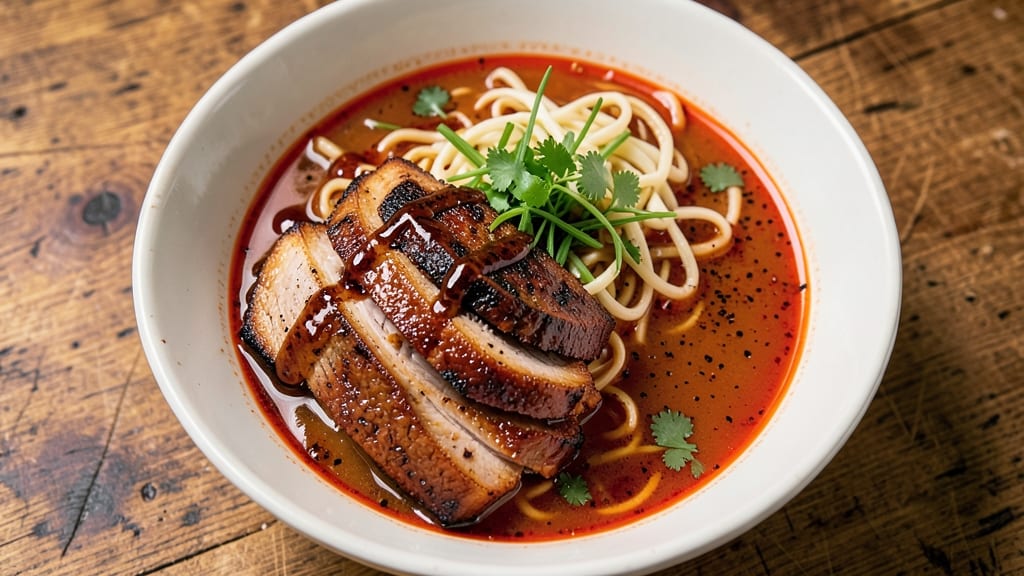
This BBQ pork ramen recipe fuses two bold flavors—smoky, spiced pork and rich ramen broth—into one unforgettable bowl. 🔥 The secret lies in marinating pork shoulder overnight with a deep blend of spices, then slow-smoking it until it practically falls apart.
I've been perfecting this technique for years, balancing the sweet heat of BBQ with the umami depth of ramen, and the result is a dish that's equally satisfying as a weeknight meal or weekend feast.
The process starts with the pork, which gets its signature flavor from a dry rub of smoked paprika, brown sugar, and cayenne, then cooks low and slow until tender enough to shred with a fork.
Meanwhile, the ramen broth builds complexity with aromatics like ginger, garlic, and sesame oil, while caramelized onions add a sweet contrast. The noodles cook just until al dente, so they hold up to the hearty toppings.
What you end up with is a bowl that's rich, smoky, and perfectly balanced—each spoonful delivers tender pork, silky broth, and chewy noodles all in one bite.
The caramelized onions add a sweet crunch that cuts through the smokiness, while optional toppings like soft-boiled eggs, scallions, and sesame seeds let you customize it. This isn't just ramen; it's a flavor-packed experience that brings BBQ and ramen together in the best way possible.
Perfect for feeding a crowd or treating yourself to a restaurant-quality meal at home, this recipe delivers deep, satisfying flavors without requiring advanced skills. The key is patience—letting the pork cook low and slow, allowing the broth to develop its complexity, and giving each component the attention it deserves.
Let's get started on creating this smoky, spice-infused masterpiece.
Ingredients for bbq pork ramen
Sixteen ingredients that transform into smoky, spice-infused ramen bowls with rich pork and caramelized onions.
| Ingredient | Amount | Notes |
|---|---|---|
| Pork Shoulder 🐖 | 3 lb | Bone-in for flavor, cut into 2-inch chunks |
| Smoked Paprika 🌶️ | 2 tbsp | High-quality for smoky depth |
| Brown Sugar 🍯 | ½ cup | Light or dark, packed |
| Ground Black Pepper 🌶️ | 1 ½ tsp | Freshly cracked for sharpness |
| Cayenne Pepper 🔥 | 1 tsp | Adjust for heat preference |
| Garlic Cloves 🧄 | 6 cloves | Minced for marinade |
| Ginger Root 🌿 | 1 tbsp | Freshly grated, aromatic |
| Yellow Onions 🧅 | 2 whole | Thinly sliced for caramelizing |
| Sesame Oil 🫒 | 1 tbsp | Toasted for nutty aroma |
| Ramen Noodles 🍜 | 2 packages | Fresh or dried, al dente preferred |
| Chicken Broth 💧 | 6 cups | Low-sodium, homemade preferred |
| Soy Sauce 🍶 | ½ cup | Kosher or tamari for gluten-free |
| Sesame Seeds 🌰 | 1 tbsp | Toasted for garnish |
| Green Onions 🧅 | 4 whole | Thinly sliced for garnish |
| Eggs 🥚 | 6 whole | Soft-boiled for optional topping |
The pork shoulder is non-negotiable here—bone-in for maximum flavor and texture. Look for a well-marbled cut at Whole Foods or your local butcher shop; the fat renders down beautifully during slow cooking. If you can't find bone-in, substitute pork butt and trim excess fat. The spices—smoked paprika, cayenne, and black pepper—need to be fresh; Penzeys or bulk bins at natural grocery stores are your best bet. Pre-grated ginger loses potency fast, so grate it yourself right before marinating the pork. The onions? Yellow or sweet onions caramelize best—avoid red unless you want color over sweetness.
No smoked paprika? Chimichurri or smoked salt can mimic some of the smokiness, but it won't be identical. Running out of sesame oil? Avocado oil or peanut oil works in a pinch, though the flavor profile shifts slightly. For the broth, homemade chicken stock elevates this dish, but low-sodium store-bought is fine if you're short on time. The ramen noodles can be fresh or dried—just cook them al dente so they hold up to the toppings. If you're avoiding gluten, tamari instead of soy sauce and gluten-free noodles are essential. The eggs are optional but add a luxurious touch; soft-boiled for 6 minutes keeps the yolk runny and perfect for dipping.
This dish tastes even better the next day—reheats beautifully with a splash of water or broth. Store the pork and broth separately in the fridge for up to 4 days; the noodles should be cooked fresh when serving. For meal prep, cook the pork and onions ahead, then assemble bowls just before eating. The sesame seeds and green onions can be prepped in advance and stored in airtight containers for 3 days. Freeze the pork and broth together for up to 3 months—just thaw overnight in the fridge before reheating. The key to restaurant-quality ramen? Freshly caramelized onions and hot broth, so never skip those steps.
Why You'll Love This Recipe
- One-Pot Magic: I swear by this recipe when I’m too tired to wash dishes. The pork shoulder slow-cooks right in the broth—no extra pans, no stress—just rich, smoky flavor that practically cooks itself.
- Smoky-Sweet Obsession: That blend of smoked paprika and brown sugar? It’s the kind of depth that makes you pause mid-bite. The cayenne adds just enough kick to wake up your taste buds without overpowering the tender, caramelized pork.
- Weeknight to Party: Between us, this is my lazy Sunday dinner and my game-day spread. Double the broth, freeze half—suddenly you’ve got a crowd-pleaser that costs next to nothing and feels fancy.
- Budget Stretch: Pork shoulder is cheap, but it transforms into something restaurant-worthy. Honestly, I’ve made this for $3 per serving, and my picky roommate still asks for seconds. Leftovers? Even better cold the next day.
Step-by-step instructions for BBQ pork ramen
Here's how to transform smoky pork shoulder into rich ramen broth with caramelized onions and perfect noodles.
🔥 Step 1: Marinate and Cook the Pork Shoulder
In a large bowl, combine the 3 lb pork shoulder with 2 tbsp smoked paprika, 0.5 cup brown sugar, 1.5 tsp ground black pepper, 1 tsp cayenne pepper, 6 minced garlic cloves, and 1 tbsp grated ginger root. Mix thoroughly until the pork is evenly coated. Let it marinate at room temperature for 30 minutes.
Heat a Dutch oven over medium-high heat and add the marinated pork shoulder. Sear on all sides until deeply browned, about 5-7 minutes per side. Remove the pork and set aside. In the same pot, add 2 thinly sliced yellow onions and cook for 8-10 minutes until caramelized and golden brown. This step builds flavor depth that will infuse the entire broth.
🍳 Step 2: Build the Smoky Ramen Broth
Return the pork to the Dutch oven and add 6 cups chicken broth and 0.5 cup soy sauce. Bring to a boil, then reduce heat to low and simmer uncovered for 2.5-3 hours until the pork is fork-tender. The broth should reduce slightly but remain flavorful. Skim off any foam that rises to the surface during the first 30 minutes of simmering.
Once the pork is tender, remove it from the broth and let it rest for 15 minutes before shredding with two forks. Return the shredded pork to the broth and stir to combine. The pork should be falling apart easily, and the broth should have a rich, smoky aroma with visible caramelized onion strands. If the broth isn't flavorful enough, simmer uncovered for another 15-20 minutes to reduce further.
🥘 Step 3: Prepare the Noodles and Garnishes
While the broth simmers, prepare the noodles and garnishes. Cook the 2 packages ramen noodles according to package instructions until al dente, then drain and rinse briefly under cold water to stop the cooking process. This prevents the noodles from becoming mushy in the hot broth.
In a small bowl, toast the 1 tbsp sesame seeds in a dry skillet over medium heat for 2-3 minutes until golden and fragrant. Thinly slice the 4 green onions and set aside. For the eggs, bring a pot of water to a gentle simmer and cook the 6 whole eggs for 6 minutes for soft-boiled centers, then transfer to an ice bath to stop cooking.
🔪 Step 4: Assemble and Serve
Divide the cooked noodles among 6 bowls. Ladle the hot pork broth and shredded pork over the noodles, ensuring each bowl gets an equal distribution. The broth should be steaming hot and aromatic, with visible pork chunks and caramelized onions.
Top each bowl with a soft-boiled egg, sliced green onions, and a drizzle of 1 tbsp sesame oil for added richness. Sprinkle with toasted sesame seeds and serve immediately. The contrast of the cool egg against the hot broth creates the perfect balance, while the smoky pork and caramelized onions deliver deep, satisfying flavors in every bite.
Pro Tips For Making Bbq Pork Ramen
- CRUSH THE PORK SHOULDER: Cook it in two stages—first sear it hard over direct heat until the outside blackens, then finish it low and slow with the lid on. I learned this the hard way: rushing the low-and-slow part leaves you with dry, stringy pork that’ll fall apart in the broth.
- DON’T SKIP THE SMOKE BOMB: Toast the smoked paprika in a dry pan for 30 seconds until it smells like a campfire. That extra aroma step makes a real difference—it’s the thing that turns your BBQ sauce from "decent" to "I’d drive 20 minutes for this."
- SAVE THE BROTH: Reserve 2 cups of the pork cooking liquid before shredding. Strain it, reduce it by half, and toss it into the ramen broth at the end—it’ll deepen the smoky-sweet flavor without making your noodles soggy.
- STOP WHEN IT’S STICKY: Pull the pork off the heat the second it hits 203°F (95°C) internal temp, even if it looks underdone. It’ll keep cooking in the residual heat, and that’s when the collagen turns to gelatin—giving you that perfect pull-apart texture. (Yes, even if you’re impatient like me.)
Storing and reheating this dish
Refrigerator Storage
After assembling your BBQ pork ramen, let it cool completely before storing. Divide the broth and pork into airtight glass containers—I prefer Mason jars for easy reheating—and refrigerate for up to 4 days.
The noodles should be cooked fresh when serving, but the pork and broth keep beautifully. The flavors actually deepen overnight as the spices meld together. 💫
Freezer Storage
For longer storage, freeze the pork and broth together in quart-sized freezer bags—leave 1 inch headspace for expansion. Thaw overnight in the fridge before reheating. The noodles don’t freeze well, so cook them fresh when ready to serve.
This method preserves the smoky depth and caramelized onion sweetness perfectly for up to 3 months. Label your bags with the date to track freshness.
Reheating Broth
To reheat, transfer the pork and broth to a heavy-bottomed pot and warm over medium-low heat until steaming. Add ¼ cup water or broth if it looks too thick.
Stir occasionally to prevent sticking—this keeps the pork tender and the flavors vibrant. Never microwave, as it can make the broth uneven and the pork rubbery. 🔥
Reviving Noodles
If you prepped noodles ahead, store them in airtight containers with a damp paper towel to prevent drying. Reheat by boiling in fresh water for 2-3 minutes until al dente.
Drain and toss with a splash of sesame oil to restore their chewy texture. For extra flavor, add a spoonful of the reheated pork broth to the noodles before serving.
Garnish Prep
Toasted sesame seeds and sliced green onions can be prepped in advance and stored in small airtight containers for up to 3 days. Keep them separate until ready to serve to preserve their freshness and crunch.
Soft-boiled eggs should be peeled and stored in the fridge for up to 2 days, but add them to bowls just before eating for the perfect runny yolk. 💡
Make-Ahead Tips
For meal prep, cook the pork and broth 2 days ahead, then store separately. On serving day, reheat the broth and shred the pork fresh. Assemble bowls with pre-cooked noodles and garnishes—this keeps everything hot and flavorful.
If reheating leftovers, add a splash of water or broth to loosen the sauce and restore moisture. The key is keeping components separate until the final moment!
Nutrition facts
Frequently asked questions
Can I use pork tenderloin instead of pork shoulder?
The recipe calls for pork shoulder because it's more flavorful and tenderizes beautifully during slow cooking. Pork tenderloin would cook too quickly and lack the rich, smoky depth you want in this dish. If you must substitute, use pork butt (shoulder) or even a mix of pork shoulder and pork loin, but avoid lean cuts like tenderloin.
How do I adjust the heat level for picky eaters?
Reduce the cayenne pepper to ½ teaspoon or omit it entirely. For extra smokiness without heat, add 1 extra teaspoon of smoked paprika. The brown sugar already provides sweetness to balance any spice, so the dish will still taste rich and satisfying.
What's the best way to make this vegetarian?
Replace the pork with shitake mushrooms or extra-firm tofu marinated in the same spices. For umami depth, add 1 tbsp soy sauce and 1 tsp miso paste to the broth. The caramelized onions and sesame oil will still provide that smoky-sweet contrast. The noodles and broth will carry all the flavor!
Can I make this in an Instant Pot?
Yes! Sear the pork first, then add all ingredients except noodles. Cook on high pressure for 45 minutes, then let it naturally release for 15 minutes. Shred the pork and finish with the caramelized onions. The broth may be less reduced, so simmer uncovered for 10 minutes to concentrate flavors. The Instant Pot cuts cooking time to about 1 hour total.
Why did my pork turn out dry?
Overcooking is the most common cause. Pork should be fork-tender but still juicy—it should pull apart easily but not crumble like sawdust. Always check internal temperature with a meat thermometer (203°F for pulled pork). If using a Dutch oven, keep the lid slightly ajar during the last 30 minutes to let moisture escape gradually.