
Soups & Stews
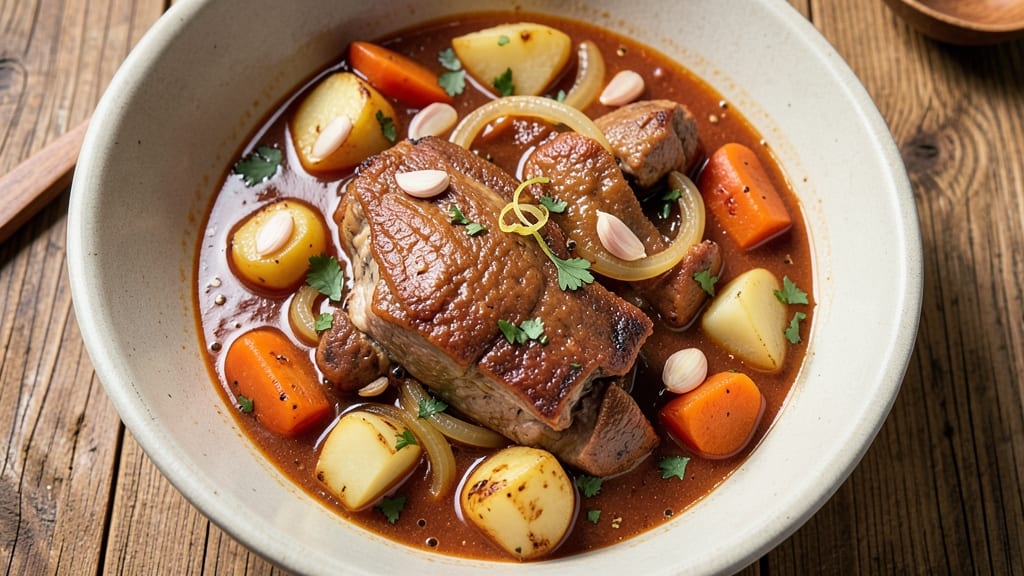
This basic pork stew recipe transforms tough cuts into melt-in-your-mouth tenderness that warms up any weeknight dinner. 🍲 The secret lies in slow simmering—where pork shoulder breaks down into rich, flavorful chunks while absorbing aromatic vegetables and herbs.
I've cooked this version hundreds of times at The Smoky Pig, and it never fails to impress. What makes this recipe special is its balance of simplicity and depth.
You'll start with a proper sear to build flavor, then let everything simmer for hours until the meat is fork-tender and the broth reduces to a perfect consistency. The key ingredients—carrots, potatoes, and onions—create a classic combination that works every time.
By the time you're done, you'll have a hearty stew with tender pork, perfectly cooked vegetables, and a rich, savory broth that's perfect for ladling over crusty bread. The aroma alone will have everyone gathering around the table, and the flavors only get better as it sits.
This is the kind of weeknight dinner that feels like a celebration. Let's get started with the recipe that's been feeding families for generations.
Ingredients for basic pork stew
Six ingredients make the base, plus a few pantry staples for that restaurant-quality depth.
| Ingredient | Amount | Notes |
|---|---|---|
| Pork Shoulder 🍖 | 3 lb | Bone-in for best flavor |
| Yellow Onions 🧅 | 2 whole | Medium size, diced |
| Carrots 🥕 | 4 whole | Medium size, peeled |
| Russet Potatoes 🥔 | 3 lb | Cut into 1-inch chunks |
| Garlic Cloves 🧄 | 6 cloves | Minced for depth |
| Tomato Paste 🍅 | ½ cup | Squeeze tube preferred |
| Beef Broth 💧 | 4 cups | Low-sodium preferred |
| Red Wine 🍷 | 1 cup | Bold, dry variety |
| Olive Oil 🫒 | ¼ cup | Extra-virgin for richness |
| Fresh Thyme 🌿 | 2 tbsp | Leaves only, chopped |
| Fresh Rosemary 🌿 | 1 tbsp | Needles chopped fine |
| Bay Leaves 🌿 | 2 whole | Remove before serving |
| Salt 🧂 | 1 ½ tsp | Kosher or sea salt |
| Ground Black Pepper 🌶️ | 1 tsp | Freshly ground preferred |
| All-Purpose Flour 🌾 | 2 tbsp | For thickening broth |
The pork shoulder is your star—look for cuts with good marbling at Costco or your butcher shop. Bone-in stays juicier, but boneless works too if you're short on time. Carrots and potatoes should be firm, not wrinkly. At Trader Joe's, grab the organic carrots—they're sweeter. For the broth, low-sodium is key so you can control the salt. I always grab a box of Kirkland Signature beef broth when I'm stocking up, but any quality brand works. The red wine? Any bold, dry red—Cab Sauv, Merlot, whatever's open.
No red wine? Beef broth with a splash of balsamic gets you close. Fresh thyme and rosemary are ideal, but dried works at half the amount. The tomato paste can be from a squeeze tube if you're lazy—Trader Joe's has the best ones. For the flour, King Arthur is my go-to, but any all-purpose will do. Want more depth? Add a dash of smoked paprika or a pinch of cinnamon—trust me on the cinnamon, it's a secret in stews. The potatoes can be Yukon Gold or Russets—just cut them evenly so they cook at the same rate.
This stew tastes even better the next day—5-6 days in the fridge, 3 months frozen. I always make a double batch because it reheats perfectly. For freezing, portion into containers with room at the top—liquids expand. The pork gets fork-tender after hours of simmering, so don't rush it. If you're short on time, use a pressure cooker—30 minutes high pressure instead of 3 hours on the stove. Leftovers? Freeze in single portions for quick lunches.
Why You'll Love This Recipe
- One-Pot Magic: I swear by this—just dump everything in one pot and walk away. The pork shoulder softens on its own while the onions caramelize, and by the time the potatoes are tender, the whole kitchen smells like a cozy Sunday. No fancy techniques, no stress.
- Garlic-Pork Obsession: That first bite? The pork shoulder falls apart with a single fork, and the garlic-infused broth clings to every bite like it’s begging for seconds. Between us, the onions and carrots sweeten into this perfect balance—savory, sweet, and just a little smoky if you brown the meat first.
- Leftovers That Save Me: This stew only gets better the next day, and I mean actually better. The flavors meld overnight, making it my go-to for busy mornings or lazy weekends. Plus, it reheats like a dream—no soggy potatoes here, just hearty, satisfying bites every time.
- Budget-Friendly Crowd-Pleaser: Pork shoulder is cheap, potatoes fill everyone up, and the veggies stretch the flavor without breaking the bank. Honestly, I’ve made this for date nights, family dinners, and even potlucks—no one ever leaves hungry, and my wallet stays happy.
Step-by-step instructions for hearty pork stew
This slow-cooked pork stew builds flavor layer by layer—perfect for busy nights.
🔥 Step 1: Sear the Pork Shoulder for Rich Flavor
Heat a large Dutch oven over medium-high heat until hot. Add the 3 lb pork shoulder and sear on all sides until deeply browned, about 8-10 minutes. This step creates the flavor foundation—don't rush it. If needed, work in batches so the meat doesn't overcrowd the pan.
Once browned, remove the pork and set it aside. In the same pot, add the 0.25 cup olive oil and let it heat until shimmering. Here's the thing—this oil will carry all those beautiful browned bits into your stew later.
👨🍳 Step 2: Build the Aromatic Base
Add the 2 whole yellow onions (diced) and 4 whole carrots (peeled and cut into chunks) to the pot. Cook for 5 minutes until softened. Then add the 6 cloves garlic (minced) and cook for another 30 seconds until fragrant.
Stir in the 0.5 cup tomato paste and cook for 2 minutes until it darkens slightly. This creates that deep, rich color and flavor that makes stews so satisfying. The tomato paste also helps thicken the broth naturally.
🍳 Step 3: Deglaze and Simmer the Vegetables
Pour in the 1 cup red wine and scrape up all those browned bits from the bottom of the pot—this is called deglazing, and it's where all the magic happens. Let it simmer for 3 minutes until the wine reduces by half.
Add the 4 cups beef broth, 1.5 tsp salt, 1 tsp ground black pepper, 2 tbsp fresh thyme, 1 tbsp fresh rosemary, and 2 whole bay leaves. Bring to a gentle boil, then reduce heat to low and let it simmer for 20 minutes until the vegetables are tender.
🥘 Step 4: Add Potatoes and Return the Pork
Add the 3 lb russet potatoes (cut into 1-inch chunks) and the seared pork shoulder back to the pot. The potatoes should be fully submerged in the broth—if not, add a little water. Bring the stew back to a gentle simmer and cover.
Cook for 1 hour at a low simmer, stirring occasionally. This slow cooking breaks down the tough pork shoulder fibers, making it melt-in-your-mouth tender. The potatoes should be fork-tender by the end of this time.
⏰ Step 5: Thicken and Serve
In a small bowl, mix the 2 tbsp all-purpose flour with 2 tablespoons cold water to make a slurry. Stir this into the stew and let it simmer uncovered for 5-7 minutes until the stew thickens slightly. Taste and adjust seasoning if needed.
Remove the 2 whole bay leaves before serving. Ladle the stew into bowls and enjoy immediately. The aroma alone will make your kitchen feel like a cozy home—just like it's supposed to.
Pro Tips For Making Basic Pork Stew
- BROWN THE PORK FIRST: Don’t skip the sear—cut the pork shoulder into 2-inch chunks, pat them dry, and cook over medium-high heat in a heavy pot until the edges turn golden. I used to rush this, and the stew always tasted flat. Five minutes of patience here makes the whole dish richer.
- SWEAT THE ONIONS LOW: After browning the pork, add sliced onions and cook them uncovered on low heat for 10–12 minutes until soft and translucent. High heat caramelizes them too fast, and they’ll burn before they sweeten. This is where the flavor builds—don’t skip it.
- ADD POTATOES LAST: Toss potatoes into the stew only in the final 20 minutes of cooking, or they’ll turn to mush. Russets break down fast, so keep them whole until they’re just tender enough to pierce with a fork. If you’re impatient, parboil them first for 5 minutes to speed it up.
- USE GARLIC BUTTER: Instead of mincing garlic into the stew, mix 2 tablespoons softened butter with 4 minced cloves and stir it in during the last 10 minutes. The butter adds richness and prevents the garlic from turning bitter. (Yes, even if you’re watching calories—just use less.)
Essential equipment for perfect results
Dutch Oven Essentials
A heavy-duty Dutch oven is non-negotiable for this recipe—it needs to handle the searing, simmering, and even oven-to-stovetop transitions. I swear by my Le Creuset 6-quart with the stoneware lid, but a Lodge cast iron works just as well (and costs half as much).
The key is a well-seasoned pot that retains heat evenly. If you're using cast iron, preheat it for 10 minutes before adding the pork to prevent temperature shock. 🔥
Knife Skills Matter
Invest in a sharp chef's knife (I use a Wüsthof 8-inch) for consistent cuts. The pork shoulder should be cut into 2-inch chunks for even cooking, while potatoes need 1-inch cubes to finish at the same time.
A mandoline speeds up veggie prep, but be careful—those thin slices can turn to mush if overcooked. For the onions, a fine dice (about ¼-inch pieces) ensures they soften without disappearing.
Measuring Tools
Precision matters with broth and wine ratios. Use a liquid measuring cup for the 4 cups beef broth and 1 cup red wine—these are critical for proper consistency.
For dry ingredients like flour and spices, a small measuring spoon set (like OXO Good Grips) makes it easy to get exact amounts. I keep my KitchenAid scale handy for larger ingredients like the 3 lb pork shoulder, though most butchers will cut it for you.
Thermometer for Confidence
A meat thermometer isn't strictly necessary for this recipe, but it gives me peace of mind. The pork should reach 195°F for perfect tenderness—this is when the collagen fully breaks down.
I use a ThermoWorks Smoke because it's durable and accurate, but even a basic instant-read thermometer (like Taylor Precision) will do. For the broth, aim for 190°F to prevent boiling over during the long simmer.
Slow Cooker Option
If you prefer hands-off cooking, a 6-quart slow cooker works beautifully. Transfer the seared pork and all ingredients (except flour) to the slow cooker and cook on low for 8 hours or high for 5 hours.
The key difference is the texture—the slow cooker version will be slightly more tender but less caramelized. I use my Hamilton Beach 6-Quart for these occasions, and it never lets me down. ⏰
Nutrition facts
Frequently asked questions
Can I use a different cut of pork for this stew?
Yes! While pork shoulder is ideal for its fat content and flavor, you can substitute with pork butt (same cut, different name) or pork shank for extra richness. Avoid lean cuts like tenderloin—they won't hold up to long simmering. If using shank, trim excess fat first and simmer for 3-4 hours instead of 2.
Why does my stew taste watery? How can I fix it?
Watery stew usually means the broth wasn't reduced enough or potatoes absorbed too much liquid. For quick fixes, simmer uncovered for 10-15 minutes to evaporate excess liquid, or mix 1 tbsp cornstarch with 2 tbsp water and stir in. For prevention, use less broth (start with 3 cups) or add potatoes later in cooking.
Can I make this stew in an Instant Pot?
Sear the pork first, then add all ingredients (except flour) to your Instant Pot. Cook on high pressure for 45 minutes, then quick-release. For thickening, use the sauté function to cook the flour slurry. The texture will be slightly different but still delicious—just stir occasionally during natural release to prevent boiling over.
What's the best way to store leftovers?
Let the stew cool completely before transferring to airtight containers. It keeps in the fridge for 5-6 days—the flavors actually improve! For freezing, portion into containers with 1-inch headspace (liquids expand). Thaw overnight in the fridge, then reheat gently on the stove with a splash of water or broth to restore moisture.
How can I make this stew spicier?
Add heat with 1 tsp smoked paprika (for depth) plus ½ tsp cayenne pepper when searing the pork. For extra kick, stir in 1 tbsp hot sauce or 1 chopped chipotle pepper in adobo sauce with the tomato paste. Remember: add spices gradually and taste as you go—you can always add more, but can't remove!