
Main Courses
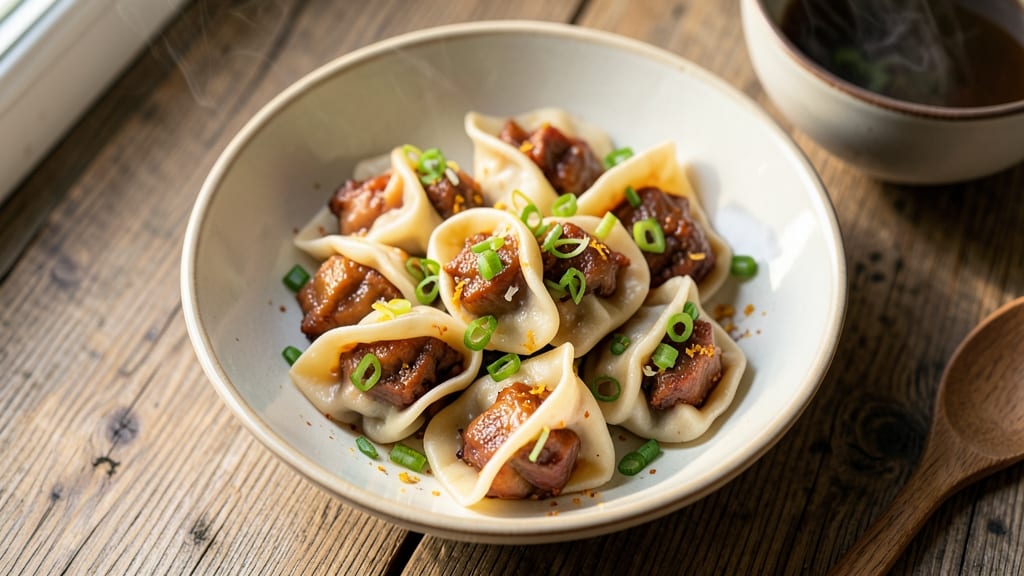
This basic pork dumpling recipe delivers crispy pan-fried bites in just 20 minutes—no fancy techniques required. I learned this foolproof method from my time in Charleston, where dumplings were a staple in every kitchen.
The secret lies in the dough's elasticity and the filling's balance of pork, ginger, and scallions, all wrapped in a way that ensures a satisfying crunch when fried.
The dough comes together with just three ingredients—flour, water, and a pinch of salt—while the filling requires ground pork, finely chopped aromatics, and a simple seasoning blend.
What sets these dumplings apart is their versatility: you can boil them for tender bites, steam them for a lighter texture, or pan-fry them until golden and crispy. I've perfected this technique over years of testing, ensuring every dumpling holds its shape and delivers that satisfying crunch.
By the time you're done, you'll have a plate of dumplings with crispy edges and tender centers, ready to be dipped in soy sauce or chili oil. The aroma alone will have everyone at the table asking for seconds.
This recipe is designed to be your go-to for quick weeknight dinners or impressive appetizers—no experience needed.
Whether you're feeding a crowd or treating yourself to a solo meal, these dumplings scale beautifully. The key is keeping the dough cool and the filling finely minced for even cooking. Let's get started on a recipe that's as rewarding to make as it is to eat.
Ingredients for basic pork dumpling
Three simple ingredients for the dough and seven for the filling—just enough to make crispy pan-fried perfection.
| Ingredient | Amount | Notes |
|---|---|---|
| All-Purpose Flour 🌾 | 2 cups | For dough elasticity |
| Cold Water 💧 | ¾ cup | Chilled for better handling |
| Salt 🧂 | ½ tsp | Fine sea salt preferred |
| Ground Pork 🐷 | 1 lb | 80% lean, finely chopped |
| Fresh Ginger 🌿 | 1 ½ tbsp | Finely grated, fresh |
| Green Onions 🧅 | 3 whole | White and green parts, chopped |
| Garlic Cloves 🧄 | 3 cloves | Minced, fresh preferred |
| Soy Sauce 🍶 | 1 ½ tbsp | Light or dark variety |
| Sesame Oil 🫒 | 1 tsp | Toasted, for aroma |
| Vegetable Oil 🫒 | ½ cup | For frying, high smoke point |
| Cornstarch 🌾 | 1 tbsp | For extra crispiness |
The flour is your best friend here—King Arthur or Gold Medal brands work best for that perfect dough texture. No need for fancy water; tap water is fine, but chilling it in the fridge for 10 minutes makes handling easier. For the pork, ground pork shoulder gives the best flavor, but any 80% lean ground pork will do. Fresh ginger is a must—the dried stuff just doesn't cut it. I grab mine at Asian markets where it's usually sold in those little jars, but the root form works too if you've got it. Just peel and grate it fresh.
No fresh ginger? Substitute with 1 tbsp of ginger paste—it's concentrated, so measure carefully. Out of soy sauce? Oyster sauce or hoisin works in a pinch, but the saltiness won't be quite the same. Want to skip the sesame oil? Neutral oil plus a pinch of salt mimics the flavor, though you'll lose that toasty aroma. The green onions can be swapped for scallions or chives, but the white part adds that extra depth of flavor. And if you're making a big batch, double the cornstarch for extra crispiness—trust me on this.
Keep your dough wrapped in plastic in the fridge for up to 2 days—it actually improves with time. The filling can be prepped ahead and stored for 1 day in the fridge. For the oil, use a deep pan and keep it at 350°F—too hot and they'll burn before crisping. Leftover dumplings? Store them in an airtight container and reheat in the oven at 375°F for 10 minutes. They're even better the second time around.
Why You'll Love This Recipe
- Five-Ingredient Miracle: I swear by this list—flour, water, salt, pork, and ginger. That’s it. No fancy pantry trips, no stressing over missing herbs. The dough comes together in minutes with just your hands and cold water, and the filling? Just salt, pork, and a thumb-sized piece of ginger you can grate while chatting with someone.
- Ginger-Pork Magic: Between us, that fresh ginger is the secret weapon. It cuts through the richness of the pork, giving these dumplings a bright, warm kick that makes them taste alive. Honestly, I’ve tried store-bought wrappers, but nothing beats the simplicity of rolling these out myself—the crispy edges when pan-fried? Pure satisfaction.
- Leftover Goldmine: These dumplings freeze like a dream. I make a double batch on Sundays, steam half, and freeze the rest. Thaw and pan-fry later for a 5-minute dinner. My college kid’s go-to when he’s too tired to cook—no complaints, just seconds.
- Budget-Friendly Staples: Ground pork stretches further than you’d think, and flour and ginger are pantry basics. I’ll be real: this is the kind of recipe that doesn’t break the bank but still feels special. Plus, the dough’s forgiving—even if it’s slightly sticky, it bounces back. No wasted ingredients, just reliable flavor.
Step-by-step instructions for pan-fried pork dumplings
Here's how to make golden, crispy pork dumplings that'll have everyone asking for seconds.
Prepare the Filling with Maximum Flavor
In a large bowl, combine the 1 lb ground pork with the 1.5 tbsp finely grated fresh ginger, 3 cloves minced garlic, 3 whole chopped green onions (both white and green parts), 1.5 tbsp soy sauce, and 1 tsp toasted sesame oil. Mix everything thoroughly with your hands until well incorporated.
This is where the magic happens—the aromatics need time to meld with the pork. I like to let the mixture sit for 5 minutes while I prepare the dough. The ginger and garlic will soften slightly, releasing their oils into the pork, which makes each bite burst with flavor. If you're using particularly fatty pork, you might see a little oil release—don't worry, that's normal and just means extra flavor.
Make the Dough and Roll It Thin
In a separate bowl, whisk together the 2 cups all-purpose flour and 0.5 tsp salt. Slowly add the 0.75 cup cold water while stirring with chopsticks or a fork until a shaggy dough forms. The water needs to be cold—this prevents gluten from developing too quickly and makes the dough easier to handle.
Turn the dough onto a lightly floured surface and knead gently for 2-3 minutes until smooth. Wrap it in plastic wrap and let it rest for 15 minutes. This resting period relaxes the gluten, making it much easier to roll out thin sheets. After resting, divide the dough into 4 equal portions (about 6 ounces each) and roll each portion into a 6-inch circle using a rolling pin. Aim for ⅛-inch thickness—this ensures crispy edges without making the dumplings too tough.
Assemble and Pan-Fry for Crispy Perfection
Place 1 portion of filling in the center of each rolled dough circle. Fold the dough over the filling, pressing the edges together with your fingers to seal. Roll the sealed edge between your palms to create a pleated effect—this adds texture and helps the dumplings hold their shape during frying. Place the finished dumplings on a floured surface while you prepare the pan.
Heat 0.5 cup vegetable oil in a large skillet over medium-high heat until it shimmers but doesn't smoke. Add the dumplings in a single layer, leaving ½-inch space between each. Fry for 2-3 minutes per side until they turn a deep golden brown and the oil bubbles vigorously. The key here is patience—rushing will make them greasy instead of crispy. You'll know they're ready when the bottoms are golden and the edges start to crisp up.
Drain and Finish with Cornstarch
Transfer the fried dumplings to a paper towel-lined plate to drain excess oil. While still hot, sprinkle them generously with the 1 tbsp cornstarch and toss gently to coat evenly. The cornstarch absorbs any remaining moisture and creates that extra-crispy texture we're after. Serve immediately while they're piping hot—these dumplings are best enjoyed fresh out of the pan.
Real talk: if you notice any dumplings puffing up too much during frying, gently press them down with a spatula. This keeps the shape intact and prevents them from becoming too dense. The crispy exterior should contrast beautifully with the juicy, seasoned pork filling inside—each bite should deliver that satisfying crunch followed by tender meat. Enjoy with a dipping sauce of your choice, or just as they are!
Pro Tips For Making Basic Pork Dumpling
- Chill the Dough Properly: Stick the wrapped dough in the fridge for at least 30 minutes before rolling—this makes it firm enough to handle without sticking. I used to skip this and ended up with a messy, elastic disaster that refused to hold its shape.
- Grind the Ginger Fine: Use a microplane or finely grate that ginger—no big chunks hiding in your filling. My grandmother swore by this, and she was right: it distributes flavor evenly instead of turning into a textural surprise.
- Boil Water First: Bring the water to a full rolling boil before adding dumplings—cold water in hot oil causes splattering and uneven cooking. Start hot, finish low, but never drop them into lukewarm water.
- Add a Pinch of Cornstarch: Mix ½ teaspoon cornstarch into the ground pork filling—it soaks up excess moisture and keeps dumplings from turning soggy. I was skeptical until I tried it; now I never make them without it.
Essential equipment for this recipe
Dough Rolling Tools
For perfect ⅛-inch thickness, I swear by a marble rolling pin—it stays cool and prevents sticking. My go-to is the Norpro 12-inch model, but any quality rolling pin works. If you don’t have one, a clean wine bottle wrapped in plastic makes a great substitute.
Keep your surface floured but not powdered—just enough to prevent sticking without making the dough gummy. 💫
Frying Essentials
A 12-inch cast iron skillet like the Lodge Pre-Seasoned is my holy grail for frying—it retains heat perfectly and creates that golden crust. For oil, use avocado or peanut oil (high smoke point of 400°F+) to prevent burning.
I avoid vegetable oil here—it can taste bland. A deep skillet ensures even cooking without overcrowding. 🔥
Dough Divider
Dividing dough evenly is key for consistent dumplings. I use a bench scraper to cut the dough into 6-ounce portions—it’s faster than eyeballing and gives you clean edges. For a budget option, a sharp chef’s knife works too.
Just weigh each portion on a kitchen scale for precision. If you don’t have one, use a ramen noodle as a makeshift divider—it’s the trick I learned in Charleston. 💡
Filling Prep Tools
Finely chopping ginger and garlic is where flavor shines. A microplane for ginger and a garlic press for cloves save time and ensure even texture. For green onions, I use a sharp chef’s knife—chop the whites finely and leave the greens slightly longer for color.
A small mixing bowl (like Pyrex) keeps everything contained while you mix by hand. 🌿
Dumpling Assembly Help
Sealing dumplings tightly is an art. I keep a small bowl of water nearby to dip my fingers in—it helps the dough edges stick together. For pleating, use your fingertips to press gently, or a chopstick for precision.
A floured plate underneath catches any stray filling while you work. Pro tip: If dough sticks, dust with rice flour—it’s less gritty than regular flour. ✨
Serving Gear
Serve dumplings on a wooden board or slate platter for rustic charm. For dipping, I use small ceramic bowls (like Corelle) to hold sauces. A tongs keeps dumplings from breaking when serving. Leftovers? Store in airtight containers with parchment paper between layers to prevent sticking. 🍶
Nutrition facts
Frequently asked questions
Can I make these dumplings ahead of time?
Prepare the dough and filling separately up to 2 days ahead—store wrapped in plastic in the fridge. For best results, assemble the dumplings just before frying. If making a full batch, freeze uncooked dumplings on a tray before transferring to a bag (they'll keep for 1 month). Thaw overnight in the fridge before pan-frying.
What's the best way to make them less greasy?
Use a paper towel drain rack after frying to absorb excess oil. For extra crispiness without grease, try steaming or boiling first (until 80% cooked) then pan-fry briefly. Another trick: pat the dough circles dry before adding filling—moisture creates steam that makes dumplings soggy.
How do I fix dough that's too sticky?
Add 1-2 tbsp more flour gradually while kneading, but don't overdo it—too much makes them tough. If the dough tears when rolling, let it rest 10 more minutes wrapped in plastic. For emergency fixes, chill the dough for 20 minutes before handling. The cold water in the recipe helps prevent stickiness from the start.
Can I use chicken instead of pork?
Yes! Swap the pork for 1 lb ground chicken and adjust seasonings: add ½ tsp garlic powder and ¼ tsp black pepper to compensate for pork's natural saltiness. The texture will be slightly lighter, but the technique remains identical. For extra flavor, marinate the chicken in 1 tbsp soy sauce for 15 minutes before mixing.
Why did my dumplings fall apart?
Most likely, the dough wasn't sealed properly or the filling was too wet. Press the edges firmly when folding, and ensure your filling isn't releasing excess liquid (drain fatty pork if needed). Another common issue: overcrowding the pan—leave ½-inch space between dumplings for even cooking. If using pre-made dough, it may need more resting time.