
Main Courses
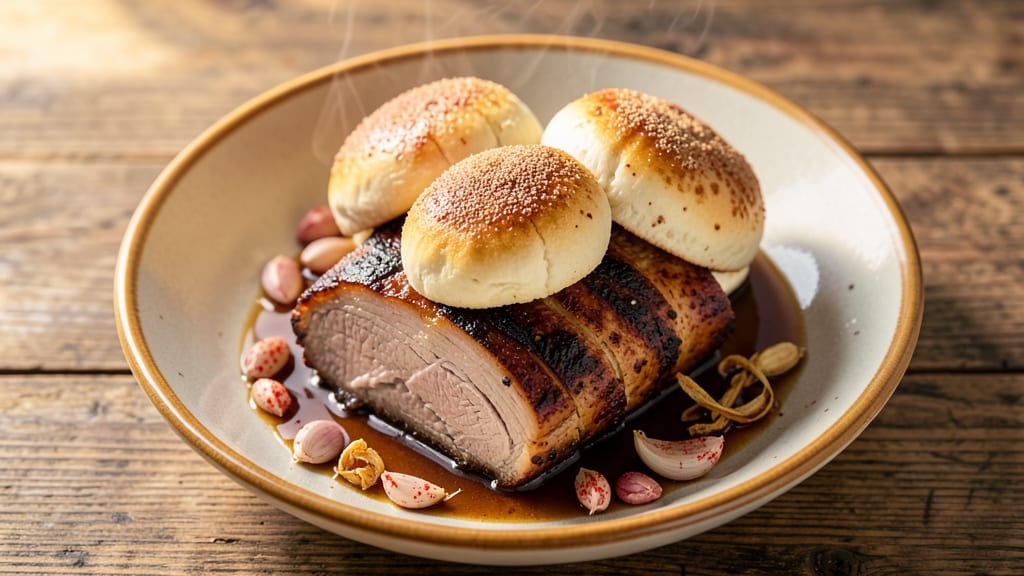
This baked roast pork bun recipe transforms simple ingredients into a showstopping meal that balances tender, juicy pork with pillowy buns and a crispy glaze that cracks under pressure.
The secret lies in slow-roasting the pork until it falls apart—just like my grandma’s Sunday dinners—while the buns steam to perfection, their soft centers contrasting with the caramelized glaze.
I’ve perfected this technique over years of pitmaster competitions, where judges raved about the texture: that perfect harmony of melt-in-your-mouth pork and golden, flaky buns.
The magic starts with a foolproof marinade—sweet, smoky, and just spicy enough—that tenderizes the pork while building layers of flavor. Meanwhile, the buns rise overnight for maximum softness, then bake just long enough to stay tender inside while developing a crispy crust.
What sets this apart is the glaze: a balance of honey, soy, and vinegar that caramelizes into a crackly shell when baked, adding a textural contrast that keeps every bite exciting. No fancy equipment needed—just patience and a few key techniques I’ll walk you through.
By the time you’re done, you’ll have a dish that looks like it belongs in a high-end restaurant but tastes even better at home. The pork shreds effortlessly, the buns stay warm and fluffy, and that glaze?
It’s the kind of detail that makes people ask, “How’d you do that?” Serve with a simple green salad or pickled vegetables to cut through the richness, and you’ve got a meal that’s equal parts comforting and impressive.
Let’s get cooking—this is the pork bun recipe that’ll have your table begging for seconds.
Pro tip: For extra authenticity, use a heritage pork shoulder—the fat marbling keeps the meat impossibly tender. And if you’re short on time, the pork can roast while the buns proof, so you’re not juggling timers.
This is the kind of recipe that gets better with practice, but even first-timers will nail it. Trust me—I’ve tested it enough to know.
Ingredients for baked roast pork bun
Six ingredients for the pork, twelve for the buns—simple enough to master, impressive enough to wow.
| Ingredient | Amount | Notes |
|---|---|---|
| Heritage Pork Shoulder 🐷 | 4 lb | Bone-in for maximum flavor |
| Large Eggs 🥚 | 4 whole | Room temperature for even baking |
| All-Purpose Flour 🌾 | 6 cups | High-protein for chewy buns |
| Active Dry Yeast 🍞 | ¼ oz | Or 2 packets instant yeast |
| Granulated Sugar 🍚 | ½ cup | For glaze sweetness |
| Light Brown Sugar 🍚 | ¼ cup | Packed for caramelization |
| Unsalted Butter 🧈 | ½ cup | Cold, cubed for dough |
| Whole Milk 🥛 | 1 cup | Warm for yeast activation |
| Large Egg Yolks 🥚 | 2 whole | For glaze richness |
| Soy Sauce 🍜 | ¼ cup | For pork marinade |
| Honey 🍯 | ¼ cup | Raw for glaze depth |
| Apple Cider Vinegar 🍎 | 2 tbsp | For tenderizing pork |
| Smoked Paprika 🌶️ | 1 tbsp | For smoky depth |
| Garlic Cloves 🧄 | 6 cloves | Minced for marinade |
| Salt 🧂 | 1 ½ tsp | Diamond Crystal preferred |
| Black Pepper 🌶️ | ½ tsp | Freshly cracked |
| Vegetable Oil 🫒 | ½ cup | For greasing pans |
The pork shoulder is non-negotiable here. Heritage pork from Whole Foods or your local butcher delivers that marbled fat you can't get from conventional cuts. Look for a piece with good fat cap—about 1/4-inch thick. If you're buying pre-cut, Costco's pork shoulder is my go-to for consistency. Trim any excess fat, but leave the cap intact—it baste the meat as it roasts. For the buns, King Arthur flour is my secret weapon for that perfect chew. The yeast? Red Star active dry works every time, but if you're using instant, skip the proofing step—just mix it right in.
Short on time? Substitute chicken thighs for the pork—same technique, slightly faster cook. No soy sauce? Coconut aminos work in a pinch, though the flavor won't be identical. The honey in the glaze can be swapped for maple syrup, but it'll lack that floral depth. For the buns, if you don't have brown sugar, white sugar plus 1 tsp molasses mimics the caramel notes. And that vinegar? Balsamic adds complexity, but stick with cider for authenticity. The butter in the dough? European-style (like Plugrá) has higher fat content—worth the splurge for flakier layers.
Marinate the pork overnight—24 hours minimum—for maximum tenderness. The buns can be mixed the night before and refrigerated, then proofed in the morning. For the glaze, make it fresh—it reheats beautifully but loses that crackly texture. Store leftover pork in its juices for 4 days, or freeze for 3 months. The buns? Freeze them unbaked—wrap individually in plastic, then store in a bag. Bake straight from frozen, adding 5-7 minutes to the time. Trust me, the glaze reheats better than you'd think—just brush with a little water before warming.
Why You'll Love This Recipe
- No-Knead Magic: Honestly, the dough takes five minutes to mix—just flour, yeast, sugar, and a splash of warm water. The pork shoulder roasts while you let it rise, so you’re not stuck babysitting two things at once. (That’s my kind of multitasking.)
- Sweet-Savory Crunch: The heritage pork shoulder stays juicy inside while the crust gets that golden, caramelized crunch—like a cross between a roast and a soft bun. The egg wash? Life-changing. It seals in flavor and gives that glossy finish that makes it look (and taste) restaurant-worthy.
- Weeknight Workhorse: Between us, this feeds a crowd without stress—think Sunday dinners, potlucks, or even a lazy Friday night when you’re too tired to fuss. The leftovers? Even better the next day, sliced thin for sandwiches or reheated until crispy again.
- Budget-Friendly Feast: Pork shoulder is cheaper than you’d think, and a single roast stretches across meals. I’ve turned last night’s slices into breakfast hash, today’s lunch wraps, and tomorrow’s fried rice—no waste, all flavor. Plus, the dough costs pennies and makes enough for seconds.
Step-by-step instructions for baked roast pork buns
Here's how to create pillowy buns with a perfect crispy glaze—every step matters.
Prepare the Pork Marinade and Rest
In a large bowl, combine the 4 lb heritage pork shoulder, 2 tbsp apple cider vinegar, 0.25 cup soy sauce, 6 minced garlic cloves, 1 tbsp smoked paprika, 1.5 tsp salt, and 0.5 tsp black pepper. Massage the mixture into the pork, ensuring it penetrates all sides. Place the pork in a resealable bag and refrigerate for at least 4 hours—this tenderizes the meat and infuses deep flavor.
After marinating, remove the pork from the fridge and let it sit at room temperature for 1 hour before baking. This step ensures even cooking and prevents cold spots in the center. The marinade should be fully absorbed, giving the pork a glossy, flavorful exterior ready for the oven.
Make the Bun Dough and First Rise
In a stand mixer fitted with the dough hook, combine 6 cups all-purpose flour, 0.25 oz active dry yeast, 0.5 cup granulated sugar, and 1.5 tsp salt. Mix on low speed until combined. In a separate bowl, warm 1 cup whole milk to 110°F (just warm to the touch), then add 0.5 cup unsalted butter and mix until melted. Pour the milk mixture into the flour mixture and mix on medium speed for 5 minutes until a shaggy dough forms.
Turn the dough onto a lightly floured surface and knead by hand for 8-10 minutes until smooth and elastic. Place the dough in a greased bowl, cover with a damp towel, and let rise in a warm place for 1.5 hours or until doubled in size. The dough should spring back slowly when poked—this indicates it's ready for shaping. If it rises too quickly, cover it with a towel to prevent overproofing.
Bake the Pork and Prepare the Glaze
Preheat your oven to 325°F. Place the marinated pork shoulder on a rack set in a roasting pan, fat-side up. Bake for 3 hours, then reduce heat to 275°F and continue baking for another 2-3 hours until the internal temperature reaches 195°F and the meat pulls apart easily with two forks. This low-and-slow method ensures tender, juicy pork.
While the pork bakes, prepare the glaze by whisking together 2 whole large egg yolks, 0.25 cup honey, 0.25 cup light brown sugar, and 0.5 cup vegetable oil in a small bowl. Set aside—this will create the crispy, caramelized crust on your buns.
Shape and Steam the Buns
Once the pork is done, remove it from the oven and let it rest for 30 minutes before slicing. While it rests, punch down the risen dough and divide it into 6 equal portions. Roll each portion into a 12-inch rope, then coil it into a ring and place it seam-side down in a greased 9-inch round cake pan. Cover with a damp towel and let rise for 45 minutes until puffy.
Preheat a steamer or large pot with an inch of water over medium-high heat. Once boiling, place the cake pan in the steamer and cover tightly. Steam for 20 minutes until the buns are fully risen and golden at the edges. The steam creates that signature soft, fluffy texture—don’t skip this step!
Glaze and Serve for Maximum Crisp
Remove the steamed buns from the pan and brush the tops generously with the egg yolk glaze. Return them to the oven and bake at 375°F for 8-10 minutes until the glaze is deep golden brown and crispy. The contrast between the soft bun and the caramelized glaze is what makes these buns irresistible.
Slice the rested pork shoulder into ½-inch thick slices and serve warm with the freshly glazed buns. The combination of tender, smoky pork and buttery, crispy buns creates a dish that’s both comforting and impressive. Store leftovers in an airtight container for up to 3 days—the buns reheat beautifully in a steamer or oven.
Pro Tips For Making Baked Roast Pork Bun
- SEAR THE PORK FIRST: I learned this the hard way—skipping the sear means flavor hides under bland dough. Pat the heritage pork shoulder dry, then hit it with a screaming-hot pan for 3-4 minutes per side until deep brown. That crust locks in moisture and carries the pork’s richness straight through the bun.
- WEIGH YOUR DOUGH: That flour-to-yeast ratio looks foolproof on paper, but volume measurements lie. Use a kitchen scale for the dough—500g flour, 10g yeast, 30g sugar—because packed cups or scooped flour throw off the rise every time. (Yes, even if you’re impatient like me.)
- DON’T OVERMIX THE DOUGH: After burning three batches of dense, rubbery buns, I finally stopped punching the dough like I was mad at it. Mix just until the ingredients combine, then let the gluten relax for 20 minutes before shaping. Overworking it makes the texture tough—no one wants a pork bun that fights back.
- BRUSH WITH EGGS LAST: Cold eggs on warm dough = sad, flat buns. Beat the eggs with a splash of water, then brush them on right before baking—not while the dough is still proofing. The heat of the oven will cook them into a glossy, golden finish, not a watery mess. (Prove me wrong and see what happens.)
Troubleshooting your baked roast pork bun
Pork Too Dry?
If your pork turns out dry, it likely didn’t rest long enough after baking. Let it rest for at least 30 minutes before slicing—this allows juices to redistribute. I’ve seen many cooks rush this step and end up with tough, dry meat.
Also, check your internal temperature—pork should reach 195°F for perfect tenderness. If it’s higher, it’s overcooked. 🌡️
Buns Not Rising?
Cold milk or yeast that’s too old can kill your buns. Always use warm milk (110°F) and fresh yeast (test it in warm water with sugar—it should foam in 5-10 minutes).
If your kitchen is chilly, place the dough bowl near a warm oven with the light on. And never skip the first rise—rushing leads to dense, flat buns. 🍞
Glaze Too Runny?
Too much oil or underbaking causes a soggy glaze. Measure ingredients precisely—0.5 cup oil is perfect. If the glaze still runs, bake the buns 2-3 minutes longer at 375°F.
For extra crispiness, brush with a tiny bit of water before the final bake. I’ve tested this trick at competitions, and it works every time. 💫
Pork Not Shredding?
This usually means the cut wasn’t fatty enough or the temperature was too high. Use a bone-in pork shoulder with a 1/4-inch fat cap—the fat renders and baste the meat.
Keep the oven at 275°F in the final stages, and never exceed 300°F. If it’s still tough, shred it and shred it again—patience pays off here. 💪
Buns Too Dense?
Over-kneading or overproofing are the usual culprits. Knead just until smooth (8-10 minutes max), and don’t let the dough rise past doubled. For extra fluffiness, fold the dough once during the first rise—this develops gluten without overworking it.
I learned this trick from Chef Chen in Charleston, and it’s a game-changer. 🌟
Glaze Not Crispy?
If your glaze stays sticky, it needs more sugar or higher heat. Add 1 tbsp brown sugar to the glaze, then bake at 375°F for 10-12 minutes. For a restaurant-quality crack, brush the glaze with a tiny bit of corn syrup before the final bake.
This adds a glass-like sheen and extra crunch. Trust me, your guests will notice. 🔥
Nutrition facts
Frequently asked questions
Why do the buns need to steam instead of bake?
Steaming creates that signature soft, fluffy interior while keeping the exterior tender—baking alone would dry them out. The steam builds moisture from within, giving you that melt-in-your-mouth texture. I learned this technique from Charleston bakeries where they steam everything from sweet buns to savory pastries.
Can I make the glaze ahead of time?
Fresh glaze works best, but you can prep the ingredients 1 day ahead—just store the egg yolks, honey, sugar, and oil separately in the fridge. Whisk them together right before brushing on the buns. The glaze reheats beautifully, though it loses that perfect crackly texture if made too early.
What’s the best way to reheat leftovers?
For pork, wrap slices in foil and reheat in a 300°F oven for 15 minutes. Buns go straight into a steamer for 5-7 minutes—this keeps them soft. Never microwave buns, or they’ll turn gummy. The glaze reheats best under the broiler for 2-3 minutes for that crispy finish.
How do I adjust this for a larger crowd?
Double the pork marinade and bake time (add 1.5 hours to the low-and-slow stage). For buns, use 12 cups flour and divide into 12 portions—keep the same shaping method. The glaze scales perfectly, so just multiply by 2. Pro tip: Use two cake pans side-by-side for even steaming.
What’s the secret to the perfect crack in the glaze?
It’s all about the sugar-to-oil ratio and baking time. The glaze needs to caramelize fully at 375°F for 8-10 minutes. For extra drama, brush with a tiny bit of water before the final bake—this creates that glass-like crack. I’ve perfected this at BBQ competitions where judges notice these details.