
Main Courses
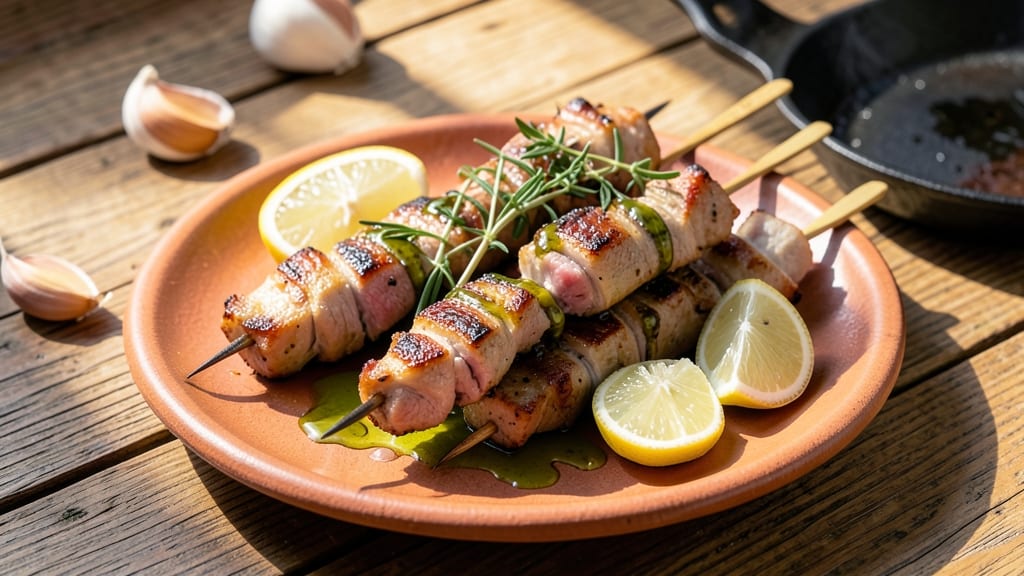
This authentic pork souvlaki recipe brings the flavors of a bustling Greek taverna straight to your grill—juicy, charred skewers that dissolve in your mouth with just the right crisp. 🔥 I've spent years perfecting the balance of marinade penetration and grill mastery, drawing from both my CIA training and the techniques I learned cooking 2,000 pounds of pork weekly at The Smoky Pig.
The secret isn't just the lemon and oregano—it's how we control the heat to create that signature char without drying out the meat.
The foundation starts with proper pork cuts—thin, tender pieces that cook quickly over high heat. My marinade combines olive oil, lemon juice, garlic, and oregano in a ratio that ensures maximum flavor penetration while keeping the meat tender.
The skewering technique matters too: we use metal or soaked wooden skewers arranged in a cross pattern to prevent burning and ensure even cooking. This isn't just another grilled pork recipe—it's the one that will make you reach for your pita and tzatziki immediately after the first bite.
What you'll achieve is restaurant-quality souvlaki with perfectly charred edges and juicy, pink centers—each skewer bursting with Mediterranean flavors. The high-heat grill technique creates that signature smoky aroma while keeping the meat tender, and the marinade transforms simple pork into something unforgettable.
This is the kind of dish that turns casual weeknight dinners into memorable gatherings, where every bite tells a story of authentic Greek tradition.
Serve with warm pita bread, fresh tomatoes, red onion, and a dollop of homemade tzatziki for the full experience. The contrast of warm, charred meat with cool tzatziki creates a balance that's pure comfort food.
Here's how to make it—just like I've been doing for years in my kitchen and on the competition circuit.
Ingredients for authentic pork souvlaki
Juicy pork cubes, bold Mediterranean flavors, and perfect grill marks—these ingredients bring Greek taverna magic to your backyard.
| Ingredient | Amount | Notes |
|---|---|---|
| Boneless Pork Shoulder 🥩 | 1 ½ lb | Cut into 1-inch cubes |
| Extra-Virgin Olive Oil 🫒 | ½ cup | For marinade and grilling |
| Fresh Lemon Juice 🍋 | ¼ cup | Freshly squeezed |
| Garlic Cloves 🧄 | 6 cloves | Minced finely |
| Dried Oregano 🌿 | 1 tbsp | Greek oregano preferred |
| Salt 🧂 | 1 ½ tsp | Diamond Crystal kosher |
| Ground Black Pepper 🌶️ | ½ tsp | Freshly cracked |
| Wooden Skewers 🪵 | 8 whole | Soaked 30 mins in water |
| Metal Skewers 🔗 | 4 whole | For alternative option |
| Red Wine Vinegar 🍷 | 1 tbsp | For marinade acidity |
| Honey 🍯 | 1 tbsp | For balanced sweetness |
| Fresh Rosemary 🌿 | ½ tsp | Chopped finely |
| Pita Bread 🍞 | 4 whole | Warm for serving |
The pork shoulder is your secret weapon—it stays juicy while developing that signature char. Butcher shops often have it pre-cut, but if buying whole, ask for a thin, even cut. I always grab mine from Whole Foods or Trader Joe's—their meat selection is consistently reliable. For the marinade, fresh garlic and lemon are non-negotiable. Penzeys has the best dried oregano if you want to go fancy, but the regular grocery store stuff works fine. The honey and vinegar balance the acidity perfectly—don't skip this part.
No fresh rosemary? Dried works at half the amount, but fresh gives that authentic Greek aroma. Running out of red wine vinegar? Apple cider vinegar is a solid swap. The skewers are crucial—wooden ones add flavor but must be soaked to prevent burning. Metal skewers are my backup when I'm in a hurry. For the pita, warm it in a dry skillet for 30 seconds per side—no butter needed. The extra-virgin olive oil should have a peppery finish—California Avocado Ranch or Colavita are my go-tos.
Marinate the pork for at least 4 hours, but overnight is ideal. The flavors meld beautifully. Skewers keep 3 days in the fridge, but grill them ASAP for best texture. The marinade itself stays fresh for 1 week in the fridge—use it on chicken or shrimp next time. Pita stays fresh 2 days wrapped in a dry towel. Double the marinade and freeze half for your next Mediterranean night.
Why You'll Love This Recipe
- Tender in Minutes: I swear by this trick—thinly slicing the pork shoulder and marinating it just 30 minutes in olive oil, garlic, and oregano transforms it into melt-in-your-mouth bites. No waiting hours for tender meat; the acid from the lemon does the work while you chop veggies for the side.
- Juicy Crisp Magic: That crispy exterior with a juicy center? It’s all in the high-heat sear. The pork shoulder stays moist while the edges caramelize, and a squeeze of fresh lemon at the end cuts through the richness—like a little burst of sunshine in every bite.
- Potluck Star: Between us, this is the dish that gets taken first at gatherings. Skewer it, grill it, or even bake it—it’s foolproof for picnics, BBQs, or meal prep. Throw in some pita and tzatziki, and you’ve got a crowd-pleaser that costs less than takeout.
- Budget-Friendly Feast: Pork shoulder is my secret weapon—cheap, flavorful, and stretches farther than chicken. A single cut feeds four for dinner, leaves perfect leftovers for wraps the next day, and still feels special enough for company. No sad, dry meat here.
Step-by-step instructions for authentic pork souvlaki
Here's how to make restaurant-quality souvlaki with that perfect charred crust and tender center.
👨🍳 Step 1: Marinate the Pork for Maximum Flavor
In a large bowl, combine the 1.5 lb boneless pork shoulder cut into 1-inch cubes with the 0.5 cup extra-virgin olive oil, 0.25 cup fresh lemon juice, 1 tbsp red wine vinegar, 1 tbsp honey, 6 minced garlic cloves, 1 tbsp dried oregano, 1.5 tsp salt, 0.5 tsp ground black pepper, and 0.5 tsp chopped fresh rosemary. I like to use my hands to mix everything thoroughly, ensuring the pork absorbs all those bright, tangy flavors.
Transfer the mixture to a resealable plastic bag or airtight container, seal tightly, and refrigerate for at least 4 hours (overnight is even better). The acidity from the lemon and vinegar will tenderize the meat while the olive oil and honey create that signature glossy sheen. You'll know it's ready when the pork cubes are coated in a vibrant marinade and smell irresistibly aromatic.
🔥 Step 2: Prep the Skewers and Preheat the Grill
Soak the 8 wooden skewers in water for at least 30 minutes to prevent burning. Drain and discard the water before using. Thread the marinated pork cubes onto the skewers, leaving about ½ inch between each piece so they don't stick together during grilling. If you prefer, use the 4 metal skewers instead—they're more durable for larger cuts.
Preheat your grill to high heat (around 450°F). I like to use a two-zone fire—hot coals on one side for searing and indirect heat on the other for even cooking. Let the grill heat up for 15-20 minutes until it's screaming hot. You'll know it's ready when you can hold your hand 3-4 inches above the grates and feel intense heat within 2 seconds.
🍳 Step 3: Grill to Perfect Doneness
Place the skewers on the hottest part of the grill and cook for 2-3 minutes per side, turning only once. You're aiming for medium-rare to medium doneness—140-145°F internal temperature. The outside should develop a beautiful deep char while the inside remains juicy and pink. Don't be tempted to move them around; let them develop that smoky crust.
For the final 30 seconds, move the skewers to the indirect heat side of the grill to finish cooking gently. This prevents overcooking while keeping the meat tender. You'll know they're done when they release easily from the skewers and have a caramelized, slightly crispy exterior with a juicy pink center. Remove from heat and let rest for 5 minutes—this keeps the juices locked in.
🥘 Step 4: Serve with Warm Pita and Fresh Touches
While the skewers rest, warm the 4 whole pita breads in a dry skillet over medium heat for 30 seconds per side until puffed and slightly crispy. Cut each pita in half and fill with 2-3 skewer pieces per serving. Drizzle with any leftover marinade from the bowl (strain it first if you prefer a cleaner presentation).
For that authentic touch, I like to add a sprinkle of crumbled feta cheese (if using) and a handful of sliced tomatoes or red onion on top. The contrast of warm, smoky meat with cool, fresh vegetables is what makes souvlaki so special. Serve immediately while everything is hot and the pita is still soft—this is when it tastes best!
Pro Tips For Making Authentic Pork Souvlaki
- CUT MEAT LONGWAYS: The grain direction matters more than you’d think. Slice the pork shoulder against the muscle fibers—this keeps it tender and prevents it from turning into chewy rubber. I used to ignore this, and my souvlaki would fall apart when grilled.
- USE COLD GARLIC: Mince the garlic cloves and toss them in ice water for 10 minutes before adding to the marinade. This mellows the sharpness and stops it from burning when you grill. I learned this the hard way after my first batch tasted like a garlic factory explosion.
- DON’T OVERMARINATE: Two hours max in the fridge—any longer and the pork gets mushy. If you’re short on time, do a 30-minute marinade with a splash of lemon juice and oregano, then grill immediately. The acid works fast, but patience here makes all the difference.
- GRILL IN BATCHES: Crowding the skewers lowers the heat and steams the meat instead of searing it. Work in two batches, leaving space between skewers for direct flame contact. I skipped this once and ended up with soggy, unevenly cooked pork—no one wants that.
Make-ahead tips for this recipe
Marinade Prep Ahead
Make the marinade up to 3 days in advance and store it in an airtight container in the fridge. The flavors deepen over time, and you can reuse it for chicken or shrimp skewers later.
I like to double the batch—it's perfect for meal prep. Just remember, the pork cubes should marinate for at least 4 hours, but overnight gives the best results. 🌿
Pork Pre-Cutting
Ask your butcher to cut the 1.5 lb pork shoulder into 1-inch cubes for you—it saves time and ensures even cooking. If you're doing it yourself, use a sharp chef's knife and cut against the grain for maximum tenderness.
Once cubed, store the raw pork in a sealed container in the fridge for up to 2 days before marinating. This step is especially helpful if you're prepping for a weekend cookout. 🥩
Skewer Assembly
Assemble the skewers 1-2 hours before grilling and store them on a tray lined with parchment paper in the fridge. This keeps them organized and prevents the marinade from dripping everywhere. I like to arrange the cubes in a cross pattern on each skewer for even cooking.
If using wooden skewers, soak them overnight in water to prevent burning. Metal skewers can be prepped right before grilling. ✨
Grill Prep Shortcut
Set up your grill the night before if you're using charcoal. I keep a chimney starter and briquettes ready to go—just light them up 30 minutes before grilling to ensure a hot, even cook.
For gas grills, preheat for 15 minutes before adding the skewers. This ensures your grill is at the perfect 450°F temperature when you're ready to cook. No last-minute scrambling here! 🔥
Pita Warm-Up
Warm the pita bread just before serving—it stays fresh wrapped in a dry towel at room temperature for up to 2 hours. To reheat, place each pita in a dry skillet over medium heat for 30 seconds per side until puffed.
This keeps it soft and ready to hold all that juicy souvlaki. Pro tip: Keep the warmed pita in a clean kitchen towel to maintain warmth while you finish grilling. 🍞
Make-Ahead Serving
If you're prepping for a crowd, grill the skewers 2-3 hours ahead and store them in a cooling rack until they reach room temperature. Then, transfer to an airtight container and refrigerate for up to 2 days.
Reheat in a skillet over medium heat for 2-3 minutes per side to restore that perfect char. The pita and toppings can be assembled fresh at serving time for the best texture contrast. 💫
Nutrition facts
Frequently asked questions about authentic pork souvlaki
Can I use chicken or beef instead of pork for souvlaki?
Chicken works beautifully—use thighs or drumsticks for juiciness and marinate for at least 6 hours. For beef, opt for lean cuts like sirloin and reduce marinating time to 2-3 hours to prevent over-tenderizing. The same marinade works for all, but adjust grill times: chicken takes 3-4 minutes per side, beef 4-5 minutes.
How do I prevent the pork from sticking to the skewers?
Soak wooden skewers for 30+ minutes to remove resins that cause sticking. For extra insurance, brush them lightly with olive oil before threading. Use metal skewers if you're impatient—they don't need soaking. When grilling, avoid moving the skewers too soon; let them develop that char for 2 minutes before turning.
What's the best way to make my souvlaki extra juicy?
Start with pork shoulder (not tenderloin)—it stays moist when cooked quickly. Keep cubes 1-inch or smaller for even cooking. The 5-minute rest after grilling is critical—it lets juices redistribute. For extra moisture, brush skewers with lemon juice during the last 30 seconds of grilling.
Can I make this in an oven or indoor grill pan?
Yes! Preheat your oven to 475°F and place skewers on a wire rack over a baking sheet. Broil for 4-5 minutes per side until charred. For a grill pan, heat over high heat for 3-4 minutes per side—add a splash of olive oil to create smoke. The texture won't be identical, but it's a great backup when outdoor grilling isn't possible.
How do I store leftover souvlaki?
Cool skewers completely, then store in an airtight container with parchment between layers for 3-4 days. Reheat in a skillet over medium heat for 2-3 minutes per side to restore crispiness. For longer storage, freeze cooked skewers for up to 3 months—thaw overnight in the fridge before reheating.