
Soups & Stews
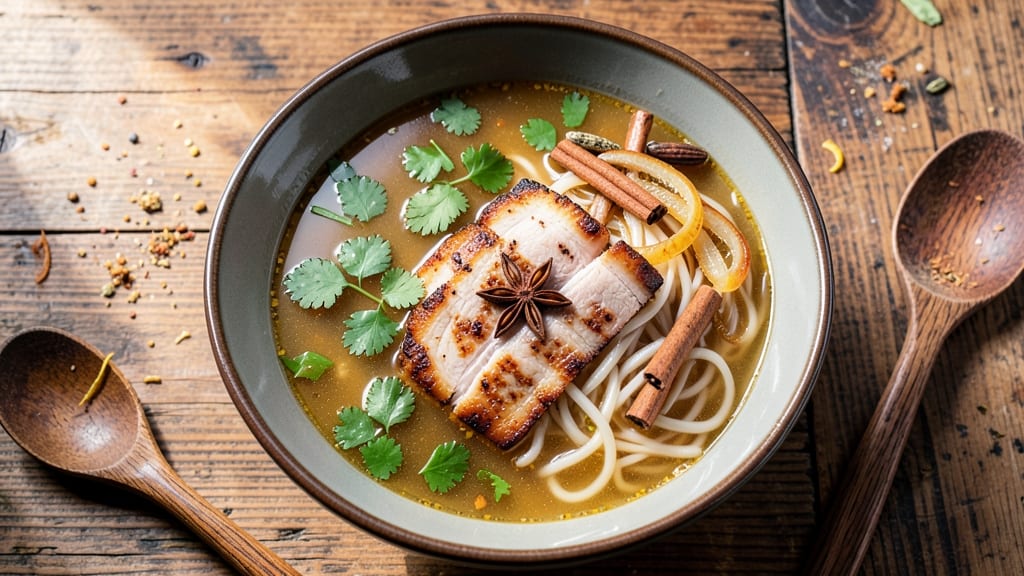
This authentic pork pho recipe brings the fragrant streets of Hanoi into your kitchen with every steaming bowl. After years of perfecting Vietnamese flavors in my professional kitchen, I've distilled the secrets of a rich, aromatic broth that balances sweet, savory, and herbal notes perfectly. The key lies in slow-simmered spices—star anise, cinnamon, and cloves—that infuse the broth with complex warmth while keeping the pork tender and the rice noodles perfectly al dente.
The magic happens in the broth preparation, where we build layers of flavor through careful spice toasting and long simmering. I've simplified the process without sacrificing authenticity, ensuring home cooks can achieve restaurant-quality results.
Thinly sliced pork shoulder transforms into melt-in-your-mouth strips, while fresh herbs and lime add brightness at the table. What you'll end up with is a bowl that's both comforting and sophisticated—a perfect balance of textures and flavors.
What sets this recipe apart is the attention to detail in every component: the proper ratio of fish sauce to sugar for that signature umami-sweet balance, the correct rice noodle width, and the fresh garnishes that elevate each bite.
The broth should be fragrant enough to make your kitchen smell like a Vietnamese market, with just the right depth of spice and herbal notes. This is the kind of dish that becomes a family favorite and a showstopper for dinner guests.
Whether you're serving this for a special occasion or a cozy weeknight dinner, the technique remains the same. The secret to success is patience—letting the broth develop its complex flavors over time.
Once you taste the difference between this homemade version and store-bought, there's no going back. Let's create this authentic pho together, step by step.
Ingredients for authentic pork pho
These aromatic ingredients transform simple pantry staples into pho that smells like Hanoi's streets.
| Ingredient | Amount | Notes |
|---|---|---|
| Pork Shoulder 🥩 | 1 ½ lb | Thinly sliced, fat cap removed |
| Star Anise Pods 🌿 | 4 whole | Whole pods for infusion |
| Cinnamon Sticks 🌿 | 3 whole | 2-inch pieces for aroma |
| Cloves 🌿 | 6 whole | Whole cloves for depth |
| Cardamom Pods 🌿 | 4 whole | Lightly crushed for flavor |
| Onion 🧅 | 1 whole | Yellow, halved lengthwise |
| Garlic Cloves 🧄 | 8 cloves | Peeled, smashed slightly |
| Fresh Ginger 🧅 | 2 tbsp | Finely grated, skin removed |
| Fish Sauce 🍶 | ¼ cup | Red Boat preferred |
| Cane Sugar 🍯 | ½ cup | Light brown preferred |
| Rice Noodles 🍜 | 8 oz | Flat, medium-width |
| Fresh Thai Basil 🌿 | ½ cup | Whole leaves for garnish |
| Fresh Cilantro 🌿 | ¼ cup | Chopped for garnish |
| Lime Wedges 🍋 | 4 whole | For serving |
| Fresh Bean Sprouts 🌱 | 1 cup | For garnish |
The spices are non-negotiable here. Whole star anise and cinnamon sticks from Penzeys or your local Asian market bring that authentic depth—pre-ground spices won't cut it. Look for pods that are plump and intact, not shriveled or broken. The pork shoulder should have good marbling for juiciness, and Costco or Whole Foods often carry high-quality cuts. Fresh ginger matters too—peel it just before grating for maximum punch. For the fish sauce, Red Boat is the gold standard, but Three Crabs works in a pinch if you can't find it.
No star anise? 1 tsp ground anise seed in a pinch, but it won't be the same. Running out of cardamom? Double the cinnamon for warmth. The sugar can be swapped for coconut sugar or brown sugar, but cane sugar gives that authentic caramel note. For the noodles, banh pho is ideal, but rice vermicelli works if that's all you can find. Fresh herbs are key—Thai basil has that anise-like kick that regular basil lacks. If you can't find it, holy basil is the next best thing.
Broth keeps for 5 days in the fridge—flavor actually improves as it sits. Freeze for 3 months in airtight containers. The noodles? Cook them fresh for best texture, but you can parboil them ahead and store separately. Fresh herbs stay vibrant for 4 days wrapped in damp paper towels. I always make extra broth—it's perfect for rice bowls the next day.
Why You'll Love This Recipe
- One-Pot Magic: I swear by this—just toss the pork shoulder, spices (star anise, cinnamon, cloves—the good stuff), and broth into one pot. No chopping, no fuss, and that slow-cooked richness? It’s all happening in the same vessel.
- Spice Bomb Depth: Between us, those whole spices (cardamom, star anise) infuse the broth like nothing else. You’re not just tasting pork—you’re getting layers of warmth, earthiness, and a hint of sweetness that lingers. Honestly, my first sip always makes me pause.
- Weeknight to Party: This recipe works when I’m exhausted (pork shoulder simmers while I do laundry) and when I’m hosting (just double the batch). Serve it with rice noodles and fresh herbs, and suddenly, you’ve got a restaurant-worthy bowl that’s still your meal.
- Budget Feast: Pork shoulder is cheap, but it transforms into something luxurious. A single roast feeds four, and leftovers reheat beautifully—no dryness, no sad texture. I’ll be real: I’ve had this for lunch three days in a row, and it’s still a highlight.
Step-by-step instructions for authentic pork pho
Here's how to craft that signature aromatic broth and tender pork that defines true Vietnamese pho.
Prepare the Pork and Spice Packet
Thinly slice the 1.5 lb pork shoulder against the grain into ¼-inch thick pieces. Remove any visible fat cap to avoid cloudy broth. In a small bowl, combine the 4 whole star anise pods, 3 whole cinnamon sticks, 6 whole cloves, and 4 whole cardamom pods (lightly crush the cardamom pods to release their oils). This spice packet is the soul of your pho—don't skip the crushing step, as it intensifies the aroma.
Place the spice packet in the center of a large, heavy-bottomed pot. Add the halved onion (cut side down), 8 smashed garlic cloves, and 2 tbsp finely grated fresh ginger. This arrangement ensures even heat distribution and prevents burning while building deep, complex flavors. The onion will caramelize slightly, adding sweetness to balance the broth's savory notes.
Sear the Pork and Build the Broth Base
Heat the pot over medium-high heat until the onion begins to sizzle and release its juices. Add the sliced pork in a single layer, working in batches if needed, and sear for 3-4 minutes per side until the meat develops a golden crust. This step isn't just for flavor—it's about creating a Maillard reaction that forms the foundation of your broth's depth.
Once the pork is seared, pour in 8 cups cold water (enough to cover the meat by 2 inches). The cold water prevents the spices from burning and helps extract their essential oils more effectively. Bring to a rolling boil, then immediately reduce heat to low and skim off any foam that rises to the surface. This skimming ensures a crystal-clear broth free of impurities.
Simmer the Broth for Maximum Aroma
Let the broth simmer uncovered for 45 minutes, stirring occasionally to prevent the spices from sticking to the bottom. The liquid should reduce slightly, intensifying its flavor. Here's the thing—you want the broth to develop a deep amber color and a fragrance that fills your kitchen. If it smells like a spice market in Hanoi, you're on the right track.
After 45 minutes, add the ½ cup cane sugar and ¼ cup fish sauce. Stir gently and simmer for another 15 minutes. The sugar balances the savory notes, while the fish sauce adds umami depth. Taste the broth now—it should be sweet, aromatic, and just slightly salty. If it needs more balance, adjust with additional fish sauce or sugar, but be cautious. Pho broth should be complex, not one-dimensional.
Cook the Pork to Perfection
Using a slotted spoon, transfer the pork to a plate and set aside. Strain the broth through a fine-mesh sieve into a clean pot, pressing gently on the solids to extract every last drop of flavor. Return the broth to medium heat and bring it to a gentle simmer. Add the pork back to the broth and cook for another 15-20 minutes, until the meat is fork-tender but not falling apart.
The pork should be so tender it practically melts in your mouth, yet still holds its shape when sliced. If the broth starts to reduce too much, add hot water to maintain the original volume. The goal is a rich, fragrant liquid that coats the noodles perfectly without being overly thick. Here's a pro tip: the broth should be hot enough to cook the noodles in 2-3 minutes, so keep it simmering gently until ready to serve.
Assemble and Serve with Traditional Garnishes
Bring a large pot of water to a boil and cook the 8 oz rice noodles according to package instructions (usually 3-5 minutes). Drain and rinse briefly under cold water to stop the cooking process. Divide the noodles among four bowls, then ladle the hot broth over them, ensuring each serving gets an equal portion of pork.
Top each bowl with ½ cup fresh Thai basil, ¼ cup chopped fresh cilantro, ¼ cup fresh bean sprouts, and serve with the 4 lime wedges on the side. The basil and cilantro add freshness, while the bean sprouts provide a satisfying crunch. The lime wedges are essential—they brighten the rich, savory broth and cut through the fat, balancing every bite. Serve immediately while the broth is steaming hot, as pho is best enjoyed fresh from the pot.
Pro Tips For Making Authentic Pork Pho
- Sear the Pork Hard: Don’t just brown the pork shoulder—get it deep golden with a crust. I used to rush this, and the broth never tasted as rich. Hit 400°F (200°C) in a heavy pot, add 2 tablespoons oil, and let the meat sizzle undisturbed for 8-10 minutes. That crust holds flavor like glue.
- Toast Spices Low: Star anise, cinnamon, and cloves burn faster than you think. Toast them whole over medium-low heat for 30 seconds until fragrant, then add 1 cup water and simmer for 5 minutes before adding the broth. Skipping this step means bland, bitter broth—trust me, it’s worth the wait.
- Parboil Bones First: If using bone-in pork shoulder, blanch the bones in boiling water for 5 minutes before searing. This removes impurities and keeps your broth crystal clear. I learned this the hard way after straining murky broth for hours—now I do it automatically.
- Save the Fat: After rendering the pork fat, don’t pour it down the drain. Strain it through a fine-mesh sieve into a jar and store it in the fridge. Use it later to finish the broth or sauté aromatics—it’s pure flavor gold. (Yes, even if it looks unappetizing.)
Troubleshooting great authentic pork pho
Broth Too Weak?
If your broth lacks depth after simmering, the issue is usually insufficient spice infusion or skimping on fish sauce. First, ensure you're using whole spices (not ground) and simmering them uncovered for the full 45 minutes. I've found that Penzeys brand spices infuse better than store brands.
For extra richness, add 1 tbsp fish sauce at the end and let it meld for 10 minutes before serving. The broth should be fragrant enough to make your kitchen smell like a Hanoi market. 🌿
Pork Overcooked?
Tender pork is all about timing—overcooking turns it into mush. Once the broth returns to a simmer after straining, cook the pork for just 15-20 minutes. Test with a fork: it should pierce easily but still hold its shape.
If it's tough, you likely overcooked it. My trick? Use a meat thermometer and remove the pork when it hits 195°F—it'll finish cooking in the hot broth. 🥩
Noodles Mushy?
Rice noodles absorb liquid like sponges, so they're easy to overcook. Follow package instructions exactly, but set a timer and taste-test at 2 minutes. They should be tender but still slightly firm.
For extra insurance, rinse them briefly under cold water after cooking to stop the cooking process. Pro tip: Cook noodles in batches if serving immediately—they'll continue cooking in the hot broth. 🍜
Broth Too Cloudy?
Cloudy broth usually means fat or impurities weren't skimmed properly. After bringing the broth to a boil, skim aggressively for the first 5 minutes using a fine-mesh skimmer. For extra clarity, strain through a cheesecloth-lined sieve after simmering.
I also recommend using leaner cuts of pork shoulder (ask your butcher for 50% lean or less). The result should be a golden, crystal-clear broth that looks as good as it tastes. 🌟
Spices Too Bitter?
Over-toasted spices can turn bitter, especially if burned. Keep heat at medium-low during the initial searing and never let the spices sit dry in the pot. If you detect bitterness, strain out the spice packet immediately and add ½ tsp sugar to balance the flavor.
For future batches, use 1-inch cinnamon sticks instead of longer pieces—they toast faster and are less likely to burn. 💡
Lime Too Sour?
Fresh lime is essential for balance, but if it's overwhelming, you might be using too much. Start with 2 wedges per bowl and let guests add more to taste. For a milder option, substitute ½ lime wedge with 1 tsp lime zest—it adds brightness without the sharp acidity.
I keep lime wedges chilled until serving to prevent bitterness from developing. 🍋
Nutrition facts
Frequently asked questions
Can I substitute chicken or beef for the pork?
Traditional pho uses pork, but you can adapt this recipe for chicken or beef. For chicken, use 1.5 lb boneless thighs (skin-on for flavor) and reduce simmering time to 25 minutes after adding meat back. For beef, 1.5 lb flank steak works beautifully—slice against the grain and cook for 10 minutes after returning to broth. The broth flavors will still shine, but the texture changes slightly.
How do I make this recipe vegetarian?
For a vegetarian version, replace the pork with 1 lb mushrooms (shiitake or oyster) sliced thinly and 1 lb tofu (pressed and cubed). Simmer the mushrooms in the broth for 20 minutes before adding tofu. Boost umami with 1 tbsp soy sauce and 1 tsp mushroom powder. The broth remains the star—just add ½ cup fresh veggies (bean sprouts, cabbage, or water chestnuts) when serving.
Why does my pho broth taste too salty?
Over-salting usually comes from too much fish sauce or not balancing with sugar. Start with ¼ cup fish sauce and adjust in 1 tsp increments. The sugar should be ½ cup total—this balances the saltiness while adding natural sweetness. If it's still too salty, add 1 cup hot broth to dilute. Taste as you go—pho should be complex, not one-note.
Can I make pho in an Instant Pot?
Yes! Sear the pork and spices in the pot first, then add 8 cups water and pressure cook for 60 minutes (natural release). After releasing pressure, strain and return to the pot. Add pork back and cook on high heat for 10 minutes. The Instant Pot speeds up cooking but may reduce some of the deep aroma. For extra depth, simmer uncovered on the stovetop for 15 minutes after pressure cooking.
What's the best way to reheat leftover pho?
Reheat broth and pork separately—never microwave noodles directly as they'll turn mushy. Warm broth on the stove over medium-low heat until steaming. Reheat pork in a separate pan with 1 tsp water to keep it moist. Assemble fresh noodles and top with reheated broth and pork. For extra flavor, add ½ tsp fish sauce to the reheated broth. Serve with fresh herbs and lime for brightness.