
Main Courses
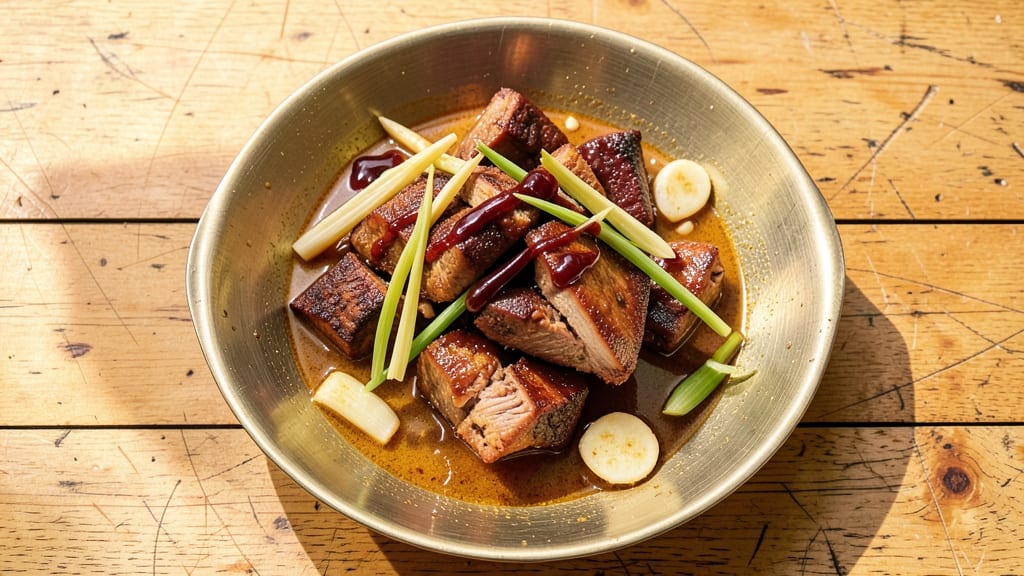
This authentic pork curry recipe brings the bold, aromatic essence of Southeast Asian kitchens to your home table. ✨ After years of perfecting the balance between fragrant coconut milk and tangy tamarind, I've developed a method that delivers restaurant-quality depth without shortcuts.
The key lies in slow-cooking the pork until it's melt-in-your-mouth tender while building layers of spice through proper tempering techniques.
What sets this recipe apart is the authentic approach to flavor development. We begin with a proper spice paste—fresh ginger, garlic, galangal, and lemongrass—pounded together to release their essential oils.
The pork marinates overnight, allowing the spices to penetrate deeply, while tamarind and palm sugar create that signature sweet-sour balance that defines great curries. This isn't about quick fixes; it's about building flavor through time and technique.
By the time you serve this dish, you'll have rich, velvety coconut curry with perfectly tender pork that falls apart at the touch. The aroma alone will transport your guests to a bustling street market in Malaysia or Thailand.
The sauce clings beautifully to each piece of pork, creating pockets of flavor with every bite—spicy, sweet, tangy, and umami all in perfect harmony.
Serve this curry with steamed jasmine rice to soak up every last drop of that fragrant sauce, or pair it with warm naan for a more rustic presentation.
The leftovers actually improve overnight as the flavors continue to meld, making this an ideal recipe for meal prep. Let's create something truly special in your kitchen.
Ingredients for authentic pork curry
Sixteen ingredients for a curry that tastes like home.
| Ingredient | Amount | Notes |
|---|---|---|
| Pork Shoulder 🥩 | 3 lb | Cut into 1.5-inch cubes |
| Fresh Ginger 🌿 | ½ cup | Peeled, roughly chopped |
| Garlic Cloves 🧄 | 8 cloves | Peeled, smashed |
| Galangal 🌿 | ½ cup | Peeled, roughly chopped |
| Lemongrass 🌿 | ½ cup | Bruised, cut into 2-inch pieces |
| Tamarind Paste 🍯 | ¼ cup | Or 4 tbsp tamarind pulp |
| Palm Sugar 🍬 | ¼ cup | Or light brown sugar |
| Coconut Milk 🥥 | 2 cans | Full-fat, 13.5 oz each |
| Fish Sauce 🍶 | 2 tbsp | Red Boat preferred |
| Red Curry Paste 🌶️ | ¼ cup | Maesri brand recommended |
| Green Curry Paste 🌶️ | ¼ cup | Maesri brand recommended |
| Turmeric Powder 🌿 | 1 tsp | Fresh root preferred |
| Cumin Seeds 🌿 | 1 tsp | Toasted for aroma |
| Coriander Seeds 🌿 | 1 tsp | Toasted for aroma |
| Kaffir Lime Leaves 🍋 | 4 whole | Torn into strips |
| Salt 🧂 | 1 ½ tsp | Diamond Crystal preferred |
| Thai Basil Leaves 🌿 | ¼ cup | Fresh, for garnish |
The pork shoulder is non-negotiable—it's what gives you that melt-in-your-mouth texture. Look for well-marbled cuts at the butcher counter or Costco for the best value. If you can't find galangal or lemongrass at your regular grocery store, Asian markets will have them fresh. Tamarind paste is a game-changer—if you can only find tamarind pulp, just blend it with a little water. Palm sugar adds that authentic sweetness, but light brown sugar works in a pinch. For the curry pastes, Maesri brand is the gold standard, but any quality brand will do.
No galangal? Extra ginger plus a pinch of citrus zest gets you close. Running short on coconut milk? Coconut cream plus extra water mimics the texture. The fish sauce is essential for umami—Red Boat is my go-to, but any reputable brand works. Want to skip the kaffir lime leaves? Extra lime zest plus a bay leaf works in a bind. The Thai basil should be fresh—dried won't give you that same bright, anise-like flavor. If you're feeling adventurous, toast your own cumin and coriander seeds in a dry pan for 30 seconds before grinding—the aroma is worth it.
This curry tastes even better the next day as the flavors meld. Store in an airtight container in the fridge for up to 5 days, or freeze portions for 3 months. I like to portion it into containers with rice so I can grab a quick meal. The sauce thickens as it cools, so add a splash of water or coconut milk when reheating. Garnish with fresh Thai basil right before serving—it adds that final pop of color and flavor.
Why You'll Love This Recipe
- One-Pot Magic: Between us, this curry is almost foolproof—I just brown the pork shoulder, toss in the ginger, galangal, and lemongrass (minimal chopping, promise), then let it simmer. No fancy techniques, no last-minute scrambling for extra pots.
- Flavor Bomb: That first bite? The pork shoulder turns tender while the galangal and lemongrass bloom into this bright, citrusy depth—like a hug in a bowl. Honestly, the garlic and fresh ginger make it taste like it simmered for hours, even if it didn’t.
- Leftovers? Bring Them On: This curry begs for seconds—and thirds. The flavors only get richer overnight, so I make a double batch on Sundays. Perfect for lunchboxes (yes, even my picky teen) or reheating with rice straight from the fridge.
- Budget Stretch: Pork shoulder is cheap, and a single cut feeds four easily. I’ll be real: this is my go-to when I need a hearty, satisfying meal without breaking the bank. Plus, the aromatics (ginger, lemongrass) go a long way—no wasted ingredients here.
Step-by-step instructions for authentic pork curry
Here's how to build layers of flavor that balance sweet, sour, and spicy perfectly.
🔥 Step 1: Sear the Pork Shoulder for Depth of Flavor
Heat a large Dutch oven over medium-high heat until very hot. Add the 3 lb pork shoulder cut into 1.5-inch cubes in a single layer, working in batches if needed. Let them sear undisturbed for 3-4 minutes until golden brown on all sides—this creates that rich, caramelized crust that holds up through the long cooking process.
As the pork browns, you'll hear it sizzle loudly and smell the fat rendering. Don't rush this step; patience here means deeper flavor later. Once all pieces are golden, remove them and set aside. You'll add them back later when the aromatics are ready.
🍳 Step 2: Toast Spices and Build the Aromatic Base
In the same Dutch oven, add 1 tsp cumin seeds and 1 tsp coriander seeds and toast them for 30 seconds until fragrant and lightly popping. Immediately add 0.5 cup fresh ginger, 0.5 cup galangal, 0.5 cup lemongrass cut into pieces, and 8 cloves garlic that you've smashed with the side of your knife.
Cook these aromatics for 3-4 minutes until the ginger and galangal soften and the garlic becomes golden. Here's where the magic happens—the spices release their oils, and the aromatics break down to create that complex, earthy foundation. You'll smell the lemongrass's citrusy notes and the ginger's warmth—this is your reward for paying attention.
🥘 Step 3: Layer the Curry Pastes and Simmer the Sauce
Add 0.25 cup red curry paste and 0.25 cup green curry paste to the Dutch oven, stirring constantly for 1 minute to cook off the raw flavors. Then pour in 2 cans coconut milk, scraping up any browned bits from the bottom with a wooden spoon—this is where all the flavor hides.
Bring the mixture to a gentle simmer, then reduce heat to low. Stir in 0.25 cup tamarind paste, 0.25 cup palm sugar, 2 tbsp fish sauce, and 1 tsp turmeric powder. Let it simmer uncovered for 10 minutes—you'll see the sauce thicken slightly and the coconut milk separate into a creamy layer on top. This is normal and actually enhances the texture.
🔪 Step 4: Cook the Pork Until Tender
Return the seared pork shoulder to the Dutch oven, nestling it into the sauce. Add 1.5 tsp salt and 4 whole kaffir lime leaves torn into strips. Bring everything to a gentle simmer, then cover and cook for 1.5 hours, turning the pork occasionally to ensure even cooking.
After 1.5 hours, check for doneness by inserting a meat thermometer into the thickest piece—it should read 195-200°F. If it's not quite there, continue cooking for another 30 minutes covered. The pork should be fork-tender, falling apart easily when pierced. The sauce should have thickened into a rich, glossy consistency with a beautiful balance of sweet, sour, and spicy flavors.
🍽️ Step 5: Finish and Serve with Fresh Herbs
Once the pork is tender, discard the kaffir lime leaves. Taste the sauce and adjust seasoning if needed—add a touch more fish sauce for saltiness or palm sugar for sweetness. The sauce should coat the back of a spoon and have a vibrant, complex flavor profile.
Stir in 0.25 cup fresh Thai basil leaves just before serving to brighten the dish with their peppery freshness. Ladle the pork and sauce over steamed jasmine rice, garnishing with additional Thai basil if desired. Each bite should deliver tender, flavorful pork in a velvety sauce that's perfectly balanced—this is what makes an authentic curry truly special.
Pro Tips For Making Authentic Pork Curry
- Char the Aromatics: Toss whole garlic cloves, sliced ginger, and galangal into a dry pan first—no oil—until they’re deep golden and smell like a spice market. This isn’t just about flavor; it’s about building layers that dissolve into the curry later. I used to skip this, and the dish always tasted flat until I saw how much richer the paste became after charring.
- Slice Pork Against Grain: Cut the pork shoulder into 1-inch chunks before cooking, but save half the slices for finishing. The trick? Slice the raw meat against the grain, then sear the thickest pieces first—they’ll stay juicy while the thinner slices crisp up in the curry at the end. (Yes, even if you’re impatient like me.)
- Don’t Overcrowd the Pan: When browning the pork, work in batches—two at a time max—so the meat sizzles instead of steams. Crowding turns the curry into a sad, pale gravy instead of a rich, caramelized base. I learned this the hard way after serving a curry that looked like it was made in a pot of lukewarm water.
- Blend Lemongrass Roughly: Tear the lemongrass stalks into 1-inch pieces with the tough outer leaves still on—no need to peel or chop finely. The fibers soften as they cook, releasing oil and citrusy depth without turning the curry into a mush. (Your blender will thank you too.)
Essential equipment for great authentic pork curry
Dutch Oven Essentials
Your Dutch oven is the workhorse of this recipe—it needs to be 5-7 quarts with a tight-fitting lid to handle the long simmering time. I swear by my Lodge cast iron Dutch oven (pre-seasoned, of course) because it distributes heat evenly and retains moisture beautifully.
For non-stick convenience, All-Clad Stainless Steel is a great alternative, though you'll need to monitor the sauce more closely to prevent sticking. 🔥
Spice Pounding Tools
To build that authentic spice paste, you'll need a mortar and pestle or a food processor with a metal blade. I prefer the mortar and pestle for traditional texture—it releases more oils from the ginger, galangal, and lemongrass.
If you're using a food processor, pulse the ingredients in short bursts to avoid overheating. For galangal, which can be fibrous, a sharp chef's knife is essential to chop it finely before processing.
Meat Thermometer
Don't skip the meat thermometer—it's the only way to guarantee your pork reaches that perfect 195-200°F internal temperature. I use a ThermoWorks Smoke because it's durable and has a remote probe, but any instant-read thermometer with a probe will work.
The 200°F target ensures the pork is fork-tender without drying out. Pro tip: Insert the probe into the thickest piece of pork, avoiding any fat pockets for an accurate reading.
Wooden Spoons
Stirring the sauce requires a heat-resistant wooden spoon—I keep a maple or bamboo spoon in my kitchen specifically for curries. Wood won't scratch your Dutch oven and helps prevent the sauce from sticking.
Avoid metal utensils during the simmering phase, as they can react with the acidic tamarind and coconut milk. For scraping up those flavorful browned bits, a flexible silicone spatula is also handy.
Kaffir Lime Leaves
These aromatic leaves are non-negotiable for authentic flavor, but if you can't find them, lime zest plus a bay leaf works in a pinch. When using fresh kaffir lime leaves, tear them into strips rather than chopping—they release their citrusy aroma more gradually.
Store them in the freezer for up to 3 months to preserve their potency. I keep a small bag in my freezer specifically for curries and Thai dishes.
Slow Cooking Setup
For those who prefer hands-off cooking, a slow cooker (6-8 quarts) can handle the pork cooking phase beautifully. Transfer the seared pork and sauce to the slow cooker, cover, and cook on low for 6-7 hours or high for 4-5 hours.
The key is to keep the lid tightly sealed to trap steam and tenderize the meat. If you're using a slow cooker, add the kaffir lime leaves and Thai basil at the end—don't let them cook too long, or they'll turn bitter.
Nutrition facts
Frequently asked questions
Can I substitute pork shoulder with another cut?
Pork shoulder is ideal for its fat content and tenderness, but you can use pork belly (cut into 1-inch cubes) or pork butt—just reduce cooking time by 20-30 minutes. Avoid lean cuts like tenderloin, as they dry out. For extra richness, trim excess fat from pork belly before cooking.
How do I make this curry less spicy?
Reduce the curry pastes to 0.125 cup each and omit the green curry paste entirely. For milder heat, replace it with 1 tbsp mild curry powder or 1 tsp ground turmeric. Taste as you go—coconut milk naturally balances spice, so don't rush the simmering process.
What's the best way to reheat leftovers?
Reheat gently in a pot with 2 tbsp water or coconut milk over low heat for 10-15 minutes, stirring occasionally. Microwaving can make the sauce watery. For best texture, reheat only until warmed through—pork continues to tenderize slightly when reheated.
Can I make this curry in an Instant Pot?
Yes! Sear the pork first, then sauté aromatics and curry pastes. Add all remaining ingredients except basil, then cook on high pressure for 25 minutes. Quick-release the pressure, stir in basil, and let sit for 10 minutes before serving. The pressure cooker cuts time by about 1 hour.
Why does my curry taste too sweet?
Too much palm sugar or tamarind can overpower the dish. Balance it by adding 1-2 tbsp fish sauce or a splash of lime juice. For future batches, reduce sugar to 0.125 cup and taste the sauce before adding all the pork. The tamarind's sourness should complement, not overpower, the sweetness.