
Main Courses
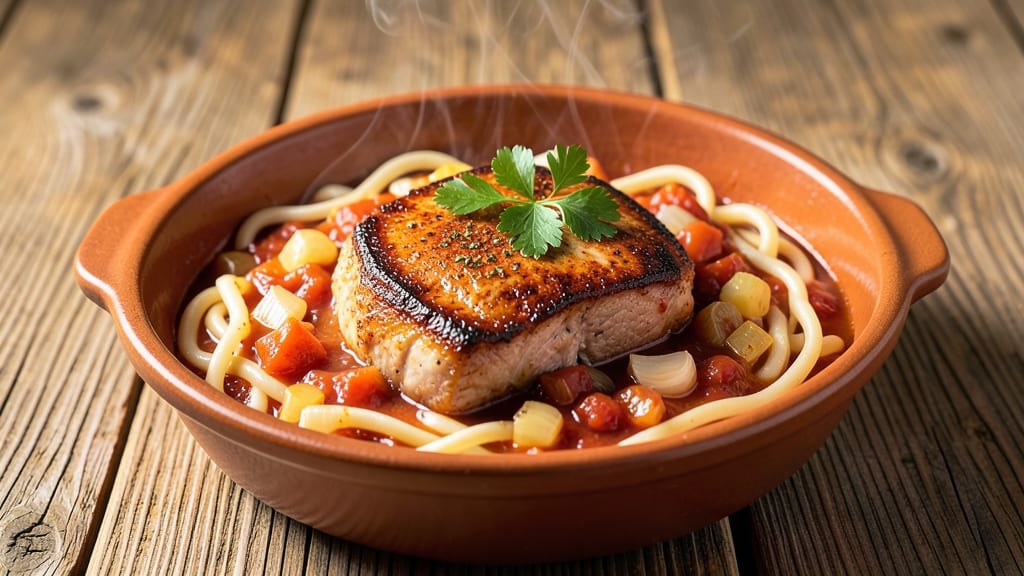
This authentic pork goulash recipe brings the heart of Central Europe to your kitchen table—where rich paprika and slow-cooked pork transform simple ingredients into a dish that deepens in flavor with every passing hour. 🔥 The secret lies in the balance of sweet and smoky paprika, tender pork shoulder, and onions caramelized until they're nearly black at the edges.
I've perfected this version after years of testing, ensuring the meat stays fork-tender while the sauce develops that signature depth only time can bring.
The beauty of this recipe is its foolproof technique—no fancy equipment needed, just patience and a heavy pot. You'll start with a proper sear to build flavor, then let the onions and paprika develop their signature aroma before adding the tomatoes and broth.
The key is low-and-slow cooking, which breaks down the pork into melt-in-your-mouth perfection while allowing the spices to meld into a complex, aromatic sauce. Even beginners can achieve restaurant-quality results with this method.
By the time you serve this goulash, you'll have a steaming pot of tender pork swimming in a velvety sauce that's rich with caramelized onions, sweet paprika, and just enough acidity from the tomatoes to cut through the richness.
The aroma alone will have everyone gathering at the table, and each bite delivers layers of flavor that build with every spoonful. This is comfort food at its finest—warm, satisfying, and deeply comforting.
Serve it with crusty bread to soak up every last drop of that precious sauce, or pair it with pickles and fresh parsley for a touch of brightness. The leftovers actually taste better the next day as the flavors continue to develop.
Let's get cooking—this is the kind of dish that becomes a family tradition in just one try.
Ingredients for authentic pork goulash
Rich paprika, tender pork, and caramelized onions—this is comfort food at its finest.
| Ingredient | Amount | Notes |
|---|---|---|
| Pork Shoulder 🥩 | 2 lb | Bone-in for best flavor |
| Yellow Onions 🧅 | 3 whole | Medium size, sliced thin |
| Sweet Paprika 🌶️ | 2 tbsp | Hungarian preferred |
| Smoked Paprika 🌶️ | 1 tbsp | For depth of flavor |
| Garlic Cloves 🧄 | 4 cloves | Minced for aroma |
| Tomato Paste 🍅 | ½ cup | No sugar added |
| Beef Broth 💧 | 2 cups | Low-sodium preferred |
| Red Wine 🍷 | 1 cup | Dry, bold variety |
| Bay Leaves 🌿 | 2 whole | Fresh if possible |
| Black Peppercorns 🌶️ | 1 tsp | Freshly cracked |
| Salt 🧂 | 1 ½ tsp | Kosher or sea salt |
| Olive Oil 🫒 | 2 tbsp | Extra-virgin for richness |
| Fresh Parsley 🌿 | ¼ cup | Chopped for garnish |
| Crusty Bread 🍞 | 1 loaf | For serving (optional) |
The pork shoulder is the star here—bone-in stays juicier and more flavorful. Ask your butcher for a well-marbled cut if you're buying whole, or grab pre-cut pork shoulder from Costco or Trader Joe's for convenience. Onions are non-negotiable: yellow onions caramelize best, and you want them sliced thin for that sweet, jammy texture. Paprika is where the magic happens—Hungarian sweet and smoked give that authentic depth. If you can only find one, use sweet paprika and add a pinch of cayenne for heat. The tomato paste? No sugar added—that's key for balancing flavors.
No red wine? Beef broth with a splash of balsamic works in a pinch. Fresh bay leaves are ideal, but dried at half the amount gets you close. The parsley is optional but adds that fresh pop—Trader Joe's sells big bunches for cheap if you want to stock up. For the bread, any crusty loaf will do—sourdough, baguette, whatever you've got. Skip the pre-sliced stuff; it's never as good. Want more richness? Add a splash of cream at the end, but traditional goulash keeps it simple with just the wine and broth.
This goulash tastes even better the next day, so make extra. Keeps in the fridge for 5 days or freeze for 3 months. I like to portion it into containers with a side of bread—lunches sorted for the week. The onions can be prepped ahead and stored in the fridge for 3 days before cooking. Pork shoulder? Pat it dry before searing for the best crust.
Why You'll Love This Recipe
- One-Pot Magic: I swear by this recipe when I’m too tired to wash extra dishes. Brown the pork shoulder first, then toss everything in the same pot—onions caramelizing while the paprika infuses that deep, smoky warmth. Honestly? The cleanup is almost as satisfying as the meal.
- Smoky Depth: That combo of sweet and smoked paprika? It’s what turns this into something special. The pork gets tender enough to melt, while the onions and garlic build layers of flavor that just keep getting better. Between us, it’s the kind of taste that makes you slow down and savor every bite.
- Meal Prep Hero: This goulash tastes even richer the next day—perfect for lunches or freezing. I double the batch on Sundays and portion it out; reheating it with a splash of water keeps it moist and delicious. (Yes, even on a Tuesday night.)
- Budget-Friendly Feast: Pork shoulder is affordable, and a single cut stretches for days. The paprika and onions add just enough richness to feel indulgent without breaking the bank. I’ll be real: my grocery bill stays low, but my family’s happy—what’s not to love?
Step-by-step instructions for authentic pork goulash
Here's how to build this rich, paprika-kissed stew that gets better as it sits.
🔥 Step 1: Sear the Pork Shoulder for Deep Flavor
Heat the 2 tablespoons olive oil in a large Dutch oven over medium-high heat until shimmering. Pat the 2 lb pork shoulder completely dry with paper towels—this helps create that signature crispy crust. Working in batches if needed, add the pork and sear for 4-5 minutes per side until deeply browned all over.
Don't rush this step. You're building flavor from scratch here—the browned crust (fond) will dissolve into the sauce later. Once golden, transfer the pork to a plate and set aside. Here's the thing—if you see any pink edges after searing, just sear those spots a bit longer until they're fully browned.
👨🍳 Step 2: Build the Paprika Base
In the same Dutch oven, reduce heat to medium and add the 3 whole yellow onions, sliced into thin half-moons. Cook for 8-10 minutes until softened and golden, stirring occasionally. Add the 4 minced garlic cloves and cook for 30 seconds until fragrant—don't let it burn, or you'll taste bitterness.
Now comes the magic: stir in the 2 tablespoons sweet paprika and 1 tablespoon smoked paprika. Watch as the mixture transforms into a vibrant, aromatic paste—this is what gives goulash its signature color and depth. Cook for 1-2 minutes until the paprika is fully incorporated and the raw smell disappears.
🍳 Step 3: Develop the Sauce
Pour in the 1 cup red wine and scrape up all those browned bits from the bottom of the pot. Let it simmer for 3-4 minutes until reduced by half. Add the 0.5 cup tomato paste and stir until smooth, then pour in the 2 cups beef broth. Bring to a gentle simmer, then add the 2 whole bay leaves, 1 teaspoon cracked black peppercorns, and 1.5 teaspoons salt.
Return the pork shoulder to the pot, along with any accumulated juices. The liquid should come about halfway up the meat. Here's where it gets good—this is the moment that matters: cover the pot and let it simmer gently. You're looking for 2.5-3 hours at low heat until the pork is fork-tender and falls apart easily.
⏰ Step 4: Finish and Rest for Maximum Richness
Once the pork is tender, remove it from the pot and shred it using two forks right in the Dutch oven. Discard the bay leaves and return the shredded pork to the sauce. Simmer uncovered for another 10-15 minutes to let the flavors meld and the sauce thicken slightly. Taste and adjust seasoning—you might need a bit more salt or pepper depending on your broth.
Let the goulash rest for 10 minutes off the heat before serving. This resting period allows all the flavors to truly marry together. The sauce will thicken even more as it sits, creating that perfect consistency that clings to every bite of crusty bread.
🍽️ Step 5: Serve with Crusty Bread
Ladle the goulash into bowls and garnish with the 0.25 cup chopped fresh parsley. Serve immediately with slices of the 1 loaf crusty bread on the side. The bread will soak up all that paprika-rich sauce, making every bite even more satisfying. Real talk: this goulash tastes even better the next day as the flavors deepen and intensify.
Pro Tips For Making Authentic Pork Goulash
- SEAR THE PORK HARD: The first 5 minutes in the pot should be aggressive—no hesitation. A deep, dark crust on the pork shoulder locks in flavor and keeps it from falling apart later. I used to rush this, and the goulash always tasted underdeveloped. Now I push it until the edges are nearly black.
- CHAR THE ONIONS LOW: Walk away for 20 minutes after you add the onions. They need to caramelize slowly, not burn into bitterness. Too much heat turns them bitter, and you’ll end up masking the paprika’s sweetness. I learned this the hard way after making a pot that tasted like ash.
- TOAST THE PAPRIKAS: Mix the sweet and smoked paprika in a dry pan over medium heat for 30 seconds—just until you smell the aroma. This deepens their flavor and cuts through the pork’s richness. Skipping this step makes the goulash taste flat, like it’s missing something.
- REST THE PORK BEFORE SLICING: Let the shoulder sit under foil for 10 minutes after cooking. This redistributes the juices so every bite stays moist. I know, I know—you’re eager to serve it. But cutting into it too soon turns it into a dry, sad pile of meat.
Pro cooking tips for great authentic pork goulash
Dutch Oven Mastery
Your choice of cookware makes a world of difference here. I swear by a heavy-duty Dutch oven—I use my Lodge 5.5-quart—because it distributes heat evenly and retains moisture perfectly.
If you don’t have one, a deep, heavy pot with a tight-fitting lid will work, but avoid thin aluminum or nonstick pans. The lid needs to stay on tight during simmering to trap steam and break down the pork tenderly.
Pro tip: Place your Dutch oven on the back burner if your stove has uneven heat distribution. 🔥
Paprika Perfection
This is where most home cooks mess up—using the wrong paprika. Hungarian sweet paprika is non-negotiable for that authentic, slightly sweet depth. I buy mine from Penzeys Spices because their quality is consistent. For the smoked paprika, look for a lightly smoked variety—not too intense, or it’ll overpower.
If you can’t find Hungarian paprika, substitute with Spanish pimentón dulce (though it’ll have a slightly different profile). Toast the paprika in a dry pan for 30 seconds before adding it to deepen its flavor even more.
Pork Shoulder Prep
Never skip the drying step—this is critical for that perfect sear. Pat the pork shoulder thoroughly with paper towels, then let it sit at room temperature for 30 minutes before cooking. This ensures even cooking and maximum browning.
If your pork shoulder has a thick fat cap, trim it down to about ¼-inch—this prevents the fat from rendering too quickly and making the sauce greasy. I like to score the fat in a crosshatch pattern with a sharp knife to help it render evenly during cooking.
Low-and-Slow Secrets
The magic happens during the long simmer. Maintain a gentle bubble—not a rolling boil—at all times. If your pot is boiling vigorously, reduce the heat immediately. I set my stove to low heat and adjust as needed.
For even more tenderness, add ½ cup hot water during the last 30 minutes of cooking to keep the sauce from drying out. The internal temperature of the pork should reach 203°F—this is when it’ll be fork-tender and falling apart. 💡
Flavor Boost Hacks
Want to take your goulash to the next level? Add 1 teaspoon caraway seeds with the bay leaves for a traditional Eastern European touch. Or, stir in 2 tablespoons tomato paste at the very end for extra richness.
For a smoky twist, add ½ teaspoon liquid smoke (like La Choy) when you return the pork to the pot. If you’re serving it with bread, brush the slices with garlic butter before toasting—it’ll soak up the sauce like a dream.
Leftovers Game Plan
This goulash is even better the next day, so plan accordingly. Let it cool completely, then store in an airtight container in the fridge for up to 5 days. For freezer storage, portion into quart-sized freezer bags, leaving 1-inch headspace for expansion.
Thaw overnight in the fridge, then reheat on the stovetop with 2 tablespoons water or broth to restore moisture. I like to reheat it very slowly over low heat to prevent the sauce from separating—this keeps it just as rich as the day it was made. ✨
Nutrition facts
Frequently asked questions
Can I substitute beef broth with chicken broth?
You can, but the flavor will be lighter. Beef broth adds depth that complements the pork and paprika beautifully. For a closer match, use half beef broth and half chicken broth, or add 1 teaspoon Worcestershire sauce to chicken broth for richness. The pork's natural flavor will still shine through, but the sauce won't have that same robust character.
How do I know when the pork shoulder is done?
Use a meat thermometer to check the internal temperature—it should reach 203°F for fork-tender results. The pork will fall apart easily when pierced with a fork, and the juices should run clear. If it's not quite there after 3 hours, cover and cook 30 more minutes. Overcooking won't ruin it, but the sauce may thicken too much.
What if I don't have Hungarian paprika?
Use Spanish pimentón dulce for the closest substitute, or blend 1 tablespoon regular paprika with ½ teaspoon sugar to mimic the sweetness. For extra depth, add ¼ teaspoon cayenne pepper to compensate for the lack of smokiness. The dish will still taste delicious—just slightly different in profile. Toasting the paprika in a dry pan for 30 seconds before adding enhances flavor regardless of type.
Can I make this in a slow cooker?
Brown the pork and onions first in a skillet, then transfer everything to the slow cooker. Cook on low for 6-7 hours or high for 3-4 hours until tender. The sauce may be thinner, so reduce it on the stovetop afterward by simmering uncovered for 10-15 minutes. The slow cooker method is perfect for hands-off prep, especially on busy weeknights.
Why does my goulash taste bland?
Most likely, you didn't let the flavors develop long enough. Goulash needs at least 2.5 hours of simmering for the paprika and onions to fully meld. Taste as you go and adjust with salt, black pepper, or a splash of red wine to deepen the flavor. Another trick: add 1 teaspoon fish sauce (trust me, it works!) or a pinch of sugar to balance acidity. The resting period after cooking is also crucial—let it sit for 10 minutes before serving.