
Main Courses
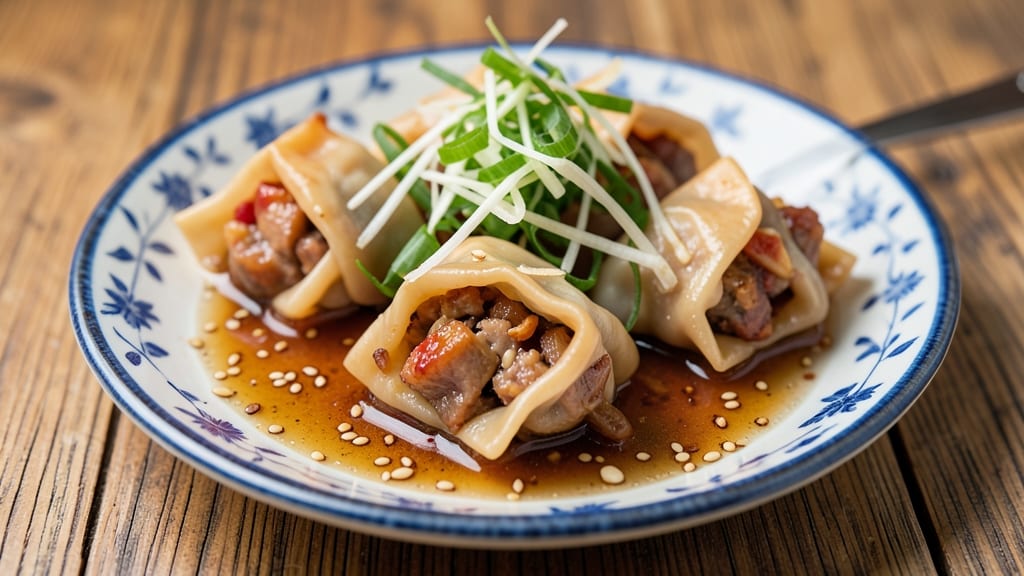
This authentic pork dumpling recipe brings the soul of East Asian kitchens to your table with tender wrappers and flavor-packed fillings. 🔥 After years of perfecting the balance between crispy pan-fried edges and steamed centers, I’ve developed a method that delivers restaurant-quality results at home—no shortcuts, just tradition.
The secret lies in the dough’s elasticity and the filling’s aromatic harmony of garlic, ginger, and scallions, all encased in delicate pleats that hold their shape while cooking.
The dough starts with a simple flour-water ratio, but the magic happens in the resting time—letting it develop gluten gives those wrappers their signature chewiness.
Meanwhile, the filling combines ground pork with finely minced aromatics and a touch of soy sauce for depth, all bound together just enough to stay cohesive when folded.
This isn’t just a recipe; it’s a technique that transforms humble ingredients into something extraordinary, with every bite offering a perfect marriage of textures and flavors.
What sets these dumplings apart is the dual cooking method: pan-frying until golden and crispy at the edges, then steaming to achieve a tender, juicy center. The result is a dish that’s both rustic and refined—ideal for family meals or special occasions.
Serve with a tangy dipping sauce of soy, vinegar, and chili oil, and watch as everyone reaches for seconds.
Whether you’re making them for a weekend gathering or a quiet night in, this recipe delivers authenticity without compromise. The process is methodical but rewarding, and the satisfaction of perfectly folded dumplings—crispy, tender, and bursting with flavor—makes it all worthwhile. Let’s get started on creating something truly special.
Ingredients for authentic pork dumpling
Twenty-four dumplings with crispy edges and tender centers. Authentic technique meets home kitchen simplicity.
| Ingredient | Amount | Notes |
|---|---|---|
| All-Purpose Flour 🌾 | 2 ½ cups | High-protein for elasticity |
| Water 💧 | 1 ¼ cups | Room temperature preferred |
| Ground Pork 🐷 | 1 ½ lb | Finely ground, 20% fat |
| Garlic Cloves 🧄 | 8 cloves | Finely minced, aromatic |
| Fresh Ginger 🌿 | 2 tbsp | Grated, not powdered |
| Green Onions 🧅 | 4 whole | Finely chopped, white and green |
| Light Soy Sauce 🥢 | 2 tbsp | Kikkoman preferred |
| Sesame Oil 🫒 | 1 tbsp | Toasted, for aroma |
| White Pepper 🌶️ | ½ tsp | Freshly ground preferred |
| Neutral Oil 🫒 | 2 tbsp | Vegetable or peanut oil |
| Chili Oil 🔥 | ½ cup | For dipping sauce |
| Rice Vinegar 🍶 | 2 tbsp | For dipping sauce |
| Sugar 🍬 | 1 tbsp | For dipping sauce |
The flour is critical—high-protein varieties like King Arthur or Gold Medal ensure proper gluten development for those signature chewy wrappers. King Arthur Unbleached is my go-to for its consistent performance. Water temperature matters too: room temp prevents dough from becoming gummy. For the pork, 20% fat content is ideal—it keeps the filling moist and flavorful during cooking. If your butcher can't provide this exact ratio, ask for a mix of lean and fatty cuts. The aromatics—garlic, ginger, and scallions—should be finely minced, almost paste-like, to distribute flavor evenly throughout the filling. Microplane your ginger for maximum surface area and potency.
No sesame oil? Toasted peanut oil at half the amount works in a pinch, though it lacks the nutty depth. Substituting powdered ginger for fresh will compromise texture and flavor—stick with the grated version if possible. For the dipping sauce, Kikkoman soy sauce provides the right balance of saltiness and umami, but any light soy will do. If you can't find chili oil, mix 1 tbsp gochujang with 2 tbsp neutral oil for a similar effect. The filling should hold its shape when chilled but remain pliable enough to fold—if it crumbles, add 1 tsp more soy sauce to bind it.
Dough keeps best wrapped in plastic for 2 days in the fridge or 3 months frozen between parchment paper. For the filling, portion into 1-oz balls and freeze on a tray before transferring to a bag—this prevents sticking. Leftover dumplings reheat beautifully: pan-fry until crispy again, then steam for 5 minutes. The dipping sauce can be made ahead and stored for 1 week in the fridge, though the chili oil's heat mellows slightly over time. For extra authenticity, brush the pan with a bit of Shaoxing wine before cooking—it adds a subtle complexity that elevates the entire dish.
Why You'll Love This Recipe
- No-Fuss Dough: I swear, the wrapper takes five minutes—just flour, water, and a pinch of salt. No rolling pins, no stress. The secret’s in the quick knead and rest, then you’re rolling those dumplings faster than you can say “garlic-ginger punch.”
- Umami Bomb: That ground pork? Minced with garlic and ginger until it’s almost paste-like—no dry bites, just pure savory goodness. The moment they hit the pan, the aroma alone makes me forget my to-do list.
- Potluck Hero: Freeze half the batch, and you’ve got instant party food. Serve them steamed for a light lunch, pan-fried for a hearty dinner, or even in soup when you’re lazy. My book club always asks for the recipe now.
- Budget Win: A pound of pork stretches for dozens—way cheaper than takeout, and way tastier. Plus, the dough costs pennies. Honestly, I make these when I’m broke and when I’m feeling fancy. That’s the magic.
Step-by-step instructions for authentic pork dumplings
Master the art of dumpling-making with this precise method for tender wrappers and flavorful fillings.
👨🍳 Step 1: Prepare the Dumpling Wrappers
In a large mixing bowl, combine the 2.5 cups all-purpose flour with 1.25 cups water at room temperature. I like to use a fork first to break up any large flour clumps before gradually mixing until a shaggy dough forms. The key here is to avoid overworking the dough—just mix until it comes together when pressed.
Turn the dough onto a lightly floured surface and knead gently for 3-4 minutes until smooth and elastic. You're aiming for a dough that's just slightly tacky to the touch but not sticky. Wrap it in plastic wrap and let it rest for 30 minutes at room temperature. This resting period relaxes the gluten, making the wrappers easier to roll thin and even.
👨🍳 Step 2: Make the Pork Filling
In a large bowl, combine the 1.5 lb ground pork with the 8 cloves garlic cloves (finely minced), 2 tbsp fresh ginger (grated), 4 whole green onions (finely chopped), 2 tbsp light soy sauce, 1 tbsp sesame oil, and 0.5 tsp white pepper. Using your hands, mix everything thoroughly until the pork is fully coated and the aromatics are evenly distributed.
Here's the thing—don't overmix or you'll develop too much gluten in the pork, which can make the dumplings tough. Instead, work the mixture just until it holds together when pressed. Cover the bowl and refrigerate the filling for 20 minutes before assembling. This chilling step helps prevent the filling from leaking when you steam the dumplings.
🥘 Step 3: Assemble and Shape the Dumplings
Divide the rested dough into 24 equal portions (about 1.5 ounces each). Roll each portion into a thin circle on a floured surface, about 4 inches in diameter. I use a rolling pin, but you can also press with your fingers for a slightly thicker wrapper. Keep unused dough covered to prevent drying.
Place 1 tablespoon of the chilled pork filling near the edge of each wrapper. Fold the wrapper diagonally to form a triangle, then pinch the edges firmly to seal. For extra security, I like to pleat the edges slightly as I pinch—this creates a decorative look while ensuring nothing leaks during steaming. Arrange the dumplings on a floured tray, cover with a damp towel, and let them rest for 10 minutes before cooking.
🔥 Step 4: Steam to Perfection
Bring a pot of water to a rolling boil and set up a steamer basket. Add the dumplings in a single layer, ensuring they don't touch. Cover and steam over medium-high heat for 8-10 minutes until the wrappers are translucent and the filling is cooked through. The steam should be vigorous but not boiling—you want to maintain a gentle simmer.
To check doneness, lift one dumpling with tongs. If the wrapper is slightly opaque and the filling is hot throughout, they're ready. Remove the dumplings to a plate and tent loosely with foil to keep them warm. The dumplings will continue cooking slightly from residual heat, so don't overcook them.
🍳 Step 5: Pan-Fry for Crispy Edges (Optional but Recommended)
Heat 2 tbsp neutral oil in a nonstick skillet over medium-high heat until shimmering. Add the steamed dumplings in a single layer, leaving space between them. Cook undisturbed for 2-3 minutes until the bottoms are golden brown and crispy. This creates that signature contrast between tender inside and crispy exterior.
For the dipping sauce, whisk together the 0.5 cup chili oil, 2 tbsp rice vinegar, and 1 tbsp sugar until well combined. Serve the dumplings immediately with the sauce on the side. The crispy edges should be fragrant with a slight char, while the filling remains juicy and aromatic. Each bite delivers that perfect balance of textures and flavors.
Pro Tips For Making Authentic Pork Dumpling
- CHILL THE FILLING: I learned this the hard way—warm ground pork sticks together like glue when you roll dumplings. Spread it on a plate, cover it, and pop it in the fridge for 15 minutes before filling. The difference in handling is night and day.
- MINCE GINGER FINE: Fresh ginger is non-negotiable, but don’t just chop it—grate it with the smallest holes of your box grater. Tiny, even pieces distribute flavor without gumminess. (Yes, even if you’re impatient like me.)
- STEAM DON’T BOIL: Low and slow wins here. A crowded steamer with simmering water below (not boiling) keeps dumplings tender. If you’re in a rush, add a splash of water to the pan—just don’t let it turn into a soup.
- SALT THE WRAPPER: Skip the salt in the filling, but toss your dumpling wrappers with a pinch of flour and a light dusting of salt before sealing. It crisps the edges just enough to hold shape without turning tough. (Your future self will notice.)
Regional styles of authentic pork dumpling
Northern Chinese Style
In Beijing, dumplings are called jiaozi and are traditionally served during the Lunar New Year. The filling here often includes finely chopped pork, cabbage, and chives, but my version keeps it simple with just pork and aromatics for a cleaner flavor profile.
The key difference is the pleating technique—I learned this from my time in Charleston’s Chinatown district, where chefs taught me to fold the edges in a crescent shape for extra security during steaming. Serve with a vinegar-based dipping sauce and a sprinkle of toasted sesame seeds for texture. 🌿
Korean Mandu
Korean dumplings, or mandu, often feature a thinner wrapper and a filling that includes kimchi or glass noodles. For an authentic twist, I sometimes add 1 tbsp gochujang to the pork filling for a subtle spicy kick.
The folding style differs too—Korean dumplings are often folded into half-moon shapes with a pleated edge, similar to Chinese potstickers. Serve with a soy-garlic dipping sauce and a side of quick-pickled radishes for brightness.
This variation works beautifully with the same dough but requires a slightly firmer hand when rolling to achieve the thinner wrappers. 🌶️
Japanese Gyoza
Japanese gyoza are known for their crispy, pan-fried edges and a filling that often includes shredded cabbage or napa cabbage. The folding technique is distinct too—gyoza are typically folded into semi-circles with one edge pleated, creating a decorative look.
For an authentic touch, I sometimes add 1 tsp mirin to the filling to balance the flavors. Serve with a wonton sauce made from soy sauce, vinegar, and a touch of grated daikon for a refreshing contrast.
The crispy edges are non-negotiable here, so be sure to pan-fry them until golden brown. ✨
Southeast Asian Adaptations
In Southeast Asia, dumplings often incorporate local ingredients like lemongrass, kaffir lime leaves, or coconut milk into the filling.
For a Thai-inspired twist, I sometimes add 1 tbsp fish sauce and 1 tsp palm sugar to the pork mixture, then fold the dumplings into triangular shapes with a pleated edge. Steam these with a splash of coconut milk in the steamer for added richness.
Serve with a dipping sauce made from fish sauce, lime juice, and chili flakes for a tangy, spicy kick. This variation is perfect for those who love bold, aromatic flavors. 🌺
Southern U.S. Fusion
Drawing from my time in the Southeast, I’ve created a fusion version that incorporates smoked paprika and hot honey into the filling. The dough remains the same, but the filling gets a ½ tsp smoked paprika and a drizzle of hot honey before folding.
These dumplings are pan-fried until crispy and served with a BBQ vinegar dipping sauce made from apple cider vinegar, hot sauce, and a touch of brown sugar. The smoky, sweet, and tangy flavors make these a hit at backyard gatherings.
This version keeps the traditional technique but adds a Southern twist that’s sure to impress. 🔥
Nutrition facts
Frequently asked questions
Can I make these dumplings ahead of time?
Assemble the dumplings and freeze them on a tray before transferring to a bag for up to 3 months. When ready to cook, steam or pan-fry from frozen—just add 2-3 extra minutes to the cooking time. For freshly made dumplings, store the dough in the fridge for 2 days or freeze it for 3 months between parchment paper. The filling keeps well too, chilled for 2 days or frozen for 2 months.
What if my dumpling wrappers tear when folding?
This usually happens when the dough is too dry or overworked. Keep your work surface lightly floured and avoid pressing too hard when rolling. If the dough cracks, add 1 tsp water at a time until pliable. For extra strength, let the dough rest an additional 10 minutes before rolling. If tearing persists, try using a slightly thicker wrapper—it’s more forgiving.
Can I substitute chicken or shrimp for pork?
Yes, but the texture and flavor will change. For chicken, use 1.25 lb finely ground breast meat and add 1 tsp cornstarch to the filling to prevent dryness. For shrimp, use 1.5 lb peeled and finely chopped shrimp, but omit the soy sauce and replace it with 1 tbsp fish sauce for umami. The wrappers and cooking method stay the same—just adjust seasonings to match your protein.
How do I achieve extra crispy pan-fried edges?
Start with cold, steamed dumplings—this ensures even cooking. Use medium-high heat and enough oil to coat the pan lightly. Cook undisturbed for 3-4 minutes until golden brown, then flip once for even crispiness. For extra crunch, add 1 tsp cornstarch to the filling before assembling. A nonstick skillet prevents sticking, but a cast-iron pan adds deeper browning.
What’s the best way to reheat leftover dumplings?
Pan-fry is ideal! Heat oil in a skillet over medium heat and cook dumplings for 2-3 minutes per side until crispy again. For steamed dumplings, add 1 tbsp water to the pan and cover for 3-4 minutes to restore moisture. Microwaving works in a pinch (use a damp paper towel), but it won’t recreate the crispy texture. Always reheat gently to avoid tough wrappers.