
Main Courses
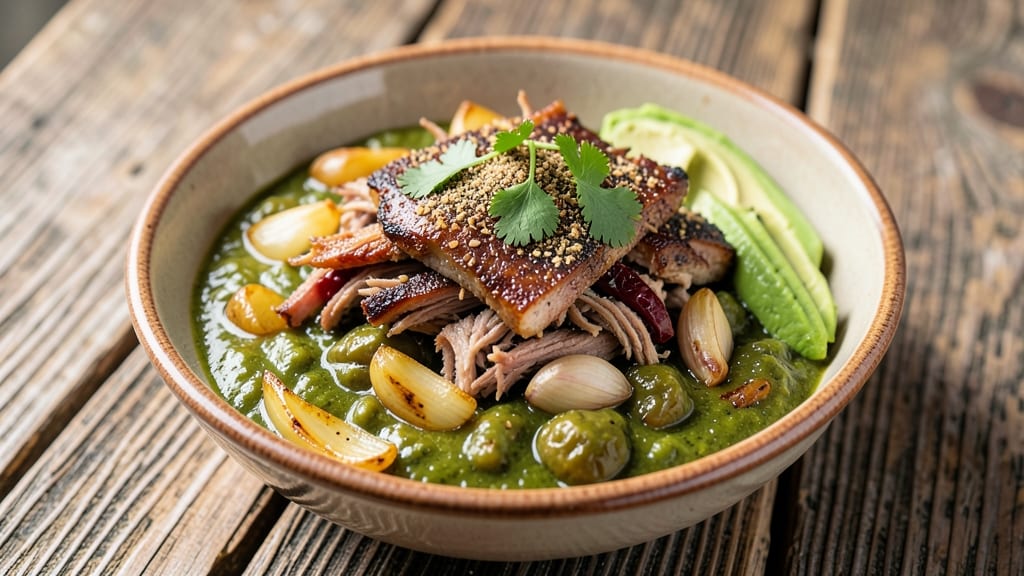
This authentic Mexican pork chile verde recipe brings the smoky, tangy flavors of Oaxaca to your kitchen. 🌟 I remember my first time tasting it at a roadside taquería in Mexico City—the way the tomatillos and chipotle created that perfect balance of heat and acidity.
This isn't just another pork stew; it's a celebration of traditional techniques like charring chiles and toasting spices that build layers of flavor.
The secret lies in slow-cooking the pork until it's fork-tender while developing a rich, smoky sauce from roasted tomatillos, garlic, and chipotle peppers. I use pork shoulder because it stays juicy during the long braise, and the fat renders into the sauce, making it velvety.
Toasting the spices—cumin, coriander, and oregano—deepens their flavor before blending them into the sauce, just like they do in Mexico.
What you'll end up with is a dish that's hearty enough for a family dinner but elegant enough for guests. The sauce has that signature bright green hue from the tomatillos, with just the right amount of heat from the chipotle.
It's the kind of meal that tastes even better the next day, when the flavors have time to meld. Serve it over warm tortillas or with steamed rice to soak up every last drop of that smoky, tangy goodness.
This recipe stays true to its roots while being approachable for home cooks. We'll cover everything from selecting the right pork cut to balancing the sauce's acidity. Let's get started on a dish that's as rewarding to make as it is to eat.
Ingredients for authentic mexican pork chile verde
Pork, smoky peppers, and tangy tomatillos—this is what makes chile verde unforgettable.
| Ingredient | Amount | Notes |
|---|---|---|
| Pork Shoulder 🐖 | 3 lb | Bone-in for best flavor |
| Tomatillos 🍅 | 2 lb | Husk removed, quartered |
| Chipotle Peppers in Adobo 🌶️ | 4 whole | From can, chopped |
| Yellow Onions 🧅 | 2 whole | Quartered, skin on |
| Garlic Cloves 🧄 | 8 cloves | Peeled, smashed |
| Ground Cumin 🌿 | 2 tbsp | Toasted for depth |
| Ground Coriander 🌿 | 1 tbsp | Toasted with cumin |
| Dried Mexican Oregano 🍃 | 1 tbsp | Not regular oregano |
| Salt 🧂 | 2 tsp | Kosher or sea salt |
| Black Peppercorns 🌶️ | 1 tsp | Freshly cracked |
| Fresh Cilantro 🌿 | ½ cup | Chopped, for garnish |
| Lime 🍋 | 1 whole | Juiced, for brightness |
| Vegetable Oil 🫒 | 2 tbsp | For charring veggies |
| Chicken or Vegetable Broth 💧 | 2 cups | Low-sodium preferred |
The pork shoulder is non-negotiable here—bone-in stays juicier during the long braise. Costco or your butcher shop are best for quality cuts, and look for good marbling. If you can't find Mexican oregano, Penzeys or Latin markets usually have it, but regular oregano works in a pinch (though it won't be authentic). For the tomatillos, they should be firm and bright green—no soft spots. Chipotle peppers in adobo are a must; Hatch or La Costeña brands add that authentic smokiness. Toast your spices in a dry pan until fragrant—this step makes all the difference.
No chipotle peppers? Dried guajillo peppers soaked in hot water work in a pinch, but you'll lose some of that smoky depth. Swap Mexican oregano for regular oregano at half the amount, but trust me, it won't be the same. The tomatillos can be roasted whole in their husks over an open flame for extra char, like they do in Oaxaca—just watch them like a hawk so they don't burn. If you're short on time, a broiler works too. The broth? Homemade is ideal, but low-sodium store-bought saves time. And for the love of tacos, don't skip the lime juice—it balances all that richness.
This dish tastes even better the next day, so make extra. The sauce keeps for 5 days in the fridge, and the pork? Freeze it for 3 months if you're not using it all. I always portion mine into containers—one for the sauce, one for the pork—so lunches are sorted for the week. Store the cilantro separately and add it fresh when serving. The lime zest can be frozen in ice cube trays for later use—just add a splash of water before freezing.
Why You'll Love This Recipe
- One-Pot Magic: I swear by this—just toss everything (pork, tomatillos, onions, garlic) into one pot, let it simmer, and walk away. The chipotle peppers in adobo do all the work, building that smoky depth while you’re still deciding what to watch on TV.
- Smoky-Creamy Balance: Between us, the tomatillos give it that bright, tangy kick, while the chipotle adds just enough heat to linger. That pork shoulder? Melts like butter, so tender it falls apart at the touch—no dry, tough bites here.
- Leftovers That Save Me: This dish actually improves the next day. I make a double batch on Sundays, and by Wednesday, it’s still the star of my lunch. Freeze half for when I’m too tired to cook, and it reheats like a dream.
- Budget-Friendly Crowd-Pleaser: Pork shoulder is cheap, but it feels fancy. Serve it with rice, tortillas, or even over eggs for breakfast—everyone at my table clears their plate. Honestly, it’s the kind of meal that makes you look like a pro without breaking the bank.
Step-by-step instructions for authentic Mexican pork chile verde
Here's how to build this smoky, tangy chile verde with rich pork—just like abuela used to make.
🔥 Step 1: Char the Tomatillos and Onions for Depth
Heat a large skillet over medium-high heat and add the 2 tablespoons vegetable oil. Add the 2 whole yellow onions and 2 lb tomatillos (skin on) in a single layer. Let them char undisturbed for 8-10 minutes until blackened in spots and softened—this develops their natural sweetness and smoky flavor.
Here's the thing—don't move them around. Let the onions and tomatillos develop those beautiful char marks. Once they're nicely caramelized and the onions are translucent, transfer everything to a cutting board. You'll see the skins will easily peel away from the tomatillos now. Chop them roughly and set aside.
🍳 Step 2: Toast the Spices and Build the Base
In the same skillet (no need to clean it—the flavor is everything), reduce heat to medium and add the 8 cloves garlic and 4 whole chipotle peppers in adobo (chopped). Sauté for 2 minutes until the garlic turns golden and the chipotles soften slightly.
Now add the 2 tablespoons ground cumin, 1 tablespoon ground coriander, and 1 tablespoon dried Mexican oregano. Toast the spices for 30 seconds—they'll smell amazing and develop their full aroma. Be careful not to burn them. Immediately add the chopped charred vegetables back to the skillet.
🥘 Step 3: Simmer the Sauce Until Silky
Pour in the 2 cups chicken or vegetable broth and bring to a gentle boil. Reduce heat to low and let it simmer uncovered for 20-25 minutes, stirring occasionally. You want the sauce to reduce slightly and develop a thick, velvety consistency—it should coat the back of a spoon when you stir.
I know it seems like a long wait, but this slow simmer is what makes the sauce authentic. The acid from the tomatillos and the smokiness from the chipotles will meld perfectly. Taste and adjust seasoning with salt and black peppercorns—you'll likely need about 1 teaspoon salt and ½ teaspoon black peppercorns at this stage.
🔥 Step 4: Cook the Pork Shoulder Until Tender
While the sauce simmers, season the 3 lb pork shoulder generously with remaining 1 teaspoon salt and ½ teaspoon black peppercorns. Heat a Dutch oven over medium-high heat and add the pork shoulder. Sear it on all sides until deeply browned—about 5-7 minutes total.
Once browned, add the pork shoulder to the simmering sauce. Pour in enough water to just cover the pork (about 1 cup). Bring to a gentle boil, then reduce heat to low, cover, and simmer for 2-2.5 hours until the pork is fork-tender. Here's the trick: check the internal temperature—it should reach 200-205°F when probe-tender.
🍽️ Step 5: Finish and Serve with Fresh Garnishes
Remove the pork shoulder from the sauce and let it rest for 15 minutes before slicing. Skim off any excess fat from the sauce, then stir in the juice of 1 whole lime and ½ cup chopped fresh cilantro. The lime brightens the flavors and cuts through the richness of the pork.
Slice the pork shoulder against the grain into ¼-inch thick slices. Serve the pork over rice or warm tortillas with the chile verde sauce spooned generously on top. The contrast of the smoky, tangy sauce with the tender pork is what makes this dish truly authentic. Don't forget to pass extra cilantro and lime wedges!
Pro Tips For Making Authentic Mexican Pork Chile Verde
- Char the Tomatillos Properly: You’d be surprised how much flavor you’re missing if you just boil or steam them. Toss halved tomatillos in a dry skillet over medium-high heat for 8–10 minutes, stirring occasionally, until they’re blackened in spots—this caramelizes their natural sugars and deepens the tang. (Yes, even if you’re impatient like me, don’t rush this part.)
- Render the Pork Fat First: Skip the urge to cut pork shoulder into tiny pieces right away. Sear the whole cut in a heavy pot over medium heat until the fat renders and the outside gets a deep brown crust—about 10 minutes. This locks in moisture and builds flavor before you shred it later. (Your future self will notice the difference.)
- Strain the Salsa, Don’t Blend: After roasting and peeling the tomatillos, blend them with chipotle, onions, and garlic—but strain the mixture through a fine-mesh sieve. The texture should be smooth but not watery; this removes skins and seeds that can make the sauce bitter. (I learned this the hard way after serving a chunky, seedy chile verde.)
- Use the Adobo Sauce: Don’t just toss in the chipotle peppers—add 1–2 tablespoons of the adobo sauce from the can. It adds depth and balances the heat, plus it’s packed with smoky flavor that store-bought blends can’t match. (Sounds weird, but it works—trust me.)
Creative variations of authentic mexican pork chile verde
Oaxacan-Style Braised
In Oaxaca, they slow-cook the pork with guajillo chiles and hoja santa leaves for an earthy depth. Replace the chipotle peppers with 3 dried guajillo chiles (soaked and blended) and add 2 fresh hoja santa leaves (available at Latin markets) to the sauce.
Simmer the pork with 1 cup beer—I like Negra Modelo—instead of broth for a malty richness. 🌶️
For extra authenticity, wrap the pork shoulder in banana leaves (found in the international aisle) before braising. The leaves infuse a subtle tropical aroma and help retain moisture. If you can't find them, use dried bay leaves instead. Serve with tortillas de maíz and a side of queso fresco.
Northern Mexican Smoky
Up north, they use pasilla chiles and chiles de árbol for a drier, smokier profile. Swap the chipotles for 2 dried pasilla chiles and 1 chile de árbol (soaked and blended).
Add 1 teaspoon ground ancho chile powder to the spice toast for depth. The sauce will be thicker and more robust—perfect for tostadas or sopes. 🔥
For the pork, sear it in lard (instead of oil) for a more traditional flavor. After braising, shred the pork and mix it directly into the sauce for a heartier consistency. Top with crumbled cotija cheese and pickled red onions for a Northern Mexican touch.
Vegetarian Adaptation
Skip the pork entirely and use 2 large portobello mushrooms or 1 lb extra-firm tofu (pressed and sliced) as the base. Sauté the mushrooms or tofu until golden before adding to the sauce.
Boost umami with 1 tablespoon soy sauce and 1 teaspoon liquid smoke. Serve with black beans and avocado slices for a protein-packed vegetarian bowl. 🌱
For texture, add ½ cup cooked quinoa or crumbled tempeh to the sauce. Garnish with toasted pumpkin seeds and fresh radishes for crunch. This version keeps the tangy, smoky essence of chile verde while being completely plant-based.
Spicy Kick Options
For extra heat, add 1-2 fresh serrano peppers (minced) to the sauce while simmering. If you love smoky heat, blend in 1 tablespoon smoked paprika with the chipotles. For a fruity kick, stir in 2 tablespoons mango chutney at the end—trust me, it balances the acidity beautifully. 🌶️
For a slow-building burn, infuse the sauce with ½ teaspoon cayenne pepper during the final 10 minutes of simmering. If you're serving kids or sensitive eaters, set aside a portion of the sauce before adding heat, so everyone can customize their bowl.
Nutrition facts
Frequently asked questions
Why do I need to char the tomatillos and onions?
Charring develops deeper, smokier flavors that are essential for authentic chile verde. The caramelization from the heat brings out natural sweetness while adding complexity. Skipping this step means missing that signature Oaxacan-style depth that makes the dish truly special.
Can I use regular oregano instead of Mexican oregano?
You can, but it won't be as authentic. Mexican oregano has a more citrusy, earthy flavor with hints of pepper. Regular oregano is milder and sweeter. For best results, use ½ teaspoon regular oregano if that's all you have, but your dish will taste different. Latin markets or specialty stores usually carry Mexican oregano.
How do I know when the pork is done?
The pork is ready when it reaches an internal temperature of 200-205°F and is fork-tender. It should pull apart easily with minimal resistance. For extra assurance, check after 2 hours of simmering—if it's not quite there, give it another 30 minutes. Overcooking can make it dry, so don't let it go beyond 210°F.
What's the best way to store leftovers?
Store the sauce and pork separately in airtight containers. The sauce keeps well for 5 days in the fridge, while the pork stays good for 3 months when frozen. Reheat gently on the stove with a splash of broth to maintain moisture. The flavors actually improve after resting overnight, so make extra!
Can I make this in a slow cooker?
Brown the pork and char the vegetables as directed, then transfer everything to your slow cooker. Add 1 cup broth and cook on low for 6-7 hours or high for 3-4 hours. The slow cooker method is perfect for hands-off cooking while developing those rich flavors. Just