
Main Courses
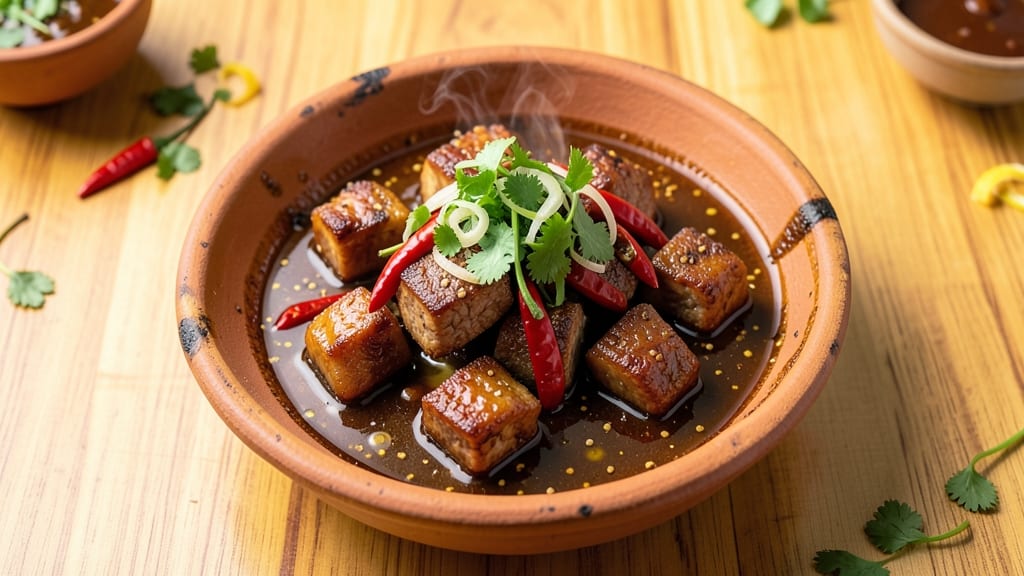
This Assamese pork recipe brings the bold flavors of Northeast India to your table with a perfect balance of tangy tamarind and earthy mustard seeds. After years of perfecting traditional techniques, I've developed a method that delivers restaurant-quality results at home—rich, aromatic, and deeply satisfying.
The secret lies in marinating the pork with local spices and slow-cooking it until tender, creating a dish that's both complex and approachable.
The recipe starts with a marinade of mustard oil, tamarind, and a blend of Assamese spices that infuse the pork with layers of flavor. Unlike many regional dishes, this version maintains authenticity while being accessible to home cooks—no special equipment required.
The slow cooking process transforms tough cuts into melt-in-your-mouth perfection, and the tangy-sweet sauce ties everything together beautifully.
What you'll end up with is a deeply flavorful pork curry that pairs perfectly with steamed rice or traditional bhat. The aroma alone will transport you to the streets of Guwahati, where this dish is a staple.
Each bite delivers a harmonious blend of smoky, spicy, and tangy notes that make it unforgettable.
Whether you're serving this for a special occasion or a weeknight dinner, the technique is foolproof and the results are always impressive. Let's bring the flavors of Assam to your kitchen—this recipe is worth every minute of preparation.
Ingredients for assamese pork
Bold spices, tender pork, and that unmistakable Assamese tang—here's what you need for restaurant-quality flavor at home.
| Ingredient | Amount | Notes |
|---|---|---|
| Pork Shoulder 🥩 | 1 ½ lb | Bone-in for flavor, cut into 1.5-inch cubes |
| Mustard Oil 🫒 | ½ cup | For authentic Assamese flavor |
| Tamarind Paste 🍋 | ¼ cup | Adjust for desired tanginess |
| Ground Cumin Seeds 🌿 | 1 tbsp | Toasted for deeper aroma |
| Ground Coriander Seeds 🌿 | 1 tbsp | Freshly ground preferred |
| Turmeric Powder 🧂 | ½ tsp | Bright yellow color indicator |
| Red Chili Powder 🌶️ | 1 tbsp | Adjust for heat preference |
| Ginger-Garlic Paste 🧄 | ¼ cup | Freshly made preferred |
| Yellow Onions 🧅 | 1 whole | Finely chopped, medium size |
| Medium Tomatoes 🍅 | 2 whole | Ripe, chopped for sauce base |
| Fresh Green Chilies 🌶️ | 2 whole | Slit lengthwise for heat control |
| Fresh Fenugreek Leaves 🌿 | ¼ cup | Chopped, optional but traditional |
| Salt 🧂 | 1 ½ tsp | Adjust to taste |
| Water 💧 | 1 cup | For deglazing, adjust as needed |
| Fresh Cilantro 🌿 | ¼ cup | Chopped for garnish |
The pork cut matters here—bone-in shoulder stays juicier during slow cooking than leaner cuts. Indian grocery stores often carry pre-cut pork shoulder, but if you're at a regular supermarket, ask the butcher for a well-marbled piece. Mustard oil is non-negotiable for authenticity—Kashmir or Indian brands work best, and you'll find it in the international aisle. Tamarind paste can be tricky to find fresh, so Trader Joe's or Whole Foods usually carry good quality blocks. If you can't find fresh fenugreek leaves, dried works at half the amount—just rehydrate in warm water first.
No mustard oil? Sesame oil with a pinch of turmeric gets you close, though it won't be exactly the same. Fresh ginger-garlic paste is ideal, but jarred works in a pinch (just add a splash of water to thin it). For heat control, remove the seeds from green chilies before slitting. The tomatoes can be swapped for tomato puree at half the amount if you're short on time. Want more depth? Add a star anise pod while cooking—it disappears but adds complexity. The fenugreek leaves are traditional but optional; skip them if you can't find them.
This curry tastes even better the next day as flavors meld. Store in an airtight container in the fridge for up to 4 days, or freeze portions for 3 months. I like to double the batch—half for dinner, half for lunches. The sauce thickens as it cools, so add a splash of water when reheating. Serve with steamed rice and a side of Assamese mashed potatoes for the full experience. The leftovers reheat beautifully in a skillet with a little water—just don't overcook or the pork gets dry.
Why You'll Love This Recipe
- One-Pot Magic: The pork shoulder cooks right in the same pot where the spices bloom—no extra pans, no fuss. Honestly, I just sear the meat, toss in the ground cumin and coriander, and let the tamarind and mustard oil work their magic while I chop veggies for rice.
- Tamarind Tang Kick: That tamarind paste isn’t just sour—it’s the star. Between us, the balance of mustard oil’s sharpness and the tamarind’s deep funk makes this dish ridiculously addictive. It’s the kind of flavor that lingers, and I’ll be reaching for seconds.
- Weeknight Crowd-Pleaser: Between us, this is my go-to for unexpected guests or lazy Sundays. The pork stays tender, the spices sing, and it pairs perfectly with steamed rice or even crusty bread. (Yes, even on a Tuesday night when I’m too tired to think.)
- Budget-Friendly Leftovers: Mustard oil and tamarind might sound fancy, but they’re cheap—this recipe stretches pork shoulder into three meals without breaking the bank. I’ll be real: the second day’s taste is even better, thanks to the flavors melding overnight.
Step-by-step instructions for tangy tamarind pork
Here's how to craft this bold Assamese dish with layers of mustard oil heat and tamarind tang.
Marinate the Pork for Maximum Flavor
In a large bowl, combine the 1.5 lb pork shoulder cut into 1.5-inch cubes with the 0.5 cup mustard oil, 0.25 cup tamarind paste, 1 tbsp ground cumin seeds, 1 tbsp ground coriander seeds, 0.5 tsp turmeric powder, 1 tbsp red chili powder, 0.25 cup ginger-garlic paste, 1.5 tsp salt, and 2 slit green chilies. The mustard oil will infuse the pork with its signature pungent aroma while the tamarind paste begins to tenderize the meat.
Use your hands to massage the marinade into every surface of the pork cubes, ensuring each piece is thoroughly coated. Cover the bowl and refrigerate for at least 4 hours, but I recommend marinating overnight if possible. This extended time allows the spices to deeply penetrate the meat, creating that signature Assamese depth of flavor. The pork should develop a vibrant yellow hue from the turmeric and a slightly sticky texture from the tamarind.
Sear the Pork for Rich Color and Texture
Heat a heavy-bottomed Dutch oven over medium-high heat. Add the marinated pork in a single layer, being careful not to overcrowd the pan. Let the pork sear undisturbed for 3-4 minutes until a deep golden-brown crust forms on all sides. This initial searing creates the Maillard reaction that builds the dish's complex flavor foundation.
As the pork browns, you'll notice the mustard oil releasing its signature aroma - that's when you know you're on the right track. Once all sides are beautifully browned, transfer the pork to a plate and set aside. The residual heat will continue cooking the pork slightly as you prepare the sauce base, preventing it from becoming dry.
Build the Tangy Tomato-Onion Base
In the same Dutch oven, add 1 finely chopped yellow onion and cook over medium heat for 5-6 minutes until softened and translucent. Add 2 chopped medium tomatoes and cook for another 5 minutes until they break down into a thick paste. This reduction process intensifies their natural sweetness and creates the sauce's velvety texture.
Stir in the 0.25 cup fresh fenugreek leaves and cook for 1 minute until wilted. The fenugreek adds that distinctive Assamese earthiness that sets this dish apart. Keep the heat at medium to maintain control while you prepare to combine everything. The mixture should now have a rich, aromatic base ready to meld with the pork.
Simmer the Pork in Flavorful Sauce
Return the seared pork to the Dutch oven along with any accumulated juices. Pour in 1 cup water and bring the mixture to a gentle simmer. Cover and cook over low heat for 1 hour, stirring occasionally. The pork needs this slow cooking time to become fork-tender while absorbing all the marinade flavors.
After 1 hour, check the pork for doneness by piercing a piece with a fork - it should slide in easily with minimal resistance. If the sauce appears too thick, add 2-3 tablespoons water to reach your desired consistency. The pork should be falling off the bone while maintaining its shape, with a sauce that coats each piece beautifully.
Finish and Garnish for Authentic Presentation
Remove from heat and let the pork rest for 10 minutes. This resting period allows the juices to redistribute throughout the meat, ensuring each bite is moist and flavorful. Stir in the 0.25 cup chopped fresh cilantro just before serving to add a bright, fresh contrast to the rich, tangy flavors.
Serve the Assamese pork hot with steamed rice or crispy paratha bread. The dish should have a perfect balance of sweet, sour, spicy, and umami flavors with the mustard oil's signature kick. Each bite should deliver tender pork with a sauce that's both tangy from the tamarind and aromatic from the complex spice blend.
Pro Tips For Making Assamese Pork
- Brown the Pork First: That first sear in mustard oil isn’t just for show—it builds flavor. Cut the pork shoulder into 1-inch chunks, then hit them with high heat in your pan until deep golden, about 5-6 minutes. I used to skip this, and the dish always tasted flat afterward.
- Soak Tamarind Properly: Tamarind paste is stubborn—don’t just dump it in dry. Mix 2 tablespoons with ½ cup warm water, then strain out the fibers. This makes it dissolve smoothly into the gravy instead of clumping. (Yes, even if you’re impatient like me.)
- Temper the Spices: Bloom the ground cumin and coriander in mustard oil first—just 30 seconds on low heat. This wakes up their aroma before they hit the meat. I learned this the hard way after tasting bland, raw-spice flavor in my first batch.
- Simmer Slow and Low: After adding the tamarind and spices, reduce to a gentle simmer—not a boil—and let it cook covered for 45 minutes. The pork needs time to tenderize; rushing it turns the meat tough. (Your future self will thank you.)
Troubleshooting perfect results
Mustard Oil Overwhelming
If your dish smells too strong or tastes bitter from the mustard oil, you're likely using too much or heating it too hot. Mustard oil should be added raw to the marinade and only heated gently during cooking.
For a milder version, reduce the amount to 0.25 cup and balance with 1 tbsp coconut oil in the marinade. I've found that Kashmir mustard oil has a more refined flavor than generic brands—worth the investment for authenticity. 🌶️
Pork Too Tough
The most common reason for tough pork is insufficient marinating or cooking time. Your pork cubes should marinate for at least 4 hours, but I recommend overnight for maximum tenderness. When slow-cooking, maintain a gentle simmer at 300°F internal temperature—use a meat thermometer to check.
If the pork still feels tough, extend the cooking time by 30 minutes and add 2 tbsp water to keep the sauce moist.
Sauce Too Thin
A watery sauce usually means too much liquid was added during cooking. Start with just 1 cup water and simmer uncovered for the final 10 minutes to reduce naturally.
For instant thickening, mix 1 tbsp cornstarch with 2 tbsp water, stir into the sauce, and simmer for 2 minutes. I've also had success adding ½ cup mashed potatoes at the end—they absorb excess liquid while adding creaminess. 💫
Tamarind Too Tart
If the tamarind flavor dominates and tastes overly sour, balance it by adding 1 tsp sugar or ½ tsp jaggery to the marinade. For a smoother sauce, blend the cooked tomatoes and onions into a smooth paste before adding to the pork.
I've found that Trader Joe's tamarind paste has a more balanced acidity than some Indian brands. When in doubt, reduce the tamarind to 0.125 cup for a subtler tang.
Spice Imbalance
If your dish tastes one-dimensional (too spicy, too sweet, or bland), adjust the spice ratios. For heat control, reduce the red chili powder by ½ tsp and add 1 tsp black pepper for depth.
If it's too bland, increase the ground coriander seeds to 1.5 tbsp and add ½ tsp garam masala at the end. I keep a Penzeys spice kit handy for quick adjustments—freshly ground spices make all the difference. ✨
Fenugreek Overpowering
Fresh fenugreek leaves have a strong, slightly bitter taste that can dominate if overused. If your dish tastes too earthy, reduce the amount to 0.125 cup or omit entirely. For a milder version, use ½ tsp dried fenugreek seeds (toasted and ground) instead.
I've found that fresh cilantro and green chilies help balance the fenugreek's intensity while adding brightness. 🌿
Nutrition facts
Frequently asked questions
What makes this Assamese pork recipe different from other pork curries?
This recipe uses mustard oil and tamarind paste as its signature ingredients, creating a unique tangy-spicy profile that's distinct from creamy or tomato-based curries. The slow-cooking method with Assamese spices like fenugreek leaves and black pepper gives it that authentic Northeast Indian depth. Unlike many pork dishes, this one balances heat, sourness, and earthiness perfectly.
Can I substitute mustard oil with another oil?
Yes, but you'll lose some authenticity. For a milder version, use 1 tbsp coconut oil or sesame oil mixed with 0.25 cup neutral oil (like vegetable oil) in the marinade. Mustard oil's pungent aroma is key to the traditional flavor—if you can't find it, look for Kashmir mustard oil in Indian grocery stores.
How do I adjust the spice level for different palates?
For milder heat, reduce the red chili powder to 0.5 tbsp and add ½ tsp black pepper for depth. If you love spice, increase the chili powder to 2 tbsp and add 1 extra green chili. Always taste the marinade before applying it to the pork—you can adjust while cooking too. I keep a spice chart handy for quick reference.
What's the best way to store leftovers?
Store in an airtight container in the fridge for up to 4 days. The flavors actually improve overnight as the spices meld! For longer storage, freeze portions for 3 months. When reheating, add 1 tbsp water and simmer gently to prevent drying. I like to double the batch—half for dinner, half for lunches.
Can I make this recipe with chicken or beef instead?
The marinade and cooking method work perfectly with chicken thighs (cut into similar size) or beef chuck. For chicken, reduce cooking time to 45 minutes after searing. For beef, extend to 1.5 hours for maximum tenderness. The spices and tamarind work beautifully with both proteins—just adjust cooking times accordingly.