
Main Courses
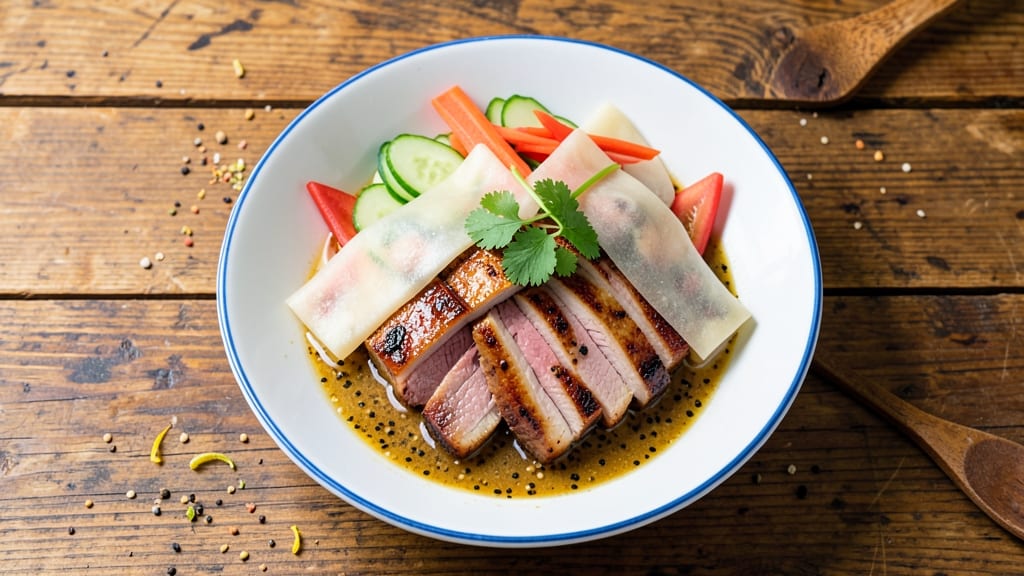
This Asian pork wraps recipe delivers restaurant-quality flavor with tender five-spice pork wrapped in delicate rice paper. The secret lies in marinating pork shoulder with a blend of aromatic spices that develop deep, complex flavors during slow cooking—something I perfected while working with heritage pork cuts in Charleston.
Every bite combines crisp rice paper with juicy, spiced pork and fresh herbs for a balance that's both elegant and satisfying.
The process begins with marinating pork shoulder in a fragrant five-spice blend—star anise, cinnamon, cloves, fennel, and Szechuan peppercorn—that transforms simple pork into something extraordinary. After slow-braising, the pork becomes fork-tender while absorbing those rich, warming spices.
Fresh rice paper wraps provide the perfect vehicle for this flavorful filling, offering just enough structure to hold everything together without overpowering the delicate flavors.
What makes this recipe truly special is how it brings together textures and flavors that complement each other perfectly: the crisp snap of fresh rice paper, the tender pull of braised pork, and the bright freshness of herbs like cilantro and mint.
The result is a dish that's both restaurant-worthy and easy to prepare at home, making it ideal for weeknight dinners or entertaining guests. Each wrap is a harmonious blend of savory, aromatic, and fresh elements.
Serve these wraps with a side of sweet chili sauce or a quick cucumber salad to round out the meal. The combination of textures and flavors creates a dining experience that feels both comforting and sophisticated—perfect for anyone looking to elevate their weeknight cooking without sacrificing ease.
Let's get started on creating these flavorful, satisfying wraps.
Ingredients for asian pork wraps
Heritage pork shoulder, aromatic spices, and delicate rice paper create restaurant-quality Asian pork wraps at home.
| Ingredient | Amount | Notes |
|---|---|---|
| Pork Shoulder 🐖 | 1 ½ lb | Heritage cut preferred, bone-in for flavor |
| Star Anise Pods 🌿 | 2 whole | Whole pods for infusion, remove after cooking |
| Ground Cinnamon 🌶️ | 1 tbsp | Freshly ground for optimal aroma |
| Whole Cloves 🌿 | 4 whole | Lightly crushed for deeper flavor |
| Fennel Seeds 🌿 | 1 tbsp | Toasted for enhanced sweetness |
| Szechuan Peppercorns 🌶️ | 1 tsp | Lightly toasted for citrusy heat |
| Soy Sauce 🍶 | ½ cup | High-quality, low-sodium preferred |
| Honey 🍯 | 2 tbsp | Wildflower preferred for floral notes |
| Garlic Cloves 🧄 | 6 cloves | Minced for even distribution |
| Fresh Ginger 🧅 | 2 tbsp | Finely grated, aromatic quality |
| Rice Paper Wraps 🍱 | 12 pieces | Fresh, 8-inch size preferred |
| Fresh Cilantro 🌿 | ½ cup | Chopped, stems removed |
| Fresh Mint Leaves 🌿 | ¼ cup | Torn, for freshness |
| Sesame Oil 🫒 | 1 tbsp | Toasted, for aromatic finish |
| Vegetable Oil 🫒 | 2 tbsp | High smoke point for searing |
The pork shoulder is the foundation—heritage cuts from Butcher's Shoppe or Whole Foods deliver superior marbling and tenderness. Look for cuts with visible fat cap; this ensures juiciness during slow braising. Star anise and Szechuan peppercorns can be found in the world foods aisle at Trader Joe's or specialty Asian markets. For the five-spice blend, toast whole spices in a dry pan for 30 seconds to release their essential oils—this amplifies their aromatic complexity significantly. Fresh ginger should have vibrant color and a sharp aroma; avoid any with soft spots or mold.
No heritage pork? Bone-in pork shoulder from any quality butcher works just as well. Substitute Szechuan peppercorns with black pepper at double the amount, though you'll lose the citrusy tingling sensation. For the rice paper, Kizuna brand from Asian markets holds its shape best when dipped. Fresh herbs? Dried cilantro or mint at half the amount works in a pinch, but fresh is ideal. The soy sauce matters—Kikkoman or Pearl River Bridge brands provide authentic umami depth. If you can't find honey, agave nectar offers a similar sweetness profile without altering the recipe's balance.
Marinated pork keeps 3 days in the fridge, though flavor improves after 24 hours. Rice paper must stay submerged in water until use—dip just before wrapping. For make-ahead prep, assemble filled wraps and refrigerate for up to 4 hours before serving. The braised pork reheats beautifully; portion into containers with a splash of water to maintain moisture. Store rice paper in a sealed bag with a damp towel to prevent drying. These wraps freeze well for 1 month when wrapped tightly in plastic wrap and foil.
Why You'll Love This Recipe
- One-Pot Magic: I toss the pork shoulder with star anise, cinnamon, and cloves in a single pot, then let it slow down while I prep the rest of dinner. No chopping boards to clean, no extra pans—just rich, spiced meat that practically cooks itself.
- Flavor Bomb: That combo of fennel seeds and star anise? It’s like a warm hug in your mouth—sweet, earthy, and just a little mysterious. The pork ends up tender with a crust that cracks open to reveal juicy perfection (yes, even if you’re not a spice snob).
- Lunchbox Hero: Between us, this is my secret weapon for packed lunches. Shred the cooked pork, stuff it in wraps with quick-pickled veggies, and boom—you’ve got a meal that survives the workday and tastes like you bothered.
- Budget Stretch: Pork shoulder is cheap, but it feels fancy. A few whole spices (that last forever) and one cut of meat stretch across three meals: wraps for lunch, stir-fry for dinner, and even tacos the next day. My wallet and my taste buds win.
Step-by-step instructions for fragrant five-spice pork wraps
Transform tender pork shoulder into aromatic, restaurant-quality filling for fresh rice paper wraps.
Prepare the Five-Spice Marinade and Pork
In a small dry skillet over medium heat, toast the 1 tbsp fennel seeds and 1 tsp Szechuan peppercorns for 1 minute until fragrant. Immediately transfer to a spice grinder and pulse until finely ground. In a large bowl, combine the toasted spices with the 1 tbsp ground cinnamon, 4 whole cloves, and 2 whole star anise pods. Add the 1.5 lb pork shoulder, breaking it into large, even chunks.
In a separate bowl, whisk together the 0.5 cup soy sauce, 2 tbsp honey, 6 minced garlic cloves, and 2 tbsp finely grated fresh ginger. Pour this marinade over the pork and spices, ensuring every piece is thoroughly coated. Cover and refrigerate for at least 4 hours or overnight for maximum flavor penetration. The marinade should fully saturate the pork, creating a glossy surface that indicates proper absorption.
Sear and Braise the Pork
Heat a heavy Dutch oven or deep skillet over medium-high heat until hot. Add 2 tbsp vegetable oil and carefully add the marinated pork in a single layer, working in batches if needed. Sear undisturbed for 3-4 minutes until a deep golden-brown crust forms. Flip and sear the other sides for another 3-4 minutes. Remove the pork and set aside, leaving the rendered fats in the pan.
Return the Dutch oven to medium heat and add the seared pork back in. Pour in enough water to come halfway up the pork pieces, then add the 2 whole star anise pods and 4 whole cloves. Bring to a gentle simmer, cover, and reduce heat to low. Braise for 2-2.5 hours until the pork is fork-tender and easily pulls apart. The pork should have a rich, caramelized exterior and a moist, tender interior that falls apart with gentle pressure.
Shred and Finish the Pork
Remove the pork from the braising liquid and transfer it to a cutting board. Using two forks, shred the pork into bite-sized pieces, discarding the star anise pods and cloves. Return the shredded pork to the Dutch oven and stir in 1 tbsp toasted sesame oil. Simmer uncovered over medium heat for 5-7 minutes until the pork is fully coated and the flavors meld together. The pork should have a glossy sheen from the sesame oil and a deep, aromatic fragrance.
Assemble the Wraps
Fill a shallow dish with warm water to soften the 12 rice paper wraps. Working with one at a time, dip a wrap into the water for 5-7 seconds until pliable but not soggy. Lay it flat on a clean surface and spread 2-3 tablespoons of the shredded pork toward one edge, leaving a 1-inch border. Top with a small handful of chopped fresh cilantro and torn fresh mint leaves. Drizzle lightly with any remaining braising liquid if desired.
Fold the bottom edge of the wrap over the filling, then fold in the sides, and finally roll tightly from the bottom up, tucking in the ends as you go. Repeat with the remaining wraps. Serve immediately while the rice paper is still pliable and the pork is warm. The wraps should hold together well and release a burst of fragrant, spiced pork with every bite.
Pro Tips For Making Asian Pork Wraps
- CRUSH THE SPICES: DESCRIPTION:
- SIMMER LOW AND SLOW: DESCRIPTION:
- STRAIN THE BROTH: DESCRIPTION:
- USE A MEAT THERMometer: DESCRIPTION:
Flavor customization for this recipe
Spice Level Control
Adjust the heat to your preference by modifying the Szechuan peppercorns. For a mild version, reduce to just ½ tsp and add ¼ tsp ground white pepper for a subtle kick.
If you love heat, increase to 1.5 tsp Szechuan peppercorns and add ½ tsp crushed red pepper flakes to the marinade. I find the citrusy tingling from Szechuan peppercorns pairs beautifully with the sweetness of the honey in the marinade. 🌶️
Sweet-Savory Balance
Customize the sweetness by swapping honey for different syrups. For a richer depth, use 2 tbsp hoisin sauce instead of half the honey. For a lighter touch, replace honey with 1 tbsp maple syrup and add 1 tsp rice vinegar to brighten the flavors.
I often use agave nectar for a neutral sweetness that lets the spices shine.
Herb Variations
Experiment with different fresh herbs to change the wrap's profile. For a classic Vietnamese-inspired version, add ¼ cup thinly sliced scallions and 2 tbsp fresh Thai basil. For a Chinese twist, swap mint for ½ cup chopped cilantro and 2 tbsp chopped scallions.
I prefer the bright, cooling effect of mint, but Thai basil adds a unique anise-like note that complements the five-spice marinade perfectly.
Extra Protein Options
Boost the protein content by adding ¼ cup cooked quinoa or 2 tbsp chopped roasted peanuts to the filling. For a vegetarian version, replace the pork with shredded tofu or tempeh marinated in the same five-spice blend.
If you want to keep it meat-based, try adding 2 oz sliced grilled shrimp for a seafood twist. The quinoa adds a nice texture contrast, while peanuts bring a satisfying crunch.
Sauce Pairings
Serve with different dipping sauces to enhance the flavors. A spicy chili sauce made with 2 tbsp Sriracha, 1 tbsp lime juice, and 1 tsp honey adds a fiery kick.
For something creamy, mix ¼ cup Greek yogurt with 1 tbsp hoisin sauce and 1 tsp grated ginger. I love the contrast of a cool yogurt sauce with the warm, spiced pork—it balances the meal beautifully. 🍶
Texture Add-Ins
Incorporate crunchy or creamy elements for added texture. Fold in 2 tbsp shredded carrots or ¼ cup quick-pickled cucumbers for freshness and crunch. For creaminess, add 2 tbsp mashed avocado or 1 tbsp peanut butter mixed with 1 tsp soy sauce.
The pickled cucumbers add a tangy brightness that cuts through the richness of the pork, while avocado brings a luxurious smoothness to each bite.
Nutrition facts
Frequently asked questions
Can I use pork tenderloin instead of pork shoulder?
Pork tenderloin works but requires adjustments—it's leaner and cooks faster. Marinate for 2-3 hours max (not overnight) and reduce braising time to 45-60 minutes at 325°F. The texture will be more delicate but equally flavorful. For best results, slice tenderloin into 1-inch chunks before marinating to ensure even cooking.
How do I prevent rice paper from tearing when wrapping?
Work quickly and keep the rice paper slightly damp but not soggy. Dip just until pliable (5-7 seconds), then lay flat on a damp towel to prevent sticking. Spread filling near one edge and fold the bottom first, then sides, before rolling tightly. If tearing occurs, use slightly larger rice paper (9-inch) or add 1 tsp cornstarch to the water for extra strength.
What's the best way to reheat leftover pork filling?
Reheat gently in a skillet with 1 tbsp water or broth over medium-low heat for 3-4 minutes until warmed through. Avoid microwaving—it makes the pork dry. For wraps, assemble fresh and warm in the oven at 350°F for 5 minutes to crisp the rice paper. Store filling in an airtight container with a splash of braising liquid to maintain moisture.
Can I make these wraps gluten-free?
Use tamari (gluten-free soy sauce) instead of regular soy sauce, and verify your rice paper is certified gluten-free. Many brands like Rice Paper Wraps by Kizuna are naturally gluten-free. Double-check all spices for cross-contamination if you have severe allergies. The five-spice marinade remains safe as long as you use pure ingredients.
Why does my pork taste bland after braising?
Bland flavor usually means insufficient marinating time or low heat during braising. Ensure pork marinates overnight and braises at a gentle simmer (325°F). Deglaze the pan with 1 tbsp soy sauce before adding water, and reduce the braising liquid by half at the end to concentrate flavors. Fresh herbs added at the last minute also brighten the dish.