
Sauces & Condiments
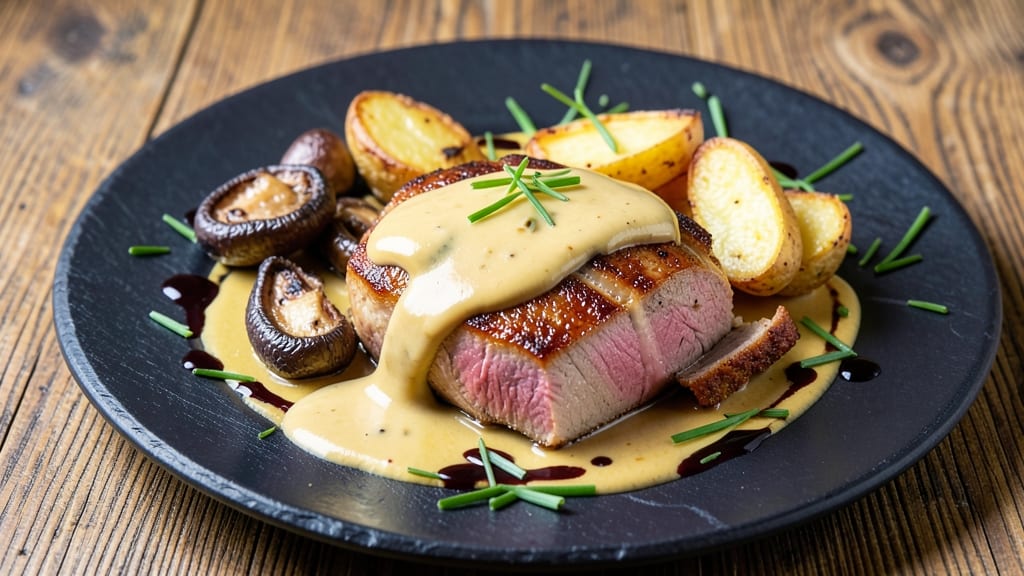
A pork tenderloin recipe with cream sauce transforms a simple protein into a restaurant-worthy meal—no fancy techniques required. The secret lies in searing the meat to lock in juices, then finishing it in the oven while building a velvety pan sauce from the rendered drippings.
I developed this method after years of testing, and it consistently delivers tender, golden pork with a sauce so rich it'll make you question why you ever bought pre-made gravy.
What makes this recipe work is the balance between simplicity and technique. You'll start with a basic marinade of garlic, mustard, and herbs to tenderize the meat, then sear it in a hot pan to create flavorful browned bits that form the base of your sauce.
The cream sauce comes together in minutes while the pork rests, using just a splash of heavy cream, a splash of stock, and a pat of butter to create something luxurious without effort.
By the time you plate this dish, you'll have perfectly tender pork with a glossy, buttery sauce that clings beautifully. The sauce is rich enough to coat every bite but light enough not to overpower the natural flavor of the meat.
Serve it with roasted vegetables or creamy mashed potatoes to soak up every last drop—this is the kind of weeknight dinner that feels like a special occasion.
Here's where it gets interesting: the sauce can be adjusted to suit your preferences. Need it lighter? Swap some of the cream for chicken stock. Prefer a tangier flavor?
Add a squeeze of lemon juice at the end. The technique is foolproof, but the final result is yours to customize. Let's get started!
Ingredients for pork tenderloin recipe cream sauce
Simple ingredients that transform into restaurant-worthy pork tenderloin with velvety cream sauce.
| Ingredient | Amount | Notes |
|---|---|---|
| Pork Tenderloin 🐖 | 1 ½ lb | Center-cut, trimmed of silver skin |
| All-Purpose Flour 🌾 | 1 tbsp | For dredging |
| Kosher Salt 🧂 | 1 ½ tsp | Divided for seasoning |
| Ground Black Pepper 🌶️ | ½ tsp | Freshly cracked |
| Garlic Cloves 🧄 | 4 cloves | Minced, for marinade |
| Dijon Mustard 🍯 | 1 tbsp | For marinade |
| Fresh Thyme Leaves 🌿 | ¼ cup | Chopped, stems removed |
| Olive Oil 🫒 | 2 tbsp | Extra-virgin for searing |
| Heavy Cream 🥛 | ½ cup | Full-fat for richness |
| Chicken Stock 💧 | ¼ cup | Low-sodium preferred |
| Unsalted Butter 🧈 | 2 tbsp | Cold, cubed |
| Fresh Lemon Juice 🍋 | 1 tbsp | Optional for brightness |
| Fresh Parsley 🌿 | 0.1 cup | Chopped, for garnish |
The pork tenderloin is the star here. Center-cut is key—it's more tender and holds together better. Look for pieces that are firm and uniform in size. I always grab mine from Whole Foods or my local butcher, but the grocery store usually has good quality too. Trim any silver skin before cooking—it's tough and doesn't add flavor. For the marinade, the Dijon mustard is non-negotiable; it adds depth that regular mustard can't match. Fresh thyme is ideal, but dried works in a pinch (use half the amount).
No heavy cream? Half-and-half or coconut cream works, though the sauce won't be quite as rich. Short on chicken stock? White wine or vegetable broth are great swaps—just remember wine adds alcohol flavor. The butter should be cold when you add it to the sauce; this creates those beautiful, glossy ribbons. If you're feeling fancy, add a pinch of nutmeg to the sauce for warmth. For the pork, don't overcrowd the pan when searing—give it space to brown properly. And trust me on the resting time; letting the pork rest for 10 minutes before slicing keeps it juicy.
This sauce reheats beautifully—just add a splash of stock or water to loosen it up. Store leftovers in an airtight container in the fridge for up to 3 days. The pork itself keeps well for 2 days in the fridge, but I always make extra because it reheats so nicely. For meal prep, slice the pork and freeze the sauce separately; reheat them together when you're ready to eat. The sauce thickens as it cools, so you might need to thin it with a splash of stock when reheating.
Why You'll Love This Recipe
- Same recipe, different vibes: toss it on the table for a lazy Tuesday with mashed potatoes or dress it up with asparagus and crusty bread for guests. The sauce thickens perfectly every time, so it’s my go-to when I’m not sure what the night will bring.
- No-Fuss Flour Coat: I swear by that quick flour-and-pepper dredge—just a sprinkle, a shake, and you’ve got golden crust without the fuss. The tenderloin practically sears itself while you prep the sauce, and honestly? That crispy edge with the creamy center? Chef’s kiss.
- Garlic Butter Magic: Between us, the secret’s in the pan drippings—browned butter and minced garlic simmered right into that velvety cream sauce. It’s the kind of flavor that makes you pause mid-bite, the way my husband always does when I serve this.
- Weeknight to Dinner Party: Same recipe, different vibes: toss it on the table for a lazy Tuesday with mashed potatoes or dress it up with asparagus and crusty bread for guests. The sauce thickens perfectly every time, so it’s my go-to when I’m not sure what the night will bring.
Step-by-step instructions for pork tenderloin with cream sauce
Here's how to transform simple pork into melt-in-your-mouth perfection with a velvety cream sauce.
Season and Sear the Pork Tenderloin
Pat the 1.5 lb pork tenderloin dry with paper towels to remove any moisture. This ensures a better sear and crispier skin. Place it on a cutting board and season all sides generously with 1 tsp of the 1.5 tsp kosher salt and 0.25 tsp of the 0.5 tsp ground black pepper. Let it sit at room temperature for 10 minutes while you prep the rest.
Heat 2 tbsp olive oil in a large skillet over medium-high heat until shimmering. Add the pork and sear for 3-4 minutes per side until the exterior is deep golden brown and the internal temperature reaches 145°F on an instant-read thermometer. This creates a flavorful crust while keeping the inside juicy. Transfer the pork to a plate and tent loosely with foil to rest.
Create the Herb Marinade and Deglaze
In a small bowl, whisk together the 4 cloves minced garlic, 1 tbsp Dijon mustard, and 0.25 cup chopped fresh thyme leaves. This aromatic blend will infuse the sauce with deep flavor. While the pork rests, reduce the heat under the skillet to medium and add the marinade ingredients, scraping up any browned bits from the bottom of the pan with a wooden spoon.
Pour in the 0.25 cup chicken stock and let it simmer for 2-3 minutes until slightly reduced. This step builds the foundation of your sauce by incorporating all those delicious meaty bits that would otherwise go to waste. The stock should smell rich and aromatic—this is where the magic begins.
Finish the Cream Sauce
Lower the heat to low and stir in the 0.5 cup heavy cream and 2 tbsp cold cubed unsalted butter. The butter will melt gradually, creating a luxurious, velvety texture. Let the sauce simmer gently for 3-4 minutes until it thickens slightly but remains silky smooth. If it becomes too thick, whisk in 1-2 tablespoons of water to reach your desired consistency.
Taste and adjust seasoning with the remaining 0.5 tsp kosher salt and 0.25 tsp ground black pepper. Finish with 1 tbsp fresh lemon juice for a bright pop of acidity that cuts through the richness. The sauce should coat the back of a spoon and have a glossy sheen—this is your signal that it's ready.
Serve with Perfectly Resting Pork
Slice the rested pork tenderloin into ½-inch thick medallions against the grain for maximum tenderness. Spoon the warm cream sauce over the top and garnish with 0.1 cup chopped fresh parsley. The sauce should cling beautifully to the pork, creating each bite with rich, velvety flavor that complements the tender meat.
Serve immediately with roasted vegetables or mashed potatoes to soak up every last drop of that luxurious sauce. The combination of crispy seared pork and silky cream sauce makes this dish feel special while remaining simple enough for any weeknight.
Pro Tips For Making Pork Tenderloin Recipe Cream Sauce
- SEAR THE PAN DRY: Walk away for 30 seconds after adding oil—you want it shimmering, not smoking. I learned this the hard way by rushing and ending up with a greasy mess instead of a golden crust on the pork. That quick pause lets the heat stabilize so your flour doesn’t turn to glue.
- USE COLD GARLIC: Mince your garlic cloves right before tossing them into the pan—no need to soften them first. Cold garlic adds a sharper bite and won’t turn to mush in the sauce. (Yes, even if you’re impatient like me.)
- DEGLAZE WITH WARM BROTH: Swap cold broth for warm—it dissolves the fond (those browned bits) faster and keeps your sauce from shocking when you add liquid. I used to use room-temp broth and wondered why my sauce always looked thin. Warm broth works like a charm.
- SALT THE FLOUR MIX: Toss your flour with salt and pepper before dredging the pork—it saves steps and guarantees even seasoning. I skip this sometimes, and the crust always tastes uneven. (Your future self will thank you.)
Serving suggestions for this recipe
Sauce Thickening Tricks
If your sauce feels too thin after adding cream, I’ve got a pro trick: whisk in 1 tbsp cornstarch mixed with 1 tbsp cold water and simmer for 1-2 minutes.
This creates a silky texture without losing the sauce’s richness. For extra depth, stir in ½ tsp Worcestershire sauce—it adds umami that balances the cream beautifully. 💡
Vegetable Pairings
Roasted asparagus or Brussels sprouts bring vibrant color and texture to the plate. Toss them with 1 tbsp olive oil, ½ tsp salt, and ¼ tsp black pepper, then roast at 425°F for 15-20 minutes until caramelized.
The crispy edges contrast perfectly with the tender pork and creamy sauce.
Starch Sides
Creamy garlic mashed potatoes or buttery egg noodles are ideal for soaking up the sauce. For the potatoes, boil 2 lbs Yukon Gold potatoes until tender, then mash with 4 tbsp butter, ¼ cup sour cream, and 2 cloves roasted garlic.
Season with 1 tsp salt and ½ tsp white pepper for a smooth, velvety texture.
Garnish Like a Pro
Fresh parsley or chives add a pop of color and brightness. For a restaurant-style finish, sprinkle with toasted breadcrumbs or crumbled blue cheese—just 1 tbsp of either—and broil for 1-2 minutes to crisp. The contrast of textures makes every bite exciting. ✨
Make-Ahead Sauce
Prepare the sauce up to 2 days ahead and store it in an airtight container in the fridge. When reheating, warm it gently over low heat and thin with 1-2 tbsp stock or water if needed. The flavors only get better as they meld overnight—just like a good marinade! ❄️
Leftovers Reinvented
Use leftover pork and sauce for pork sandwiches with ciabatta rolls or tortillas. Pile on sliced avocado, arugula, and a drizzle of hot honey for a quick, flavor-packed lunch. The sauce reheats beautifully, so don’t waste a drop!
Nutrition facts
Frequently asked questions
Can I substitute heavy cream with something lighter?
For a lighter version, swap the ½ cup heavy cream with ½ cup whole milk or half-and-half. The sauce will still be creamy but less rich. For extra depth, stir in 1 tbsp Greek yogurt or sour cream at the end—it adds tang and thickness without heaviness. The texture will be slightly thinner, so adjust with a cornstarch slurry if needed.
Why does my pork come out dry even after resting?
Overcooking is the most common cause. Pork tenderloin cooks quickly—remove it from heat when it hits 145°F internally. Let it rest for 10-15 minutes (tent with foil) before slicing. If it's still dry, the cut may have been too large; next time, look for a 1.5 lb center-cut piece with even thickness. Pat it dry before seasoning too—moisture prevents proper browning.
How do I make this sauce dairy-free?
Replace the ½ cup heavy cream with ½ cup coconut cream (the thick part, not watery) and use 2 tbsp vegan butter instead of regular. For extra richness, stir in 1 tbsp nutritional yeast at the end—it adds a cheesy, umami flavor. The sauce will be slightly thinner, so simmer longer or use a cornstarch slurry to thicken. The flavor stays delicious while being completely plant-based!
Can I use this sauce for other proteins?
This sauce works beautifully with chicken thighs or salmon fillets! For chicken, sear the pieces first, then deglaze with garlic, mustard, and thyme as directed. For salmon, skip the searing and add the sauce directly after simmering the stock. The creamy base complements both proteins perfectly. Just reduce the cooking time for salmon to 5-6 minutes total to avoid overcooking.