
Main Courses
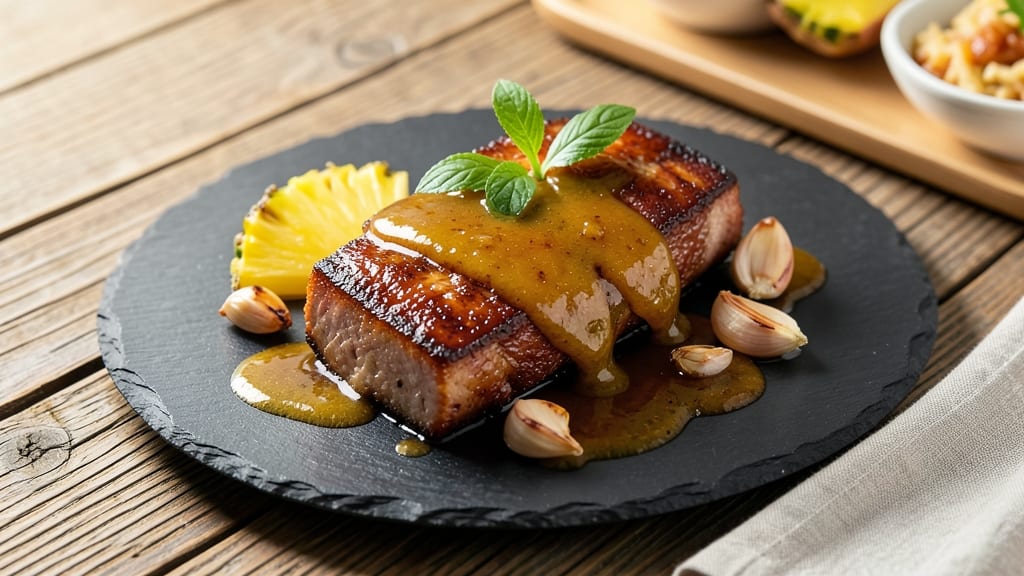
This pork pata hamonado recipe with pineapple juice transforms tough pork into melt-in-your-mouth tenderness with a tropical twist. 🌟 The secret lies in slow braising with pineapple juice, which tenderizes the meat while creating a sticky, caramelized glaze that balances sweet and savory flavors.
My grandmother used to make this dish for special occasions, and I've refined her method to make it approachable for home cooks. The process begins with marinating pork cuts in a blend of soy sauce, vinegar, and spices, then slow-cooking them until fork-tender.
The pineapple juice doesn't just add sweetness—it breaks down collagen for incredible texture while creating that signature glossy glaze. What makes this recipe special is how it turns simple ingredients into something restaurant-worthy without requiring hours at the stove.
By the end, you'll have perfectly tender pork with a glossy, caramelized exterior that's impossible to resist. The aroma alone will have everyone gathering around the table. This dish pairs beautifully with steamed rice and grilled vegetables, making it a complete meal that feels both comforting and special.
The best part? You can make it ahead and let the flavors develop even more overnight. Let's create this Filipino classic that's sure to become a family favorite.
Ingredients for pork pata hamonado recipe with pineapple juice
Six simple ingredients transform tough pork into restaurant-quality tenderness with tropical sweetness.
| Ingredient | Amount | Notes |
|---|---|---|
| Pork Shoulder (or Pata) 🐷 | 3 lb | Cut into 1.5-inch chunks |
| Pineapple Juice 🍍 | 1 ½ cups | Freshly extracted preferred |
| Soy Sauce 🥢 | ½ cup | Use high-quality brand |
| White Vinegar 🍶 | ¼ cup | Distilled preferred |
| Brown Sugar 🍚 | ½ cup | Packed measurement |
| Garlic Cloves 🧄 | 8 cloves | Minced for marinade |
| Fresh Ginger 🌿 | 2 tbsp | Finely grated |
| Bay Leaves 🌿 | 2 whole | Dried or fresh |
| Black Peppercorns 🌶️ | 1 tsp | Crushed lightly |
| Olive Oil 🫒 | 2 tbsp | Extra-virgin preferred |
| Water 💧 | 1 cup | For braising liquid |
| Salt 🧂 | 1 ½ tsp | Kosher or sea salt |
The pork shoulder is the star here—look for well-marbled cuts at Costco or your local butcher for the best texture. My grandmother always used Filipino-style pork cuts, but regular pork shoulder works too if you can't find specialty cuts. The pineapple juice is non-negotiable—freshly extracted from a whole pineapple gives the best flavor, but canned juice in a pinch works if it's 100% pure with no added sugar. For the soy sauce, Kikkoman or Filipino brands like Silver Swan add that authentic depth. If you can't find those, any good-quality soy sauce will do.
No pineapple juice? Substitute with orange juice plus 1 tbsp extra brown sugar—it won't be identical, but it'll still work. Running low on vinegar? White wine or apple cider vinegar are great swaps. The ginger can be substituted with 2 tbsp ground ginger, but fresh is ideal for that bright, zesty kick. For extra richness, add 1 tbsp coconut milk to the braising liquid. The brown sugar can be swapped for white sugar or coconut sugar, though brown sugar's molasses notes add depth to the glaze. Always taste as you go—adjust sweetness or saltiness to your preference.
This dish tastes even better the next day as flavors meld. Store leftovers in an airtight container in the fridge for up to 5 days. For longer storage, freeze portions for 3 months. The braising liquid reduces beautifully, so I always make extra—it's perfect for serving over rice or as a quick soup base. If you're making this ahead, let it sit at room temperature for 30 minutes before serving to let the pork reabsorb some of the juices for maximum tenderness.
Why You'll Love This Recipe
- Sweet-Savory Magic: The pineapple juice and brown sugar caramelize into a sticky glaze that clings to every bite—like a hug for your taste buds. Honestly, the first time I tasted that balance of tangy vinegar and sweet pork, I nearly licked the pan.
- One-Pot Wonder: No chopping, no fuss—just sear the pork, pour in the sauce (pineapple juice, soy, vinegar, sugar), and let it simmer. Between us, this is the kind of recipe where you can text your friends while it cooks and still end up with something restaurant-worthy.
- Leftovers That Shine: This dish actually gets better the next day. The flavors meld into something deeper, and reheating it turns the meat into melt-in-your-mouth perfection. I’ve packed this for lunches—trust me, your coworkers will ask for the recipe.
- Budget-Friendly Feast: Pork shoulder is affordable, and the sauce ingredients (soy, vinegar, sugar) are pantry staples. For under $10, you feed four people with a dish that feels like a splurge. My college self would’ve cried.
Step-by-step instructions for pork pata hamonado with pineapple juice
Here's how to transform tough pork shoulder into melt-in-your-mouth perfection with this tropical braising technique.
🍳 Step 1: Sear the Pork for Maximum Flavor
Heat a large Dutch oven over medium-high heat and add the 2 tablespoons olive oil. Once shimmering, add the 3 lb pork shoulder cut into 1.5-inch chunks in a single layer. Let them sear undisturbed for 4-5 minutes until deep golden brown on one side—this creates the flavorful crust we want.
Flip the pork pieces and sear the other sides for another 4-5 minutes. You'll notice the pork releases from the pan more easily now—this is your cue to remove it and set aside. Don't rush this step; proper searing builds layers of flavor that the braising liquid will absorb later. If your pan gets crowded, work in batches to avoid steaming instead of searing.
👨🍳 Step 2: Build the Tropical Braising Sauce
In the same Dutch oven, reduce heat to medium and add the 8 cloves minced garlic and 2 tablespoons finely grated fresh ginger. Sauté for 1 minute until fragrant—you should smell that bright, zesty aroma that signals they're ready. Be careful not to burn them; garlic turns bitter quickly.
Pour in the 1.5 cups pineapple juice, 0.5 cup soy sauce, and 0.25 cup white vinegar. Stir well to deglaze the pan, scraping up all those browned bits from the pork. Add the 0.5 cup brown sugar, 1.5 teaspoons salt, and 1 teaspoon crushed black peppercorns, stirring until the sugar dissolves completely. The mixture should smell sweet, tangy, and complex—this is where the magic happens.
🥘 Step 3: Braise Until Fork-Tender
Return the seared pork to the Dutch oven and add the 2 whole bay leaves and 1 cup water. Bring to a gentle simmer, then reduce heat to low. Here's the key: cover tightly and let it cook for 2.5-3 hours until the pork is fork-tender. The liquid should reduce significantly but still coat the pork when shaken.
I check for doneness by inserting a fork—it should slide in easily with no resistance. The pork should pull apart cleanly, and the sauce should have thickened into a glossy, caramelized glaze. If you're short on time, you can increase heat slightly after the first hour, but patience here ensures the best texture. Real talk: this is where the tough meat transforms into something luxurious.
⏰ Step 4: Rest and Serve with Perfect Sauce
Remove the pork from the braising liquid and transfer it to a serving platter. Tent loosely with foil and let it rest for 10-15 minutes. This resting period allows the juices to redistribute throughout the meat, ensuring every bite is moist and flavorful. While it rests, skim off any excess fat from the sauce if desired—though I like to leave some for richness.
Serve the pork with the reduced braising sauce ladled generously over the top. The sauce should be thick enough to coat the back of a spoon but still pour smoothly. Garnish with fresh pineapple chunks if you like, though the natural sweetness from the braising should be enough. Pair with steamed rice or crusty bread to soak up every last drop of that tropical, savory sauce.
Pro Tips For Making Pork Pata Hamonado Recipe With Pineapple Juice
- Sear the Pork First: I learned this the hard way—skipping the sear means flavor gets lost in the sauce. Heat a heavy pan until it’s smoking, then brown the pork shoulder on all sides before adding any liquid. That crust locks in juices and makes the pineapple-soy glaze stick like glue.
- Use Aged Pineapple Juice: Fresh pineapple juice works, but aged (or even canned) juice has deeper sweetness and acidity that cuts through the richness of the pork. If you’re using fresh, let it sit uncovered in the fridge for 24 hours first—it mellows out the tartness and concentrates the flavor.
- Don’t Boil the Vinegar: I used to add vinegar right at the start, and the pork would turn rubbery before it ever got tender. Instead, wait until the pork’s halfway cooked and the liquid’s reduced by half before pouring in the vinegar. It brightens the sauce without toughening the meat.
- Thicken with Brown Sugar Early: Brown sugar caramelizes fast, so add it when the sauce is still thin—about 10 minutes before the pork’s done. Stir it in with the soy sauce and let it bubble until it darkens slightly. This gives the glaze that glossy, sticky texture without burning. (Yes, even if you’re impatient like me.)
Essential equipment for great pork pata hamonado recipe with pineapple juice
Dutch Oven Essentials
The heart of this recipe beats in a Dutch oven—I swear by my Le Creuset 5.5-quart for its even heat distribution and durable construction. The deep sides prevent spills while braising, and the tight lid traps steam for tenderizing.
If you don't own one, a heavy-bottomed pot with a tight-fitting lid works too—I've used my All-Clad 5-quart with great results. Look for one with enamel coating to prevent sticking and make cleanup easier. 🥘
Instant-Read Thermometer
Skip guessing doneness with a thermometer—I use the ThermoWorks Smoke because it's fast and accurate. Insert it into the thickest pork piece when checking for 195-200°F internal temperature. This ensures perfect tenderness without overcooking.
A budget-friendly alternative is the OXO Good Grips—it's reliable and easy to read. Pro tip: Wipe the probe clean between uses to avoid flavor transfer from previous meats. 🌡️
Tongs for Handling
Long-handled tongs make flipping pork chunks in the Dutch oven a breeze—I reach for my Nordic Ware 12-inch with silicone grips. They're heat-resistant up to 500°F, so they won't melt when submerged in hot oil or sauce.
For smaller batches, 6-inch kitchen tongs work fine. Avoid metal utensils that can scratch your Dutch oven's enamel over time. 🍴
Measuring Cups & Spoons
Precision matters with this recipe, so invest in stainless steel measuring cups and spoons—they're durable and won't warp like plastic. My go-to is the OXO Good Grips set because the handles stay cool.
For pineapple juice and soy sauce, a liquid measuring cup with clear markings ensures accuracy. Remember: packed brown sugar means pressing it firmly into the cup—don't scoop it straight from the bag. 🍚
Cutting Board & Knife
A sharp chef's knife and cutting board are non-negotiable for chopping pork into 1.5-inch chunks evenly. I use my Wüsthof 8-inch knife with a plastic cutting board (it's gentle on blades). For garlic and ginger, a microplane gives finer results than a knife.
If you're new to knives, practice on a soft vegetable like zucchini first to build confidence. Safety first: keep fingers curled under when chopping! 🔪
Basting Brush & Plate
While the pork braises, a silicone baster brush lets you glaze the meat with reduced sauce for extra shine. My favorite is the OXO Good Grips—it's heat-resistant and easy to clean. For resting meat, use a wire cooling rack over a rimmed baking sheet to prevent sogginess.
This setup also helps drain excess fat from the sauce if you prefer a lighter finish. 🍲
Nutrition facts
Frequently asked questions
Can I use regular pork shoulder instead of pork pata?
While pork pata (hock) is traditional, regular pork shoulder works perfectly—just cut it into 1.5-inch chunks for even cooking. The key is using a well-marbled cut with some fat for flavor and moisture. If your butcher can't find pork pata, don't worry—this recipe is forgiving with any pork shoulder.
Why does the pineapple juice make the pork so tender?
The pineapple juice contains bromelain, a natural enzyme that breaks down tough muscle fibers in the meat. Plus, the acidity helps tenderize while the natural sugars caramelize during braising, creating that signature glossy glaze. It's like a tropical magic trick for tough cuts!
Can I make this in a slow cooker?
Yes! Sear the pork first in a skillet, then transfer everything to a 6-quart slow cooker on low for 6-8 hours or high for 4-5 hours. The liquid will reduce less dramatically, so you may need to simmer uncovered for the last 30 minutes to thicken the sauce. Use the same braising liquid ratio but add ½ cup extra water for slow cooker safety.
How do I fix if the sauce is too thin?
Simmer the braising liquid uncovered for 10-15 minutes to reduce it naturally. For extra thickness, mix 1 tablespoon cornstarch with 2 tablespoons cold water, stir into the sauce, and simmer until it glazes. If you prefer a richer sauce, add 1 tablespoon coconut milk at the end—it blends beautifully with the tropical flavors.
What's the best way to reheat leftovers?
Reheat gently in a skillet with 1 tablespoon olive oil over low-medium heat for 5-7 minutes, adding 2 tablespoons water to prevent drying. For microwave reheating, cover with a damp paper towel and heat in 30-second intervals until warmed through. Never reheat to boiling—this keeps the pork moist and the sauce glossy.