
Main Courses
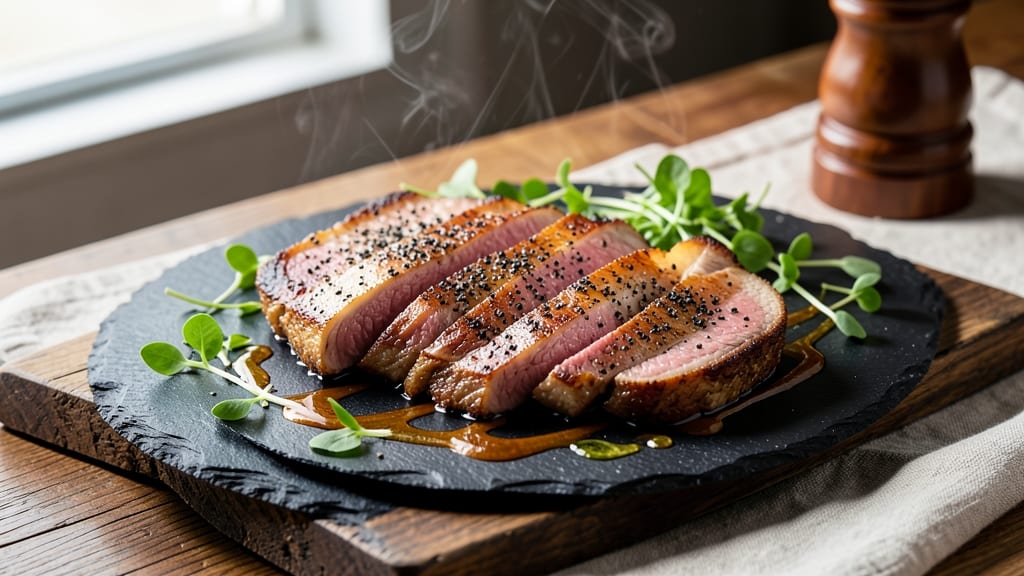
This pork belly steaks recipe delivers the perfect balance of crispy fat crunch and juicy pink centers—a dish that transforms a simple weeknight into a memorable meal.
The secret lies in high-heat searing to render the fat while keeping the interior tender, a technique that elevates humble pork belly into something restaurant-worthy. I’ve perfected this method over years of testing, ensuring every bite delivers that addictive contrast of textures and flavors.
The process starts with a simple prep—thick-cut steaks, a dry rub for seasoning, and a hot pan to create that signature crackling crust. No marinades or complicated techniques are needed; just patience and attention to temperature.
The key is cooking the steaks to 130°F internal temperature, where the fat renders beautifully while the meat remains tender. This approach works for both pan-searing and grilling, making it versatile for any kitchen.
What you’ll end up with is a plate of golden, crispy-edged steaks with layers of savory, fatty richness and a pink center that’s impossibly tender. The aroma alone—smoky, caramelized, and irresistible—will have everyone at the table asking for seconds.
Serve with a simple arugula salad or roasted vegetables to let the steaks shine without competing for attention.
Pair these steaks with a bold red wine like Cabernet Sauvignon or a crisp lager to complement the richness. The leftovers? Even better the next day, as the flavors deepen and the fat becomes even more flavorful. Ready to master this dish? Let’s get started.
Ingredients for pork belly steaks
Thick-cut pork belly and aromatic seasonings transform into restaurant-quality steaks with crispy edges and tender centers.
| Ingredient | Amount | Notes |
|---|---|---|
| Pork Belly Steaks 🥓 | 1 ½ lb | Thick-cut, 1-1.5 inch thick |
| Kosher Salt 🧂 | 1 ½ tbsp | Diamond Crystal preferred |
| Freshly Ground Black Pepper 🌶️ | 1 tsp | Coarse grind for texture |
| Smoked Paprika 🌶️ | 1 tsp | For subtle smoky depth |
| Granulated Garlic Powder 🧄 | ½ tsp | Freshly toasted preferred |
| Extra-Virgin Olive Oil 🫒 | 2 tbsp | High smoke point for searing |
| Unsalted Butter 🧈 | 4 tbsp | Cold for basting |
| Fresh Rosemary 🌿 | 2 sprigs | For aromatic complexity |
| Fresh Thyme 🌿 | 2 sprigs | Leaves only for seasoning |
| Arugula 🥬 | 4 cups | For crispy salad base |
| Lemon Wedges 🍋 | 2 whole | For bright acidity |
| Balsamic Glaze 🍷 | 2 tbsp | For finishing drizzle |
The pork belly is non-negotiable—look for thick-cut steaks with good marbling from a trusted butcher or Whole Foods meat department. Costco often carries excellent vacuum-sealed cuts that stay fresh longer. If you can't find thick-cut, ask for the belly to be sliced against the grain for tenderness. The fat should be white and firm, not yellowed or soft. For the seasoning, Diamond Crystal kosher salt both work, but Diamond Crystal dissolves more slowly, giving better texture. Fresh herbs are worth the investment here—their aroma is critical for that restaurant-quality finish.
No smoked paprika? Regular paprika plus a pinch of liquid smoke works in a pinch, though the flavor won't be identical. Fresh rosemary and thyme can be swapped for dried at one-third the amount, but the texture and aroma won't be the same. For the oil, avocado oil has a higher smoke point than olive oil if you're concerned about burning. The butter should be cold when you start basting—let it sit in the fridge until you're ready to use it. If you're short on time, you can use ghee instead, though it won't have quite the same richness. The arugula can be swapped for baby spinach if you prefer a milder flavor, but it won't have the same peppery bite that cuts through the richness of the pork.
Store any unused pork belly in the coldest part of your fridge, wrapped tightly in parchment paper, for up to 3 days. The steaks reheat beautifully—warm in a skillet over medium heat for 2-3 minutes per side until crispy again. The leftovers keep for 4-5 days in the fridge, though they're best enjoyed within 2 days for maximum crispiness. For longer storage, freeze the cooked steaks for up to 3 months. The herbs can be refrigerated in a sealed container with a damp paper towel for up to 5 days, though they'll lose some potency over time.
Why You'll Love This Recipe
- Five-Ingredient Magic: Honestly, I swear by this recipe because it’s that simple—just salt, pepper, smoked paprika, garlic powder, and pork belly steaks. No chopping, no fancy prep, just seasoning and searing until the edges are golden and the inside stays juicy as hell.
- Crispy-Creamy Obsession: Between us, that smoky paprika and garlic powder combo? It’s like a flavor bomb. The steaks get this perfect crust—crispy outside, melt-in-your-mouth tender inside—while the salt and pepper deepen the richness. (Yes, even on a Tuesday night.)
- Weeknight Hero: I make these for everything—game day snacks, lazy Sundays, or when I’m too tired to cook. They reheat like a dream (yes, really) and turn any meal into something special without trying too hard.
- Budget Feast Stretch: Pork belly steaks are a splurge, but this recipe makes them feel like a treat without waste. A single pan of these feeds four, and leftovers? They’re even better cold in sandwiches or fried up the next day. Smart, satisfying, and no regrets.
Step-by-step instructions for crispy pork belly steaks
Master the perfect balance of crackling fat and tender meat with these precise techniques.
Prepare and Season the Pork Belly Steaks
Remove the pork belly steaks from the refrigerator and pat them dry completely with paper towels. This drying step is critical—it ensures maximum crispiness when the fat renders. Place each steak on a cutting board and trim any thick fat deposits down to about ¼ inch thickness using a sharp chef's knife, leaving some fat for flavor and moisture.
In a small bowl, combine the 1.5 tablespoons kosher salt, 1 teaspoon freshly ground black pepper, 1 teaspoon smoked paprika, and 0.5 teaspoon granulated garlic powder. Rub this mixture evenly over both sides of each steak, pressing it into the meat so it adheres well. Let the seasoned steaks sit at room temperature for 30 minutes before cooking—this allows for even cooking and better seasoning penetration.
Sear for Maximum Crispiness
Heat a heavy skillet over medium-high heat until it's smoking hot. Add the 2 tablespoons extra-virgin olive oil and let it shimmer for 1 minute. Place the pork belly steaks in the pan, fat-side down first, and cook undisturbed for 4-5 minutes until the fat begins to render and the bottom develops a deep golden crust. You'll see the fat bubbling and sizzling—this is your signal that the sear is working.
Flip the steaks and cook the meat side for another 3-4 minutes until it reaches 130-135°F internally (use a meat thermometer for accuracy). The fat should be crispy and crackling, with the meat just reaching medium-rare. If the fat isn't crisping enough, reduce the heat slightly and cook for another minute. Remove the steaks from the pan and tent loosely with foil to keep warm.
Baste with Butter and Herbs
Reduce the heat to medium-low and add the 4 tablespoons unsalted butter to the same skillet. Let it melt completely, then add the 2 sprigs fresh rosemary and 2 sprigs fresh thyme, stripping the leaves from the stems. Toss the herbs in the butter for 30 seconds until fragrant—this infuses the butter with aromatic flavors that will baste the steaks.
Return the pork belly steaks to the skillet, spooning the herbed butter evenly over the top. Let them baste for 2-3 minutes, turning occasionally, until the butter coats the meat and the steaks reach 135-140°F internally. This basting step ensures the meat stays juicy while the fat remains crispy. Remove the steaks from the pan and let them rest for 5 minutes before serving.
Assemble with Arugula and Finishing Touches
While the steaks rest, prepare the arugula by tossing the 4 cups arugula with 1 tablespoon extra-virgin olive oil and a pinch of kosher salt. Arrange the arugula on serving plates, creating a bed for the steaks. Slice each pork belly steak into ½-inch thick pieces against the grain for maximum tenderness.
Place the sliced steaks over the arugula and garnish with the 2 whole lemon wedges and a drizzle of the 2 tablespoons balsamic glaze. The contrast of the bright lemon and tangy balsamic complements the rich, smoky pork perfectly. Serve immediately while the fat is still crackling and the meat is juicy.
Pro Tips For Making Pork Belly Steaks
- CRANK THE HEAT FIRST: Pork belly steaks need that initial shock of high heat to render fat fast and build crust—don’t start gentle. After the first 2 minutes on max, drop to medium-high, or you’ll end up with greasy, undercooked edges. I learned this the hard way when my steaks turned into sad, soggy pancakes.
- SALT THE BELLY 24 HOURS EARLY: Toss those steaks in kosher salt now—not right before cooking. The salt cures the surface, keeps the meat juicy, and makes the crust stick like glue. Skip this, and your seasoning will just flake off into the pan. (Yes, even if you’re impatient like me.)
- DON’T OVERCROWD THE PAN: Pork belly steaks need space to sizzle, not steam. Cook them in a single layer with a minute or two between batches, or you’ll end up with grease baths and dull, gray crusts. After burning three batches, I finally figured out: patience here = flavor later.
- USE A MEAT THERMOMETER: Guessing medium-rare on pork belly is a gamble—it’s thick and fatty, so internal temp matters. Aim for 130–135°F (54–57°C) for perfect doneness. No thermometer? Cut into the thickest part: if it’s pale pink with a slight spring, you’re golden. (Your knife will thank you.)
Common mistakes when making perfect results
Overcooking the Meat
Pork belly steaks are all about that delicate balance between crispy fat and tender meat. The biggest mistake? Letting them cook past 140°F internal temperature. Once they hit 145°F, the fat becomes greasy instead of crispy, and the meat turns dry.
I’ve ruined more steaks than I’d admit by keeping them in the pan too long, chasing that perfect crust while ignoring the thermometer. Trust your meat thermometer—it’s your best friend here. 🌡️
Skipping the Resting Step
You’ve seared those steaks to perfection, and now you’re itching to slice into them immediately. Big mistake! Pork belly needs 5-10 minutes of resting time to let the juices redistribute. If you skip this, you’ll end up with dry, stringy meat.
I learned this the hard way after serving steaks that were all fat and no flavor. Pro tip: Tent them loosely with foil to keep them warm while they rest.
Not Trimming the Fat Properly
Thick, uneven fat layers won’t render evenly, leading to uneven cooking and a soggy crust. Before seasoning, trim any fat deposits down to about ¼ inch thickness. This ensures the fat crisps up uniformly while the meat cooks through.
I once tried cooking steaks with thick fat chunks, and half the plate was rubbery—don’t make my mistake! Use a sharp knife for clean cuts.
Using the Wrong Pan
A flimsy nonstick skillet won’t handle the high heat needed for crispy fat. You need a heavy, high-quality pan like a cast-iron skillet or carbon steel to maintain even heat.
I’ve tried using my thin stainless steel pan, and the fat just pooled instead of crisping. Invest in a good pan—it makes all the difference. 🔥
Overcrowding the Pan
If you’re cooking multiple steaks, resist the urge to pile them all in at once. Overcrowding lowers the pan’s temperature, causing the fat to steam instead of crisp. Cook one steak at a time, or at least leave 1 inch of space between them.
I’ve had to start over more times than I’d like because I tried to rush the process. Patience is key here—your steaks will thank you.
Ignoring the Room Temp Step
Cold steaks straight from the fridge won’t cook evenly, leading to uneven doneness and a less crispy crust. Let them sit at room temperature for 30 minutes before cooking. This ensures even heat penetration and better seasoning.
I used to skip this step, and my steaks would always have cold spots. Now? I make it a non-negotiable part of the process. ⏳
Nutrition facts
Frequently asked questions
Can I substitute regular pork chops for pork belly steaks?
Regular pork chops won't give you the same rich, fatty texture or crispy fat. Pork belly's marbling is key for that signature flavor and mouthfeel. If you must substitute, look for thick-cut pork loin chops with good fat content, but they won't be identical. The fat-to-meat ratio in pork belly is what makes these steaks so special!
How do I know when the pork belly steaks are done?
Use a meat thermometer for accuracy—aim for 130-135°F internal temperature for medium-rare with crispy fat. The fat should be golden and crackling while the meat is still tender. Overcooking past 140°F turns the fat greasy and the meat dry. Never guess—always use a thermometer!
Can I make this recipe in an oven instead of a stovetop?
Yes, but you'll need to adjust the technique. Preheat your oven to 425°F and sear the steaks in a hot skillet first, then transfer them to the oven on a wire rack for 8-10 minutes until they reach 135°F. The oven helps maintain even heat while the stovetop gives you better control for crispiness.
What's the best way to reheat leftover pork belly steaks?
Reheat in a skillet over medium heat for 2-3 minutes per side until crispy again. Avoid microwaving—they'll lose their texture. For extra crispiness, broil for 1-2 minutes on high, watching closely to prevent burning. The fat will render beautifully when reheated properly!
Can I use bone-in pork belly steaks?
Bone-in steaks work perfectly—they'll add extra flavor and juiciness. Just be sure to trim any thick fat deposits to ¼ inch as directed. The bone helps keep the meat moist during cooking, and you can remove it before serving if preferred. It's a great way to use the whole cut!