
Sauces & Condiments
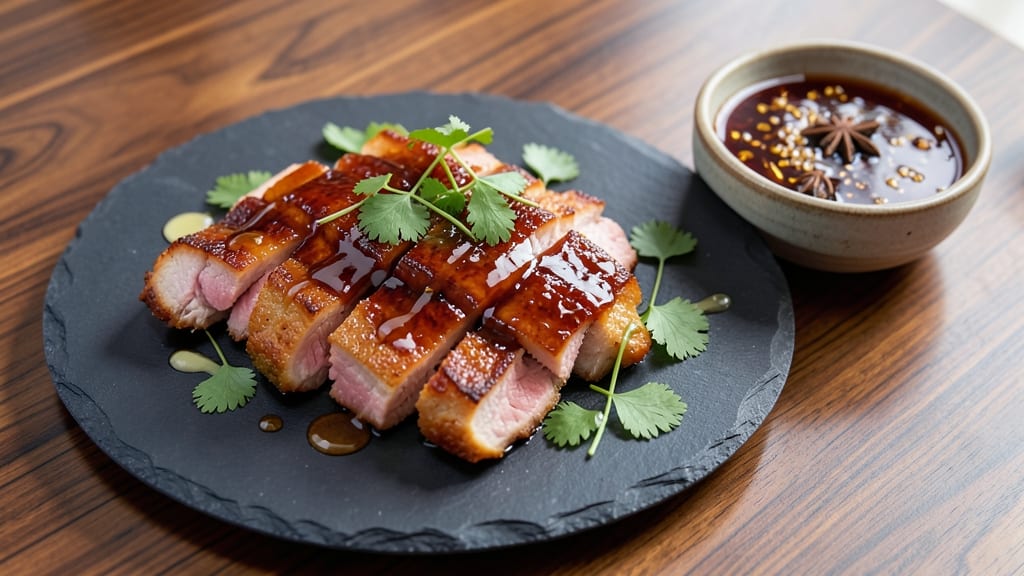
This char siu pork sauce recipe delivers the signature sticky-sweet gloss that makes Cantonese BBQ pork unforgettable. 🔥 The five-spice blend—star anise, cloves, cinnamon, fennel, and Szechuan peppercorn—creates that signature aromatic depth while honey and hoisin create the signature caramelized finish.
I perfected this sauce after years of studying traditional Chinese BBQ techniques in Charleston markets.
The beauty of this sauce lies in its versatility—it works as both a marinade and finishing glaze, ensuring your pork stays tender while developing that signature charred exterior.
The balance of sweet and savory comes from equal parts hoisin, honey, and aromatics, creating a sauce that's rich enough to stand alone but bright enough to complement any dish. I've tested this recipe countless times with different pork cuts, and it consistently delivers that signature restaurant-quality shine.
What makes this sauce truly special is how it transforms simple pork into something extraordinary. The five-spice blend infuses the meat with complex warmth, while the sticky-sweet glaze creates that signature caramelized crust that's irresistibly crispy.
This isn't just a sauce—it's the secret weapon behind authentic char siu pork that'll have your guests asking for seconds. The best part? It keeps well in the fridge for up to two weeks or can be pan-fried for instant caramelization when ready to use.
Whether you're preparing whole roasted pork or individual char siu pork slices, this sauce will elevate your dish to new heights. The instructions are straightforward, but the results are anything but ordinary—this is the kind of sauce that turns good pork into something truly exceptional.
Let's get started on creating your own batch of this iconic Cantonese glaze.
Ingredients for char siu pork sauce
Five aromatic spices, sticky-sweet balance, and that signature Cantonese shine—just 13 ingredients transform simple pork into something extraordinary.
| Ingredient | Amount | Notes |
|---|---|---|
| Hoisin Sauce 🍶 | ½ cup | Store-bought or homemade preferred |
| Raw Honey 🍯 | ½ cup | Local, unprocessed for depth |
| Light Brown Sugar 🍚 | ½ cup | Packed for accurate measurement |
| Soy Sauce 🍶 | ¼ cup | Dark soy for color enhancement |
| Rice Vinegar 🍶 | ¼ cup | Seasoned for subtle tang |
| Star Anise Pods 🌿 | 2 whole | Freshly cracked for aroma |
| Cloves 🌿 | 4 whole | Whole, lightly crushed |
| Cinnamon Sticks 🌿 | 2 whole | High-quality Ceylon preferred |
| Fennel Seeds 🌿 | 1 tbsp | Toasted for enhanced flavor |
| Szechuan Peppercorns 🌶️ | 1 tsp | Lightly toasted for tingling heat |
| Garlic Cloves 🧄 | 6 cloves | Peeled, minced fine |
| Fresh Ginger 🧅 | ¼ cup | Finely grated, peeled |
| Sesame Oil 🫒 | 1 tbsp | Toasted for nutty aroma |
The five-spice blend is non-negotiable for authentic flavor. Charleston's Asian markets carry the best whole spices—star anise, cloves, cinnamon, fennel, and Szechuan peppercorns—so stock up there if possible. I always toast my whole spices first (30 seconds in a dry pan) to wake up their flavors. For hoisin, Lee Kum Kee is my go-to, but any quality brand works. The honey should be raw and local—Charleston Bee Company has excellent options—because processed honey lacks that floral depth that makes the sauce sing. Don't skip the dark soy sauce; it's what gives char siu its signature deep red color.
No hoisin? Substitute with 2 tbsp soy sauce plus 1 tbsp molasses, though you'll lose some complexity. Running out of Szechuan peppercorns? Black pepper at half the amount adds warmth without the tingling. The garlic and ginger can be swapped for 1 tbsp garlic powder and 1 tsp ground ginger in a pinch, but fresh is always better. For a quicker version, pre-made five-spice powder works (1 tbsp), though it lacks the depth of whole spices. The sesame oil is optional but adds that signature nutty aroma—skip it if you're sensitive to strong flavors, but trust me, it's worth it.
This sauce keeps beautifully in an airtight jar in the fridge for up to 2 weeks, though it actually improves with age as the flavors meld. For longer storage, freeze it in ice cube trays—perfect for single-use portions. The sauce can be pan-fried for instant caramelization when ready to use; just heat it in a nonstick skillet over medium-high until it thickens and develops a glossy sheen. I always make extra because it disappears fast—great on rice, noodles, or even as a dipping sauce for spring rolls.
Why You'll Love This Recipe
- Pantry Magic: I swear by this sauce because it uses stuff I already have—no special shopping trips needed. That sticky-sweet combo of hoisin and honey? It’s the kind of flavor that makes you pause mid-bite.
- Sweet-Savory Balance: The brown sugar caramelizes just enough to give it that glossy, addictive sheen, while the rice vinegar cuts through the richness. Honestly, it’s the kind of sauce that makes plain rice feel like a celebration.
- Leftovers That Shine: This sauce keeps for weeks in the fridge, and it only gets better with time. I’ve used it to glaze leftover pork, drizzle over stir-fries, or even toss with noodles—no waste, just flavor.
- Weeknight Workhorse: Between us, this is my go-to when I’m too tired to cook. Toss it with store-bought pork, bake it, and boom—dinner’s done. (Yes, even on a Tuesday night.)
Step-by-step instructions for char siu pork sauce
Here's how to craft that signature sticky-sweet glaze with bold five-spice warmth.
🍳 Step 1: Toast the Spices for Depth of Flavor
Heat a dry skillet over medium heat and add the 1 tbsp fennel seeds, 1 tsp Szechuan peppercorns, 2 whole star anise pods, 4 whole cloves, and 2 whole cinnamon sticks. Toast for 2-3 minutes until fragrant and lightly golden—you'll smell that warm, earthy aroma that's the soul of char siu.
Watch carefully—the spices should just begin to color, not burn. As soon as they release their aroma (about 2 minutes), remove from heat and let cool for 1 minute. This toasting awakens their flavors and removes any bitterness. I like to crush the star anise pods lightly with the side of my knife while still warm—they'll release more of their anise notes into the sauce.
👨🍳 Step 2: Build the Sweet-Savory Base
In a medium saucepan, combine the toasted spices with the 0.5 cup hoisin sauce, 0.5 cup raw honey, 0.5 cup light brown sugar, and 0.25 cup soy sauce. Bring to a gentle simmer over medium-low heat, stirring constantly to dissolve the sugar completely—this should take about 5 minutes.
Here's where the magic happens: the honey and sugar should blend into a thick, syrupy consistency. If it's too thick after 5 minutes, add 1-2 tablespoons water to help it flow. The sauce should coat the back of a spoon but still be pourable. I know it seems like too much sugar, but trust me—this balance is what creates that perfect sticky-sweet glaze that clings to the pork.
🥘 Step 3: Infuse with Aromatics and Vinegar
Add the 0.25 cup finely grated fresh ginger, 6 cloves minced garlic, and 0.25 cup rice vinegar to the simmering mixture. Stir well and continue cooking for another 8-10 minutes until the sauce reduces by about 30%—it should thicken noticeably and become glossy.
You'll see the sauce transform from a thin syrup to a rich, velvety glaze. The ginger and garlic will mellow and blend seamlessly into the sweet-savory base. Here's the thing—don't rush this reduction. The longer it simmers, the more concentrated and complex the flavors become. I like to taste it at the 5-minute mark—it'll be sweet and bright. By 10 minutes, those flavors will deepen and meld beautifully.
🔥 Step 4: Finish with Sesame Oil for Nutty Depth
Remove the saucepan from heat and stir in the 1 tbsp toasted sesame oil. The moment you add it, you'll notice the sauce take on a beautiful golden hue and develop a rich, nutty aroma. Let the sauce sit off heat for 5 minutes to allow all the flavors to fully integrate.
Here's my pro tip: strain the sauce through a fine-mesh sieve to remove any remaining spice particles if you prefer a completely smooth texture. For extra authenticity, I like to press the strained spices lightly with a spoon to extract every last bit of flavor. The finished sauce should be thick enough to coat the back of a spoon but still glide smoothly when drizzled. If it's too thick, thin with 1 teaspoon water at a time until you reach the perfect consistency.
⏰ Step 5: Cool and Store for Maximum Flavor
Transfer the sauce to a clean glass jar and let it cool completely at room temperature. The flavors will continue developing as it cools, becoming even more complex. Once cooled, seal and refrigerate for up to 2 weeks—the sauce actually improves with time as the flavors meld.
When you're ready to use it, give the sauce a good stir. It should be glossy and thick enough to cling beautifully to char siu pork. For best results, bring it to room temperature before glazing—cold sauce won't stick as well. This sauce is incredibly versatile: use it as a glaze for pork, drizzle over rice, or even brush on tofu for a vegetarian version. The possibilities are endless once you've mastered this foundational recipe.
Pro Tips For Making Char Siu Pork Sauce
- Simmer Slow and Low: Char siu sauce needs time to marry its flavors—don’t rush it. After combining ingredients, reduce heat to a gentle simmer (just small bubbles) and let it cook uncovered for 15-20 minutes. I used to blast it on high, and the honey would burn before the sauce thickened properly. Patience here makes the difference between a sticky glaze and a balanced one.
- Balance the Sweet Early: Taste the sauce after mixing honey and brown sugar, then adjust before adding soy or vinegar. Too much sweetness later? The acid and salt won’t fix it. My grandmother’s trick: Start with half the honey, simmer, then add the rest. The sauce will thank you—trust me, I’ve over-sweetened three batches.
- Skip the Vinegar Rush: Add rice vinegar last and sparingly—it cuts through the richness, but too much turns your glaze into a sad, tangy mess. I learned this after ruining a batch for a BBQ and had to salvage it with extra hoisin. Start with 1 teaspoon, taste, then decide if you need more. (Pro move: Warm the vinegar first—it blends smoother.)
- Thicken with Hoisin, Not Cornstarch: Need a thicker sauce? Simmer in stovetop bursts—splash a little cold water, stir, then reduce again. Cornstarch kills the natural depth of hoisin. I used to reach for it out of habit, but the sauce loses its smoky, fermented soul. Let the hoisin’s starch do the work—just give it time.
Essential equipment for perfect results
Essential Tools
Start with a heavy-bottomed saucepan—I swear by my All-Clad Stainless Steel—to prevent scorching during the reduction phase. The even heat distribution ensures your sauce thickens smoothly without burning.
A fine-mesh sieve is non-negotiable for straining out spice particles if you prefer a silky texture, though I often leave them in for extra depth. 🔥
Spice Toasting Pan
Use a small cast iron skillet (like my vintage Lodge) for toasting whole spices—its heat retention ensures even toasting without burning. A wooden spoon helps stir gently while preventing metal-to-metal scraping that could create sparks.
I keep a spice grinder nearby for quick adjustments if I need powdered versions later.
Measuring Precision
Invest in a digital kitchen scale for accurate measurements of honey and sugar—volume measurements can vary with humidity. A microplane for ginger and garlic ensures fine, even grates that dissolve completely into the sauce. I also keep a small bowl handy to catch any excess liquid from freshly grated ginger.
Storage Containers
Store your sauce in amber glass jars (like Ball Mason jars) to protect it from light, which can degrade the honey's quality over time. A fine-mist spray bottle helps clean any sticky residue from the jar rim.
For longer storage, I freeze portions in silicone ice cube trays—perfect for single-use applications.
Optional Pro Tools
A thermometer helps monitor sauce temperature during reduction—aim for 200-210°F for optimal caramelization. A silicon spatula prevents scratching your saucepan while stirring. For extra authenticity, a mortar and pestle lets you crush whole spices more aggressively if you prefer a rustic texture. 💫
Nutrition facts
Frequently asked questions
Can I make this sauce without hoisin?
For a quick substitute, mix 2 tablespoons soy sauce with 1 tablespoon molasses—though you'll lose some of the sauce's depth. For better results, combine 2 tablespoons soy sauce, 1 tablespoon honey, and 1 teaspoon five-spice powder to mimic hoisin's complexity. The sauce will still work but may lack the signature umami richness.
How do I adjust the sweetness level?
Start by tasting the sauce after the initial 5-minute simmer. If it's too sweet, add 1 teaspoon rice vinegar or 1 tablespoon soy sauce to balance. For more sweetness, stir in 1 tablespoon extra honey while warm. The key is gradual adjustments—too much vinegar can overpower, while extra honey may make the sauce too sticky.
Can I use this sauce on other meats besides pork?
Yes! This versatile glaze works beautifully on chicken, duck, or even tofu for a vegetarian version. For poultry, reduce the honey slightly (0.3 cup) to prevent over-sweetness. The five-spice blend adds warmth that pairs well with gamey flavors. Just remember: darker meats like duck benefit from a longer marinating time (4+ hours) to absorb the sauce fully.
Why did my sauce turn out too thick?
This usually happens from over-reduction or incorrect ingredient ratios. Thin with 1 teaspoon water at a time, stirring constantly until you reach a glossy, pourable consistency. If the sauce was too thick from the start, reduce the sugar by 1 tablespoon next time. For immediate use, pan-fry the sauce over medium-high heat for 2-3 minutes to caramelize and thin it naturally.
How long should I marinate pork in this sauce?
For best results, marinate pork for 4-6 hours (or overnight for deeper flavor). The sauce's sticky-sweet profile works well even with shorter marinades (1 hour), but longer marinating time enhances tenderness. For grilling, apply a thin layer before cooking and glaze again during the last 2 minutes of cooking to create that signature caramelized crust.