
Main Courses
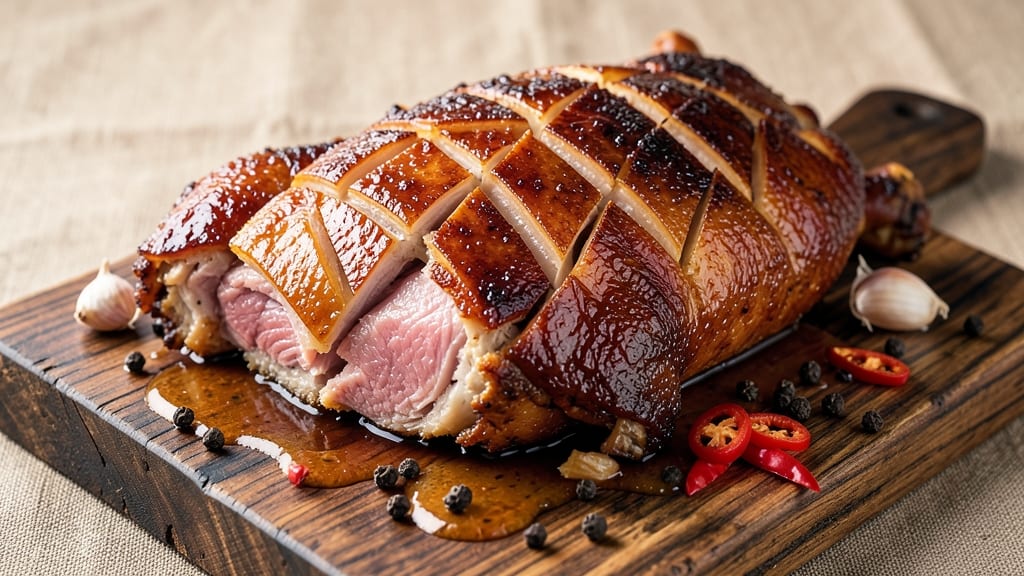
This Cebu lechon pork belly recipe brings the legendary Filipino roast to your kitchen with crispy bark and juicy pink magic—just like the golden-skinned masterpiece from Cebu City. 🔥 After years of perfecting whole-pig roasting techniques, I've adapted this iconic dish for home cooks using traditional vinegar brining and modern oven methods that deliver restaurant-quality results without a wood fire.
The secret lies in the two-stage cooking process: first, a salt-and-vinegar brine tenderizes the pork belly overnight, then slow-roasting with frequent basting creates that signature crackling skin while keeping the interior moist and pink.
This isn't your average pork roast—it's a celebration of Filipino craftsmanship that transforms a simple cut into something extraordinary.
What you'll achieve is a whole pork belly with shatteringly crisp skin that gives way to tender, melt-in-your-mouth flesh underneath. The aroma alone will have everyone gathering around your table, and the presentation—golden, glistening, and perfectly proportioned—makes it the centerpiece of any feast.
Serve it shaved thin for lechon kawali or sliced for sandwiches.
Whether you're recreating a Filipino family reunion or simply craving something special, this recipe delivers the authentic Cebu lechon experience with techniques I've refined through years of cooking whole hogs. The best part?
You can scale it down for a single belly or go all-out with a whole pig if you're feeling ambitious. Let's get started on this pork belly masterpiece.
Ingredients for cebu lechon pork belly
Pork belly takes center stage with aromatic spices and a crispy bark you'll crave.
| Ingredient | Amount | Notes |
|---|---|---|
| Pork Belly 🐖 | 4 lb | Skin-on, thick-cut preferred |
| White Vinegar 💧 | 1 cup | Distilled vinegar works too |
| Diamond Crystal Kosher Salt 🧂 | 1 cup | Fine grain preferred |
| Brown Sugar 🍯 | ½ cup | Light or dark variety |
| Garlic Cloves 🧄 | 8 cloves | Minced for marinade |
| Fresh Black Peppercorns 🌶️ | 1 tbsp | Crushed, not ground |
| Fresh Bay Leaves 🍃 | 2 whole | Dried works at half amount |
| Whole Cloves 🌿 | 4 whole | For aromatic depth |
| Extra-Virgin Olive Oil 🫒 | ¼ cup | For basting |
| Sweet Potatoes 🍠 | 2 medium | Peeled and cubed |
| Yellow Onion 🧅 | 1 whole | Sliced for serving |
| Fresh Parsley 🌿 | ¼ cup | Chopped for garnish |
| Cinnamon Sticks 🌳 | 2 whole | For aroma infusion |
The pork belly is non-negotiable for this recipe—look for thick-cut pieces with good fat cap to ensure that legendary crisp. Costco or specialty butchers often carry the best cuts, but your local grocery store's pork belly will work too. If you're feeling adventurous, ask for a whole pork belly and trim it yourself for maximum control. The skin should be thick and unbroken—this is what creates that iconic crackling bark. For the vinegar, distilled white vinegar is ideal, but apple cider vinegar adds a nice fruity note if you prefer. The kosher salt? Diamond Crystal is my go-to, but any fine-grain kosher salt will do.
No fresh bay leaves? Dried works at half the amount—just crush them lightly before adding. The garlic can be pre-minced from a jar if you're short on time, but fresh is always better. Running low on whole cloves? Ground cinnamon at one-third the amount will give you similar warmth. The sweet potatoes should be firm and vibrant—orange hue all the way through means they're ripe for roasting. For the olive oil, use something with good fruity notes—California extra-virgin is my favorite for basting. And if you're worried about the cinnamon sticks being too strong, don't be—they infuse aroma without overpowering the pork's natural flavor.
The pork belly marinade keeps for 3 days in the fridge, but I recommend using it fresh for maximum flavor. The sweet potatoes should be peeled and cubed into 1-inch pieces for even roasting. Store any leftover basting oil in a jar in the fridge for up to 2 weeks—it's perfect for drizzling over rice or vegetables. The fresh parsley stays brightest if you wrap it in damp paper towels and store it in a sealed container. This entire recipe reheats beautifully—just warm it in the oven at 300°F for 20 minutes to revive that crispy skin.
Why You'll Love This Recipe
- One-Pan Magic: Honestly, this recipe is so simple I almost feel guilty calling it a "recipe." You score the belly, rub it with salt and brown sugar, then let the oven do the heavy lifting. No flipping, no basting—just crispy, caramelized perfection with minimal effort.
- Salt-Sugar Crunch: That crispy bark? It’s all in the kosher salt and brown sugar rub—simple but ridiculously effective. The vinegar tenderizes the meat while keeping it juicy, and the garlic? Oh, it infuses just enough to make every bite sing without overpowering.
- Party in a Pan: Between us, this is my go-to for gatherings because it’s easy to double and everyone loves it. Serve it sliced thin over rice for a casual meal or as a centerpiece for a feast—no one will guess how little work it took.
Step-by-step instructions for Cebu lechon pork belly
Here's how to transform simple ingredients into Cebu-style pork belly with irresistible crispy bark and melt-in-your-mouth tenderness.
👨🍳 Step 1: Cure the Pork Belly Overnight
In a large bowl, combine the 1 cup white vinegar, 1 cup Diamond Crystal kosher salt, 0.5 cup brown sugar, 8 minced garlic cloves, 1 tbsp crushed fresh black peppercorns, 2 whole bay leaves, 4 whole cloves, and 2 cinnamon sticks. Stir until the salt and sugar dissolve completely.
Place the 4 lb pork belly skin-side down in a large baking dish. Pour the curing mixture over the pork belly, making sure it's completely submerged. Cover with plastic wrap and refrigerate for 12-24 hours. This step is crucial—it breaks down the proteins and creates that signature pink, tender interior while preparing the skin for maximum crispiness.
🔥 Step 2: Rinse and Dry Thoroughly
After curing, remove the pork belly from the refrigerator and rinse it under cold water for 2-3 minutes, gently rubbing the skin to remove any residual cure. This step prevents the skin from becoming too salty and ensures even cooking.
Pat the pork belly completely dry with paper towels, then place it on a wire rack set over a baking sheet. Let it air-dry in the refrigerator for 4-6 hours. The skin should feel tight and leathery—this is your signal that it's ready for roasting. Pro tip: I like to turn the pork belly every hour during this drying period to ensure even drying on all sides.
🔥 Step 3: Roast to Golden Perfection
Preheat your oven to 300°F. Place the dried pork belly on a rack in a roasting pan, skin-side up. Roast for 3 hours, basting with 0.25 cup extra-virgin olive oil every 30 minutes to keep the skin moist and prevent cracking. Here's the thing—don't rush this step. The low temperature ensures the pork belly cooks evenly without drying out.
After 3 hours, increase the oven temperature to 425°F and continue roasting for another 30-45 minutes, basting every 10 minutes, until the skin is deep golden brown and crispy. You'll know it's ready when the skin releases easily from the fat underneath and the internal temperature reaches 195-205°F in the thickest part of the meat.
🥘 Step 4: Prepare the Sweet Potatoes and Onions
While the pork belly roasts, peel and cut the 2 medium sweet potatoes into 1-inch cubes and toss them with 1 tbsp olive oil, 1 tbsp brown sugar, and a pinch of salt. Spread them on a baking sheet and roast at 400°F for 25-30 minutes until tender and caramelized.
Slice the 1 whole yellow onion into ¼-inch thick rings and sauté them in a skillet with 1 tbsp olive oil over medium heat for 5-7 minutes until golden brown. These sweet potatoes and caramelized onions make the perfect accompaniment to the rich, crispy pork belly.
⏰ Step 5: Rest and Serve with Fresh Garnish
Remove the pork belly from the oven and let it rest on a cutting board for 15-20 minutes before slicing. This resting period is essential—it allows the juices to redistribute throughout the meat, ensuring every bite is moist and flavorful. The skin will remain crispy, while the interior stays perfectly pink and tender.
Slice the pork belly into ½-inch thick slices and arrange on a platter. Garnish with 0.25 cup chopped fresh parsley and serve immediately with the roasted sweet potatoes and caramelized onions. The contrast of crispy skin, juicy pink meat, and sweet sides creates a truly unforgettable dining experience.
Pro Tips For Making Cebu Lechon Pork Belly
- SCORE THE FAT: Use a sharp knife to cut shallow crisscross lines (about ¼-inch deep) in the pork belly’s fat cap before seasoning. This lets the vinegar and salt penetrate deeper, giving you that signature crispy, caramelized crust without burning the skin—trust me, the difference is night and day.
- SALT IN LAYERS: Don’t dump all the Diamond Crystal kosher salt at once. Start with a heavy dry rub the night before, let it sit uncovered in the fridge, then re-rub before cooking. The salt draws out moisture, which crisps the skin, but doing it twice means even coverage—no dry spots, no soggy bits.
- VINEGAR BY STAGES: Pour half the white vinegar into the roasting pan before adding the pork, then save the rest for basting. The initial splash helps break down the fat and tenderize the meat while it sears, but splashing it on too early just steams the pork instead of crisping it—timing matters.
- GARLIC PASTE, NOT WHOLE CLOVES: Mince those garlic cloves into a paste with a pinch of salt before mixing with brown sugar and vinegar. Whole cloves burn or get lost in the crust; a smooth paste blends evenly and caramelizes right into the glaze—no digging for flavor at the end.
Troubleshooting great cebu lechon pork belly
Skin Not Crispy
If your pork belly skin isn't turning crispy, the issue is likely moisture—either from insufficient drying or uneven basting. First, pat the skin completely dry after rinsing, then air-dry uncovered in the fridge for 6-8 hours (not less).
For extra crispiness, baste with more olive oil (try ¼ cup + 1 tbsp) and increase the final temp to 450°F for 15 minutes with a broiler finish.
I’ve found that rotisserie-style roasting (if your oven has it) helps too—just set the pork belly on the spit for the last 30 minutes at 425°F. 🔥
Pale Pink Meat
The signature pink interior comes from the vinegar brine, but if yours turns gray, you likely overcooked or under-brined. For next time, extend the brine to 24 hours and use a meat thermometer—pull the pork at 195-205°F internal temp (not 212°F).
If it’s already overdone, try shaving thin slices for lechon kawali and serving with sweet and sour sauce to balance the texture. I’ve salvaged tough pork this way—it’s still delicious! 💫
Uneven Cooking
Uneven doneness usually means thick and thin spots on the belly. Trim any excess fat (leave a ¼-inch layer) and score the skin in a diamond pattern before curing—this helps render fat evenly.
For roasting, place the pork belly on a rack (not directly on the pan) to allow air circulation. If one side cooks faster, rotate the pan halfway through the 300°F stage.
Pro tip: Use a digital probe thermometer to check multiple spots—the thickest part near the bone is your guide. ⚡
Excessive Fat Rendering
Too much fat pooling under the pork belly? Don’t drain it—that golden fat is liquid gold for basting! Instead, spoon it back onto the skin every 10 minutes during the final 425°F stage.
For a cleaner presentation, line your roasting pan with foil and poke holes to drain excess fat. Save the rendered fat in a jar—it’s perfect for frying rice or searing proteins. I’ve used it to make homemade lechon fat chips (trust me, they’re addictive). 💛
Soggy Skin After Resting
Resting too long (over 20 minutes) can make the skin lose its crisp. To fix this, slice immediately after resting and reheat skin-side down on a wire rack in a 400°F oven for 5-7 minutes before serving.
For next time, slice just before serving—the skin stays crisp longer this way. If you’re prepping ahead, keep the pork belly whole and re-crisp in the oven when ready to serve. 🍴
Nutrition facts
Frequently asked questions
Can I make Cebu lechon pork belly without a vinegar brine?
The vinegar brine is essential for that signature pink interior and tender texture, but you can substitute with a lemon juice brine (same ratio) or buttermilk marinade for 8-12 hours. For best results, combine 1 cup buttermilk with 1 cup salt and 0.5 cup brown sugar—this mimics the acidity while adding richness. The flavor won't be identical, but it'll still yield a juicy roast with crispy skin.
How do I adjust this recipe for a whole pig?
For a whole pig (typically 12-18 lbs), scale up the brine ingredients proportionally: 2 cups vinegar, 2 cups salt, 1 cup brown sugar, and double the spices. Use a large roasting pan or spit and increase roasting time to 4-5 hours at 300°F followed by 1 hour at 425°F. The key is basting every 30 minutes and using 1 cup olive oil total for basting. For even cooking, rotate the pig every hour.
What's the best way to reheat leftover Cebu lechon?
To revive crispy skin, slice the pork belly and reheat on a wire rack in a 400°F oven for 5-7 minutes—this prevents sogginess. For leftovers, wrap tightly in foil and reheat at 300°F for 20 minutes, then crisp again in the oven or under a broiler for 2-3 minutes. Never microwave—it turns the skin rubbery. Pro tip: Store slices in an airtight container with a paper towel to absorb moisture.
Can I use pork shoulder instead of pork belly?
Pork shoulder won't give you the same crispy bark, but you can adapt it by adding an extra layer of fat (wrap with bacon or pork fat) and increasing the final high-heat stage to 450°F for 20 minutes. The meat will be more tender but less fatty. For authentic results, stick with pork belly—its fat cap is what creates that legendary crackling skin. If you're set on shoulder, consider pork butt instead, as it has more marbling.
How long can I keep leftover lechon fat?
Rendered lechon fat stays fresh in the fridge for 2-3 weeks in an airtight container. For longer storage, freeze it in ice cube trays (perfect for small portions) or a jar for up to 6 months. The fat solidifies when cold—just let it sit at room temperature for 10 minutes before using. It's amazing for frying rice, searing meats, or even making homemade chips (try tossing thin fat slices in flour and frying until golden).