
Main Courses
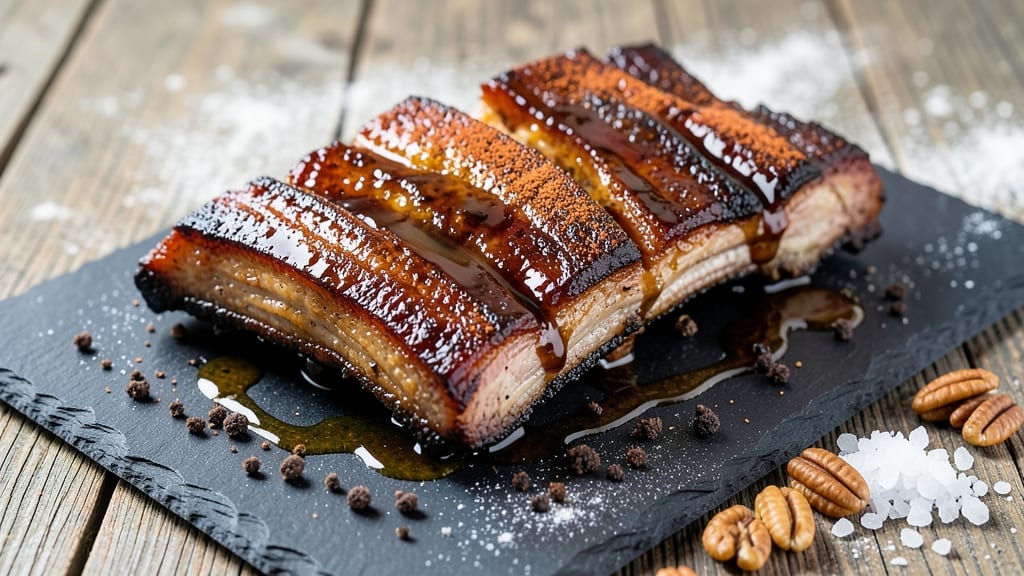
This caramelized pork ribs recipe delivers fall-off-the-bone tenderness with a smoky-sweet glaze that seals in every drop of juicy goodness. 🔥 After years of perfecting the balance between slow-cooked tenderness and high-heat caramelization, I've developed a method that transforms tough ribs into melt-in-your-mouth perfection—no matter your skill level in the kitchen.
The secret lies in the two-stage cooking process: starting with a low-and-slow braise to break down collagen, then finishing with a dry-heat sear to create that coveted caramelized bark.
We'll use a simple dry rub of brown sugar, smoked paprika, and coffee grounds to build flavor depth, while a final glaze of apple cider vinegar and honey creates that signature sticky-sweet crust that makes these ribs irresistible.
What you'll end up with is ribs that are tender enough to cut with a fork, with a crust so caramelized it practically dissolves on your tongue.
The smoky-sweet glaze isn't just for show—it locks in moisture while adding layers of complexity that turn a simple pork cut into a showstopping centerpiece for any meal.
Perfect for weekend gatherings, holiday feasts, or when you want to impress without spending hours in the kitchen. The method scales beautifully, so whether you're feeding a crowd or just craving a satisfying meal, these ribs will deliver restaurant-quality results with minimal fuss.
Ingredients for caramelized pork ribs
Four pounds of meaty ribs meet smoky-sweet glaze magic for ribs that practically melt in your mouth.
| Ingredient | Amount | Notes |
|---|---|---|
| Pork Ribs (Baby Back) 🍖 | 4 lb | Bone-in, meaty sections preferred |
| Brown Sugar 🍚 | ½ cup | Light or dark variety |
| Smoked Paprika 🌶️ | 2 tbsp | For deep smoky flavor |
| Ground Coffee ☕ | 1 tbsp | Freshly ground preferred |
| Kosher Salt 🧂 | 1 ½ tbsp | Diamond Crystal preferred |
| Black Peppercorns 🌶️ | 1 tsp | Freshly cracked for texture |
| Apple Cider Vinegar 🍎 | ¼ cup | For tangy balance |
| Honey 🍯 | ¼ cup | Wildflower preferred |
| Yellow Onion 🧅 | 1 whole | Sliced for braising |
| Garlic Cloves 🧄 | 6 cloves | Smashed for infusion |
| Beer (Dark or Amber) 🍺 | 1 cup | For moisture and depth |
| Butter 🧈 | 2 tbsp | Unsalted for glaze |
| Fresh Rosemary 🌿 | 2 sprigs | For aromatic depth |
The ribs are the star—baby back cuts with meaty sections are ideal, but spare ribs work too. Look for good marbling at Costco or your local butcher shop for the best flavor. Freshly ground coffee adds depth, so buy small amounts and use it within a month. The Diamond Crystal kosher salt is a game-changer for even seasoning—it dissolves better than table salt. For the beer, dark amber ales like Guinness or stouts add richness, but any beer in your fridge works in a pinch.
No smoked paprika? Substitute half the amount of regular paprika plus a pinch of liquid smoke—it’s a solid backup. Running low on honey? Maple syrup works beautifully at a 1:1 ratio. The apple cider vinegar can be swapped for balsamic vinegar if needed. For extra tenderness, pound the ribs lightly before applying the rub—it helps the seasoning stick and speeds up cooking. If you’re short on time, skip the beer and use extra broth instead.
The ribs keep beautifully—reheat in the oven at 300°F with extra glaze for that sticky texture. Store leftovers in an airtight container for up to 5 days in the fridge. For longer storage, freeze for 3 months—just thaw overnight in the fridge before reheating. The glaze can be made ahead and stored in the fridge for up to 2 weeks, so you’re always ready for a quick finish.
Why You'll Love This Recipe
- Five-Ingredient Magic: I swear, this recipe is the kind of dish that makes you question why you ever bought a rub kit. Brown sugar and smoked paprika alone? That’s your flavor foundation—no fuss, just deep, smoky sweetness that sticks to every rib like it’s been there forever.
- Coffee Crust Secret: Honestly, the ground coffee isn’t just for depth—it’s the game-changer. That little pinch turns the ribs from good to "I’d drive 20 minutes for this" by adding an earthy bite that cuts through the sugar’s richness. (Yes, even on a Tuesday night.)
- Leftovers That Last: Between us, these ribs taste better the next day—crispier edges, more caramelized, like they’ve been slow-cooked twice. Wrap them in foil, reheat in the oven for 10 minutes, and suddenly you’ve got a weeknight dinner solved for three meals.
- Tailgate to Tuesday: I’ve served these at backyard BBQs, game days, and lazy Sundays with zero shame. The brown sugar glaze caramelizes into a sticky, finger-licking finish, so you can eat them straight off the bone or slice them for sandwiches. No judgment here.
Step-by-step instructions for caramelized pork ribs
Here's how to transform tough ribs into fall-off-the-bone tender meat with a glossy, smoky-sweet glaze.
👨🍳 Step 1: Prepare the Dry Rub and Marinate the Ribs
In a medium bowl, combine the 0.5 cup brown sugar, 2 tbsp smoked paprika, 1 tbsp ground coffee, 1.5 tbsp kosher salt, and 1 tsp black peppercorns. Mix until the sugar is evenly distributed and the spices form a coarse, aromatic paste. This blend creates the perfect balance of sweetness, smokiness, and depth.
Pat the 4 lb pork ribs dry with paper towels—this is crucial for crispy bark later. Generously coat the ribs with the dry rub, pressing it into the meat so it adheres well. Place the ribs on a wire rack set over a baking sheet (this allows air circulation for even cooking) and refrigerate uncovered for at least 4 hours or overnight. The longer they marinate, the more flavorful the meat will be.
🔥 Step 2: Sear the Ribs for Maximum Flavor
Preheat your oven to 325°F. Remove the ribs from the fridge and let them sit at room temperature for 30 minutes—this ensures even cooking. Heat a large oven-safe skillet or Dutch oven over medium-high heat. Add the ribs and sear for 3-4 minutes per side until deeply browned in spots. You're building flavor through the Maillard reaction here, so don't rush this step.
Once browned, transfer the ribs to a plate and set aside. In the same skillet, add the 1 whole yellow onion (sliced into wedges) and 6 cloves garlic cloves (smashed). Sauté for 2-3 minutes until the onion softens and the garlic becomes fragrant. This aromatic base will infuse the braising liquid with depth.
🍳 Step 3: Braise with Beer and Vinegar
Pour in the 1 cup dark or amber beer and scrape up any browned bits from the bottom of the pan—this releases flavor that would otherwise go to waste. Add the 0.25 cup apple cider vinegar and 0.25 cup honey, then return the ribs to the skillet. The vinegar cuts through the sweetness, while the honey adds caramelization during the braise.
Bring the liquid to a gentle simmer, then cover the skillet tightly with a lid or foil. Transfer to the preheated 325°F oven and braise for 2 hours. The ribs should be tender enough to pull apart with a fork at this stage, but they'll become even more tender as they rest. Here's the thing—don't peek! Every time you open the lid, you lose heat and steam, which can dry out the meat.
🥘 Step 4: Finish with Rosemary Butter Glaze
Remove the ribs from the oven and increase the heat to 400°F. In a small saucepan, melt the 2 tbsp butter over medium heat, then add the 2 sprigs fresh rosemary. Let it infuse for 1 minute, then pour this fragrant butter over the ribs. The rosemary adds a piney aroma that pairs beautifully with the smoky-sweet flavors.
Return the ribs to the oven (broiler setting if your oven has one) for 5-7 minutes to caramelize the glaze. Watch closely—you want the glaze to bubble and turn a deep amber color, but not burn. The ribs are done when the glaze is glossy and sticky, and the meat is fork-tender with a dark, crackly bark.
⏰ Step 5: Rest and Serve
Transfer the ribs to a cutting board and let them rest for 10-15 minutes before serving. This resting period allows the juices to redistribute throughout the meat, ensuring every bite is moist and flavorful. The glaze will thicken slightly as it cools, creating a perfect balance of sweet, smoky, and tangy flavors.
Slice the ribs between the bones and serve with extra glaze spooned over the top. The contrast of tender meat with the caramelized crust is what makes this dish unforgettable. Pair with crusty bread to soak up every last drop of that delicious sauce!
Pro Tips For Making Caramelized Pork Ribs
- CRANK THE HEAT FIRST: Start your ribs on the hottest burner or grill—yes, even if they’re baby backs—until they sear deep brown in 3-4 minutes. I learned this the hard way after making ribs that tasted like they were slow-cooked in their own juices instead of caramelized. The Maillard reaction kicks in fast here, and that’s what builds the flavor foundation for the brown sugar glaze.
- GRIND THE COFFEE FRESH: Skip the pre-ground stuff unless you’re okay with bitterness creeping in. Freshly ground coffee (medium-dark roast) adds depth without overpowering, and it dissolves better into the caramelized sugar. I used to use instant, and the ribs always tasted like they were missing something—turns out, it was the aromatic oils from freshly cracked beans.
- DON’T DROWN THE SUGAR: When mixing brown sugar with the ribs, use just enough liquid (like apple cider vinegar or broth) to make a thick paste—not a glaze. Too much liquid = sticky mess that steams the ribs instead of caramelizing. My first attempt turned into a syrup bath, and the ribs ended up soggy. Aim for a ratio of 1 part liquid to 2 parts sugar by volume.
- LET THEM REST—REALLY: After cooking, tent the ribs with foil and walk away for at least 10 minutes. I know, it’s tempting to cut into them immediately, but the residual heat will turn your perfectly caramelized crust into a sad, sticky glop. This also lets the meat fibers relax, so the first bite isn’t a chewy surprise. (Yes, even if you’re starving.)
Regional styles of this dish
Georgia Pitmaster Style
In Georgia, ribs are all about bold, smoky flavors with a touch of sweetness—just like my granddaddy used to make. Here, we swap the apple cider vinegar for ½ cup tomato paste and add 1 tbsp hot sauce to the braising liquid.
The heat balances the sugar perfectly, creating that signature Georgia tang. I like to finish these ribs with a sprinkle of crushed red pepper flakes right before serving for an extra kick. 🌶️
Charleston Lowcountry Twist
Charleston's version leans into coastal flavors with a ½ cup shrimp stock replacing the beer in the braise. Add 2 bay leaves and 1 tsp Old Bay seasoning to the rub for that signature Lowcountry profile.
The shrimp stock adds a subtle briny depth that pairs beautifully with the caramelized crust. Serve these ribs with she-crab soup on the side for a true Charleston feast.
Texas BBQ Approach
Texas pitmasters take ribs to the next level with a dry rub that includes 1 tbsp chili powder and 1 tsp cayenne pepper—no glaze needed. After the braise, these ribs get wrapped in butcher paper and smoked at 275°F for 1 hour to develop that iconic Texas bark.
The key difference? We skip the honey and use ¼ cup molasses instead for a deeper, more robust sweetness. 🔥
Atlanta Smoky Pig Style
At my restaurant, we use a reverse sear method for extra tenderness. First, we sous vide the ribs at 165°F for 6 hours in a liquid made from beef stock, brown sugar, and smoked paprika.
Then we finish with a quick sear in a 400°F oven for 10 minutes to create that caramelized crust. The result? Ribs that are so tender they practically dissolve in your mouth while maintaining that perfect bark.
Southeast Fusion Variation
For a modern twist, I like to add 1 tbsp gochujang (Korean chili paste) to the glaze for a sweet-spicy kick. This fusion style works beautifully with the smoky-sweet base and adds a layer of complexity that surprises and delights.
Serve with pickled jalapeños and kimchi for a flavor-packed Southeast-meets-Korean experience. 🌟
Nutrition facts
Frequently asked questions
Can I use spare ribs instead of baby back ribs?
Spare ribs work beautifully, though they'll have more fat and connective tissue. For best results, increase the braising time by 30-45 minutes (aim for 2.5 hours total) since they need extra time to break down. The caramelization process remains the same, but spare ribs benefit from an additional 15 minutes in the final high-heat stage to render all that fat.
Why do my ribs turn out dry even after following the recipe?
Most common causes are opening the oven too early (losing moisture) or overcooking. Always keep the lid on during braising—every peek releases steam! Also, ensure your ribs are fully submerged in liquid during the braise. If using a Dutch oven, add a splash of water or broth if the liquid level drops below halfway up the ribs.
Can I make this recipe in a slow cooker?
Yes, but with adjustments for texture. Brown the ribs first in a skillet, then transfer to the slow cooker with all braising ingredients. Cook on low for 6-8 hours (not high—it won't develop enough bark). For caramelization, finish in a 425°F oven for 10-15 minutes with the rosemary butter glaze. The meat will be tender but less crispy than oven-braised ribs.
How do I know when the glaze is perfectly caramelized?
The glaze should be deep amber with small bubbles forming at the edges—like honey that's been heated just right. Test by touching it lightly: it should feel warm but not scorching. If it's too pale, return to the oven for 2-3 minutes; if it's dark brown/black, it's burned. The perfect glaze coats the ribs like lacquer but remains glossy, not sticky or rubbery.
What's the best way to reheat leftovers?
Wrap ribs tightly in foil with a spoonful of extra glaze, then reheat at 300°F for 20-25 minutes. The foil traps moisture, preventing dryness. For extra crispiness, broil for 3-5 minutes at the end. Never microwave—it turns the glaze rubbery. Store leftovers in an airtight container for up to 5 days or freeze for 3 months.