
Main Courses
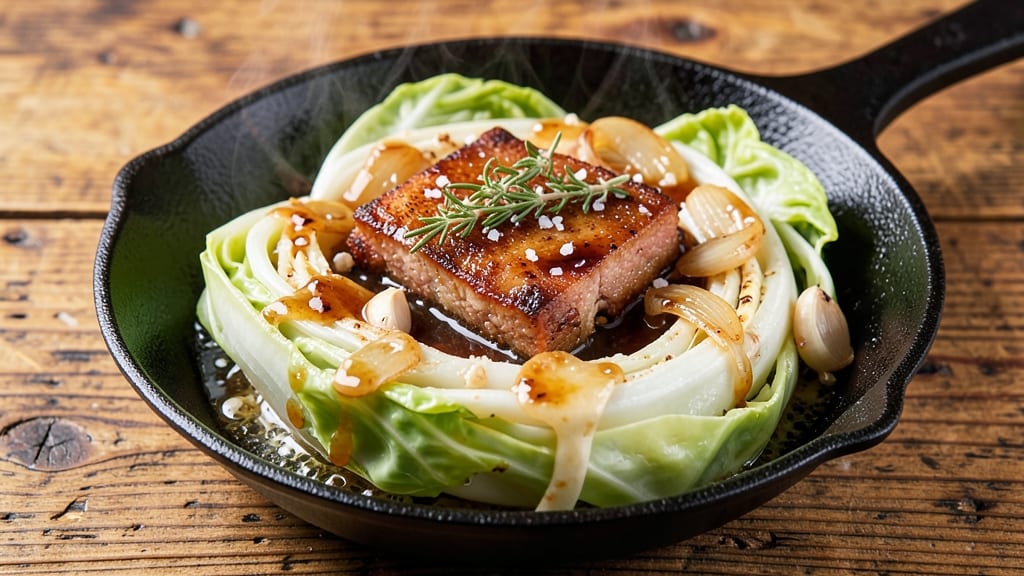
This Southern-style cabbage and salt pork recipe brings the kind of hearty, braised comfort that reminds me of my grandmother's kitchen. The rich, salty pork melts into tender cabbage leaves, creating a dish that's equal parts satisfying and nostalgic.
I've perfected this technique over years of cooking for crowds at The Smoky Pig, where pork is our foundation.
The beauty of this recipe lies in its simplicity—just a few ingredients that work together through slow braising. Salt pork adds deep, savory flavor while keeping the dish rich without being heavy, and the cabbage softens into a perfect texture that soaks up all that delicious pork fat.
This method preserves the natural sweetness of the cabbage while developing complex, caramelized notes.
What you'll end up with is a dish that's perfect for family dinners, holiday gatherings, or even a cozy weeknight meal. The aroma alone will have everyone gathering around the table, and each bite delivers that perfect balance of smoky, salty pork and tender cabbage.
It's the kind of comfort food that feels like coming home.
Serve with cornbread or crusty bread to soak up every last drop of that flavorful braising liquid. The leftovers actually taste better the next day as the flavors meld even more. This is Southern cooking at its finest—simple, hearty, and impossible to resist.
Ingredients for cabbage and salt pork
Just twelve ingredients for that soul-warming Southern braised cabbage you'll crave forever.
| Ingredient | Amount | Notes |
|---|---|---|
| Green Cabbage 🥬 | 2 lb | Heads cut into wedges, core removed |
| Salt Pork 🥓 | 1 lb | Thinly sliced, rind removed |
| Yellow Onion 🧅 | 1 whole | Thickly sliced, white part only |
| Garlic Cloves 🧄 | 4 cloves | Smashed, not minced |
| Apple Cider Vinegar 🍎 | ¼ cup | For tangy depth |
| Brown Sugar 🍯 | ½ cup | Light or dark, packed |
| Black Peppercorns 🌶️ | 1 tsp | Crushed, not ground |
| Dried Thyme 🌿 | 1 tsp | Or 1 tbsp fresh thyme |
| Bay Leaves 🍃 | 2 whole | Removed before serving |
| Salt 🧂 | 1 ½ tsp | Kosher or sea salt |
| Vegetable Oil 🫒 | 2 tbsp | For searing pork |
| Water 💧 | 1 cup | Or chicken stock for depth |
The salt pork is the heart of this dish—look for thick-cut slices from the deli section (the kind with visible marbling). Butcher shops often have the best quality, but most grocery stores carry it too. If you can't find salt pork, smoked bacon works in a pinch, but it won't have that same rich, salty depth. The cabbage should be firm and heavy for its size—green or purple varieties both work, but green holds up better to braising. I always buy a couple extra pounds because it's so versatile in Southern cooking.
No apple cider vinegar? White vinegar or lemon juice will work, though the flavor won't be quite as complex. Fresh thyme is ideal, but dried at one-third the amount is perfectly fine—just make sure it's not old and dusty. The brown sugar can be swapped for white sugar or even maple syrup, though brown gives that classic caramelized note. For extra richness, add a splash of Worcestershire sauce (just 1 tsp)—it's a secret weapon in Southern braises. And if you're feeling fancy, a pinch of smoked paprika adds that subtle smokiness.
This dish tastes even better the next day, so make it ahead if you can. Store in the fridge for up to 5 days, or freeze for 3 months—the flavors deepen over time. The braising liquid is liquid gold, so save it all for soups or gravies. If you have leftovers, reheat gently with a splash of water or broth to keep it from drying out. And trust me, everyone will ask for seconds—this is the kind of dish that disappears fast.
Why You'll Love This Recipe
- One-Pot Magic: I swear by this recipe when I’m too tired to scrub pots—just chop the cabbage, sear the salt pork in the same pan, and let it simmer. That salty, caramelized pork fat renders right into the cabbage, turning it tender without extra effort.
- Salty-Sweet Crunch: The salt pork adds this unreal depth—smoky, fatty, and just salty enough to make your taste buds dance. Toss in a splash of apple cider vinegar at the end, and suddenly it’s bright, tangy, and way more exciting than plain cabbage ever was.
- Lunchbox Hero: This keeps perfectly for days, which means I can make a big batch on Sunday and pack leftovers for work. (Yes, even my picky coworkers ask for seconds.) The flavors get richer overnight, and it reheats like a dream—no sad, mushy veggies here.
- Pocketbook Win: Salt pork stretches further than fresh bacon, and a whole cabbage costs next to nothing. I feed four people for under $10, and honestly? That crispy pork, the way it clings to the cabbage leaves—it’s the kind of meal that makes you wonder why you ever ordered takeout.
Step-by-step instructions for Southern-style cabbage and salt pork
This braised cabbage delivers rich, smoky flavors with tender salt pork—simple steps for maximum comfort.
Sear the Salt Pork Until Golden
Heat a large Dutch oven over medium-high heat and add the 2 tablespoons vegetable oil. Once shimmering, add the 1 pound salt pork in a single layer, being careful not to overcrowd. Let it sear undisturbed for 3-4 minutes until the edges turn golden brown and crispy.
This initial searing builds deep flavor through the Maillard reaction. If the pork releases easily from the pan, it's ready to flip. Work in batches if needed, but keep the heat steady—rushing this step leads to greasy pork instead of crispy edges. Once all pieces are golden, remove them with tongs and set aside, leaving all that rendered fat in the pot.
Sauté Onions and Garlic for Flavor Foundation
In the same Dutch oven (no need to wipe it clean—those browned bits are pure flavor), add the 1 whole yellow onion sliced thickly. Cook over medium heat for 5-6 minutes until softened and beginning to caramelize at the edges. Add the 4 smashed garlic cloves and cook for another 30 seconds until fragrant.
Here's the thing—don't rush this step. The onions should develop a deep golden color, which adds sweetness and complexity to the dish. If they're still pale, keep cooking until they're properly caramelized. The garlic should smell pungent and sweet, not burnt. This aromatic base is what transforms simple cabbage into something extraordinary.
Build the Braising Liquid
Add the 1.5 teaspoons salt, 1 teaspoon black peppercorns, 1 teaspoon dried thyme, and 2 whole bay leaves to the pot. Stir everything together for 30 seconds to toast the spices slightly. Then pour in the 1 cup water, scraping up any browned bits from the bottom of the pot with a wooden spoon.
Bring the mixture to a gentle simmer over medium heat, then reduce heat to low. Add the 0.5 cup brown sugar and 0.25 cup apple cider vinegar, stirring to dissolve the sugar completely. This creates a sweet-tangy braising liquid that tenderizes the cabbage and salt pork while adding depth of flavor. Let it simmer uncovered for 5 minutes to allow the vinegar's acidity to mellow slightly.
Braise the Cabbage Until Tender
Return the salt pork to the pot, then nestle in the 2 pounds green cabbage wedges, cut-side down. Pour enough of the braising liquid over the cabbage to come about halfway up the wedges—you should have about 1 cup remaining. Cover the pot tightly with a lid and transfer to a 350°F oven.
Braise for 1 hour and 15 minutes until the cabbage is fork-tender and the salt pork is cooked through. You'll know it's done when the cabbage wedges collapse easily when pierced with a fork and the pork is no longer pink in the center. If the liquid reduces too much before then, add a splash of water to keep everything moist. The goal is tender cabbage with crispy pork that falls apart at the touch.
Rest and Serve with Crispy Edges
Remove the pot from the oven and let it rest covered for 10 minutes. This resting period allows the juices to redistribute throughout the dish, ensuring every bite is moist and flavorful. Before serving, remove the 2 bay leaves—they've done their job and can be quite bitter if left in.
Transfer the cabbage and pork to a serving platter, spooning the braising liquid over the top. The cabbage should be tender with slightly crispy edges from the braising process, and the salt pork should be perfectly cooked with tender meat and crispy edges. Serve immediately with crusty bread to soak up all that delicious braising liquid. This dish tastes even better the next day, so consider making extra for leftovers!
Pro Tips For Making Cabbage And Salt Pork
- CRISP THE PORK FIRST: Salt pork straight from the block is tough and greasy—no one wants to chew through that. Slice it into ¼-inch strips, pat dry with paper towels, and sear in a cold skillet over medium heat for 3-4 minutes per side until golden. The extra effort removes excess fat and builds flavor that’ll carry through the whole dish.
- SHRED CABBAGE THIN: Thick cabbage wedges turn mushy and sad. Use a sharp knife to slice the core off, then cut the head into quarters and shred each quarter lengthwise into paper-thin strips. The more surface area, the faster it’ll soften without turning into a soggy mess.
- RINSE THE PORK: Salt pork is, well, salty. Before cooking, rinse the slices under cold water and pat them dry. This washes away some of the brine so you don’t end up with a dish that tastes like a pickle factory exploded.
- SAVE THE VINEGAR WATER: After adding apple cider vinegar to the pot, don’t pour out the liquid—it’s packed with flavor. Let it simmer into the cabbage and pork instead of draining it. That tangy liquid is what keeps the dish bright and balanced, not just a bland stew.
Storing and reheating your leftovers
Refrigerator Storage
Let your cabbage and salt pork cool completely before transferring to an airtight container—I use glass Pyrex with snap-on lids for maximum freshness. Store at 40°F or below for up to 5 days, but honestly, it tastes even better the next day as the flavors meld together.
The braising liquid becomes like liquid gold—save it for soups or gravies later. 💛
Freezer Preparation
For longer storage, freeze in quart-sized freezer bags with 1 inch headspace to prevent expansion cracks. I like to portion it into 2-cup servings so you can thaw just what you need.
Freeze for up to 3 months, though I’ve had it last 4 months without quality loss. Label with the date and reheating instructions—trust me, you’ll forget! ❄️
Stovetop Reheating
My preferred method is stovetop because it preserves the best texture. Pour the cabbage and pork into a heavy-bottomed pot, add ¼ cup water or chicken stock, and heat over medium-low heat for 10-15 minutes.
Stir occasionally and taste—you may need ½ teaspoon extra salt since flavors concentrate during freezing. Keep it covered until piping hot. 🔥
Microwave Revival
For quick meals, transfer to a microwave-safe dish with a splash of water or broth. Cover with a damp paper towel and heat on 70% power for 3-4 minutes, stirring halfway.
If it looks dry, add another 1 tablespoon liquid and continue heating in 30-second bursts until reaching 165°F internal temperature. The cabbage will soften perfectly while retaining its smoky pork flavor. 💡
Oven Refresh
Preheat your oven to 350°F and transfer the cabbage and pork to a baking dish with a little braising liquid. Cover with foil and bake for 20-25 minutes until heated through.
This method is great for warming up larger batches—just check the internal temperature of the pork to ensure it’s safe. The oven’s dry heat helps crisp up any softened edges. 🌡️
Pro Tip for Leftovers
If your leftovers seem dry, don’t toss them! Add 2 tablespoons of the reserved braising liquid and reheat. The salt pork’s rendered fat will re-moisten the cabbage, making it just as tender as the first serving.
I always make extra because this dish disappears faster than you’d think—especially when cornbread is on the table. 🍽️
Nutrition facts
Frequently asked questions
What's the best way to choose salt pork for this recipe?
Look for thick-cut slices from the deli section with visible marbling—this ensures maximum flavor and tenderness. Butcher shops often carry the best quality, but most grocery stores stock it too. If you can't find salt pork, smoked bacon works in a pinch, though it won't have that same rich, salty depth. Avoid pre-sliced bacon designed for breakfast—it's too thin and lean for braising.
Can I substitute regular bacon for salt pork?
While you can use regular bacon in a pinch, it won't deliver the same deep, salty flavor that salt pork provides. For the closest substitute, try thick-cut smoked bacon—it has more fat and a similar smoky profile. If using bacon, reduce the added salt by ½ teaspoon since bacon is already heavily salted. The texture will be slightly different but still delicious.
How do I know when the cabbage is tender enough?
The cabbage is perfectly tender when it collapses easily when pierced with a fork and the edges are slightly crispy. You should also see the cabbage wedges softening noticeably after 1 hour of braising. If you're unsure, cut into a wedge—it should be fork-tender with no resistance. Overcooking can make it mushy, so check it at 1 hour and 15 minutes as directed.
Why does my braising liquid reduce so quickly?
This happens when the oven temperature is too high or the lid isn't sealed tightly. Keep the oven at 350°F and ensure your Dutch oven has a tight-fitting lid. If the liquid reduces too much, simply add ¼ cup water or broth to maintain moisture. The goal is tender cabbage, not dry—don't be afraid to add a little extra liquid if needed during braising.
Can I make this recipe in a slow cooker instead?
Sear the pork and sauté the onions/garlic as directed, then transfer everything to a 6-quart slow cooker. Add the remaining ingredients and cook on LOW for 6-7 hours or HIGH for 3-4 hours. The slow cooker will give you even more tender cabbage with deeper flavors. Just stir occasionally and add a splash of water if it looks too dry.