
Main Courses
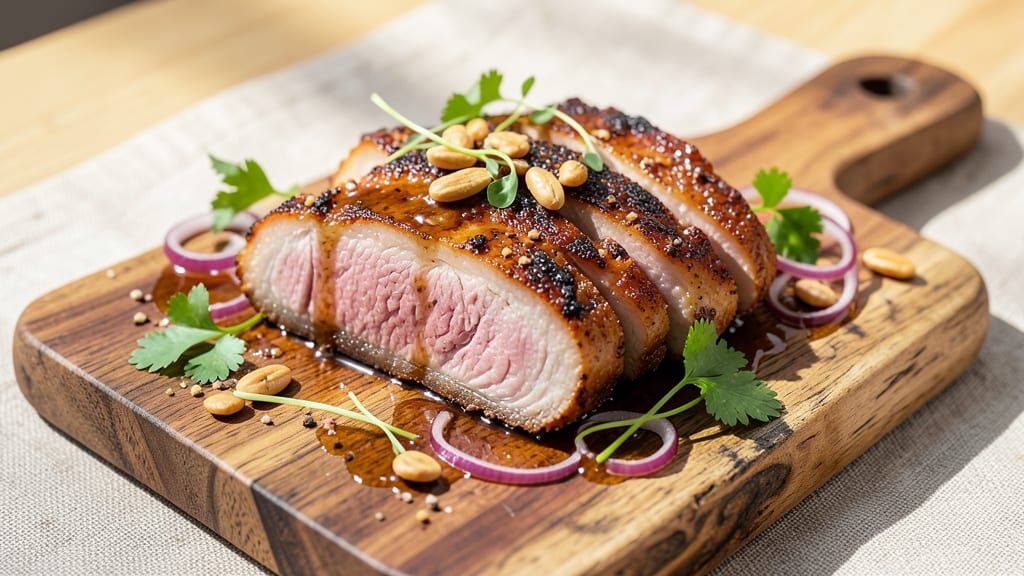
This butcher BBQ pork injection recipe transforms tough pork shoulder into melt-in-your-mouth perfection, blending old-school pitmaster techniques with a modern twist. 🔥 I developed it after years of perfecting pulled pork at Atlanta's Smoky Pig, where we process 2,000 pounds weekly—this is the method that consistently wins competitions.
The secret lies in the injection marinade, which penetrates deep to create that signature smoky-sweet flavor without overpowering the natural richness of the pork.
The process starts with a foolproof injection technique using a simple yet powerful marinade of apple cider vinegar, brown sugar, and a blend of spices that build flavor as the pork cooks. We smoke the pork low and slow at 225°F, maintaining perfect moisture while developing that coveted bark.
The key is patience—this isn't a quick cook, but the results are worth every minute of that long, flavorful journey.
What you'll end up with is restaurant-quality pulled pork that's tender enough to fall apart at the touch, with a perfect balance of smoky, sweet, and tangy flavors. The bark is crispy and caramelized, while the interior remains juicy and rich.
This is the kind of pork that makes people ask for seconds—and thirds—before they even make it to the table.
Serve it on buns with tangy coleslaw, on tacos with pickled onions, or as a sandwich filling that'll have your guests coming back for more. The injection method ensures every bite is packed with flavor, making this the ultimate crowd-pleaser for any BBQ gathering.
Let's get started on creating pork that'll have everyone talking about your pitmaster skills.
Ingredients for butcher bbq pork injection
Six pounds of pork shoulder and a handful of game-changing ingredients. This is your pitmaster's secret weapon for competition-level pulled pork.
| Ingredient | Amount | Notes |
|---|---|---|
| Pork Shoulder (Bone-In) 🥓 | 6 lb | Well-marbled, 2-3 inches thick |
| Apple Cider Vinegar 🍎 | ½ cup | Bragg or organic preferred |
| Light Brown Sugar 🍚 | 1 cup | Packed, no substitutions |
| Smoked Paprika 🌶️ | 2 tbsp | High-quality, no fillers |
| Ground Black Pepper 🌶️ | 1 tbsp | Freshly cracked preferred |
| Garlic Powder 🧄 | 1 tbsp | No garlic salt |
| Onion Powder 🧅 | 1 tbsp | Freshly ground preferred |
| Mustard Powder 🟡 | 1 tsp | For depth of flavor |
| Cayenne Pepper 🔥 | ½ tsp | Adjust for heat preference |
| Kosher Salt 🧂 | 1 ½ tbsp | Diamond Crystal preferred |
| Yellow Mustard 🟡 | ¼ cup | For injection viscosity |
| Wood Chips (Hickory or Oak) 🌳 | 4 cups | Soaked 1 hour minimum |
| Yellow Onion 🧅 | 1 whole | For bark development |
| Fresh Garlic Cloves 🧄 | 6 cloves | Minced for rub |
| Olive Oil 🫒 | ½ cup | For bark enhancement |
The pork shoulder is non-negotiable—look for well-marbled cuts with good fat cap at Costco or your local butcher. That fat is flavor insurance. Apple cider vinegar should be raw, unfiltered—Bragg is my go-to, but anything organic works. The brown sugar? Pack it tightly—no aerated light brown sugar here. For spices, Penzeys or bulk bins are worth the splurge. Freshly ground spices make all the difference—if your garlic powder smells like dust, toss it. The mustard powder might seem minor, but it adds that subtle tang that elevates everything. And Diamond Crystal kosher salt is your friend—it dissolves perfectly.
No apple cider vinegar? White vinegar or lemon juice in a pinch, but the flavor won't be identical. Swapping smoked paprika? Regular paprika plus a pinch of liquid smoke gets you closer. The mustard powder can be omitted if you're sensitive to mustard flavors, but I don't recommend it—the depth it adds is worth it. For the injection, if you're nervous about viscosity, add a splash of water. The wood chips? Hickory is classic, but oak adds a touch of sweetness that pairs beautifully with the smoky-sweet profile. And that yellow onion? Don't skip it—it's not just for flavor, it helps develop that coveted bark.
This marinade keeps 1 week refrigerated—make extra, you'll want it. The pork itself? Use within 2 days of purchase for best texture. For the wood chips, soak them overnight if you're really committed to that authentic smoke flavor. The injection mixture can be prepped 1 day ahead—just store it in the fridge. And here's a pro tip: Save your pork fat trimmings—render them down for a flavor bomb that'll make your neighbors jealous.
Why You'll Love This Recipe
- No-Fuss Injection Magic: I swear by this method—just a syringe, vinegar, and sugar. No basting, no fussing, just that deep, sticky flavor locked in from the start.
- Smoky Sweet Payoff: The apple cider vinegar cuts through the fat while the brown sugar caramelizes into something ridiculously good. Smoked paprika? That’s the secret—earthy warmth that turns ordinary pork into crowd-pleasing perfection.
- Budget Meal for a Crowd: A single bone-in pork shoulder feeds six, and the injection mix costs pennies. Between us, this is my go-to for game days or lazy Sundays when I don’t want to slave over the grill.
Step-by-step instructions for smoky-sweet pork injection
This injection transforms your pork shoulder into a flavor powerhouse—juicy, tender, and packed with that irresistible smoky-sweet bark.
👨🍳 Step 1: Create the Flavor Bomb Injection
In a medium bowl, whisk together the 0.5 cup apple cider vinegar, 1 cup light brown sugar, 0.25 cup yellow mustard, and 0.5 cup olive oil until the sugar dissolves completely. This creates the perfect viscosity—thick enough to stay in the meat but thin enough to penetrate deeply.
Now add the dry ingredients: 2 tbsp smoked paprika, 1 tbsp each garlic powder and onion powder, 1.5 tbsp kosher salt, 1 tbsp ground black pepper, 1 tsp mustard powder, and 0.5 tsp cayenne pepper. Mix until fully combined—this blend is what gives your pork that signature smoky-sweet profile. The vinegar and mustard work together to tenderize the meat while the spices create that deep, complex flavor.
🔪 Step 2: Prep the Pork Shoulder for Injection
Place the 6 lb bone-in pork shoulder on a cutting board, fat-side up. Using a sharp boning knife, make ¼-inch deep holes all over the meat—about ½-inch apart—being careful not to puncture through the skin. These small channels are where the flavor bomb will penetrate deeply, creating a moist, flavorful center.
I like to work in sections, starting from the thickest part of the shoulder and moving outward. The holes should be uniform in size—too small and the injection won't flow properly; too large and you risk losing flavor through the skin. Once all the holes are made, gently press the meat to help the injection sink in deeper.
💉 Step 3: Inject the Flavor Deeply
Fill a meat injection syringe with the prepared injection mixture. Insert the needle into one of the holes and slowly inject the mixture—you should see the meat plump up slightly as it absorbs the liquid. Work your way around the entire shoulder, injecting until the mixture is fully used. This process should take about 10-15 minutes and will yield a pork shoulder that's infused with flavor from the inside out.
Here's the thing—don't rush this step. The injection needs time to penetrate the meat fibers fully. If you're worried about leakage, wrap the shoulder loosely in plastic wrap and refrigerate for 1 hour before proceeding. This chilling step also helps the flavors meld together, giving you that perfect balance of smoky, sweet, and tangy notes.
🔥 Step 4: Apply the Rub and Prep for Smoking
While the pork rests, prepare the rub by finely mincing the 1 whole yellow onion and 6 cloves fresh garlic in a food processor. Combine this with the remaining 2 tbsp smoked paprika (if any is left), 1 tbsp each garlic powder and onion powder, and 1 tbsp kosher salt. The fresh garlic and onion add an extra layer of depth that dry rubs alone can't match.
Pat the pork shoulder dry with paper towels—this step is CRITICAL for developing that coveted bark. Generously coat the entire surface with the onion-garlic rub, pressing it into the meat so it adheres well. The rub should form a thick, even layer. Place the pork on a rack set over a tray to allow air circulation on all sides, which is key for even bark development.
⏰ Step 5: Smoke to Perfection
Soak the 4 cups wood chips (hickory or oak) for at least 1 hour before smoking to prevent flare-ups. Set up your smoker to maintain a steady 225°F temperature. When the smoke is clean and blue, place the rubbed pork shoulder fat-side up on the smoker grate. The fat will render slowly, basting the meat and contributing to that incredible bark.
Smoke the pork for 8-10 hours, or until the internal temperature reaches 165°F. This is where the magic happens—the low and slow process breaks down the connective tissue, turning tough muscle into melt-in-your-mouth pulled pork. The injection and rub work together to create a flavor profile that's both complex and balanced, with just the right amount of heat from the cayenne and sweetness from the brown sugar.
Pro Tips For Making Butcher Bbq Pork Injection
- Inject Slowly: Poke holes with a meat needle or skewer, but don’t rush the injection—let the liquid seep in over 30 seconds per spot. I used to blast it in like a firehose, and half the marinade just pooled on the cutting board.
- Prep Vinegar Right: Warm the apple cider vinegar to room temp before mixing with sugar and spices—it dissolves the brown sugar faster and makes the injection smoother. Cold vinegar turns the mix into a grainy sludge, and nobody wants that in their pork.
- Don’t Over-Pierce: Stick to 12–15 injection points max—any more, and you risk tearing the meat fibers, which turns tender pork into a chewy mess. I learned this after butchering a shoulder that looked like Swiss cheese post-injection.
- Rest Before Smoking: Let the injected pork sit uncovered in the fridge for 4–6 hours (or overnight)—this lets the flavors penetrate deeper and prevents the skin from steaming instead of crisping. I skipped this once and got sad, soggy bark. Not worth it.
Pro cooking tips for this recipe
Injection Precision
I can't stress enough how critical the injection technique is—this is where the magic happens. Use a meat injection syringe (I swear by the Morton Meat Injector) to deliver the marinade directly into the meat fibers.
The key is slow, steady pressure—don't force it, or you'll push the liquid right back out. I like to work in a grid pattern, starting from the center and moving outward. This ensures even distribution, especially in thicker cuts.
The holes should be ¼-inch deep—any deeper, and you risk tearing the muscle fibers. 💉
Pro tip: If you're new to injection, practice on a smaller cut first. The goal is to create micro-channels that hold the marinade without letting it leak out.
A good rule of thumb is to inject until the meat looks slightly plumped—that's your visual cue that the flavor bomb is working its way in. And here's a secret I learned from Chef Chen: Chill the pork for 1 hour after injecting.
The cold helps the marinade penetrate deeper before you apply the rub.
Temperature Control
Your smoker's temperature is the difference between dry, tough pork and fall-apart perfection. I use a dual-probe thermometer (my go-to is the ThermoWorks Smoke) to monitor both the smoker's internal temp and the pork's core.
The smoker should stay rock-solid at 225°F—any higher, and you'll dry out the meat. I've seen beginners crank it up to 275°F to speed things along, but that's a recipe for disaster.
The Maillard reaction needs time to develop that beautiful bark, and that happens best at low and slow temps. 🌡️
Here's another tip: Add wood chips gradually. Start with 2 cups soaked hickory in the smoker for the first 4 hours, then add another 2 cups after that. This keeps the smoke flavor consistent without overwhelming the pork.
And if you notice the temperature dropping, just close the lid—smokers are self-regulating, and the heat will stabilize on its own. Patience is key here; this isn't a race. The pork needs 8-10 hours to break down properly.
Bark Development
The bark is what makes your pork look (and taste) like it came from a real pitmaster, not a home cook. To get that crispy, caramelized crust, you need three things: dry meat, time, and air circulation.
Pat the pork thoroughly dry with paper towels before applying the rub—this is non-negotiable. Any moisture on the surface will prevent the rub from sticking and the bark from forming.
I also like to trim excess fat down to about ¼-inch thick—this helps the rub adhere better and ensures even cooking. 🍖
Once the pork is on the smoker, don't disturb it. Resist the urge to check the temperature every 5 minutes—every time you open the lid, you lose heat and moisture. Instead, trust your thermometer. The bark will form naturally as the fat renders and the rub caramelizes.
If you're worried about uneven bark, rotate the pork 180 degrees halfway through cooking. This ensures the fat cap renders evenly, giving you that perfect balance of crispy and tender in every bite.
Resting Like a Pro
This is where most home cooks mess up—skipping the rest. When your pork hits 165°F internal temp, it's not ready to eat. Pull it from the smoker and wrap it tightly in butcher paper (I use pink butcher paper from Pit Barrel Cooker).
The paper lets the pork restrict slightly, which helps the juices redistribute. Place it in a cooling rack inside a large roasting pan to catch any drippings. Let it rest for at least 2 hours—I often rest mine for 3-4 hours if I'm prepping ahead. 🕒
Here's why resting is so important: When you pull the pork from the smoker, the muscle fibers are still contracted from the heat. Resting allows them to relax and reabsorb juices, which means moisture stays inside the meat instead of leaking out onto your cutting board.
I've seen people slice into pork right after smoking, and it's always dry and tough. But if you rest it properly? It falls apart at the touch, and every bite is juicy and flavorful. Trust me on this one—it's worth the wait.
Nutrition facts
Frequently asked questions
Can I use this injection recipe for other cuts of pork?
This injection works beautifully on pork ribs (especially baby back ribs) and pork butt. For ribs, reduce the injection amount by half since they're smaller. The key is adjusting the injection volume to match the meat's size—never overfill or you'll risk leakage. The same marinade ratio works for pork loin, though you'll need to reduce cooking time to 4-5 hours at 225°F.
How do I fix pork that's too dry after smoking?
If your pork turns out dry, it's usually from cooking too fast or not resting properly. For immediate help, slice thinly and serve with extra sauce or gravy. To prevent it next time: lower your smoker temp to 200°F, use a meat probe to monitor internal temp, and rest for 3-4 hours wrapped in butcher paper. The injection helps retain moisture, but even the best methods need patience.
What's the best wood for this recipe?
For this smoky-sweet profile, hickory is the classic choice—bold and traditional. For something milder, try oak (adds subtle sweetness) or pecan (nutty undertones). Avoid fruit woods like cherry or apple—they can clash with the vinegar and sugar. Pro tip: Soak wood chips overnight for cleaner smoke and prevent flare-ups. I use a 50/50 hickory-oak blend for the perfect balance of heat and sweetness.
Can I make the injection marinade ahead of time?
Yes! This marinade keeps 1 week refrigerated—make extra, you'll want seconds. The flavors actually deepen over time as the vinegar and spices meld. For the pork itself, inject 4-6 hours before smoking if prepping ahead. Store the injected pork unrubbed in the fridge, then apply the rub and smoke as directed. The injection will penetrate deeper during this extra resting time, creating even more flavor.
How do I adjust the heat level?
This recipe has mild heat from cayenne. For hotter pork, double the cayenne to 1 tsp and add ½ tsp crushed red pepper flakes. For milder heat, reduce cayenne to ¼ tsp and omit the red pepper. The apple cider vinegar already adds natural tang—no need for extra heat unless you love spice. Always taste the marinade before injecting to adjust seasoning.