
Main Courses
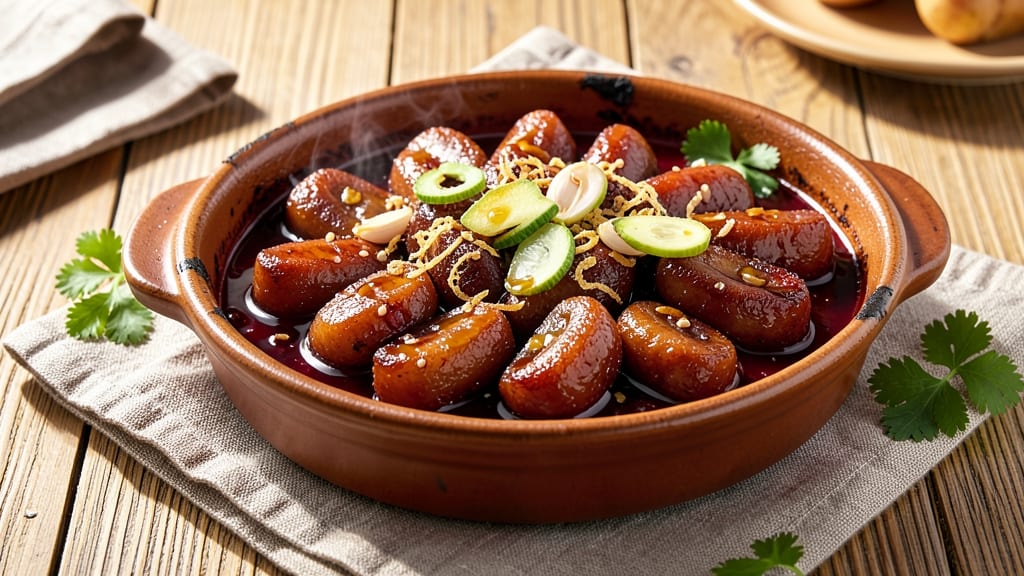
This braised pork intestine recipe transforms humble offal into a dish of rich umami depth and silky texture that belongs at any table. Growing up in Georgia, I learned how offal—when handled with care—becomes the heart of a meal, not an afterthought.
The secret lies in slow braising, where tough connective tissue melts into tender, flavorful strands that soak up aromatic broth.
The process begins with thorough cleaning (if needed) and a marinade that tenderizes while building layers of flavor. We'll use a blend of soy sauce, garlic, and ginger to create that signature umami profile, then slow-cook until the intestines achieve that fall-apart tenderness without drying out.
This isn't just a recipe—it's a technique that turns economical cuts into a centerpiece.
What you'll end up with is a dish that's restaurant-quality but made at home, with a glossy sauce clinging to each strand of pork. The texture is what makes it special—creamy yet firm, with just enough bite from the slow-cooked collagen.
This is the kind of meal that pairs beautifully with buttery mashed potatoes or steamed greens, elevating a simple dinner into something memorable.
Between you and me, I've spent years perfecting this method after watching my grandmother prepare similar dishes. The key is patience—letting the pork work its magic in the liquid until it's perfectly balanced between rich and tender. Let's get started on creating something truly special from what many might overlook.
Ingredients for braised pork intestine
These twelve ingredients transform humble offal into a dish of restaurant-quality richness and texture.
| Ingredient | Amount | Notes |
|---|---|---|
| Pork Intestines 🥩 | 1 ½ lb | Fresh, cleaned, cut into 2-inch pieces |
| Soy Sauce 🥄 | ½ cup | High-quality, preferably Japanese |
| Garlic Cloves 🧄 | 6 cloves | Minced, fresh preferred |
| Fresh Ginger 🌿 | ½ cup | Finely grated, peeled |
| Red Wine 🍷 | 1 cup | Bold, dry variety like Cabernet |
| Beef Broth 🥫 | 2 cups | Homemade or high-quality store-bought |
| Olive Oil 🫒 | 2 tbsp | Extra-virgin for richness |
| Bay Leaves 🌿 | 2 whole | Dried, for aromatic depth |
| Black Peppercorns 🌶️ | 1 tsp | Freshly cracked, coarse |
| All-Purpose Flour 🌾 | 2 tbsp | For dredging, light coating |
| Brown Sugar 🍚 | 1 tbsp | Light, for subtle sweetness |
| Fresh Thyme 🌿 | ¼ cup | Leaves only, chopped |
| Salt 🧂 | 1 ½ tsp | Kosher or sea salt |
The pork intestines are the star—look for fresh, clean cuts at your butcher or specialty market. Costco or local farms often carry them, but if not, ask your butcher to clean and prepare them for you. The cleaning process is simple: soak in cold water, rinse thoroughly, then pat dry before cutting into 2-inch pieces. Fresh ginger and garlic should be vibrant—no shriveled roots or bruised cloves. For the soy sauce, Japanese brands like Kikkoman or Lee Kum Kee add that deep umami punch. If using red wine, a bold Cabernet Sauvignon works best—whatever you'd drink with steak.
No red wine? Substitute with extra beef broth—just add another cup. Fresh thyme unavailable? Dried thyme at one-third the amount gets you close, but fresh is ideal. The flour is for dredging—lightly coat the intestines before braising to help them absorb flavors. For a sweeter touch, swap brown sugar with honey or maple syrup, though traditionalists swear by the brown sugar's caramel notes. The beef broth can be homemade (better) or store-bought (Knox or Swanson are reliable), but avoid low-sodium versions—they lack depth. If your ginger is old, microwave it 30 seconds to revive the flavor.
Store cleaned intestines in the fridge for up to 2 days in a sealed container with paper towels to absorb moisture. The braised dish keeps for 4-5 days in the fridge, with flavors intensifying overnight. For longer storage, freeze portions in airtight containers for up to 3 months. Reheat gently on the stove—never microwave—to preserve that silky texture. Leftovers reheat beautifully, making this a perfect make-ahead meal for busy weeknights.
Why You'll Love This Recipe
- I swear by this one: just one pot, minimal scraping, and that red wine deglaze? It practically cleans itself. The ginger and garlic stick to the bottom, but a quick scrape with a wooden spoon sends all the flavor into your sauce—no scrubbing required.
- No-Fuss Cleanup: I swear by this one: just one pot, minimal scraping, and that red wine deglaze? It practically cleans itself. The ginger and garlic stick to the bottom, but a quick scrape with a wooden spoon sends all the flavor into your sauce—no scrubbing required.
- Umami Bomb: That soy-wine braise turns pork intestines into something rich and addictive—think deep, caramelized edges with a silky interior. Honestly, the first bite makes me forget it’s an offal dish entirely.
- Leftovers That Shine: This recipe actually tastes better the next day. Reheat it with a splash of water, and the sauce thickens into a glossy, savory glaze. I’ve packed it in lunches for days, and no one’s ever complained.
Step-by-step instructions for braised pork intestines
Transform humble pork intestines into a luxurious, silky dish with deep umami layers.
Prepare the Intestines for Cooking
Rinse the 1.5 lb pork intestines thoroughly under cold water until the water runs clear. This removes any impurities and ensures a clean flavor base. Pat them completely dry with paper towels, then cut into 2-inch pieces using a sharp knife. You want uniform-sized pieces so they cook evenly.
In a bowl, combine the 2 tbsp all-purpose flour, 1.5 tsp salt, and 1 tbsp brown sugar. Toss the intestine pieces in this mixture until lightly but evenly coated. Let them sit for 10 minutes while you prepare the aromatics. This coating creates a delicate crust that enhances texture while absorbing flavors from the braising liquid.
Build the Flavor Base
Heat the 2 tbsp olive oil in a large Dutch oven over medium heat. Add the 6 cloves minced garlic and 0.5 cup finely grated ginger, cooking for 2-3 minutes until fragrant but not browned. This step develops the aromatic foundation that will infuse the intestines with complex flavor.
Stir in the 0.25 cup chopped fresh thyme and 1 tsp cracked black peppercorns, cooking for another 30 seconds while stirring constantly. Add the flour-coated intestines in a single layer and cook for 2 minutes until lightly golden. This initial sear helps set the texture before the braising process begins.
Deglaze and Develop the Sauce
Pour in the 1 cup red wine and scrape up any browned bits from the bottom of the pot with a wooden spoon. This deglazing step captures all the flavor compounds that would otherwise be lost. Let the wine simmer for 3-4 minutes until reduced by about half, allowing the alcohol to cook off and intensify the flavors.
Add the 0.5 cup soy sauce and 2 cups beef broth, stirring to combine. The soy sauce adds that essential umami depth while the broth provides the liquid base for braising. Bring the mixture to a gentle simmer, then add the 2 whole bay leaves. The bay leaves will infuse subtle earthy notes that complement the rich pork flavor.
Braise Until Silky Perfection
Cover the Dutch oven and reduce heat to low. Let the intestines braise for 1 hour and 30 minutes, stirring occasionally. You're looking for the meat to become fork-tender with a silky texture. The liquid should reduce until it just coats the bottom of the pot, creating a concentrated flavor base.
After the initial braising time, check for doneness by piercing a piece with a fork. It should slide in easily with no resistance. If the intestines aren't quite tender yet, continue cooking for another 15-20 minutes, adding a splash of water if the liquid reduces too much. The key is patience here—rushing will result in tough, chewy pieces.
Finish and Serve
Remove the bay leaves and adjust seasoning if needed. The intestines should be perfectly seasoned with the soy sauce and salt, but you can add a touch more salt if desired. For a glossy finish, remove the lid and let the braising liquid reduce by another 5 minutes to achieve the perfect consistency.
Serve the braised pork intestines hot, either as a main dish with steamed rice or as a component in noodle bowls. The silky texture and rich umami flavor make this a standout dish that transforms simple ingredients into something truly special. The aroma alone will draw everyone to the table!
Pro Tips For Making Braised Pork Intestine
- Blanch First, Braise Later: Skip the temptation to toss raw intestines straight into the braise—blanch them for 3-4 minutes first. This removes impurities and pre-cooks them slightly, so they absorb flavors instead of turning rubbery. I learned this the hard way after a batch tasted like a science experiment.
- Slice Thin, Even Strips: Cut the intestines into ¼-inch-thick strips, not thick chunks. Thinner pieces braise faster and stay tender, while thick slices stay chewy no matter how long you simmer. Use kitchen shears for clean cuts—it’s faster than a knife, and you’ll thank me when you’re not fighting uneven cooking.
- Deglaze with Wine Early: Add the red wine right after searing the garlic and ginger, not at the end. The alcohol burns off quickly, deepening the sauce’s richness before the soy sauce takes over. I used to add it later and wondered why my dish tasted flat—turns out, timing matters more than I thought.
- Salt the Braising Liquid: Don’t rely on soy sauce alone—add 1 teaspoon of salt to the braising liquid. The intestines are porous and absorb flavors, but they also need that extra seasoning boost to cut through any lingering gamey taste. Sounds simple, but it’s the thing that makes the difference between "meh" and "wow."
Creative variations of this recipe
Southern-Style BBQ
Inspired by my time in Charleston, I love transforming this dish into a Southern-style BBQ centerpiece. Swap the red wine for 1 cup apple cider vinegar and add 2 tbsp hot sauce (like Crystal or Louisiana) to the braising liquid.
After cooking, toss the intestines in a sauce made with ½ cup ketchup, 1 tbsp brown sugar, and 1 tsp smoked paprika. Serve on a bun with crispy slaw for a true Georgia BBQ experience. 🔥
Asian-Inspired Stir-Fry
For a quick stir-fry variation, sear the intestines as directed but skip the braising. Instead, toss them with 1 tbsp oyster sauce, 1 tsp sesame oil, and ½ cup shredded bok choy.
Serve over steamed jasmine rice with a fried egg on top. The soy sauce in the marinade already gives you that perfect umami base for Asian flavors. ✨
Italian-Inspired Ragù
Turn this into a rich Italian ragù by adding 1 cup crushed San Marzano tomatoes and ½ cup dry white wine to the braising liquid. After cooking, blend the sauce until smooth and simmer for another 15 minutes.
Serve over fresh pasta like tagliatelle, garnished with fresh basil. The tender intestines add a luxurious texture that pairs beautifully with tomato sauce.
Moroccan-Spiced Tagine
For a North African twist, add 1 tsp ground cumin, 1 tsp coriander, and ½ tsp cinnamon to the flour coating. Deglaze with 1 cup orange juice instead of red wine, and finish with 2 tbsp chopped cilantro.
Serve with couscous and a side of pickled onions. The warm spices transform this into a fragrant, aromatic dish that's completely different from the original but equally satisfying. 🌶️
Spicy Korean Kimchi Braise
Add ½ cup chopped kimchi and 1 tbsp gochujang to the braising liquid for a Korean-inspired version. Let the kimchi simmer in the sauce for 10 minutes before adding the intestines.
The tangy, spicy flavors create a perfect balance with the rich pork. Serve with steamed rice and a side of quick-pickled cucumbers for a complete meal.
Sweet & Smoky Glazed
For a dessert-like finish, add ¼ cup honey and 1 tbsp smoked paprika to the braising liquid. After cooking, reduce the sauce until it becomes thick and glossy. Serve over mashed sweet potatoes or apple slices for a surprising but delicious sweet-savory dish.
This variation works surprisingly well as a breakfast hash with crispy bacon on top. 💫
Nutrition facts
Frequently asked questions
Do I need to clean pork intestines before cooking?
Yes, always clean them thoroughly! Rinse under cold water until the water runs clear, then soak in ice water for 10 minutes to remove any remaining impurities. Pat completely dry before cutting—this ensures a clean flavor and prevents the braising liquid from becoming cloudy. If you're unsure about cleaning, ask your butcher to prepare them for you.
Can I substitute pork intestines with another type of offal?
While pork intestines are ideal for this recipe, you can use pork stomach (tripe) or beef intestines as substitutes. The texture will differ slightly—tripe stays firmer while beef intestines may cook faster. Adjust braising time accordingly, checking for tenderness with a fork. For best results, stick with pork for that signature silky texture.
Why is my braised pork intestine dish still chewy?
Chewiness usually means the intestines weren't braised long enough. Extend cooking time by another 30-45 minutes on low heat, adding a splash of water if needed to prevent drying. For tougher cuts, try marinating in 1 cup buttermilk for 4 hours before cooking—the acid helps tenderize. Remember, patience is key!
How do I store leftovers without drying them out?
Cool the braised intestines completely before storing in an airtight container with the sauce. They'll keep in the fridge for 4-5 days and freeze beautifully for up to 3 months. To reheat, warm gently in a saucepan with a splash of water or broth over low heat—never microwave, as it can make the texture rubbery.
What's the best way to serve this dish in a restaurant setting?
For a restaurant-worthy presentation, strain the braising sauce and reduce it until glossy, then drizzle over the intestines. Serve on a bed of creamy mashed potatoes or steamed jasmine rice, garnished with fresh thyme and a sprinkle of toasted sesame seeds. For extra drama, arrange the intestines in a circular pattern on the plate.