
Main Courses
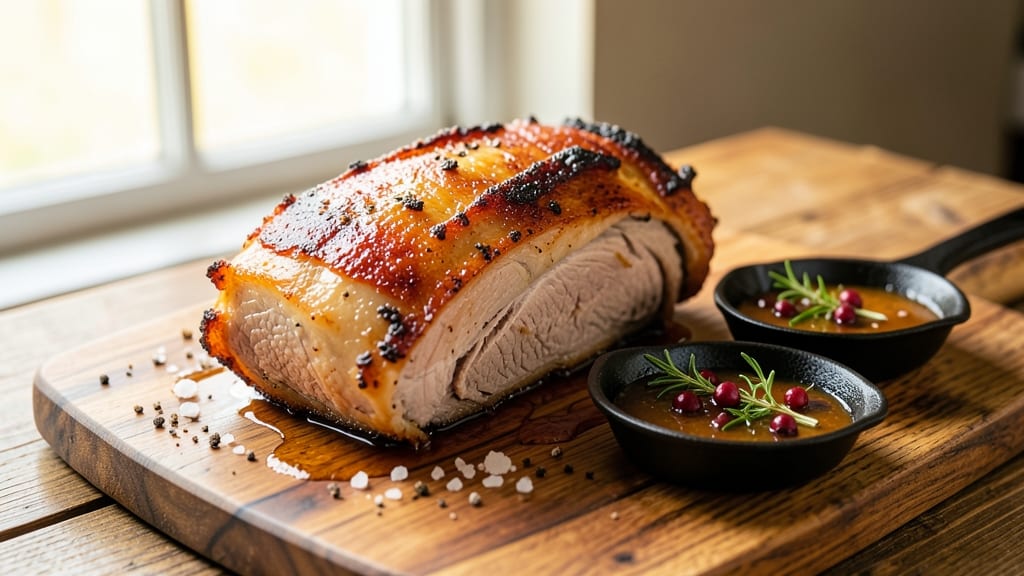
This Boston pork roast recipe delivers crispy bark and tender meat without needing a smoker—just your oven. I perfected this technique after years of experimenting, and the secret lies in a dry rub that develops deep, smoky flavors while creating that coveted crust.
The slow cooking process transforms tough pork shoulder into melt-in-your-mouth perfection, all while keeping your kitchen smelling like a New England holiday table.
The magic happens with a blend of brown sugar, juniper berries, and thyme, which form a caramelized crust while infusing the meat with authentic New England flavors.
Cooking at a low and steady 275°F for hours ensures the pork stays juicy inside while developing that crispy bark on the outside. This method is foolproof—no need for fancy equipment, just patience and attention to detail.
By the time it's done, you'll have a golden, crackling roast that practically falls apart at the touch, with a rich, savory interior that pairs beautifully with classic sides like cranberry sauce, mashed potatoes, or roasted root vegetables.
The aroma alone will have everyone gathering around the table, and the first bite delivers that perfect balance of sweet, smoky, and herby flavors.
Serve it whole for a centerpiece main course or slice it for sandwiches the next day—this roast is so flavorful, it's worth the effort. Let's get cooking! The instructions are simple, but the results are anything but ordinary.
Ingredients for boston pork roast recipe oven
Six pounds of pork shoulder and nine aromatic ingredients transform into a New England classic.
| Ingredient | Amount | Notes |
|---|---|---|
| Pork Shoulder (Boston Butt) 🥓 | 6 lb | Bone-in, skin-on preferred |
| Light Brown Sugar 🍯 | ½ cup | Packed, not granulated |
| Juniper Berries 🌿 | 1 tbsp | Crushed lightly, whole berries |
| Fresh Thyme Leaves 🌿 | 2 tbsp | Or 2 tsp dried thyme |
| Ground Black Pepper 🌶️ | 1 ½ tbsp | Freshly cracked preferred |
| Kosher Salt 🧂 | 2 tbsp | Diamond Crystal preferred |
| Smoked Paprika 🌶️ | 1 tbsp | For deeper smoky flavor |
| Garlic Powder 🧄 | 1 tbsp | Fresh garlic preferred |
| Yellow Onion 🧅 | 1 whole | Quartered for aromatics |
| Fresh Rosemary 🌿 | 1 tbsp | Chopped, stems removed |
| Apple Cider Vinegar 🍎 | 2 tbsp | For tenderizing |
| Olive Oil 🫒 | ¼ cup | For basting |
| Beef Broth 🥫 | 1 cup | Low-sodium preferred |
The pork shoulder is the star, so look for a well-marbled Boston butt—that fat is what renders into flavor. Costco and Whole Foods often carry pre-cut roasts, but if buying whole, ask your butcher to trim it to about 6 pounds. Fresh thyme and rosemary make all the difference here—Trader Joe's sells pre-bundled sprigs that save time. Juniper berries can be tricky to find; check the spice aisle at Penzeys or order online if needed. The brown sugar should be light, not dark—it caramelizes better and won't overpower the meat. For the onion, yellow or red both work, but avoid sweet varieties like Vidalia.
No juniper berries? Substitute 1 tsp liquid smoke plus 1/2 tsp ground allspice—it mimics the piney, smoky depth. Fresh thyme ran out? Dried thyme at half the amount works, but toast the dried spices in a dry pan for 30 seconds first to wake up the flavors. Smoked paprika is non-negotiable for that authentic bark—no regular paprika. The apple cider vinegar tenderizes the meat; if you're short, lemon juice works too. For the beef broth, low-sodium is key—you don't want to over-salt the meat. And trust me on the olive oil—use extra-virgin for basting; it adds richness you won't get with regular vegetable oil.
Prep the pork the night before if possible—the rub needs time to penetrate. Store the raw pork in a sealed container in the fridge for up to 2 days before cooking. The dry rub keeps in an airtight container for 2 weeks at room temperature, so make extra for future roasts. Leftover pork? Slice thin for sandwiches—it reheats beautifully. The crust will crisp up again when reheated, so don't skip the broiler for 2-3 minutes at the end. And save those onion quarters—they make incredible pork broth if you have leftovers.
Why You'll Love This Recipe
- Sweet-Savory Magic: Between us, the combination of brown sugar and juniper berries is chef’s kiss—caramelized edges with a deep, piney warmth that lingers. The thyme adds brightness, and the pepper? Just enough to keep it from being too sweet. It’s the kind of flavor that makes people pause mid-bite.
- Leftovers That Shine: This roast actually improves the next day. Shred it for tacos, sandwiches, or even a loaded baked potato—every time, it’s better than the first slice. Honestly, I make it on purpose so I have excuse to eat it twice.
- Budget-Friendly Feast: A whole pork shoulder feeds a crowd for less than half the cost of individual cuts. The juniper berries might sound fancy, but you only need a few—crush them in a mortar or just grab a tiny bag online. One roast means no takeout, no regrets, and no empty wallet.
Step-by-step instructions for slow-cooked Boston pork roast
Here's how to transform a simple oven into your smoker substitute for melt-in-your-mouth pork with perfect bark.
Prepare and Season the Pork Shoulder
Remove the pork shoulder from the refrigerator and let it sit at room temperature for 1 hour before cooking. This ensures even cooking throughout. Pat the meat completely dry with paper towels—this is crucial for developing that crispy bark. I like to work in stages: first dry the exterior thoroughly, then use your fingers to press into the crevices to get rid of any moisture trapped there.
In a small bowl, combine the 0.5 cup light brown sugar, 1 tbsp juniper berries (lightly crushed), 2 tbsp fresh thyme leaves, 1.5 tbsp ground black pepper, 2 tbsp kosher salt, 1 tbsp smoked paprika, 1 tbsp garlic powder, 1 tbsp chopped fresh rosemary, and 2 tbsp apple cider vinegar. Mix well to distribute all the spices evenly. Rub this mixture generously over all sides of the pork shoulder, pressing it into the meat so it adheres well. The vinegar helps tenderize while the sugar caramelizes to create that beautiful bark.
Sear for Maximum Flavor Development
Preheat your oven to 275°F—this lower temperature is key for that slow-cooked tenderness. Heat a large oven-safe skillet over medium-high heat and add the 0.25 cup olive oil. Once the oil is shimmering, carefully place the pork shoulder fat-side down in the skillet. Let it sear undisturbed for 8-10 minutes until the fat renders and the skin begins to turn golden brown. This step creates a flavorful crust that will carry through the entire cooking process.
Flip the pork shoulder and sear the other side for another 5-6 minutes. You'll know it's ready when the skin releases easily from the pan and the meat underneath is no longer pink. Transfer the skillet to the preheated oven and pour the 1 cup beef broth into the skillet, scraping up all the browned bits from the bottom. These bits are packed with flavor that will infuse into your pork as it cooks.
Slow-Cook to Perfect Tenderness
Place a piece of aluminum foil loosely over the skillet (don't seal it completely—you want some steam to escape). This helps retain moisture while still allowing the pork to develop that beautiful bark. Cook in the oven for 4-5 hours until the internal temperature reaches 195-200°F. Here's where the magic happens: the collagen breaks down slowly, transforming into gelatin that makes the meat incredibly tender.
Real talk: don't be tempted to check the temperature too early. The pork needs this time to transform. I like to check every 30 minutes starting at the 3-hour mark. When the internal temperature hits 195°F, the pork will be fork-tender and ready for the final crisping. The bark should be dark and crispy, with a beautiful caramelized crust that contrasts perfectly with the tender meat underneath.
Rest and Slice for Maximum Juiciness
Once the pork reaches the target temperature, remove it from the oven and transfer it to a cutting board. Let it rest for at least 30 minutes (I prefer 45 minutes if possible). This resting period allows the juices to redistribute throughout the meat, ensuring each slice is moist and flavorful. If you can't wait, at least give it 15 minutes—skipping this step will result in dry meat.
Slice the pork shoulder against the grain into ½-inch thick slices. The grain direction will be visible as lines running through the meat. Serve immediately with the pan juices reduced slightly if desired—simmer the juices in the skillet for 5-7 minutes to thicken them into a glossy sauce. The result should be tender, juicy pork with a perfect balance of sweet, smoky, and herby flavors that will have everyone asking for seconds.
Pro Tips For Making Boston Pork Roast Recipe Oven
- CRANK THE HEAT FIRST: Start your pork shoulder at 450°F for 20 minutes—yes, even if the recipe says otherwise. This sears the exterior fast, locking in juices and giving you that deep caramelized crust before you drop the temp to 300°F for the long cook. I learned this the hard way after a batch that looked pale and tasted bland.
- CRUSH THE JUNIPER: Juniper berries need to be cracked open, not whole—otherwise, you’re just sprinkling tiny peppercorns on your roast. Use a mortar and pestle or the flat side of a knife to bruise them; this releases their piney, resinous flavor. (And skip the pre-ground stuff—it’s weak and tastes like sawdust.)
- DON’T PUNCH THE MEAT: After pulling the roast from the oven, resist the urge to stab it with a fork to check doneness. The juices will escape, and you’ll end up with a dry, sad pork shoulder. Use a meat thermometer instead—aim for 195–203°F in the thickest part. (Your future self will thank you.)
- SAVE TIME WITH A DRY BRINE: Salt the pork shoulder the night before and let it sit uncovered in the fridge. The salt penetrates deeper, and the surface gets a head start on drying out—no soggy crust when you roast it. I was skeptical until I tried it; the texture is noticeably better.
Serving suggestions for this recipe
Classic New England Sides
Boston pork roast shines with traditional New England sides that complement its rich, caramelized flavors. Start with savory mashed potatoes—I love using Yukon Gold potatoes boiled in their skins, then mashed with ½ cup heavy cream, ¼ cup butter, and a pinch of salt.
For extra depth, fold in 2 tbsp roasted garlic. Serve in a warm bowl with a sprinkle of crispy fried onions for contrast. 🥔
No roast is complete without homemade cranberry sauce—my go-to recipe combines 1 cup cranberries, ½ cup orange juice, ½ cup brown sugar, and a pinch of cinnamon.
Simmer for 15 minutes until thickened, then chill before serving. The tartness cuts through the pork's sweetness beautifully. For a twist, add 1 tsp fresh ginger for warmth.
Vegetable Pairings
Roasted honey-glazed carrots add natural sweetness that echoes the pork's caramelized bark. Toss 1 lb carrots with 2 tbsp honey, 1 tbsp olive oil, ½ tsp thyme, and salt, then roast at 400°F for 25 minutes.
The glaze caramelizes perfectly, creating a sticky, flavorful side. For a heartier option, serve with brown butter Brussels sprouts—sauté 1 lb Brussels sprouts in 3 tbsp browned butter with crispy bacon until tender.
Apple and cabbage slaw brings freshness to balance the richness. Shred 2 cups green cabbage and 1 apple (I use Granny Smith), then toss with 2 tbsp apple cider vinegar, 1 tbsp olive oil, 1 tsp Dijon mustard, and salt. Let it sit for 10 minutes before serving—it tastes even better after resting! 🍏
Bread and Sauces
A crusty sourdough loaf is perfect for soaking up pan juices. Toast slices lightly and serve with the reduced pork juices—simmer them in the skillet for 5-7 minutes until slightly thickened.
For extra richness, stir in 1 tbsp apple cider vinegar and 1 tsp Dijon mustard at the end. This sauce adds a tangy depth that pairs perfectly with the pork.
For a lighter option, serve with herbed butter—mix ½ cup softened butter with 1 tbsp fresh rosemary, 1 tsp garlic powder, and salt. Spread on warm bread or dollop over sliced pork. The herbs echo the roast's seasoning, creating a cohesive flavor experience. 🍞
Presentation Tips
Slice the pork against the grain into ½-inch thick pieces for the most tender bites. Arrange slices on a wooden board or slate platter with sides fanned out for a rustic, inviting look.
Garnish with fresh thyme sprigs and crispy fried onions for a pop of color and texture. The golden bark should be visible—it’s the star of the dish!
For a family-style meal, serve the pork whole at the center of the table with sides in bowls around it. Use small ramekins for sauces and individual butter dishes for the herbed butter. The presentation should feel warm and inviting—just like a New England holiday feast. 🏡
Nutrition facts
Frequently asked questions
Why does my Boston pork roast turn out dry?
Skipping the resting time is the #1 cause of dry pork. Always let it rest for at least 30 minutes after removing from the oven—this lets juices redistribute. Also, check the internal temperature: it should reach 195-200°F, not higher. Overcooking past this range turns the meat tough. Pro tip: Use a meat thermometer to avoid guessing.
Can I make this in a regular oven without a skillet?
Transfer the seared pork to a roasting pan and add the beef broth. Place a loose foil tent over it to trap moisture. The key is still keeping the oven at 275°F for 4-5 hours. Just rotate the pan halfway through for even cooking. The bark will be slightly less crispy but still delicious.
What's the best way to reheat leftover pork?
Slice thin and reheat in a skillet over medium heat with a splash of beef broth for 3-5 minutes—this keeps it moist. For crispy bark, broil for 2-3 minutes at the end. Never microwave! The texture becomes rubbery. Store leftovers in an airtight container for up to 4 days or freeze for 3 months.
Can I substitute other meats like beef or chicken?
This recipe works best with pork shoulder due to its fat content and collagen. For beef, try a chuck roast but adjust cooking time to 3-4 hours at 275°F. Chicken won't develop the same bark—it's too lean. The juniper and thyme flavors shine with pork's natural richness. Save this recipe for pork lovers!
How do I know when the bark is perfectly crispy?
The bark should be deep golden-brown with visible cracks that snap when touched. If it's just light brown, broil for 3-5 minutes at the end. The perfect bark has a caramelized sweetness that contrasts with the tender meat underneath. Press gently—it should hold its shape but still feel crispy, not hard.