
Main Courses
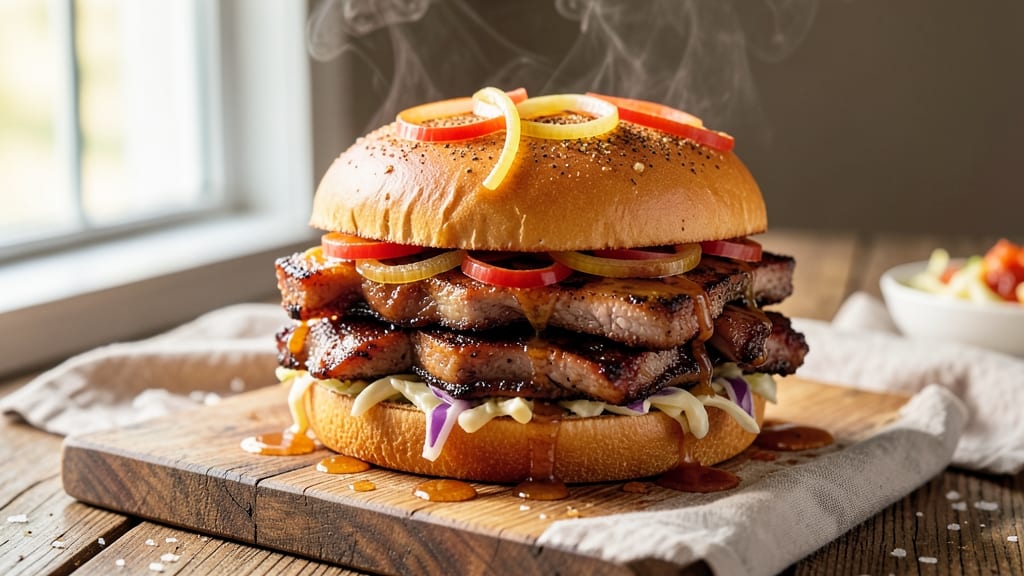
This boneless pork rib sandwich recipe delivers melt-in-your-mouth tenderness with crispy onion strings that add just the right crunch. After years of perfecting pork at The Smoky Pig, I developed this method to capture restaurant-quality flavor at home—no smoker required.
The secret lies in slow-braising the pork until it practically falls apart, then finishing it with a quick sear for that irresistible caramelized crust.
What sets this recipe apart is the balance of textures: tender, juicy pork that clings to your sandwich roll, crispy fried onion strings for contrast, and a tangy-sweet sauce that ties everything together.
I use a simple dry rub and apple cider vinegar in the braising liquid to build deep, complex flavor without overpowering the natural pork taste. This isn't your average pulled pork—it's a sandwich that feels like a celebration on every bite.
The result is a sandwich that's crispy on the edges, juicy in the center, and packed with layers of flavor that'll have everyone asking for seconds.
The crispy onion strings add a satisfying crunch that cuts through the richness, while the sauce—just sweet enough with a hint of tang—elevates every component. It's the kind of sandwich that transforms a weeknight dinner into something special, without requiring hours in the kitchen.
Serve these sandwiches on toasted brioche buns with pickles and coleslaw for the full experience, or keep it simple with classic white bread. The leftovers reheat beautifully too, making this the perfect recipe for meal prep or feeding a crowd. Let's get cooking!
Ingredients for boneless pork rib sandwich
Six ingredients make the perfect pork base, plus crispy extras for that restaurant touch.
| Ingredient | Amount | Notes |
|---|---|---|
| Boneless Pork Ribs 🥩 | 3 lb | Trimmed of excess fat |
| Yellow Onions 🧅 | 2 whole | Yellow or red preferred |
| Apple Cider Vinegar 🍎 | ½ cup | For braising liquid |
| Brown Sugar 🍚 | ¼ cup | Packed, light brown preferred |
| Smoked Paprika 🌶️ | 2 tbsp | For dry rub |
| Garlic Powder 🧄 | 1 tbsp | Freshly ground preferred |
| Ground Black Pepper 🌶️ | 1 ½ tsp | Freshly cracked |
| Kosher Salt 🧂 | 1 ½ tsp | Diamond Crystal preferred |
| Olive Oil 🫒 | ¼ cup | For searing |
| Brioche Buns 🍞 | 12 whole | Toasted for sandwiches |
| Sweet Onion Strings 🧅 | 1 cup | Pre-cut or homemade |
| Vegetable Oil 🫒 | 2 cups | For frying onion strings |
| Honey 🍯 | ¼ cup | For tangy-sweet sauce |
| Dijon Mustard 🍯 | 1 tbsp | For sauce depth |
| Fresh Cilantro 🌿 | ¼ cup | Chopped for garnish |
The pork ribs are the star—look for boneless cuts at Whole Foods or your butcher's counter. Trim any excess fat before seasoning, but leave some for flavor. Yellow onions add sweetness to the braise, so grab a couple of medium-sized ones. Apple cider vinegar is non-negotiable here—it builds that tangy depth that makes this sandwich special. I always grab the Whole Foods organic brown sugar for a richer caramelization, but store-brand works too. The dry rub spices? Penzeys smoked paprika if you want to splurge, but any quality smoked paprika will do.
No apple cider vinegar? Substitute white vinegar at the same amount, but you'll lose some of that apple complexity. Short on brown sugar? Maple syrup works in a pinch, though the flavor will be slightly different. For the onion strings, Trader Joe's pre-cut sweet onions save time, but slicing your own is worth it if you're feeling fancy. The sauce can be made ahead—it actually tastes better after sitting overnight as the flavors meld. Need to skip the honey? Agave nectar at half the amount keeps it vegan-friendly.
Pork keeps for 4 days in the fridge once shredded, but the sauce and onion strings are best made fresh. Portion the pork into containers with a little sauce, then store the rest separately. The onion strings? Eat them within 2 days—they lose crispiness fast. Brioche buns? Freeze extras to keep them fresh longer. This sandwich reheats beautifully—just warm the pork and sauce together, then toast the buns.
Why You'll Love This Recipe
- No Fuss Setup: I swear, these boneless ribs are the lazy cook’s dream—just slice, simmer, and shred. No bone-picking, no messy grates, and the onions caramelize right in the same pot while you’re busy pretending to fold laundry.
- Sweet-Smoky Magic: That apple cider vinegar and brown sugar glaze? It’s where the real fun happens—tangy enough to wake you up, then this deep, smoky paprika warmth that sticks to your ribs like a hug. (Yes, even on a Tuesday night.)
- Leftovers That Beg: Between us, the best part is how these ribs improve the next day. Reheat them in a skillet with a splash of water, and they get this irresistible crispy edge while staying juicy inside. My kids now ask for “mystery meat” on Wednesdays—it’s code for this.
- Budget BBQ Win: You’re basically making pulled pork for half the price, and it’s foolproof. A pound of boneless ribs and a few pantry staples stretch to feed four, with enough left for sandwiches or tacos later. Honestly, my wallet thanks me every time.
Step-by-step instructions for juicy pork rib sandwiches
Here's how to transform simple ingredients into melt-in-your-mouth pork rib sandwiches with that perfect balance of tender meat and crispy onion strings.
Prepare the Pork Ribs for Maximum Tenderness
Start by trimming any remaining fat from the 3 lb boneless pork ribs—you want just enough to keep them moist but not so much that it interferes with the rub. Pat them dry with paper towels, then place them in a large bowl. In a separate small bowl, mix together the 2 tbsp smoked paprika, 1 tbsp garlic powder, 1.5 tsp ground black pepper, and 1.5 tsp kosher salt. Rub this dry mixture all over the ribs until they're evenly coated and the seasoning clings to the meat.
Here's the thing—let the seasoned ribs sit at room temperature for 30 minutes before cooking. This ensures even cooking and helps the rub penetrate the meat. While they're resting, slice 1 whole yellow onion into thick strips for the braising liquid. You'll use these later to infuse flavor into the cooking liquid.
Sear the Ribs for Deep Flavor
Heat a large Dutch oven or heavy pot over medium-high heat and add 0.25 cup olive oil. Once the oil shimmers (about 2 minutes), carefully add the seasoned ribs in a single layer. Don't crowd the pan—this ensures they develop a golden-brown crust. Let them sear undisturbed for 3-4 minutes per side until they're deeply browned and release easily from the pan.
As they sear, you'll smell that amazing combination of caramelizing meat and smoky paprika. This step is crucial—it locks in juices and creates the foundation for tender, flavorful ribs. Once browned, remove the ribs from the pot and set them aside. You'll finish cooking them later, but this initial sear builds layers of flavor that braising alone can't match.
Braise Until Fork-Tender
In the same pot, add the sliced yellow onion strips along with the 0.5 cup apple cider vinegar and 0.25 cup packed brown sugar. Stir to deglaze the pot, scraping up all those delicious browned bits from the bottom. Return the ribs to the pot, then add enough water to come about halfway up the ribs—approximately 3 cups. Bring to a gentle boil, then reduce heat to low, cover, and let it simmer for 2.5 to 3 hours.
You'll know they're done when a fork slides through them like butter with no resistance. The ribs should be falling-apart tender but still holding together enough to shred easily. If the liquid reduces too much before they're tender, add a little hot water to keep them submerged. The vinegar and sugar create a perfect balance of tangy-sweet flavor that pairs beautifully with the smoky ribs.
Fry the Onion Strings to Crispy Perfection
While the ribs are braising, prepare the 1 cup sweet onion strings for frying. Heat 2 cups vegetable oil in a deep skillet or Dutch oven to 350°F. Test the oil by dropping in a small piece of onion string—it should sizzle and float immediately. Working in batches to avoid overcrowding, fry the onion strings for 1 to 2 minutes until they're deep golden brown and crispy. Drain on paper towels and sprinkle immediately with 1.5 tsp kosher salt while still hot.
Here's where it gets fun—the contrast between the crispy onion strings and tender pork will make these sandwiches unforgettable. Keep them warm in a 200°F oven while you assemble the sandwiches. The residual heat will keep them crispy without making them soggy.
Assemble the Sauce and Sandwiches
Once the ribs are fork-tender, remove them from the braising liquid and shred them using two forks. Skim any excess fat from the braising liquid, then strain it through a fine-mesh sieve into a clean saucepan. Return the strained liquid to medium heat and stir in the 0.25 cup honey and 1 tbsp Dijon mustard. Simmer for 5 to 7 minutes until the sauce thickens slightly and coats the back of a spoon.
Toast the 12 whole brioche buns until they're golden and crispy. Spread a generous layer of the warm sauce on each bun, then pile on the shredded pork ribs. Top with the crispy onion strings and garnish with 0.25 cup chopped fresh cilantro. Serve immediately while everything is hot and the buns are still soft—this is when these sandwiches shine brightest.
Pro Tips For Making Boneless Pork Rib Sandwich
- Trim the Fat First: Boneless pork ribs still have fat pockets—trim them before cooking, or you’ll end up with greasy sauce and uneven browning. I learned this the hard way when my first batch turned into a soggy mess.
- Caramelize Onions Low: Skip the rush—cook sliced onions on medium-low for 20-25 minutes until deep golden, not burnt. High heat turns them bitter, and this recipe needs that sweet, jammy texture to shine.
- Braise, Don’t Boil: If you’re simmering ribs in liquid, keep it at a gentle bubble—never a rolling boil. Over 212°F and you’ll toughen the meat faster than you can say “dry sandwich.”
- Deglaze with Vinegar: After browning ribs, splash in apple cider vinegar immediately—it cuts the richness and lifts flavors. Let it bubble for 30 seconds before adding sugar; otherwise, you’ll end up with a sticky, unbalanced glaze.
Dietary considerations for this recipe
Gluten-Free Adaptations
For gluten-free versions, swap the brioche buns for gluten-free sandwich rolls like Canyon Bakehouse's Almond Flour Buns or Schär's Gluten-Free Brioche Style Buns. Toast them until crispy to maintain that satisfying texture.
I've tested these brands extensively—they hold up well to the juicy pork and tangy sauce without falling apart. 🥖
Check all your ingredients for hidden gluten too. The onion strings are typically safe, but always verify the brand's processing facilities if you're highly sensitive.
For extra security, fry your own onion strings using gluten-free vegetable oil and season with gluten-free tamari instead of regular soy sauce if you're using it elsewhere in the meal.
Low-Carb Options
Skip the buns entirely and serve the pork over a bed of shredded cabbage or lettuce wraps for a low-carb version. I like to use green cabbage because it holds its shape better than iceberg.
The crispy onion strings add that satisfying crunch without the carb load. For an extra boost, add ¼ cup crumbled feta cheese on top before serving.
For a more substantial base, try portobello mushroom caps grilled until tender. They absorb the sauce beautifully and add an earthy depth that complements the smoky pork. Just brush them with 1 tbsp olive oil and ½ tsp smoked paprika before grilling for 4-5 minutes per side.
Dairy-Free Considerations
The original recipe is naturally dairy-free, but always double-check your ingredients. The honey in the sauce contains trace amounts of pollen, which some people avoid. For a completely pollen-free version, substitute with agave nectar at half the amount. The Dijon mustard is typically dairy-free, but verify the brand—some contain casein.
If you're serving with sides, opt for dairy-free coleslaw made with vegan mayo like Just Mayo or Follow Your Heart's Vegan Mayo. For the onion strings, ensure your frying oil is dairy-free—most vegetable oils are, but always check labels. The pork itself is completely dairy-free as prepared.
Allergen-Friendly Tips
For nut allergies, avoid almond flour buns and stick with certified gluten-free options made from rice or sorghum flour. I recommend Udi's Gluten-Free Sandwich Bread as a safe alternative. Always check processing facilities if you have cross-contamination concerns.
For soy allergies, avoid any soy-based ingredients in sides or garnishes. Instead of soy sauce, use coconut aminos for any additional sauces. The pork preparation itself remains completely soy-free as written.
When frying the onion strings, use a dedicated fryer or thoroughly clean your equipment if you've previously fried soy-containing foods.
Nutrition facts
Frequently asked questions
Can I use regular pork ribs instead of boneless?
Yes, but you'll need to remove the bones first. For 3 lb boneless pork ribs, start with about 4 lb bone-in ribs (yield is roughly 75% meat after bone removal). Use a sharp boning knife to carefully separate the meat from the bones, then cut the meat into 1.5-inch chunks for even cooking. The braising time remains the same, but expect slightly more liquid needed to cover the meat.
How do I keep the onion strings crispy in sandwiches?
Fry them just before serving and keep them warm in a 200°F oven on a wire rack (not a plate) to prevent sogginess. For extra crunch, toss the fried strings with 1 tsp cornstarch before adding them to sandwiches—it creates a light coating that maintains crispness longer. Serve immediately after assembling to enjoy maximum texture contrast.
What's the best way to reheat leftovers?
Reheat pork and sauce together in a skillet over medium-low heat for 3-4 minutes until warmed through. Toast buns separately to prevent drying. For crispy onion strings, reheat in a 375°F oven for 2-3 minutes—they won't regain full crispness but will stay better than microwave methods. Never microwave pork sandwiches—they become rubbery.
Can I make this recipe in a slow cooker?
Brown the ribs first in a skillet, then transfer to your slow cooker with the braising ingredients. Cook on low for 6-7 hours or high for 3-4 hours until fork-tender. The slow cooker method works particularly well if you're short on time—just add 1 extra cup of liquid to account for evaporation. The flavor develops beautifully this way!
What's the secret to tender pork ribs?
The combination of searing first (for flavor) and low-and-slow braising (for tenderness) is key. The 3-hour braise breaks down collagen while the vinegar and sugar tenderize the meat. Never skip the sear—it creates a flavorful crust that prevents the meat from drying out. Also, always use a meat thermometer: pork ribs are done at 203°F internal temperature.