
Main Courses
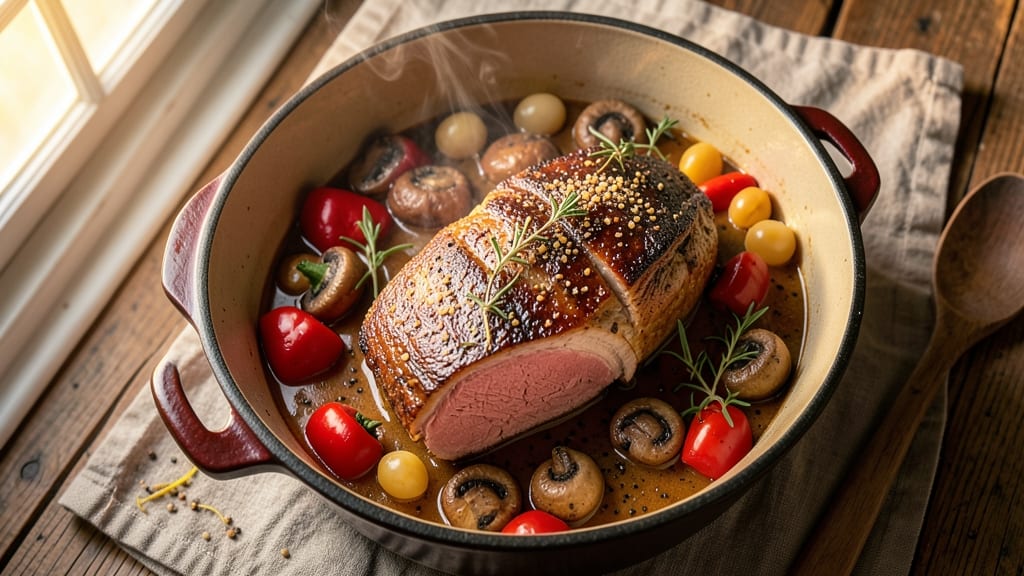
This bone-in pork sirloin roast slow cooker recipe transforms tough cuts into fall-off-the-bone tenderness with minimal effort. After years of testing slow-cooker techniques, I discovered the secret lies in proper seasoning, slow cooking at low heat, and letting the bone infuse rich flavor into the meat.
My family's favorite Sunday dinner now comes together with just 15 minutes of prep and 8 hours of hands-off cooking.
The key to success is starting with a well-seasoned roast—salt, pepper, and a touch of garlic powder create a flavorful crust that locks in moisture.
I use a low heat setting for the entire cooking time, which allows the connective tissue to break down gradually, resulting in meat that practically melts in your mouth. The bone adds depth to the broth, creating a natural sauce that elevates every bite.
By the time you remove it from the slow cooker, your pork will be so tender it pulls apart with a fork, and the surrounding broth will be rich enough to spoon over roasted potatoes or crusty bread.
The aroma alone will have everyone gathering around the table—this is comfort food at its finest, made simple through slow cooking.
For best results, let the roast rest for 10 minutes before slicing to keep all the juices inside. Serve with roasted vegetables or a simple salad to round out the meal. This recipe delivers restaurant-quality results without the fuss, making it perfect for busy weeknights or special occasions alike.
Ingredients for bone in pork sirloin roast recipe slow cooker
The secret to melt-in-your-mouth pork starts with these simple yet powerful ingredients.
| Ingredient | Amount | Notes |
|---|---|---|
| Bone-In Pork Sirloin Roast 🥩 | 3 lb | With bone and fat cap intact |
| Kosher Salt 🧂 | 1 ½ tbsp | Diamond Crystal preferred for even coating |
| Freshly Ground Black Pepper 🌶️ | 1 tbsp | Freshly cracked for maximum flavor |
| Garlic Powder 🧄 | 1 tsp | For subtle depth of flavor |
| Onion Powder 🧅 | 1 tsp | Adds aromatic sweetness |
| Dried Thyme 🌿 | 1 tsp | Earthy herbal note |
| Dried Rosemary 🌿 | ½ tsp | Crushed between fingers for aroma |
| Olive Oil 🫒 | 1 tbsp | For even seasoning distribution |
| Fresh Garlic Cloves 🧄 | 4 cloves | Smash lightly for intense flavor |
| Carrots 🥕 | 2 whole | Baby carrots work too |
| Celery Stalk 🧅 | 1 whole | Cut into 2-inch pieces |
| Yellow Onion 🧅 | 1 whole | Quartered for broth flavor |
| Water 💧 | 1 ½ cups | Or low-sodium chicken broth |
The bone-in pork sirloin is everything here—look for a roast with good fat marbling at Costco or your local butcher. The fat cap renders during cooking, creating a flavorful crust. If your roast is bone-in but has no fat cap, rub a thin layer of olive oil over it before seasoning. For the spices, Penzeys or bulk bins at Whole Foods have the freshest options—avoid pre-ground spices that lose potency quickly. The fresh garlic and aromatics (carrots, celery, onion) form the flavor base for that rich bone broth everyone will love.
No fresh thyme or rosemary? Dried works at half the amount—just crush the leaves between your fingers before adding. Short on time? Pre-cut frozen veggies work perfectly for the broth. The garlic can be minced or left whole—I usually smash it for more surface area. For the water, low-sodium chicken broth adds depth without overpowering. The olive oil helps the spices stick to the meat—don't skip this step if your roast is lean. If you're making this ahead, prep the veggies and season the meat the night before—it'll be ready to go in the morning.
This roast reheats beautifully—tastes even better the next day once all the flavors meld. Store leftovers in the fridge for 4-5 days or freeze for 3 months. The broth freezes well too—portion into ice cube trays for easy use later. For serving, let the roast rest 10 minutes before slicing—this keeps all the juices inside. The broth pairs perfectly with roasted potatoes or crusty bread, and doubles as a base for gravy if you're feeling fancy.
Why You'll Love This Recipe
- Crispy-Creamy Magic: The bone stays juicy while the outside gets that perfect crust—like a restaurant cut but with way less effort. Honestly, the garlic powder alone makes it taste like it simmered for hours (even if it didn’t).
- Weeknight Crowdpleaser: This feeds six for dinner or four with leftovers—no stress. My kids grab seconds before I even finish slicing, and it’s still great reheated for lunches. (Yes, even on a Tuesday night.)
- Budget Stretch: A bone-in roast costs less than pre-cut chops, and the bone adds flavor without extra work. I’ve turned one into four meals: sandwiches, tacos, even a pasta night. My wallet and my taste buds thank me.
Step-by-step instructions for bone-in pork sirloin roast
Here's how to transform a tough cut into melt-in-your-mouth perfection with minimal effort.
Season the Roast Thoroughly
Pat the bone-in pork sirloin roast dry with paper towels—this helps the seasoning stick and creates that coveted crispy exterior. In a small bowl, combine the 1.5 tablespoons kosher salt, 1 tablespoon freshly ground black pepper, 1 teaspoon garlic powder, 1 teaspoon onion powder, 1 teaspoon dried thyme, and 0.5 teaspoon dried rosemary. Rub this mixture all over the roast, including the fat cap, pressing it into the meat so it adheres well.
Here's the thing—I like to let the seasoned roast sit at room temperature for about 30 minutes before cooking. This equalizes the temperature and ensures even cooking. While it rests, crush the 4 cloves fresh garlic lightly with the flat side of a knife to release their oils and aromas.
Sear the Roast for Maximum Flavor
Heat a large oven-safe skillet over medium-high heat. Add the 1 tablespoon olive oil and let it get hot but not smoking. Place the seasoned roast fat-side down in the skillet and sear for 4-5 minutes until the fat renders and the skin begins to brown. Flip the roast and sear the other side for another 3-4 minutes until deeply golden.
This searing step is crucial—it locks in juices and develops deep, caramelized flavors. Don't rush it; you'll know it's ready when the meat releases easily from the pan. Transfer the roast to your slow cooker, fat-side up, to maximize flavor extraction during cooking.
Prepare the Aromatic Base
In the same skillet (no need to clean it—the browned bits add flavor), add the quartered yellow onion, 2-inch pieces of celery stalk, and 2 whole carrots. Sauté for 3-4 minutes until the vegetables begin to soften. Add the crushed garlic cloves and cook for another 30 seconds until fragrant.
Transfer the sautéed vegetables to the slow cooker along with the 1.5 cups water. The vegetables will infuse the broth with their natural sweetness, creating a flavorful base for your roast. Give everything a gentle stir to distribute the aromatics evenly.
Slow Cook to Perfection
Place the lid on the slow cooker and cook on low for 8-10 hours. This long, slow cook time is what transforms tough pork into fork-tender meat. The bone will infuse the broth with rich, gelatinous flavors that make every bite irresistible.
Here's where patience pays off: The internal temperature should reach 195-205°F when done. This is well above the usual safe temperature because the collagen in the connective tissue breaks down during this long cook, creating that melt-in-your-mouth texture. Check the temperature with a meat thermometer inserted into the thickest part of the meat, avoiding the bone.
Rest and Serve
Once the pork reaches the perfect temperature, carefully remove the roast from the slow cooker and transfer it to a cutting board. Tent loosely with aluminum foil and let it rest for 15-20 minutes. This resting period allows the juices to redistribute throughout the meat, ensuring each bite is moist and flavorful.
While the roast rests, skim any excess fat from the surface of the broth in the slow cooker. The vegetables should be tender and the broth rich and flavorful—perfect for serving alongside the pork or using in other recipes. Slice the roast against the grain for maximum tenderness and serve with the aromatic broth and vegetables.
Pro Tips For Making Bone In Pork Sirloin Roast Recipe Slow Cooker
- SEAR FIRST, THEN SLOW: Pat the pork dry with paper towels—this isn’t just about looks, it’s about flavor. Sear it in a hot skillet for 3-4 minutes per side before tossing it in the slow cooker. The crust locks in juices and adds depth that dry-rubbing alone can’t match.
- USE THE BONE’S BROTH: Don’t toss that bone after carving. Place the leftover bone in a pot with 2 cups of water, a pinch of salt, and a smashed garlic clove, then simmer for 20 minutes. Strain and pour it over the roast in the slow cooker—it’ll make the meat taste richer without extra effort.
- SALT IN LAYERS, NOT ALL AT ONCE: Sprinkle half the kosher salt directly on the meat before searing, then add the rest after it’s in the slow cooker. Salting too early makes the surface too salty before the crust forms, and too late means uneven seasoning. Split the difference.
- CHECK TEMP AT THE THICKEST PART: The slow cooker’s “done” time is a guess. Use a meat thermometer—insert it into the thickest part of the roast (away from bone) and pull it when it hits 145°F. If it’s bone-in, the bone’s heat will carry over, so don’t wait for 160°F like ground pork.
Pro cooking tips for great bone in pork sirloin roast recipe slow cooker
Low-and-Slow Mastery
Your slow cooker's low heat setting is where magic happens for this roast. Set it to low for 8-10 hours—this gradual cooking breaks down collagen in the connective tissue, transforming tough meat into tender perfection.
I've found that 8 hours minimum ensures complete tenderness, especially with bone-in cuts. The bone infuses the broth with rich gelatinous flavors that elevate every bite. 🌡️
Temperature Precision
Use a meat thermometer to monitor internal temperature—aim for 195-205°F in the thickest part of the meat (avoid the bone). This higher-than-usual temperature ensures the collagen fully melts, creating that melt-in-your-mouth texture.
I recommend the ThermoWorks Smoke thermometer for accuracy. If your roast reaches 165°F but feels tough, return it to the slow cooker and continue cooking until it hits the target range.
Searing for Flavor Lock
Before slow cooking, sear the roast in a hot skillet with 1 tablespoon olive oil for 4-5 minutes per side. This step creates a flavorful crust that locks in juices during cooking. I use a cast-iron skillet from Lodge for even heat distribution.
Don't skip this—it makes a noticeable difference in flavor and texture. The rendered fat from the sear also adds richness to the slow-cooked broth.
Broth Enhancement
Boost your broth's depth by adding 1.5 cups water or low-sodium chicken broth along with 2 carrots, 1 celery stalk, and 1 quartered onion. These aromatics infuse the liquid with natural sweetness and complexity.
For extra flavor, I sometimes add 1 bay leaf or 2 sprigs of fresh thyme during the final hour of cooking. Skim excess fat from the broth before serving—this keeps it clean while preserving its richness.
Resting for Juices
After removing the roast from the slow cooker, rest it for 15-20 minutes before slicing. This allows juices to redistribute throughout the meat, preventing them from pooling on your plate. I like to tent the roast loosely with aluminum foil while it rests.
The longer you wait, the more tender each slice becomes. This step is especially important for bone-in cuts, where juices tend to collect near the bone.
Slow Cooker Safety
Never leave your slow cooker unattended for extended periods, especially during the initial hours of cooking. The low heat setting means it won't overcook quickly, but always ensure it's placed on a stable surface away from flammable materials.
I recommend using a slow cooker with a timer so you can set it and forget it. If you're cooking for more than 8 hours, check the temperature occasionally to ensure it's maintaining low heat consistently.
Nutrition facts
Frequently asked questions
Why does the recipe call for such a long slow cooking time?
The 8-10 hour low heat setting is essential for breaking down the collagen in bone-in pork, creating that signature melt-in-your-mouth tenderness. This slow process transforms tough connective tissue into rich gelatin that infuses the meat with natural juices and depth of flavor. The bone also contributes to this process by releasing flavorful marrow during cooking.
Can I use a bone-in pork shoulder instead of sirloin?
While you can substitute a bone-in pork shoulder, the cooking time and texture will differ. Shoulder has more fat and connective tissue, so it may need 10-12 hours on low heat. The flavor will be richer but slightly fattier. For sirloin's leaner profile, stick to the original recipe or reduce cooking time by 1-2 hours if using shoulder.
What's the best way to check if the pork is done?
Use a meat thermometer inserted into the thickest part of the meat (avoiding the bone) to check for 195-205°F. The higher temperature ensures complete collagen breakdown for maximum tenderness. If you don't have a thermometer, cut into the thickest part—it should feel very tender and pull apart easily with a fork.
Can I make this ahead of time?
This roast tastes even better the next day as flavors meld. Cook it fully, then refrigerate for up to 5 days or freeze for 3 months. Reheat in the slow cooker on low for 2-3 hours or in the oven at 300°F for 45 minutes until warmed through. The broth also freezes well—portion into ice cube trays for easy use later.
What if my slow cooker doesn't have a low setting?
Use the high setting for 6-8 hours instead, but monitor closely to prevent overcooking. The meat may be slightly less tender but still delicious. For best results, consider transferring the roast to a 325°F oven for the final 2-3 hours to finish cooking. This mimics the slow cooker's gentle heat while ensuring proper doneness.