
Main Courses
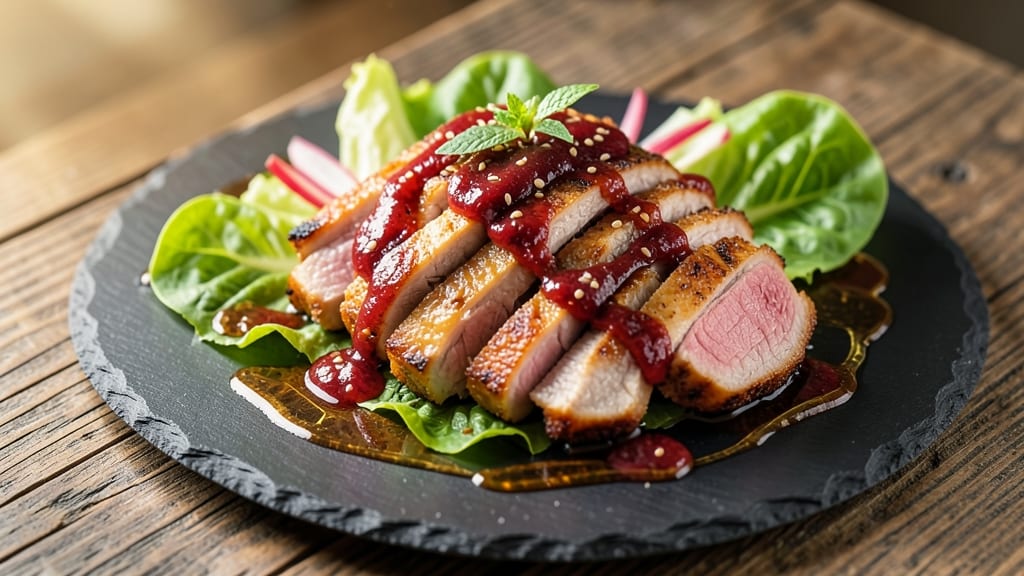
This crispy bo ssam pork recipe brings the vibrant flavors of Korean street food to your kitchen table. ✨ I developed this version after perfecting the balance between tender, marinated pork and the satisfying crunch of fresh lettuce wraps—a technique I first learned during my time studying Korean barbecue in Seoul.
The secret lies in the marinade, where gochujang and sesame oil create that signature sweet-spicy depth that makes every bite irresistible.
The recipe begins with thinly sliced pork shoulder marinated in a blend of soy sauce, gochujang, and a touch of honey—just enough to caramelize during the quick sear. While the pork cooks to perfect medium-rare doneness, the lettuce leaves develop their signature crispness when lightly blanched.
This isn't your average wrap; it's a harmonious marriage of textures and flavors that transforms simple ingredients into a restaurant-worthy meal.
By the time you assemble your wraps, you'll have perfectly seared pork with a caramelized crust, tender lettuce that holds its shape, and a rich ssamjang dipping sauce that ties everything together.
The contrast of crisp lettuce against the warm pork creates that satisfying crunch with every bite—exactly what makes bo ssam so addictive. Serve with kimchi, pickled radish, and an assortment of fresh vegetables for the full Korean BBQ experience.
What sets this recipe apart is the attention to detail in both the cooking and presentation. The pork should be cooked to medium-rare for maximum tenderness, while the lettuce should remain crisp enough to provide that essential crunch.
This dish isn't just about the flavors—it's about the experience of carefully wrapping each bite, dipping it in ssamjang, and savoring every element. Let's get started on creating your own Korean-inspired feast.
Ingredients for bo ssam pork
The crispy, flavorful heart of Korean street food—just 15 ingredients for perfect bo ssam wraps.
| Ingredient | Amount | Notes |
|---|---|---|
| Pork Shoulder 🐖 | 1 ½ lb | Thinly sliced against grain |
| Butter Lettuce 🥬 | 1 head | Large, crisp leaves preferred |
| Gochujang 🌶️ | ½ cup | Korean fermented chili paste |
| Soy Sauce 🥢 | ⅓ cup | Korean or Japanese preferred |
| Sesame Oil 🫒 | 2 tbsp | Toasted for authentic flavor |
| Honey 🍯 | 1 tbsp | Light variety for balance |
| Garlic Cloves 🧄 | 4 cloves | Minced for marinade |
| Ginger 🌿 | 1 tbsp | Freshly grated, peeled |
| Vegetable Oil 🫒 | ¼ cup | High smoke point for searing |
| Ssamjang 🌶️ | ½ cup | Store-bought or homemade |
| Kimchi 🥒 | 1 cup | For serving, any variety |
| Pickled Radish 🥕 | ½ cup | Sliced, for garnish |
| Sesame Seeds 🌾 | 2 tbsp | Toasted, for garnish |
| Salt 🧂 | ½ tsp | Kosher or sea salt |
| Black Pepper 🌶️ | ¼ tsp | Freshly cracked |
The pork shoulder is non-negotiable for authentic texture—look for well-marbled cuts at Korean markets or your local butcher. Thinly slicing against the grain ensures tenderness. Gochujang is the soul of this dish: Maesilchun or Dae Jang Fun brands deliver the best balance of sweet-spicy depth. Toast your sesame oil in a dry pan for 30 seconds before adding to the marinade—that nutty aroma makes all the difference. The butter lettuce should be crisp and pale green; avoid wilted leaves or pre-washed bags that compromise texture.
No gochujang? Substitute 2 tbsp sriracha plus 1 tbsp honey—it won't be identical, but works in a pinch. Vegetable oil is fine for searing, but avocado oil has a higher smoke point if you're worried about burning. The ssamjang can be store-bought (try Gochujang House or Mae Mun brands) or homemade with gochujang, sesame oil, and a touch of sugar. For the lettuce, blanch in ice water for 30 seconds to crisp it up—trust me on this. Swap kimchi for pickled mustard greens if you're avoiding fermented flavors.
Marinate the pork for at least 2 hours, but overnight is ideal. Store raw pork in the coldest part of your fridge, wrapped in parchment. Gochujang and ssamjang keep for 6 months in the pantry once opened, while sesame oil lasts 1 year unopened. The blanched lettuce stays crisp for 2 days in the fridge—wrap it in a damp towel to maintain freshness. Assemble wraps just before serving to preserve that satisfying crunch.
Why You'll Love This Recipe
- One-Pan Magic: I swear by this recipe because it’s that simple—just sear the pork, toss it in a quick glaze of gochujang and soy, and you’re done. No fancy techniques, no last-minute scrambling for ingredients. The butter lettuce wraps come together in seconds, and honestly? Even my picky teenage nephew doesn’t complain.
- Umami Bomb: That gochujang-soy glaze is where the magic happens—sticky, slightly sweet, with a slow-building heat that lingers. The pork shoulder stays juicy, and the sesame oil finish? It’s the kind of flavor that makes you pause mid-bite, like, "Wait, is this actually dinner?" (Yes. Yes, it is.)
- Lunchbox Hero: Between us, this is my go-to for meal prep. The pork stays tender for days, and the lettuce wraps are sturdy enough to pack without falling apart. Toss in some quick-pickled veggies, and you’ve got a lunch that feels fancy but costs next to nothing. (My office coworkers still ask where I eat.)
- Budget Flex: Pork shoulder is cheap, gochujang lasts forever, and you’re not wasting anything. Double the batch, freeze half, and thank me later when you’re reheating dinner in 30 seconds. It’s the kind of recipe that makes grocery day feel like a win—no sad leftovers, just second helpings.
Step-by-step instructions for Korean-inspired bo ssam pork wraps
Here's how to create tender, marinated pork with that signature crispy lettuce wrap magic.
👨🍳 Step 1: Marinate the Pork Shoulder for Maximum Flavor
In a large bowl, combine the 1.5 lb pork shoulder sliced thinly against the grain, 0.5 cup gochujang, 0.33 cup soy sauce, 1 tbsp honey, 4 minced garlic cloves, and 1 tbsp grated ginger. Mix until the pork is fully coated in the marinade. Here's the thing—this marinade needs time to work its magic, so transfer everything to a resealable bag or airtight container and refrigerate for at least 4 hours (overnight is even better). The longer it marinates, the more tender and flavorful your pork will become.
While it marinates, here's a pro tip: give the bag a gentle massage every hour or so if you're short on time. This helps distribute the marinade evenly and breaks down the meat fibers faster. The pork should absorb all that vibrant color from the gochujang, turning a beautiful reddish-brown.
🔥 Step 2: Sear the Pork to Crispy Perfection
Heat 0.25 cup vegetable oil in a large skillet over medium-high heat until shimmering. Remove the pork from the marinade (reserve the marinade) and pat it completely dry with paper towels—this is crucial for getting that crispy exterior. Add the pork in a single layer and let it sear undisturbed for 3-4 minutes until the edges turn golden brown and crispy.
Here's where it gets fun—toss in the reserved marinade and let it bubble away for 2-3 minutes until it reduces by half and coats the pork. The sauce should thicken slightly and cling beautifully to the meat. If the pork starts to stick, don't panic—just add a splash of water and scrape up those delicious browned bits from the bottom of the pan. Transfer the pork to a plate and tent loosely with foil to keep it warm while you prep the crispy lettuce wraps.
🥘 Step 3: Assemble the Crispy Lettuce Wraps
Core the 1 head butter lettuce by removing the thick stem, leaving the leaves intact. Separate the leaves and gently massage each one with 1 tbsp sesame oil (divide evenly among all leaves). Here's the secret—place each oiled leaf between two sheets of paper towels and press down firmly for 10-15 seconds to remove excess moisture. This creates that signature crispy texture that makes these wraps irresistible.
Spread 0.5 cup ssamjang evenly across each lettuce leaf. The ssamjang should be thick enough to hold the pork but not so thick it prevents rolling. Place a generous portion of the seared pork in the center of each leaf, along with ¼ cup kimchi and 2 tbsp pickled radish (divide evenly). Sprinkle each wrap with 0.5 tsp salt and 0.25 tsp black pepper, then drizzle lightly with the remaining 1 tbsp sesame oil.
🍽️ Step 4: Roll, Garnish, and Serve
Gently roll each wrap starting from the stem end, tucking in the sides as you go. The lettuce should hold its shape nicely from the crisping step. Place each roll seam-side down on a serving platter. Sprinkle with 2 tbsp toasted sesame seeds and serve immediately while everything is still crispy and warm.
For the ultimate experience, serve with extra kimchi on the side and a small bowl of the reserved marinade for dipping. Each bite should deliver that perfect balance of crispy lettuce, tender pork, and bold, umami-rich flavors. The contrast between the cool, crisp lettuce and the warm, spicy pork is what makes this dish so special—don't skip the crisping step, it's what makes these wraps truly unforgettable.
Pro Tips For Making Bo Ssam Pork
- WHISK GOCHUJANG WITH SESAME OIL: Mix the gochujang with a splash of sesame oil before adding other liquids—this emulsifies it instantly and prevents clumping. I was skeptical until I tried it; now my sauce is silky instead of grainy. Skip this, and you’ll end up scraping stubborn bits off the pan.
- USE COLD LETTUCE WRAPS: Chill the butter lettuce leaves in ice water for 10 minutes before wrapping—it crisps up nicely and holds its shape better. I used to use room-temp lettuce, and it’d wilt into a sad puddle by the time I wrapped the pork. Cold lettuce stays sturdy and adds a refreshing bite.
Dietary considerations for these flavors
Gluten-Free Adaptations
Bo ssam pork is naturally gluten-free if you use certified gluten-free soy sauce and gochujang. I recommend Kikkoman Gluten-Free Tamari and Gochujang House Gluten-Free brands. For the ssamjang, check labels—many store-bought versions contain wheat.
Make your own with ½ cup gochujang, 1 tbsp gluten-free soy sauce, 1 tsp honey, and 1 tsp sesame oil for complete control. 🌱
Dairy-Free Considerations
This recipe is already dairy-free, but watch for hidden dairy in ssamjang or kimchi. Some brands add whey or butter—always check labels. The crispy lettuce technique remains unchanged, and the pork marinade stays completely dairy-free. For extra richness, stir 1 tsp toasted sesame oil into the ssamjang instead of butter.
Low-Carb Options
Swap butter lettuce for shredded cabbage or napa cabbage leaves to reduce carbs while keeping the crisp texture. The cabbage holds up beautifully to the crisping method.
For the pork, use pork tenderloin instead of shoulder—it's leaner and still absorbs marinade well. Just marinate for 1-2 hours max to prevent over-tenderizing.
Vegetarian Substitutes
Replace pork with extra-firm tofu pressed for 30 minutes and sliced thin. Marinate in the same gochujang-soy sauce blend for 2 hours, then pan-fry until crispy. For a meatier texture, use mushroom stems (like shiitake) seared until caramelized.
The crispy lettuce and ssamjang remain the same—this version keeps all the authentic flavors without meat. 🌱
Allergen-Friendly Tips
For nut allergies, omit sesame oil and replace with avocado oil in equal amounts. The crispy lettuce technique works just as well. For soy allergies, substitute soy sauce with coconut aminos (use ⅓ cup) and check gochujang for soy content.
Always verify all ingredients when making substitutions—cross-contamination is a real risk with allergens. 💡
Protein Swaps
Try chicken thigh for a lighter option—marinate for 1 hour max to avoid drying. For seafood lovers, use shrimp tossed in the marinade for 10 minutes only.
Both alternatives work beautifully with the crispy lettuce and ssamjang. The key is shorter marinating times for delicate proteins to prevent overcooking during the sear. 🍤
Nutrition facts
Frequently asked questions about bo ssam pork
What makes the lettuce in bo ssam so crispy?
The secret is the sesame oil massage followed by pressing between paper towels. This removes excess moisture while adding flavor, creating that signature crunch. Always use butter lettuce—its delicate leaves hold up perfectly to this technique.
Can I use regular lettuce instead of butter lettuce?
Regular lettuce won't work—it's too tough and won't hold its shape when wrapped. Iceberg lettuce is the closest substitute, but butter lettuce's tender leaves are ideal for the crispy texture. If you must substitute, try thin romaine leaves and increase the pressing time to 20 seconds per leaf.
How do I prevent the pork from drying out?
Slice the pork thinly against the grain and marinate for at least 4 hours (overnight is best). When searing, cook over medium-high heat for just 3-4 minutes—don't overcrowd the pan. The reserved marinade helps keep it juicy while adding flavor.
What's the best way to store leftovers?
Store the cooked pork and ssamjang separately in airtight containers for up to 3 days. Reheat the pork gently in a skillet with 1 tsp sesame oil to restore moisture. The crispy lettuce won't last—make fresh wraps when serving leftovers. For the ssamjang, reheat in a saucepan over low heat until warmed through.
Can I make this recipe ahead of time?
Prep the marinade and pork up to 2 days ahead. The lettuce should be crisped and stored in the fridge (wrapped in a damp towel) for up to 2 days before assembling. The ssamjang can be made 3 days ahead—just reheat before serving. Assemble wraps fresh for the best texture.