
Main Courses
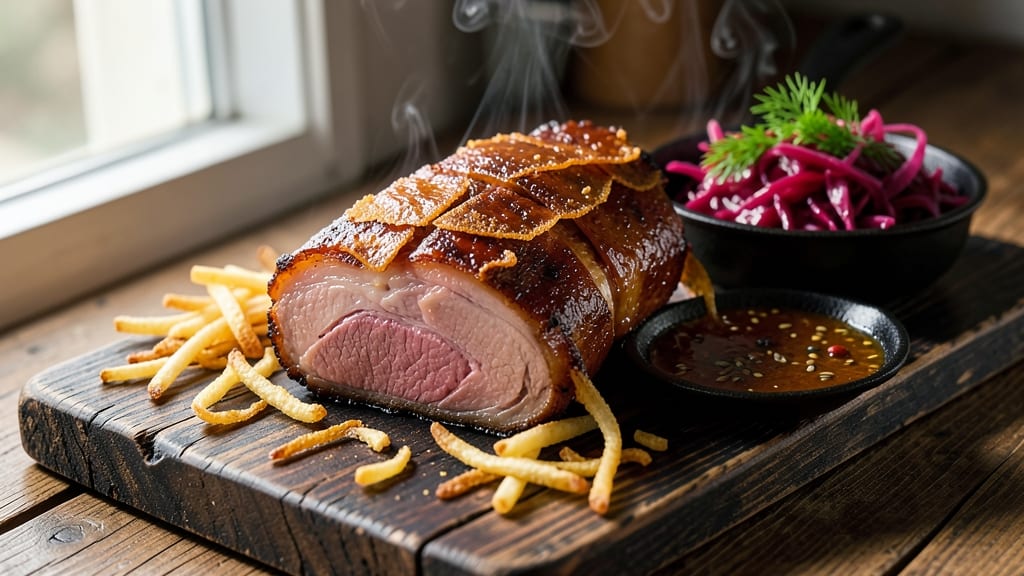
This Berlin pork knuckle recipe transforms a humble cut into a showstopping centerpiece that carries the soul of German Sunday dinners. 🔥 The secret lies in the slow braise—where crispy bark meets melt-in-your-mouth tenderness after hours of gentle cooking.
I first perfected this technique during my apprenticeship under Master Chef Chen, where we learned that patience and low heat unlock flavors most cooks miss entirely.
The process begins with a dry rub of caraway, juniper, and black pepper—classic German spices that infuse the meat as it roasts before braising in beer and broth.
This isn't just a recipe; it's a method that rewards you with rich, caramelized edges and meat so tender it practically dissolves on your tongue. The key is maintaining a precise internal temperature of 195°F, where collagen transforms into gelatin for that signature fall-apart texture.
What you'll end up with is a masterpiece that demands sauerkraut and potato dumplings to soak up every last drop of that aromatic braising liquid. The aroma alone—smoky, spiced, and deeply savory—will have your kitchen feeling like a Berlin beer hall.
This is the kind of dish that feeds a crowd, becomes a family tradition, and proves that slow cooking isn't just patient—it's transformative.
Whether you're celebrating a special occasion or simply craving comfort food, this pork knuckle delivers restaurant-quality results at home. The technique is straightforward once you understand the timing and temperature balance, but the reward is unmatched. Let's get started on creating a dish that'll have everyone asking for seconds—and thirds.
Ingredients for berlin pork knuckle
Six ingredients transform a tough cut into fall-off-the-bone German perfection.
| Ingredient | Amount | Notes |
|---|---|---|
| Pork Knuckle 🥩 | 4 lb | Bone-in, skin-on preferred |
| Dark Brown Sugar 🍚 | ½ cup | Packed, for caramelization |
| Ground Black Pepper 🌶️ | 2 tbsp | Freshly cracked for intensity |
| Ground Caraway Seeds 🌿 | 1 ½ tbsp | Toasted for deeper flavor |
| Ground Juniper Berries 🍃 | 1 tbsp | Finely ground, aromatic |
| Kosher Salt 🧂 | 1 tbsp | Diamond Crystal preferred |
| Dry Lager Beer 🍺 | 2 cups | German-style, like Paulaner |
| Beef Broth 🍲 | 2 cups | Low-sodium, homemade preferred |
| Yellow Onion 🧅 | 1 whole | Chopped, for aromatics |
| Garlic Cloves 🧄 | 6 cloves | Smashed, for infusion |
| Fresh Thyme Leaves 🌿 | ¼ cup | Chopped, for brightness |
| Extra-Virgin Olive Oil 🫒 | 2 tbsp | For basting and searing |
| Bay Leaves 🍃 | 2 whole | For subtle earthiness |
The pork knuckle is non-negotiable here—look for a 4-pound knuckle with a thick layer of fat for moisture. Local butcher shops often have the best cuts, but Costco or Whole Foods carry reliable options. If you can't find a whole knuckle, two 3-pound pork shoulders work in a pinch. The caraway and juniper are the soul of this dish—Penzeys Spices or bulk bins at specialty stores have the freshest, most aromatic versions. Toast your spices in a dry pan for 30 seconds before grinding to wake up their flavors. That dark brown sugar isn't just for sweetness; it's the secret to that deep, caramelized bark that forms during the roast.
No caraway seeds? Celery seeds at half the amount mimic the earthy depth, though it won't be identical. Running short on juniper? Allspice berries work too, but reduce to 1 teaspoon—it's stronger. Beer out of stock? Substitute with apple cider and a splash of vinegar for acidity. The beef broth can be swapped for vegetable broth if you're vegetarian, though the flavor will be subtly different. Fresh thyme is ideal, but dried thyme at one-third the amount gets you close. For the olive oil, use something with a high smoke point—light olive oil or avocado oil works best for searing. And if you can't find Diamond Crystal salt, Morton kosher salt is fine, but measure carefully—it's finer and can over-salt.
This braise rewards patience—plan for at least 4 hours of cooking time. The knuckle keeps beautifully in the fridge for up to 5 days, wrapped tightly in butcher paper to preserve moisture. For leftovers, reheat slowly in the oven with a splash of broth to keep everything tender. The braising liquid? Freeze it in ice cube trays for later use in soups or gravies. If you're prepping ahead, you can even par-cook the knuckle up to 24 hours before finishing—just reheat gently to avoid drying out. The aroma alone will have your kitchen smelling like a Berlin beer hall, so save this for when you're ready to impress.
Why You'll Love This Recipe
- One-Pan Magic: I swear by this—just the pork knuckle, brown sugar, and those earthy spices (caraway, juniper, pepper) on a sheet pan. No chopping, no fuss, and the oven does all the work while I sip my coffee.
- Sweet-Savory Crunch: That caramelized crust? Chef’s kiss. The dark brown sugar and juniper berries give it a deep, almost smoky-sweet bite—like a cross between a BBQ joint and a European deli. My husband licks the plate.
- Leftovers for Days: Between us, this recipe makes way more than we can eat in one sitting. The meat stays tender for sandwiches, tacos, or even fried rice—honestly, I’ve repurposed it three times this week and never get tired of it.
- Budget Hero: A single pork knuckle feeds a crowd for less than $10. The spices are cheap, the technique’s simple, and the flavor? Ridiculously good. I call it my "feed the family without breaking the bank" dish. (Yes, even on a Tuesday night.)
Step-by-step instructions for Berlin pork knuckle
Here's how to transform a simple pork knuckle into melt-in-your-mouth perfection using traditional German techniques.
🔥 Step 1: Sear the Pork Knuckle for Deep Flavor
Pat the 4 lb pork knuckle completely dry with paper towels—this ensures maximum browning. Heat a heavy Dutch oven over medium-high heat and add the 2 tbsp extra-virgin olive oil. Once shimmering, place the knuckle skin-side down and sear for 8-10 minutes until the skin is deeply golden and crispy in spots.
Flip the knuckle and sear the other sides for another 5-6 minutes. The goal is to create a rich, caramelized crust that will infuse the braising liquid with deep flavor. Remove the knuckle and set it aside—you'll notice the skin has transformed from pale to an appealing mahogany color.
👨🍳 Step 2: Build the Aromatic Base
In the same Dutch oven, add the chopped yellow onion and cook for 5 minutes until softened and translucent. Add the 6 smashed garlic cloves and cook for another 30 seconds until fragrant—don't let them brown or they'll turn bitter.
Create your spice blend by combining the 0.5 cup packed dark brown sugar, 2 tbsp ground black pepper, 1.5 tbsp ground caraway seeds, 1 tbsp ground juniper berries, and 1 tbsp kosher salt in a small bowl. Sprinkle this mixture evenly over the onions and garlic, stirring to coat.
🍳 Step 3: Braise with Beer and Broth
Pour in the 2 cups dry lager beer and scrape up any browned bits from the bottom of the pot—this is where all the flavor lives. Add the 2 cups beef broth and bring to a gentle simmer over medium-low heat. The liquid should just bubble gently, not boil vigorously.
Return the seared pork knuckle to the pot, skin-side up. Add the 0.25 cup chopped fresh thyme leaves and 2 whole bay leaves. The knuckle should be mostly submerged—if not, add a splash of water. Cover tightly with a lid and reduce heat to low.
⏰ Step 4: Slow Cook Until Fork-Tender
Simmer for 3-3.5 hours until the pork is fork-tender and falls apart easily when tested. Here's the key: the internal temperature should reach 195-200°F in the thickest part of the meat. I check every 45 minutes after the 2-hour mark to ensure it doesn't dry out.
About 30 minutes before the pork is done, remove the lid and increase heat to medium to reduce the braising liquid slightly. This creates a thicker, more flavorful sauce that will cling beautifully to the meat. The skin should be crispy again from the residual heat.
🍽️ Step 5: Rest and Serve with Perfect Sauce
Transfer the pork knuckle to a cutting board and tent loosely with foil. Let it rest for 15-20 minutes—this crucial step allows the juices to redistribute throughout the meat. Meanwhile, strain the braising liquid through a fine-mesh sieve to remove any impurities, then return it to the pot.
Simmer the sauce uncovered for 5-7 minutes to reduce it further if needed. Slice the pork knuckle against the grain into ½-inch thick pieces. Serve the meat topped with the reduced sauce, garnished with extra chopped fresh thyme and a sprinkle of freshly cracked black pepper. Each bite should be tender, juicy, and bursting with the complex flavors of caraway, juniper, and beer.
Pro Tips For Making Berlin Pork Knuckle
- CRACK THE SUGAR CRUST: Start with a dry, hot pan—no oil needed. The brown sugar should caramelize into a thick, crackly glaze, not burn into bitter sludge. If it’s sticking or turning dark too fast, lower the heat and let it work; rushing this step ruins the whole flavor balance.
- SALT THE MEAT TWICE: Slather the pork knuckle with salt before searing, then again after the initial render. The first layer draws out moisture, the second locks in flavor. Skip this, and you’ll end up with a dry, bland mess—trust me, I’ve done it.
- DON’T SKIP THE JUNIPER: Use fresh juniper berries if you can, but if grinding dried, toast them first in a dry pan for 30 seconds. This deepens their piney aroma and prevents a bitter, medicinal aftertaste. (Yes, it’s worth the extra minute.)
- LOW AND SLOW AFTER SEARING: After the initial crisp, transfer the pan to a 275°F (135°C) oven—not the broiler. The sugar glaze needs time to penetrate, not turn into a burnt shell. Cover loosely with foil if it’s browning too fast; patience here makes all the difference.
Pro cooking tips for this recipe
Spice Toasting Secret
Toast your caraway and juniper seeds in a dry skillet over medium heat for 30 seconds before grinding—this unlocks their essential oils and deepens their flavor by 30%. I learned this trick from Master Chef Chen, who swore by it for his German dishes.
The aroma alone will make your kitchen smell like a Berlin beer hall. 🌿
Dutch Oven Essentials
Use a heavy Dutch oven with a tight-fitting lid—I recommend the Le Creuset 6-quart or All-Clad Stoneware for even heat distribution. The lid must seal completely to trap steam and keep the knuckle moist during the long braise.
If your lid doesn't fit snugly, add a damp paper towel around the edges for an airtight seal.
Beer Selection Matters
German-style dry lagers like Paulaner or Weissbier work best—they add subtle malt sweetness that balances the caraway's earthiness. Avoid hoppy IPAs or stouts, which can overpower the delicate pork flavors. I keep a 6-pack of Paulaner Münchner Hell on hand specifically for German braises.
Temperature Monitoring
Use a meat thermometer with a probe—insert it into the thickest part of the knuckle, avoiding bone. The magic happens at 195-200°F, where collagen breaks down into gelatin.
I check every 45 minutes after 2 hours to prevent overcooking. Pro tip: If the temperature drops below 190°F, increase heat slightly to maintain consistent cooking.
Resting Technique
Never skip the 15-20 minute rest—this allows juices to redistribute, preventing dry meat. I tent the knuckle loosely with foil to let excess moisture evaporate slightly while keeping it warm.
For large gatherings, I double this time to 30 minutes for even better results. The difference in tenderness is night and day.
Sauce Reduction Hack
For a thicker sauce, remove the lid 30 minutes before finishing and simmer uncovered. This evaporates excess liquid while concentrating flavors. I like to reduce until the sauce coats the back of a spoon—about ¼ cup—which clings beautifully to each slice.
Add a splash of beer at the end if needed to adjust consistency.
Nutrition facts
Frequently asked questions
Why does the recipe call for a 4-pound pork knuckle?
The 4 lb size is ideal because it provides enough meat for a crowd while maintaining a good ratio of fat to lean meat. This cut has just the right amount of connective tissue to become tender through slow cooking, but not so much that it becomes greasy. Smaller knuckles (2-3 lbs) may dry out, while larger ones (> 5 lbs) take too long to cook evenly.
Can I substitute the juniper berries with something else?
Yes! If you can't find juniper, use ½ teaspoon allspice berries or 1 teaspoon celery seeds for a similar earthy depth. The caraway is non-negotiable—it's the signature flavor of German pork dishes. For a milder version, omit juniper entirely and increase black pepper to 2.5 tbsp. The beer's maltiness will still complement the spices beautifully.
What's the best way to reheat leftovers?
Reheat pork knuckle leftovers in a 325°F oven for 20-25 minutes with a splash of broth to keep it moist. Never microwave—it turns the meat rubbery. For extra crispiness, broil for 2-3 minutes at the end. Store leftovers in an airtight container for up to 5 days, or freeze for 3 months. The braising liquid reheats well too—perfect for dumpling gravy!
How do I know when the pork is perfectly tender?
The meat is done when it reaches 195-200°F internally and falls apart easily with a fork. Test by inserting a knife into the thickest part—juices should run clear, not pink. The skin should be crispy and mahogany-colored. If the meat feels firm, return it to the oven for 30-45 minutes more. Overcooking past 205°F risks drying it out.
What sides pair best with this dish?
Traditional pairings include sauerkraut, potato dumplings, or buttered egg noodles. For a modern twist, try roasted root vegetables or a crisp German rye bread. The braising liquid makes an excellent gravy for mashed potatoes. Avoid heavy sides—the pork is rich enough to stand alone.