
Main Courses
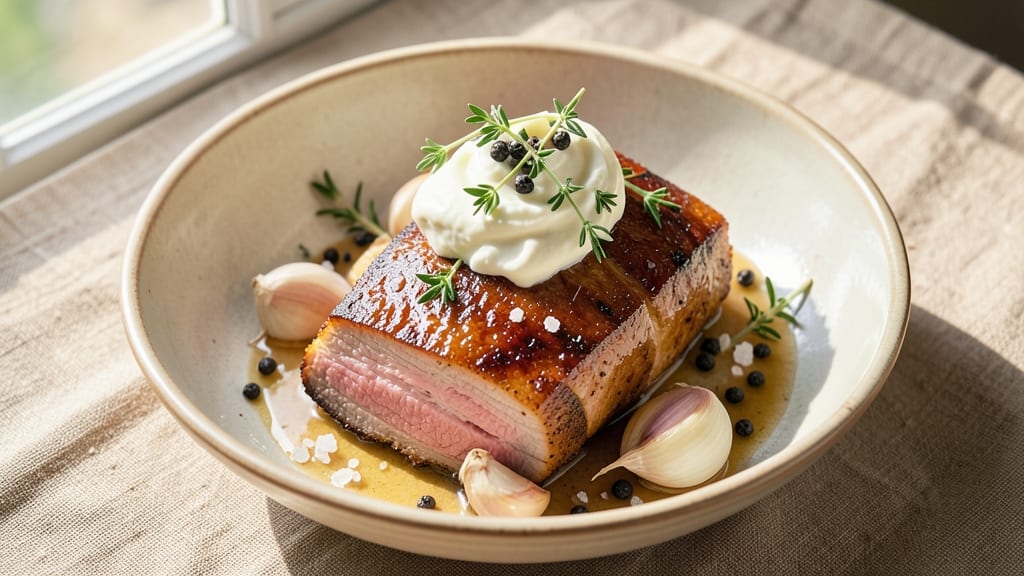
This Berkshire pork loin recipe delivers restaurant-quality results with a crispy pan-seared crust and tender, juicy interior—exactly what makes heritage pork so special. I remember the first time I cooked it at The Smoky Pig, and the difference between Berkshire and conventional pork was undeniable.
The secret lies in high-heat searing followed by a herbed butter glaze that locks in flavor while keeping the meat impossibly tender.
The process starts with a simple marinade of garlic, thyme, and black pepper, then builds to a foolproof searing technique that creates that coveted crust. We'll use a combination of dry-brining and high-heat pan-searing to ensure perfect doneness every time, with an internal temperature of 145°F for safe, juicy results.
The herbed butter glaze adds a luxurious finish that makes this dish feel like a special occasion, even on weeknights.
What you'll end up with is a golden-brown pork loin with a caramelized exterior and melt-in-your-mouth tenderness inside, all finished with a glossy herbed butter glaze.
The aroma alone will have everyone gathering at the table, and the first bite delivers that perfect balance of savory, herby, and slightly sweet flavors that define Berkshire pork. This is the kind of dish that transforms a simple dinner into something memorable.
The best part? This recipe scales beautifully for gatherings, and the leftovers reheat perfectly for sandwiches or salads. Whether you're cooking for a crowd or treating yourself to a special meal, this Berkshire pork loin delivers restaurant-quality results at home.
Let's get started with a technique that's been perfected over years of cooking heritage pork at The Smoky Pig.
Ingredients for berkshire pork loin
The secret to restaurant-quality Berkshire pork lies in these carefully chosen ingredients—each playing a crucial role in that perfect crispy crust and luxurious glaze.
| Ingredient | Amount | Notes |
|---|---|---|
| Berkshire Pork Loin 🐖 | 2 lb | Center-cut, 1.5-inch thick |
| Unsalted Butter 🧈 | ½ cup | Cold, cut into 1-inch pieces |
| Fresh Thyme Leaves 🌿 | ½ cup | Stems removed, finely chopped |
| Garlic Cloves 🧄 | 8 cloves | Minced, fresh preferred |
| Black Peppercorns 🌶️ | 1 ½ tbsp | Freshly cracked, coarse grind |
| Diamond Crystal Kosher Salt 🧂 | 1 tbsp | For dry-brine, coarse grain |
| Extra-Virgin Olive Oil 🫒 | 2 tbsp | High smoke point, for searing |
| Dijon Mustard 🍯 | 1 tbsp | For glaze, grainy preferred |
| Honey 🍯 | 1 tbsp | Wildflower, for glaze sweetness |
| Fresh Rosemary 🌿 | ¼ cup | Needles only, finely chopped |
| Heavy Whipping Cream 🥛 | ¼ cup | Full-fat for glaze richness |
| Granulated Garlic 🧄 | 1 tsp | For finishing glaze |
| Fresh Parsley Leaves 🌿 | ¼ cup | Chopped, for garnish |
Berkshire pork is non-negotiable here—look for center-cut loins with good marbling at specialty butchers like The Smoky Pig or D'Artagnan. If your grocery store doesn't carry it, Costco's heritage pork is a solid backup. The thick cut (1.5 inches) is essential for proper searing. For the herbed butter, European-style unsalted butter like Plugrá or Kerrygold melts beautifully. Fresh thyme and rosemary should smell vibrant—wilted herbs mean lost flavor. Buy them in small bunches and use within a week for maximum punch.
No fresh thyme? Dried works at one-third the amount, but it lacks that bright aroma. Substituting honey? Maple syrup keeps it vegan-friendly, though the flavor profile shifts slightly. For the glaze, Greek yogurt replaces cream if you're avoiding dairy, but you'll lose that luxurious mouthfeel. The Dijon mustard adds depth—skip the smooth kind, grainy has more texture. If you can't find Berkshire, heritage pork or even high-quality bone-in pork loin works, but the fat content won't be identical. For the olive oil, avoid light or refined oils—you want that peppery kick to stand up to the pork.
The pork should rest uncovered on a wire rack for 15 minutes after roasting—this keeps it juicy. Store leftovers in airtight containers for up to 4 days, but reheat gently to avoid drying. The herbed butter glaze freezes beautifully—portion into ice cube trays for easy single-use applications. For gatherings, double the glaze ingredients and keep it warm in a slow cooker on low. The aroma alone will have guests anticipating that first bite—trust me on this—it's worth every step of the process.
Why You'll Love This Recipe
- Foolproof Roast: I swear by this—no fancy techniques, just a hot pan, a few minutes of searing, and the oven does the rest. The pork stays juicy, the crust gets golden, and honestly? Even if you burn the edges once (looking at you, first try), the flavor still wins.
- Butter-Basted Magic: That rich, nutty Berkshire pork with melted butter and thyme? It’s like a hug for your taste buds. The garlic and peppercorns add just enough punch to make it feel special without overpowering—simple, but ridiculously good.
- Weeknight to Dinner Party: Same recipe, different vibes. Toss it on the table for a lazy Tuesday or impress guests with minimal effort. Between us, I’ve served this at both—no one ever guessed it was the same dish.
- Leftovers That Don’t Suck: Cold slices the next day are still tender, and the flavor only gets better. Slice it thin, add a drizzle of pan sauce, and boom—easy lunch or a quick sandwich fix. No sad, dry pork here.
Step-by-step instructions for pan-seared Berkshire pork loin
Here's how to transform Berkshire pork loin into a showstopping centerpiece with crispy edges and velvety glaze.
Prepare the Dry-Brine and Herb Butter
Remove the Berkshire pork loin from the refrigerator and pat it completely dry with paper towels—this is non-negotiable for crispy skin. In a small bowl, combine the 1 tablespoon Diamond Crystal Kosher Salt and 1.5 tablespoons Black Peppercorns, freshly cracked. Rub this generously over all sides of the pork, including the edges. Let it sit uncovered on a wire rack in the fridge for 2 hours—this dry-brine creates an incredible crust and ensures deep seasoning.
While the pork brines, make the herb butter by combining the 0.5 cup Unsalted Butter (cut into 1-inch pieces), 0.5 cup Fresh Thyme Leaves, 0.25 cup Fresh Rosemary (needles only), and 8 cloves Garlic Cloves (minced) in a food processor. Pulse until the butter is finely textured but still pea-sized. Transfer to a bowl, cover, and chill until ready to use. This butter will become the luxurious glaze that ties everything together.
Sear the Pork to Golden Perfection
Remove the pork from the fridge and let it sit at room temperature for 30 minutes—this ensures even cooking. Heat a 12-inch cast-iron skillet over medium-high heat until it's screaming hot. Add 2 tablespoons Extra-Virgin Olive Oil and swirl to coat the pan completely. Place the pork loin in the skillet, fat-side down, and sear for 5-6 minutes without moving it. You're looking for deep golden-brown color and a crust that releases easily when you gently lift an edge.
Flip the pork and continue searing for another 4-5 minutes until the second side is equally golden. The internal temperature should now read 140°F—this is where we'll finish it in the oven. Transfer the pork to a plate and tent loosely with foil. Let it rest while you prepare the glaze, but don't skip this resting period—it's crucial for juicy results.
Create the Herbed Butter Glaze
Return the skillet to medium heat and add the chilled herb butter. Let it melt completely, then add 1 tablespoon Dijon Mustard and 1 tablespoon Honey. Stir continuously for 2-3 minutes until the mixture thickens slightly and becomes fragrant. The glaze should coat the back of a spoon smoothly—this is your target consistency. If it looks too thick, add 1 teaspoon Heavy Whipping Cream to loosen it.
Remove the skillet from heat and stir in 1 teaspoon Granulated Garlic and 0.25 cup Heavy Whipping Cream. The glaze should now have a luxurious, glossy appearance with visible herb flecks. This is where all the flavors come together—don't rush this step. The glaze should be warm but not hot when you apply it to the pork.
Finish and Glaze the Pork
Preheat your oven to 375°F. Return the pork to the skillet and spoon the herbed butter glaze evenly over the top, making sure to cover all surfaces. Transfer the skillet to the oven and roast for 15-20 minutes, basting with any accumulated pan juices every 5 minutes. The pork is done when the internal temperature reaches 145°F and a meat thermometer inserted into the thickest part shows 155°F—this accounts for carryover cooking.
Remove the pork from the oven and let it rest for 10 minutes before slicing. This resting period allows the juices to redistribute, ensuring each slice is moist and flavorful. While it rests, spoon any remaining glaze from the pan over the top of the pork for maximum presentation.
Serve with Herb Garnish
Slice the pork into ½-inch thick medallions against the grain for maximum tenderness. Arrange on a warm serving platter and drizzle with any remaining glaze from the pan. Sprinkle generously with 0.25 cup Fresh Parsley Leaves for a pop of color and freshness. The contrast of crispy edges, tender meat, and rich glaze makes this dish truly exceptional.
Serve immediately with roasted vegetables or a simple arugula salad to complement the pork's rich flavors. Each bite should deliver perfect texture contrast—crispy exterior, tender interior, and a luxurious herb butter glaze that ties everything together beautifully.
Pro Tips For Making Berkshire Pork Loin
- Sear First, Roast Slow: DESCRIPTION:
- Smash That Garlic: DESCRIPTION:
- Don’t Overcrowd the Pan: DESCRIPTION:
- Rest It Properly: DESCRIPTION:
Pro cooking tips for great berkshire pork loin
Dry-Brine Mastery
That 2-hour dry-brine with kosher salt and cracked black pepper is non-negotiable for Berkshire pork—it creates the perfect crust while ensuring the meat stays juicy. I learned this technique from Chef Chen in Charleston, where we'd brine our heritage pork overnight for restaurant cuts.
For home cooks, 2 hours is perfect—any longer risks over-salting the surface. Pat the pork completely dry before brining, using two layers of paper towels for best results. The dry surface is what gives you that golden crust when you sear. 🌡️
Pro tip: Use a wire rack in the fridge instead of a plate—this allows air circulation and prevents soggy skin. I keep a rack in my fridge just for this purpose.
If you're short on time, a 30-minute brining at room temperature works in a pinch, but the flavor penetration won't be as deep. Trust me, the difference is noticeable in the final crust.
High-Heat Searing Secrets
The key to that perfect crispy crust is getting your cast-iron skillet screaming hot before adding the pork. I use my Lodge 12-inch skillet preheated for 5 minutes on high heat—it should be so hot that a drop of water sizzles violently when you flick it in.
Add 2 tablespoons of high-smoke-point olive oil (I prefer California Avocado Oil) and let it shimmer before placing the pork in the pan. Never move the pork during the first 5-6 minutes—this lets the Maillard reaction work its magic and create that deep golden color. 🔥
For extra insurance, I sear the fat cap first—this renders some of the fat into the pan, creating a self-basting effect. If your pork isn't releasing easily from the pan after 5 minutes, it's not ready.
Let it cook longer—rushing this step is what leads to tough, uneven crusts. The internal temperature should reach 140°F after searing both sides, which is when we move to the oven.
Glaze Consistency Control
The herbed butter glaze needs to be smooth but not runny—think of it like a thin sauce that coats the back of a spoon. I melt the chilled herb butter over medium heat (never high) and stir constantly to prevent burning.
The Dijon mustard and honey combination is what gives it that perfect balance of tang and sweetness. If your glaze starts to separate, whisk in 1 teaspoon of heavy cream to emulsify it. I've ruined more glazes than I care to admit by rushing this step—patience is key here. ✨
For extra richness, I like to add a pinch of smoked paprika to the glaze when it's off the heat—just ½ teaspoon adds a subtle smoky depth that complements the pork beautifully.
The glaze should be warm but not hot when you apply it to the pork—this prevents the butter from melting too quickly in the oven. I always keep a small bowl of ice water nearby to quickly chill any extra glaze if needed.
Resting Like a Pro
This is where most home cooks fail—resting the pork for 10 minutes before slicing is absolutely critical. I've seen people cut into pork immediately after roasting, and it's always dry and disappointing.
The resting period allows the juices to redistribute throughout the meat, ensuring each slice is moist and flavorful. Tent the pork loosely with foil to keep it warm while it rests, but don't seal it completely—you want some air circulation. 💫
For extra insurance, I like to place the pork on a meat thermometer probe during resting to monitor the temperature. It should stay around 145°F during this time. If you're serving a crowd, use this resting time to reheat any side dishes or prepare your garnishes.
The aroma alone will have everyone gathering at the table—trust me, it's worth the wait.
Nutrition facts
Frequently asked questions
Why does Berkshire pork taste different from regular pork?
Berkshire pork has a distinct, richer flavor because of its high marbling and breed characteristics. The heritage Berkshire breed has more intramuscular fat, creating a juicier, more flavorful cut. Plus, these pigs are raised more slowly and humanely, which develops deeper flavor profiles. The fat content also renders differently during cooking, giving that perfect balance of crispy exterior and tender interior.
Can I substitute regular pork loin for Berkshire?
You can try, but the results won't be the same. Regular pork loin has less fat and marbling, so it won't be as juicy or flavorful. For best results, look for heritage pork or bone-in pork loin from specialty butchers. If you must use conventional pork, trim excess fat and use a 50% longer cooking time to compensate for the lower fat content. The texture and flavor will still be noticeably different.
How do I know when the pork is fully cooked?
Use a meat thermometer for accuracy—Berkshire pork is safe at 145°F internal temperature. For carryover cooking, aim for 155°F when removing from the oven. The pork should feel firm but still slightly springy to the touch. Never rely on color alone—some cuts of pork can appear cooked before reaching safe temperatures. Pro tip: Let it rest for 10 minutes before slicing to ensure perfect doneness.
What's the best way to reheat leftovers?
Reheat Berkshire pork loin gently to avoid drying it out. Place slices in a skillet over low heat with a splash of water or broth, covering for 3-5 minutes until warmed through. For larger portions, use a slow cooker on low for 1-2 hours with a little apple cider or chicken stock. Microwaving can make the meat tough—always reheat slowly to preserve moisture. Store leftovers in airtight containers for up to 4 days.
Can I make this recipe in a Dutch oven?
A Dutch oven works perfectly for this recipe. Sear the pork as directed, then transfer it to the oven with the glaze. The Dutch oven's heavy construction helps maintain even heat and prevents the glaze from burning. Just make sure your Dutch oven is 5-6 inches deep to accommodate the pork comfortably. The enclosed environment also helps trap moisture, keeping the pork extra juicy.