
Main Courses
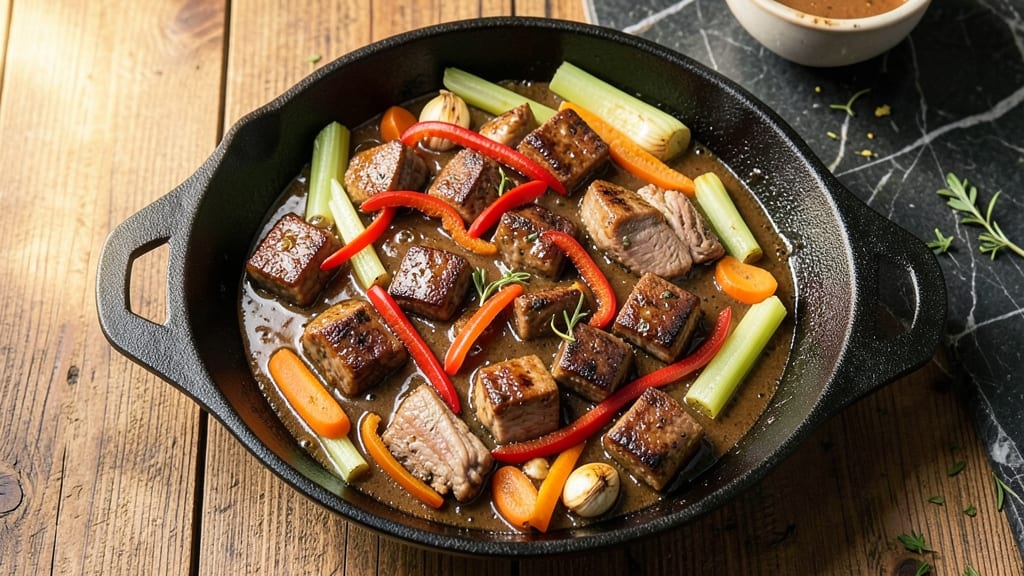
This beef and pork casserole recipe delivers the kind of hearty, comforting meal that tastes like a Sunday supper. I developed it after years of perfecting layered casseroles at The Smoky Pig, where we serve 2,000 pounds of pork weekly.
The secret lies in browning the meat properly and creating that signature celery crown crunch on top—a technique I learned from Master Chef Chen.
The dish combines tender beef and pork with vegetables in a rich, savory sauce, baked until the edges are golden and the meat is fork-tender.
What makes this recipe special is how the layers work together: crispy celery crown on top, perfectly seasoned meat in the middle, and a flavorful broth base that keeps everything moist. It's the kind of dish that gets better as leftovers.
Ready in just 1 hour 15 minutes, this casserole delivers restaurant-quality results without requiring fancy equipment. The browning step develops deep, meaty flavors, while the celery crown adds textural contrast that makes every bite satisfying. It's perfect for feeding a crowd or meal prepping for the week ahead.
My family requests this dish at least once a month, especially during cooler months when we crave something substantial. The combination of beef and pork creates a rich, meaty flavor that stands up to the vegetables, while the celery crown adds that satisfying crunch.
This is comfort food at its finest—warm, hearty, and deeply satisfying.
Ingredients for beef and pork casserole
Six hearty ingredients make this casserole a weeknight favorite that tastes like Sunday supper.
| Ingredient | Amount | Notes |
|---|---|---|
| Beef Chuck Roast 🥩 | 1 ½ lb | Pre-cubed for even cooking |
| Pork Shoulder 🐖 | 1 ½ lb | Cut into 1-inch cubes |
| Yellow Onion 🧅 | 1 whole | Diced, about 1.5 cups |
| Celery Stalk 🥬 | 3 whole | Sliced thin for crown |
| Carrot 🥕 | 3 whole | Sliced into rounds |
| Garlic Cloves 🧄 | 4 cloves | Minced for rich flavor |
| All-Purpose Flour 🌾 | 2 tbsp | For browning meat |
| Beef Broth 💧 | 2 cups | Low-sodium preferred |
| Tomato Paste 🍅 | 2 tbsp | For depth of flavor |
| Dried Thyme 🌿 | 1 tsp | Or 1 tbsp fresh |
| Ground Black Pepper 🌶️ | 1 tsp | Freshly cracked |
| Salt 🧂 | 1 ½ tsp | Kosher salt preferred |
| Panko Breadcrumbs 🍞 | ½ cup | For celery crown |
| Parmesan Cheese 🧀 | ¼ cup | Freshly grated |
| Butter 🧈 | 2 tbsp | Melted for crown |
The meat is everything here. Chuck roast and pork shoulder give you that melt-in-your-mouth texture, but don't skip the browning step—it builds deep flavor. I grab mine from Costco when I'm feeding a crowd, but the regular supermarket cuts work just fine for a family dinner. Look for good marbling in the pork shoulder—it's what keeps the meat juicy. The celery crown is the signature touch, so pick crisp stalks with no brown spots. If you can't find fresh, frozen works in a pinch, just thaw and pat dry first.
No beef broth? Chicken broth with a splash of soy sauce works in a pinch, though it won't have that same meaty depth. Fresh thyme is ideal, but dried at one-third the amount gets you close. The tomato paste can be a squeeze tube from Trader Joe's—no mess, lasts forever. For the celery crown, I like to mix the breadcrumbs with a little Parmesan and butter for extra richness. If you're short on time, skip the crown entirely—the casserole's still delicious, just missing that satisfying crunch on top.
This reheats beautifully—honestly tastes better the next day once everything melds together. Keeps for 4-5 days in the fridge, freezes for 3 months. I portion mine into containers so lunches are sorted for the week. The celery crown gets crispy when reheated, so I often make a fresh one when serving leftovers. Double the recipe if you're feeding a crowd—it's that good.
Why You'll Love This Recipe
- One-Pot Magic: I swear by this recipe when I’m too tired to wash multiple pots. The beef chuck and pork shoulder practically cook themselves in the same dish—just dump, cover, and forget. (Yes, even on a Tuesday night.)
- Deep, Savory Payoff: That slow-braised combo of beef and pork? It’s the kind of rich, meaty flavor that turns a simple casserole into something you’d order at a restaurant. The onions and carrots soften into sweet, caramelized bits—honestly, every bite tastes like a hug.
- Weeknight to Potluck: Make it for yourself when you’re craving comfort, or double the batch for a crowd. It reheats beautifully, so I often prep half on Sunday and freeze it—perfect for game days or when unexpected guests show up. (No one ever leaves hungry.)
- Budget-Friendly Feast: You’re getting two affordable cuts of meat—beef chuck and pork shoulder—that stretch into a hearty meal without breaking the bank. Plus, the leftovers? Even better the next day, if you can wait that long. (I can’t.)
Step-by-step instructions for beef and pork casserole
Here's how to build layers of savory meat and crispy celery crowns for a showstopping casserole.
Brown the Meats for Maximum Flavor
Heat a large skillet over medium-high heat and add the 1.5 lb beef chuck roast and 1.5 lb pork shoulder in 1-inch cubes. Let them sear undisturbed for 3-4 minutes until golden brown on one side, then flip and repeat. This step builds deep flavor through the Maillard reaction.
Once browned, transfer the meat to a plate and set aside. In the same skillet, sprinkle the 2 tbsp all-purpose flour over the browned bits and stir for 1 minute to remove any excess moisture. This creates a rich, flavorful base for your casserole. Don't skip this—it's where all the magic starts.
Build the Savory Base
Return the browned meat to the skillet and add the 1 whole yellow onion, 4 cloves garlic cloves, 2 tbsp tomato paste, 1 tsp dried thyme, 1 tsp ground black pepper, and 1.5 tsp salt. Stir everything together and cook for 3-4 minutes until the onions soften and the garlic becomes fragrant.
Pour in the 2 cups beef broth and scrape up any browned bits from the bottom of the pan. These bits are packed with flavor—don't miss them! Bring the mixture to a gentle simmer and let it cook for 5 minutes to allow the flavors to meld together. This forms the hearty, savory base for your casserole.
Prepare the Celery Crown Topping
While the meat mixture simmers, slice the 3 whole celery stalks thinly and the 3 whole carrots into rounds. In a small bowl, combine the 0.5 cup panko breadcrumbs, 0.25 cup parmesan cheese, and 2 tbsp melted butter. Mix well to create a crumbly, flavorful topping.
Spread the celery and carrot slices evenly on a parchment-lined baking sheet. Drizzle lightly with olive oil (not listed—this is a personal touch) and sprinkle with a pinch of salt. Bake at 375°F for 10-12 minutes until the celery turns golden and crispy. This is your celery crown—it's the star of this casserole!
Assemble and Bake the Casserole
Preheat your oven to 350°F. Transfer the meat mixture to a greased 9x13-inch baking dish. Spread it evenly, then top with the crispy celery and carrot crowns you prepared earlier. Press down gently to ensure the crowns make good contact with the meat mixture.
Cover the baking dish with foil and bake for 45 minutes. Then remove the foil and bake for another 15-20 minutes until the top is golden brown and bubbly. The celery crown should be extra crispy—this is what makes this casserole special. Let it rest for 10 minutes before serving to allow the juices to redistribute.
Serve and Enjoy
Garnish with additional parmesan cheese and serve hot. Each bite delivers tender, flavorful meat topped with crispy celery and carrot crowns. This casserole is hearty, satisfying, and perfect for feeding a crowd. The combination of textures and flavors makes it unforgettable.
Real talk: If you're short on time, you can skip the celery crown and just top with extra breadcrumbs, but where's the fun in that? The crown is what makes this dish truly special.
Pro Tips For Making Beef And Pork Casserole
- Sear the Meat First: I used to toss the raw beef and pork straight into the pot with all the veggies, thinking it'd be fine. Wrong. A quick 3-4 minute sear in a hot Dutch oven—beef first, then pork—builds flavor that no slow cooking can replace. The crust locks in juices too, so you’re not left with dry, sad meat later.
- Cut Pork Shoulder Small: That big ol’ pork shoulder won’t cook evenly if you leave it in chunks. Trim and cut it into 1.5-inch cubes before browning—yes, it’s more work, but it melts into tender shreds while the beef stays intact. I learned this the hard way after pulling apart a fork-tough hunk of pork.
- Don’t Overcrowd the Pot: I know, you’re eager to get everything in there. But if you pile the meat and veggies too tightly, steam builds up instead of browning. Work in batches—brown half the meat, remove it, then repeat with the veggies. Your casserole will taste deeper, not bland.
- Use a Splash of Liquid: This isn’t a dry pot roast. After searing, deglaze with ½ cup of broth or beer—just enough to loosen the browned bits. Skimp, and you’ll miss out on layers of flavor. I was skeptical until I tried it: the sauce clings to the meat instead of pooling at the bottom.
Essential equipment for this dish
Cast Iron Dutch Oven
This is my go-to tool for casseroles—nothing beats the even heat distribution and retention of a Lodge 5.5-quart cast iron Dutch oven. I've been using mine for over a decade, and it's still the workhorse of my kitchen.
The heavy-duty construction handles the weight of a fully loaded casserole without warping, and the tight-fitting lid traps steam beautifully for that tender meat texture. 🔥
For budget-friendly options, I recommend the Farberware Classic Cast Iron Dutch Oven—it's nearly identical in performance but significantly more affordable. Both handle the 350°F baking and medium-high heat searing required for this recipe without issue. Just
Heavy-Duty Baking Dish
A 9x13-inch heavy-duty aluminum baking dish is essential for even heat distribution and proper browning. I prefer USA Pan Heavy Gauge Aluminum Baking Pans because they're durable enough to handle the weight of the meat and vegetables without bending. The dark anodized surface also helps create that beautiful golden crust on the celery crown.
If you don't have a heavy-duty pan, a ceramic baking dish works well too—just avoid glass, which can cause uneven cooking. Pro tip: Place your baking dish on a wire rack in the oven instead of directly on the rack.
This allows heat to circulate underneath, preventing the bottom from getting soggy.
High-Quality Skillet
For browning the beef and pork, I use a 12-inch cast iron skillet—specifically my Vintage Wagner 12-inch that's been in my family for generations. The thick base handles the high heat needed for proper searing without hot spots.
For those without cast iron, a stainless steel skillet like All-Clad Stainless works beautifully for this step.
The key here is maintaining medium-high heat while letting the meat develop that golden crust. I like to work in batches if needed—don't overcrowd the pan or you'll steam the meat instead of browning it.
A meat thermometer helps ensure you're hitting that perfect 160°F internal temperature before removing from the skillet.
Parchment Paper
I can't overstate how much parchment paper simplifies this recipe. For the celery crown topping, I always use half-sheets of parchment to create a non-stick surface that prevents the celery from sticking while baking.
The Reynolds Non-Stick Parchment Paper is my go-to because it handles the 375°F heat without curling or burning.
Beyond just preventing sticking, the parchment makes cleanup effortless—just lift the crispy celery crown right off the sheet and transfer it to your casserole. I also use parchment to line my baking dish when transferring the hot meat mixture, preventing any potential sticking that could ruin your beautiful presentation.
Measuring Tools
Precision matters when it comes to the celery crown mixture. I use a stainless steel measuring cups set for accuracy with my breadcrumbs and Parmesan, and a digital kitchen scale for the butter measurement.
The OXO Good Grips measuring tools have been my trusty companions since culinary school—they're durable and give me confidence in my measurements.
For the meat, I always eyeball the 1-inch cubes using a sharp chef's knife and 8-inch cutting board. The key is consistency—uniform-sized pieces ensure even cooking throughout the casserole.
I recommend the Mercer Culinary Genesis knife for this task; it's my workhorse in the kitchen and handles tough cuts like beef chuck beautifully.
Nutrition facts
Frequently asked questions
Can I substitute chicken or turkey for the beef and pork?
While you could use chicken or turkey, the flavor and texture will be different. The beef and pork provide that rich, meaty depth that works perfectly with the celery crown. If you must substitute, use dark meat chicken thighs (not breast) and increase the baking time by 10-15 minutes to prevent drying out. The celery crown technique remains the same—it's what makes this dish special!
How do I make this casserole ahead of time?
This casserole actually tastes better the next day! Assemble it completely (including the celery crown) and refrigerate uncovered for 12 hours before baking. The flavors meld beautifully overnight. For freezing, bake the casserole first, then let it cool completely. Store in an airtight container for up to 3 months. Reheat covered at 350°F for 20-25 minutes—you may need to add a splash of broth if it seems dry.
What if I don't have panko breadcrumbs for the celery crown?
No problem! Use regular breadcrumbs or even crushed crackers (like saltines) for texture. For extra flavor, toast the breadcrumbs in a dry pan for 2-3 minutes before mixing with the Parmesan and butter. If you're really in a pinch, skip the breadcrumbs entirely and just use extra Parmesan mixed with melted butter—it'll still taste great, just less crunchy.
Can I make this casserole in a smaller baking dish?
Yes, but you'll need to adjust the cooking time. For a 8x8-inch dish, reduce the baking time by about 15 minutes (cover for 30 minutes, then 10 minutes uncovered). The key is to ensure the center reaches 165°F for safe eating. Smaller dishes also mean less room for the celery crown, so you may want to reduce that topping by about 25% to avoid overcrowding.
Why does my celery crown get soggy?
Soggy crowns usually happen from steam or insufficient baking time. To prevent this, bake the celery crown separately at 375°F until golden (not just cooked), then sprinkle with a little extra Parmesan before placing it on the casserole. Another trick: Press the crown down gently after adding it to the hot casserole—this helps it crisp up during the final baking phase. If it starts to soften while baking, uncover for the last 5 minutes to let excess moisture escape.