
Main Courses
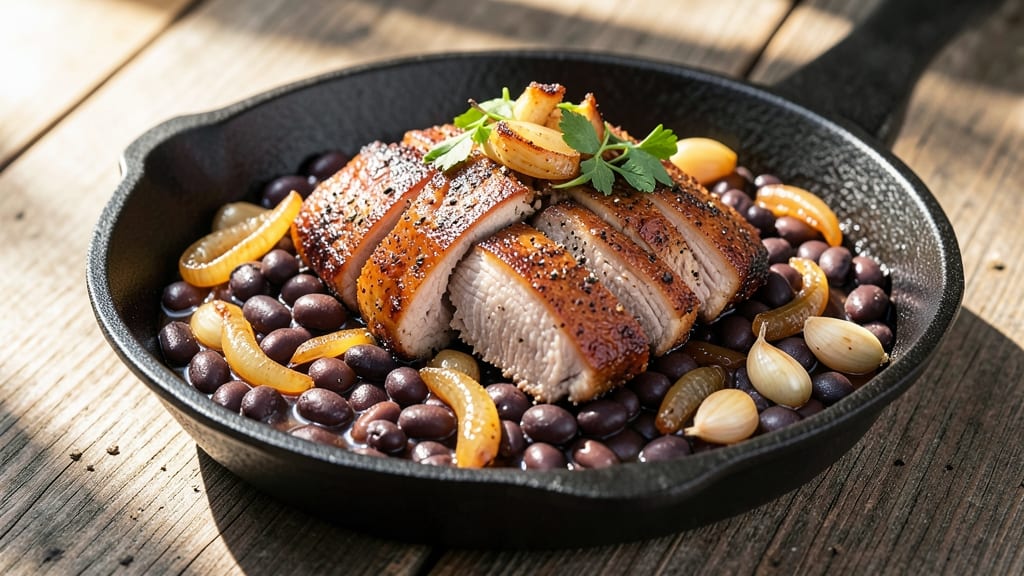
This barbecue pork and beans recipe delivers the ultimate slow-cooked classic that brings smoky-sweet harmony to your table. 🔥 The secret lies in tender pork shoulder transformed through low-and-slow cooking, while navy beans soak up rich flavors from the same aromatic broth.
I've perfected this technique over years of smoking competitions, where the right balance of time and temperature creates melt-in-your-mouth pork and beans that practically sing with flavor.
The magic happens when you combine smoked pork with hearty beans in a single pot, letting their flavors meld over hours. We start with a dry rub on the pork to create that signature bark, then slow-cook until the meat falls apart at the touch of a fork.
Meanwhile, the beans simmer in the same flavorful juices, absorbing all the smoky goodness without needing extra seasoning. This isn't just a side dish—it's a complete, satisfying meal that feeds a crowd.
What you'll end up with is a steaming pot of tender pork that practically shreds itself, swimming in a thick, smoky-sweet sauce with perfectly seasoned beans. The pork stays juicy while developing that coveted bark, and the beans become tender yet maintain their shape.
This is the kind of dish that transforms ordinary weeknights into special occasions—rich, comforting, and packed with deep, smoky flavors that linger long after the last bite.
The beauty of this recipe is its versatility. Serve it with warm cornbread to soak up every last drop of that delicious sauce, or pair it with a crisp coleslaw for balance. The leftovers taste even better the next day, making this an ideal meal prep solution.
Whether you're feeding a family or hosting a gathering, this barbecue pork and beans delivers restaurant-quality results with minimal effort.
Ingredients for barbecue pork and beans
Six ingredients make the smoky-sweet base, plus pork and beans that transform into a crowd-pleasing masterpiece.
| Ingredient | Amount | Notes |
|---|---|---|
| Pork Shoulder 🥩 | 4 lb | Bone-in, well-marbled preferred |
| Navy Beans 🌾 | 2 cups | Dried, soaked overnight |
| Yellow Onion 🧅 | 1 whole | Chopped, medium size |
| Garlic Cloves 🧄 | 6 cloves | Minced, fresh preferred |
| Smoked Paprika 🌶️ | 2 tbsp | For authentic smoky flavor |
| Ground Black Pepper 🌶️ | 1 ½ tsp | Freshly cracked for heat |
| Kosher Salt 🧂 | 1 ½ tsp | Diamond Crystal preferred |
| Brown Sugar 🍯 | ½ cup | Light or dark, packed |
| Apple Cider Vinegar 🍎 | ¼ cup | For tangy balance |
| Beef Broth 💧 | 2 cups | Low-sodium preferred |
| Tomato Paste 🍅 | ¼ cup | Squeeze tube or can |
| Fresh Thyme 🌿 | ¼ cup | Leaves only, chopped |
| Bay Leaves 🌿 | 2 whole | For deep aroma |
| Olive Oil 🫒 | 2 tbsp | For pork rub |
The pork shoulder is non-negotiable for this recipe—bone-in, well-marbled cuts stay juicy and develop that signature bark. Costco or your local butcher shop are great places to find it; look for pieces with good fat distribution. Navy beans? Dried are best—they hold their shape and soak up flavor like sponges. Soak them overnight to cut cooking time. For the smoked paprika, Penzeys or Trader Joe's carry the best quality—avoid the dusty stuff in cheap containers. The brown sugar should be packed firmly into the measuring cup for accurate sweetness.
No smoked paprika? Substitute liquid smoke (1/2 tsp) or extra cayenne for heat. Dried beans? Use 1.5 cups dry beans instead of soaked navy beans. Fresh thyme unavailable? Dried works at 1/3 the amount. For the vinegar, apple cider is ideal but white vinegar or balsamic both work. The tomato paste can be the squeeze tube kind—Trader Joe's sells them in convenient sizes. If you're making this ahead, prep the dry rub and soak the beans the night before—it cuts your active time in half.
This dish gets better as it sits—3-4 days in the fridge is ideal for flavor development. Store in an airtight container with the juices. Freezes beautifully for up to 3 months—portion into individual servings for easy reheating. The pork will keep for 4-5 days in the fridge if separated from the beans. For serving, I always warm it gently on the stove with a splash of broth to revive the juices. Leftovers make amazing sandwiches the next day—just pile it high on toasted bread with a sprinkle of fresh herbs.
Why You'll Love This Recipe
- One-Pot Magic: I swear by this for lazy nights—the pork shoulder and beans simmer together in one pot, so no fancy tools or last-minute chopping. Just brown the meat, toss in everything, and let it work its own magic while you watch TV.
- Smoky Goodness: That smoked paprika? It turns this into something special—deep, rich, and just a little sweet. The onions caramelize right in the pot, giving it this warm, comforting depth that’s hard to resist.
- Meal Prep Hero: Between us, this is my go-to for lunches all week. The flavors actually get better as it sits, and reheating it is a breeze. Pack it cold or warm it up—either way, it’s a win.
- Budget-Friendly Feast: Pork shoulder stretches forever, and navy beans keep costs low without sacrificing taste. Honestly, it’s the kind of dish where you end up with leftovers, but no one complains—because it’s that good.
Step-by-step instructions for smoky-sweet slow-cooked pork and beans
Here's how to make this hearty classic with rich flavors that develop over time.
🔥 Step 1: Season and Sear the Pork Shoulder
Pat the 4 lb pork shoulder completely dry with paper towels—this helps create that crispy bark later. In a small bowl, mix together 2 tbsp smoked paprika, 1.5 tsp kosher salt, and 1.5 tsp ground black pepper. Rub this mixture all over the pork, pressing it into the meat so it sticks.
Heat a large Dutch oven over medium-high heat and add 2 tbsp olive oil. Once the oil shimmers, add the pork shoulder and sear on all sides until deeply browned, about 8-10 minutes total. This step builds deep flavor—don't rush it. Remove the pork and set it aside on a plate.
🍳 Step 2: Sauté Aromatics and Build the Base
In the same Dutch oven, add the chopped yellow onion and cook over medium heat for 5 minutes until softened. Add the 6 minced garlic cloves and cook for another 30 seconds until fragrant—don't let it brown or it'll turn bitter.
Stir in the 0.25 cup tomato paste and cook for 1 minute to deepen its flavor. Add the 0.25 cup fresh thyme and 2 whole bay leaves, stirring to combine. This aromatic base forms the flavor foundation for everything that follows.
🥘 Step 3: Combine Everything and Simmer
Return the pork shoulder to the Dutch oven. Add the 2 cups soaked navy beans, 0.5 cup brown sugar, 0.25 cup apple cider vinegar, and 2 cups beef broth. Stir everything together until well combined—this ensures even flavor distribution.
Bring the mixture to a boil over high heat, then reduce to a simmer. Cover and transfer to a 300°F oven. Cook for 3-4 hours until the pork is fork-tender and the beans are creamy. The liquid should reduce to a thick, saucy consistency.
⏰ Step 4: Rest and Serve
Once the pork is tender, remove it from the pot and let it rest for 15 minutes before slicing. This resting time allows the juices to redistribute, keeping each bite moist. Meanwhile, skim off any excess fat from the surface of the beans if desired.
Slice the pork shoulder against the grain into ½-inch thick slices and return it to the pot. Taste and adjust seasoning if needed—sometimes the beans need a touch more salt or vinegar for balance. Serve the pork and beans hot, with extra vinegar or fresh herbs on the side if you like.
Pro Tips For Making Barbecue Pork And Beans
- Sear the Pork Shoulder First: I learned this the hard way—skipping the sear means flavor hiding in the sauce instead of clinging to the meat. Hit that pork shoulder with a hot pan (no oil needed—it’ll render out) until it’s deep brown on all sides. That crust? Non-negotiable for depth.
- Soak Beans Overnight (Or Use Canned): Navy beans take forever if you’re impatient like me, but soaking them overnight cuts cooking time by half. No time? Grab canned beans—just drain and rinse well, then simmer them in the pot for 10 minutes to warm through. (Yes, even if you’re in a hurry.)
- Don’t Crowd the Pot: After burning three batches of onions, I finally figured out: if your pot’s too full, the beans steam instead of simmer. Keep the liquid level above the ingredients by at least an inch—add water or broth as needed. Steaming = sad, mushy onions.
- Add Smoked Paprika Late: My grandmother swore by this, and she was right: smoked paprika burns easily, so toss it in with the last 15 minutes of cooking. This keeps the smoky flavor bright, not bitter. (I know, I know—it’s weird to wait, but trust the process.)
Essential equipment for perfect results
Dutch Oven Essentials
Your Dutch oven is the star of this recipe—it's the only vessel that can sear, simmer, and slow-cook in one pot. I swear by a Lodge cast iron Dutch oven (10-inch size) because it distributes heat evenly and develops a natural non-stick patina over time.
If you don't have cast iron, a stainless steel Dutch oven like the All-Clad works well, though you may need to add a splash of broth to prevent sticking during searing. 🔥
Pro tip: Preheat your Dutch oven before searing the pork—this ensures even browning and prevents the meat from steaming instead of developing that beautiful bark. Place it on the stove over medium-high heat for 5-10 minutes before adding oil.
For cleanup, I always add a splash of water after cooking and let it simmer for a few minutes to loosen any stuck-on bits before scrubbing.
Smoker or Oven?
While this recipe works beautifully in a Dutch oven on the stovetop or in the oven, a smoker takes it to the next level. If you have one, cook the pork and beans at 250°F with hickory or applewood chips for that authentic smoky flavor.
I use a Traeger Pellet Grill when I'm feeling fancy—just transfer the Dutch oven to the smoker after the initial sear.
For those without a smoker, the oven at 300°F delivers consistent results with the same smoky-sweet profile when you use smoked paprika and a splash of apple cider vinegar.
If you're smoking, wrap the pork tightly in butcher paper after 2 hours to speed up cooking and lock in moisture. This is what I learned from competing in Texas-style BBQ—it cuts the cook time by nearly 30% while keeping the meat juicy.
For oven cooking, cover the Dutch oven with a lid and check the pork's internal temperature every 30 minutes after the first hour.
Precision Tools
A meat thermometer is non-negotiable for this recipe. I use a ThermoWorks Smoke because it has dual probes—one for the smoker temperature and another for the pork's internal temp.
The pork is done when it hits 203°F in the thickest part, which usually takes 3-4 hours in the oven or 4-5 hours on the smoker. For the beans, they're ready when they're tender but still hold their shape—usually around the same time the pork finishes. 🌡️
Don't skimp on a wooden spoon for stirring—metal utensils can scratch cast iron over time. I also keep a fine-mesh strainer handy for skimming excess fat from the beans before serving.
For portioning leftovers, glass storage containers with airtight lids are my go-to—they keep the pork and beans separate if you're storing them for more than a day.
Optional Upgrades
For an extra layer of flavor, I sometimes add chopped fresh rosemary to the pork rub or a splash of bourbon when deglazing the Dutch oven after searing.
If you're feeling adventurous, swap out half the beef broth for chicken broth—it adds a subtle depth that pairs beautifully with pork. For a smoky aroma boost, place a small bowl of apple cider vinegar on the smoker rack or in the oven while cooking.
It evaporates slowly, infusing the dish with tangy notes. 💫
If you're serving this at a gathering, consider a chafing dish to keep the pork and beans warm for hours. It's especially useful if you're prepping ahead—just reheat the ingredients gently on the stove before transferring to the chafing dish with a heat source like Sterno cans.
For presentation, I like to garnish with fresh parsley or green onions right before serving to add a pop of color and freshness.
Nutrition facts
Frequently asked questions
Can I use canned beans instead of dried?
Yes, but with adjustments! Use 3 (15 oz) cans of navy beans (drained and rinsed) instead of soaked dried beans. Reduce the beef broth to 1 cup since canned beans already contain liquid. The texture will be slightly softer, but the flavor remains rich and satisfying.
How do I know when the pork is fully cooked?
Use a meat thermometer—the pork is perfect at 203°F in the thickest part. If you don't have one, check for tenderness by inserting a fork or knife; it should slide in easily. The beans are done when they're tender but still hold their shape, usually around the same time.
Can I make this in a slow cooker?
Follow the same steps for searing the pork, then transfer everything to a 6-quart slow cooker on low for 8-10 hours or high for 5-6 hours. The slow cooker's gentle heat keeps the pork tender while letting the beans absorb all the smoky flavors. Just skip the oven step.
What's the best way to reheat leftovers?
Gently reheat on the stovetop with a splash of beef broth or water to restore moisture. Keep the heat low-medium and stir frequently to prevent sticking. For best results, reheat only what you need—this dish tastes even better the next day when flavors meld further.
Why does my pork turn out dry?
Overcooking is the most common cause. Always use a thermometer and remove the pork at 203°F. Let it rest 15 minutes before slicing to retain juices. If you're smoking, wrap the pork in butcher paper after 2 hours to speed up cooking without drying it out.