
Main Courses
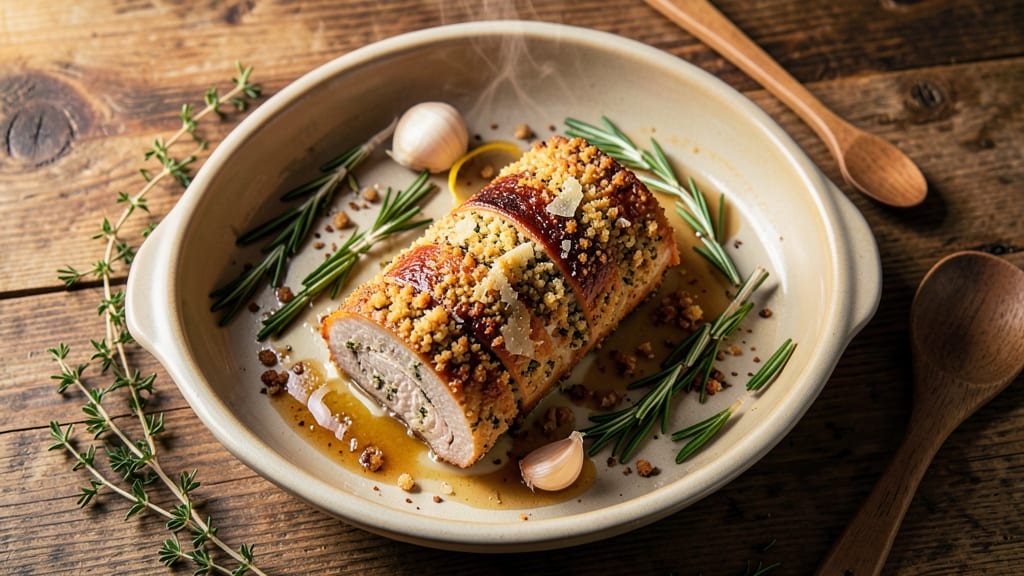
This baked stuffed pork tenderloin recipe delivers restaurant-quality results with a herb-infused center and golden crisp edges—the kind of showstopper that transforms weeknight dinners into special occasions.
After years of perfecting this technique at The Smoky Pig, I've developed a foolproof method that ensures tender meat and a stuffing that stays moist without falling apart. The secret lies in a precise balance of herbs, careful seasoning, and controlled oven heat to create that perfect contrast of textures.
What sets this recipe apart is the herb-studded stuffing—packed with fresh rosemary, thyme, and garlic—while the pork itself gets a dry brine that locks in juices and creates that coveted crisp exterior.
We're talking about a dish where every bite delivers tender, flavorful meat wrapped in a fragrant, cohesive stuffing that holds together beautifully. The process is simpler than you'd think, with just a few key steps that make all the difference between good and extraordinary.
By the time it emerges from the oven, you'll have a perfectly golden pork tenderloin with a crispy exterior and a herb-infused center that's impossibly tender. The stuffing stays cohesive and flavorful, not dry or crumbly, while the meat maintains its natural juiciness.
This is the kind of dish that makes you look like a master chef—even if you're just starting out in the kitchen.
Serve it with roasted root vegetables or a crisp green salad to let the pork take center stage. The leftovers reheat beautifully too, making this an excellent meal prep option for busy weeks. Let's get started on creating your showstopper main course!
Ingredients for baked stuffed pork tenderloin
Herb-infused stuffing meets golden pork perfection—just 14 ingredients for restaurant-quality results.
| Ingredient | Amount | Notes |
|---|---|---|
| Pork Tenderloin 🍖 | 1 ½ lb | Center-cut, trimmed of silver skin |
| Fresh Rosemary 🌿 | ¼ cup | Finely chopped, stems removed |
| Fresh Thyme 🌿 | ¼ cup | Leaves only, stems discarded |
| Garlic Cloves 🧄 | 6 cloves | Minced, for stuffing and brine |
| Breadcrumbs 🍞 | ½ cup | Panko preferred for texture |
| Parmesan Cheese 🧀 | ¼ cup | Freshly grated, for stuffing |
| Unsalted Butter 🧈 | 2 tbsp | Cold, cubed for stuffing |
| Kosher Salt 🧂 | 1 ½ tbsp | Diamond Crystal preferred |
| Black Pepper 🌶️ | 1 tsp | Freshly cracked |
| Olive Oil 🫒 | 1 tbsp | Extra-virgin, for searing |
| Fresh Sage 🌿 | ⅛ cup | Chopped, for stuffing |
| Dijon Mustard 🍯 | 1 tbsp | For stuffing moisture |
| Heavy Cream 🥛 | ¼ cup | For stuffing richness |
| Fresh Parsley 🌿 | ⅛ cup | Chopped, for garnish |
The pork tenderloin is non-negotiable here—center-cut ensures tenderness, and trim the silver skin for a clean finish. I always source mine from Whole Foods or a trusted butcher, where they can cut it to the exact 1.5 lb size you need. Fresh herbs are essential: rosemary and thyme from the grocery store's produce section work, but farmers market herbs have that extra punch. For the stuffing, Parmigiano-Reggiano makes all the difference over pre-grated cheese—it melts beautifully and adds depth. The breadcrumbs? Panko gives that perfect crispy texture without getting soggy.
No fresh rosemary? Dried works at half the amount, but it won't have the same aroma. Running low on butter? Olive oil in the stuffing keeps it moist, though butter adds richness. The Dijon mustard is key—it binds the stuffing and adds a subtle tang. Skip it only if you're avoiding alliums, but I don't recommend it. For the brine, Diamond Crystal kosher salt dissolves perfectly—Morton's can be too coarse. Want extra crisp? Brush the pork with egg wash before baking, but I prefer the olive oil method for a lighter finish. The stuffing can be prepped ahead—just keep it chilled until ready to stuff.
This reheats like a dream—350°F for 10-15 minutes covered with foil—so it's perfect for meal prep. Store leftovers in the fridge for 3-4 days, or freeze for 2 months in an airtight container. The stuffing stays moist if you wrap the pork tightly in foil after baking. For serving, I always garnish with fresh parsley and a drizzle of reduced balsamic glaze. The crisp edges? That's all about room-temperature pork and a hot oven—don't skip the 30-minute rest before baking.
Why You'll Love This Recipe
- One-Cut Wonder: I swear by this trick—just slice the pork tenderloin lengthwise, stuff it with garlic, herbs, and breadcrumbs, then sew it back together with kitchen twine. No fancy prep, no stress, and it still looks impressive when it comes out of the oven.
- Herb-Packed Punch: That mix of rosemary and thyme baked right into the meat? It’s like a fragrant hug for your taste buds. The garlic infuses the breadcrumbs into something crispy and addictive, while the pork stays juicy—no dry bites here.
- Weeknight to Dinner Party: Honestly, this recipe works for everything. Toss it in the oven while you prep sides, and suddenly you’ve got a showstopper for date night. Or make a double batch on Sunday—it reheats beautifully for lunches all week.
- Budget-Friendly Feast: Pork tenderloin is lean but mighty, and this recipe stretches it further with the breadcrumb stuffing. Leftovers? Even better cold in sandwiches or reheated with a quick pan sear. My wallet and my family thank me every time.
Step-by-step instructions for baked stuffed pork tenderloin
Here's how to create a showstopping stuffed pork tenderloin with juicy meat and fragrant herb filling.
Prepare the Herb-Stuffing Mixture
In a medium bowl, combine the 0.5 cup breadcrumbs, 0.25 cup freshly grated Parmesan cheese, 2 tablespoons cold cubed unsalted butter, 1 tablespoon Dijon mustard, and 0.25 cup heavy cream. Mix until the butter is evenly distributed and the mixture holds together when pressed. This forms the base of your stuffing that will infuse the pork with rich flavor.
In a separate small bowl, whisk together 6 minced garlic cloves, 0.25 cup finely chopped fresh rosemary, 0.25 cup fresh thyme leaves, 0.125 cup chopped fresh sage, 1.5 tablespoons kosher salt, and 1 teaspoon freshly cracked black pepper. The aromatics should be vibrant and fragrant—this is where the magic happens. Fold this herb mixture into the breadcrumb base until fully incorporated. The stuffing should look moist but not wet, with visible herb flecks throughout.
Stuff and Sear the Pork Tenderloin
Preheat your oven to 425°F. Pat the 1.5 lb pork tenderloin dry with paper towels—this is crucial for achieving crispy edges. Using a sharp boning knife, make a lengthwise cut down the center of the tenderloin, being careful not to cut all the way through. Open the pork like a book to create a pocket.
Spoon the herb-stuffing mixture into the pocket, pressing gently to distribute it evenly. The stuffing should fill about ¾ of the way—don't overstuff or it will leak out. Once stuffed, close the pork and secure it with kitchen twine, tying it every 1 inch along the length. This prevents the stuffing from escaping during baking. Heat 1 tablespoon extra-virgin olive oil in an oven-safe skillet over medium-high heat. Once shimmering, carefully add the stuffed pork and sear on all sides for 2-3 minutes per side until golden brown. This initial sear locks in juices and creates that beautiful crust.
Bake to Juicy Perfection
Transfer the seared pork to a baking dish and roast in the preheated 425°F oven for 20-25 minutes. The pork is done when an instant-read thermometer inserted into the thickest part reads 145°F and the internal temperature rises to 150°F as it rests. You'll know it's ready when the edges are deep golden brown and the juices run clear when pierced.
Here's the thing—don't cut into it immediately. Let the pork rest for 10-15 minutes before removing the twine and slicing. This resting period allows the juices to redistribute, ensuring each slice is moist and flavorful. The stuffing will have softened and melded beautifully with the pork, creating a harmonious blend of textures and flavors.
Garnish and Serve
Once rested, remove the twine and slice the pork into ½-inch thick medallions. Arrange the slices on a warmed serving platter and sprinkle generously with 0.125 cup chopped fresh parsley. The bright green parsley not only looks stunning but also adds a fresh contrast to the rich herb stuffing and tender pork.
Serve immediately with pan juices spooned over the top or alongside roasted vegetables and a crisp white wine. The result is a perfectly tender pork tenderloin with a fragrant herb stuffing that will impress even the most discerning guests. Each bite delivers a symphony of flavors—herbaceous, savory, and rich—all in one delicious package.
Pro Tips For Making Baked Stuffed Pork Tenderloin
- STUFF THE CENTER: Don’t just shove the breadcrumb-herb mix into the middle of the tenderloin—score the meat in a crosshatch pattern first. This lets the filling seep in and prevents the stuffing from collapsing into a dense, flavorless lump. (Yes, it looks like you’re butchering it, but the results are worth it.)
- SALT THE PORK TWICE: Season the tenderloin before stuffing and again after sealing it in the pan. The first salting (1 tsp per pound) breaks down fibers, while the second (right after searing) ensures the crust locks in. I used to skip this, and the pork always tasted bland on the inside—don’t be that person.
- USE COLD HERB BUTTER: Mix your chopped rosemary, thyme, and minced garlic into cold butter (or olive oil) before folding it into the breadcrumbs. Cold fat coats the herbs better, so they release aroma as the pork cooks instead of wilting into a sad, flavorless paste. (Pro move: grate the garlic instead of mincing—more surface area, more flavor.)
- DON’T OVERSTUFF THE CAVITY: The breadcrumb mix should fill about 60% of the tenderloin’s cavity, not every last inch. Overpacking makes the meat fight against expansion, leading to a sad, squashed loaf. Leave room for the pork to plump up—trust me, it’ll still look impressive, just properly impressive.
Flavor customization for these flavors
Herb Variations
Swap out the rosemary and thyme for fresh tarragon and chives—their bright, anise-like notes pair beautifully with pork. I've used this combo for spring gatherings, and it adds a delicate floral aroma.
For a Mediterranean twist, mix fresh oregano, lemon zest, and sun-dried tomatoes into the stuffing. The acidity brightens the dish, while the tomatoes add juicy bursts. 🌿
Spicy Kick Options
Add ½ teaspoon smoked paprika and ½ teaspoon cayenne to the stuffing for warmth. For a smoky depth, fold in 1 tablespoon chopped chipotle in adobo—just be sure to drain it first.
I once added 1 teaspoon gochujang for a Korean-inspired fusion, and it created a perfect balance of sweet, spicy, and umami. Start with half the amount and adjust to taste.
Cheese Alternatives
Replace Parmesan with Pecorino Romano for a sharper flavor or Gruyère for nutty richness. For a dairy-free option, use nutritional yeast (¼ cup) mixed with 2 tablespoons olive oil—it mimics the umami depth.
I've also experimented with feta crumbles (¼ cup) for a salty tang, but reduce the salt in the stuffing by ½ teaspoon to balance the flavors.
Sweet & Savory Twists
Fold in 2 tablespoons chopped dried apricots or 1 tablespoon honey into the stuffing for a caramelized sweetness. The contrast with the savory pork is incredible—think of it like a pork version of a sweet-and-sour glaze, but built right into the meat.
For a bourbon twist, mix 1 teaspoon bourbon (like Buffalo Trace) into the stuffing before baking. The alcohol cooks off, leaving behind a warm, vanilla-like depth.
Global Fusion Ideas
For a Thai-inspired version, add 1 tablespoon fish sauce, 1 teaspoon lime zest, and ½ teaspoon galangal (or ginger) to the stuffing. The umami from the fish sauce elevates everything.
A Mexican-style adaptation calls for ½ cup black beans, ½ teaspoon cumin, and ¼ cup corn kernels—it turns the stuffing into a hearty, protein-packed filling. Both versions keep the pork tender while adding bold, unexpected flavors.
Extra Crispy Edges
For ultra-crispy edges, brush the stuffed pork with a 1:1 mixture of egg wash and heavy cream before searing. The cream adds richness while the egg creates a golden, crackly crust. Another trick?
Sprinkle ½ cup panko breadcrumbs mixed with 1 teaspoon smoked paprika over the seared pork before baking. The extra layer of crunch is worth the effort—trust me, your guests will notice. 🔥
Nutrition facts
Frequently asked questions
Can I use boneless pork loin instead of pork tenderloin?
While pork loin works, it's not ideal for this recipe. Pork loin has more connective tissue and fat marbling that can make it tougher when stuffed. If you must use it, select a center-cut loin (about 2 lbs) and trim all visible fat. For best results, reduce the oven temperature to 375°F and increase baking time by 10-15 minutes to ensure even cooking. The stuffing will still work, but the texture will be slightly less tender.
How do I prevent the stuffing from falling out during baking?
Proper technique is key! First, use kitchen twine to tightly secure the stuffed pork—tie it every 1 inch along the length. Second, don't overstuff the pocket; fill it only ¾ of the way to allow room for expansion. Finally, let the pork rest for 10-15 minutes after baking before slicing. This resting time helps the stuffing set and prevents it from spilling out. The twine should hold everything together beautifully.
What's the best way to reheat leftovers?
Reheat leftovers in a 350°F oven for 10-15 minutes, covered loosely with foil. This gentle method preserves moisture better than microwaving. For extra crispiness, place the slices on a baking sheet and broil for 2-3 minutes at the end. Store leftovers in an airtight container for up to 4 days or freeze for 2 months. To freeze, wrap individual slices tightly in plastic wrap before placing in a freezer bag.
Can I make this recipe ahead of time?
Prep the stuffing mixture up to 24 hours ahead and store it in the fridge. The pork itself can be stuffed and secured with twine 4 hours ahead, then refrigerated uncovered on a wire rack. Bring it to room temperature for 30 minutes before baking. For a make-ahead main course, bake the stuffed pork completely, then refrigerate. Reheat as directed above. The flavors actually deepen when made ahead!
Why did my pork turn out dry?
Dry pork usually happens from overcooking or skipping the rest time. Always use a meat thermometer—pork is safe at 145°F internal temperature. Remove it from the oven when it hits 140°F and let it rest for 10-15 minutes before slicing. Another common mistake is not patting the pork dry before searing, which prevents proper browning and moisture retention. For extra juiciness, consider brining the pork for 1 hour before stuffing.